Get in touch with Shengtu Bufan Company

Food Processing Equipment & Turnkey Production Line Solutions
10+ Years Experience
52 Countries Served
2,000+ Machines Running
4 Manufacturing Bases
20,000+ m² Office & Display Space
5,000 m² Showroom
Backed by 4 owned and self-built manufacturing bases, the Zhucheng food machinery cluster and 10+ years of export project experience, SHENGTU supplies standalone machines, complete production lines, automation upgrades and turnkey projects to food manufacturers worldwide.
Just tell us the product and capacity. An engineer will see it before the first salesman picks up the phone.
DELIVERY & SUPPORT SPECIFICATIONS
- Quotation timing confirmed for each project
- Standalone machine through turnkey project
- Warranty duration, coverage and exclusions are confirmed in the quotation and contract
- Spare-parts availability and dispatch arrangements confirmed per order
From Process Design to After-Sales Support
Most food plant projects get derailed by seams, not by steel. One washer configured for one product, another for a second, and a third machine nobody checks against either one. Those costs only appear later, as unexpected downtime.
SHENGTU is a food processing equipment manufacturer and turnkey production line solution provider working across processing and packaging in industrial food production. We build process solutions and production lines around your material, finished product, output, site and destination market, rather than around a catalogue page.
Food Processing Equipment We Build
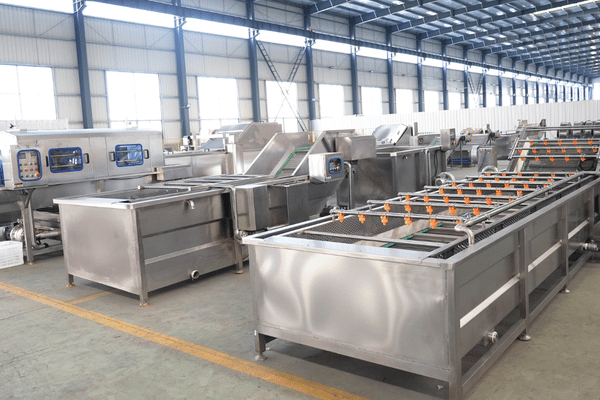
- Washing and pre-treatment
- Cutting and forming
- Blanching and cooking
- Sterilization and aseptic filling
- Frying and coating
- Freeze drying and hot-air drying
- Quick freezing
- Packaging and metal detection
- Conveying and material handling between stations
Production Line Projects We Deliver
- Standalone machines
- Station groups of 2 to 5 machines
- Complete production lines
- Automation upgrades on production systems already installed, for traceability and product consistency
- Whole-plant turnkey projects
The Eight Stages of a Line Project
01
STAGE 01
Requirement study
We determine the raw material, the product requirement, the output target, the site conditions, the budget and the destination market.
02
STAGE 02
Process design
We set the route across washing, cutting, cooking, sterilization, frying, freeze drying and packaging.
03
STAGE 03
Mechanical design
We design equipment and layout against capacity, site conditions, automation level and product characteristics.
04
STAGE 04
Equipment manufacturing
Our four owned and self-built manufacturing bases cover approximately 80% of our main equipment categories. Specialized or supplementary equipment is supplied by selected long-term partner factories.
05
STAGE 05
Automation upgrades
PLC control, HMI operation, equipment linkage, data records, alarms and recipe management are configured per project, in a form your ISO 22002-1 prerequisite programme can consume.
06
STAGE 06
Installation
Installation guidance, remote support or an on-site installation service, scoped to the project.
07
STAGE 07
Export delivery
Export packing, container loading, export documents and shipment coordination.
08
STAGE 08
After-sales support
Operator guidance, spare parts, remote technical communication and service assistance.
01 / 08
Food Sectors We Build Lines For
Because they tell us a product, not a machine number, we have developed product process lines based on foods of industry importance. Each sector product line connects to a complete breakdown of the complete system as it goes from material to finished goods packing and warehousing. These are the 7 sector lines that answer over 95% of all enquiries.
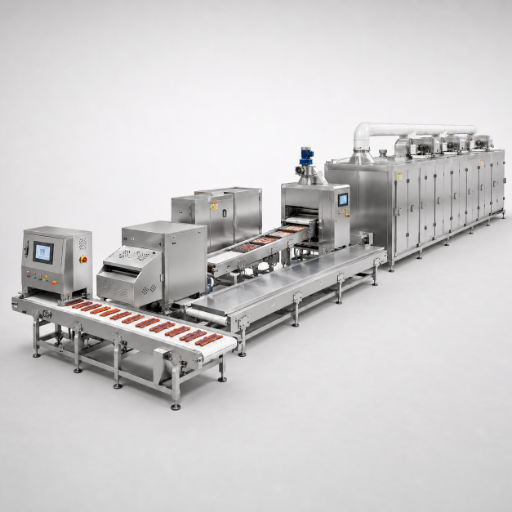
Pet Food Processing
Choose this if
You are producing dry kibble, wet food, freeze-dried treats or jerky.
Line routes
Dry kibble extrusion, wet canning and pouching, freeze-dried treats, jerky drying.
Core stations
Extrusion, drying, coating, retort sterilizing, freeze drying, metal detection, packaging.
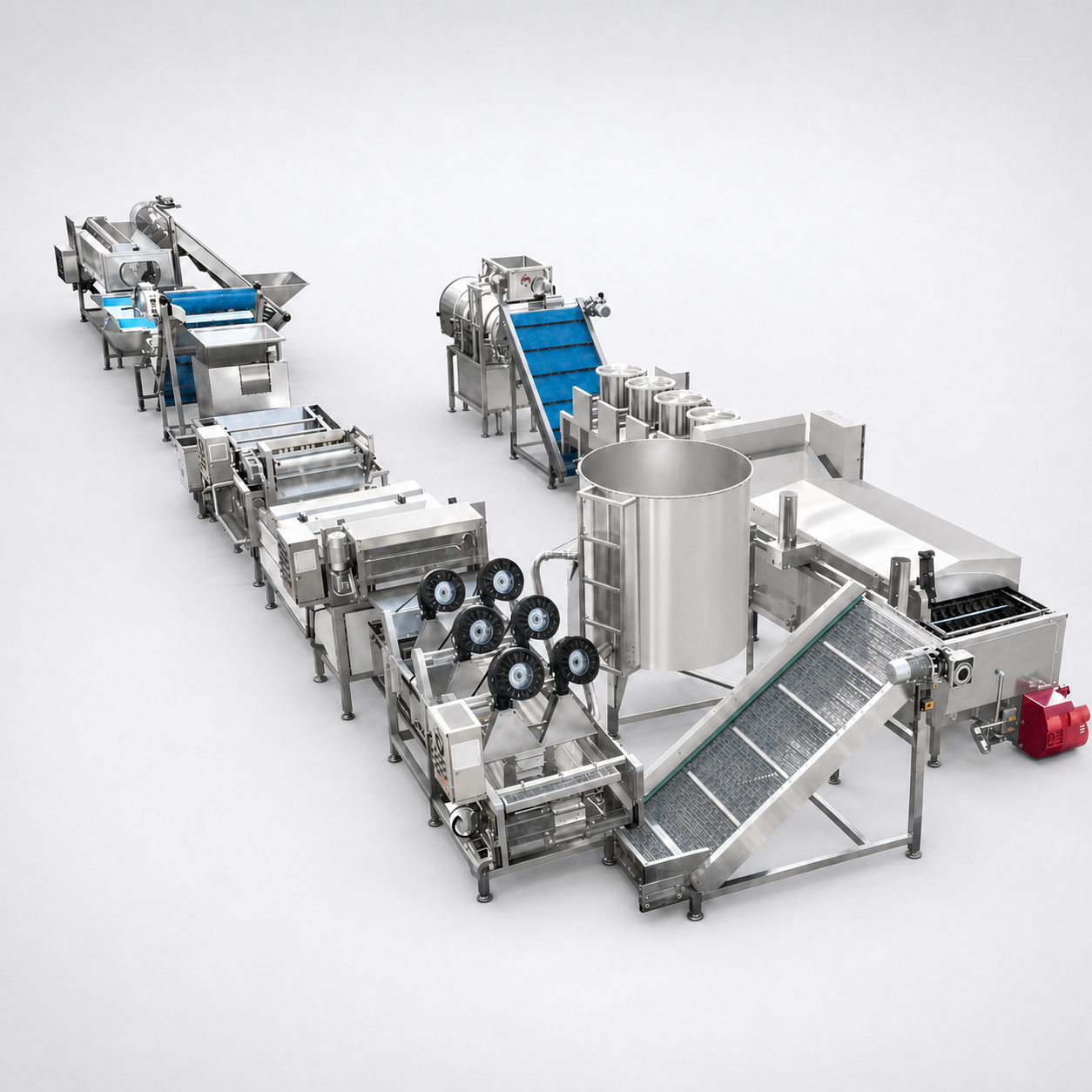
Fruit & Vegetable Processing
Choose this if
You are washing, cutting, dehydrating or freeze drying crops.
Line routes
Root vegetable washing and peeling, leafy fresh-cut, dehydration drying, freeze drying.
Core stations
Air bubble and brush washing, sorting, cutting, blanching, dewatering, drying, packing.
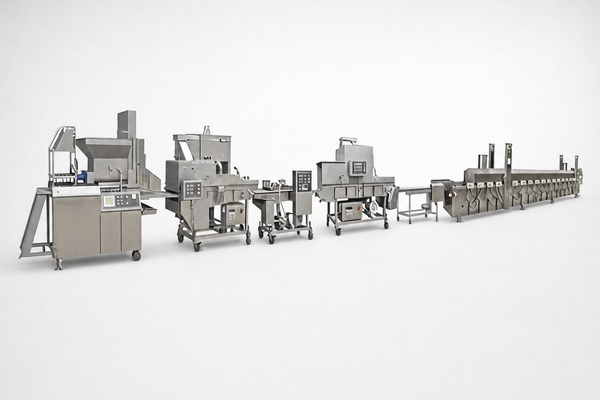
Meat, Poultry & Prepared Food
Choose this if
You are in protein processing: sausage, meatballs, coated products or portioned cuts.
Line routes
Sausage, ham and hot dog; meatball, fishball and patty; nugget coating and frying; cutting and deboning.
Core stations
Grinding, chopping, filling, forming, battering, frying, cooking, freezing.
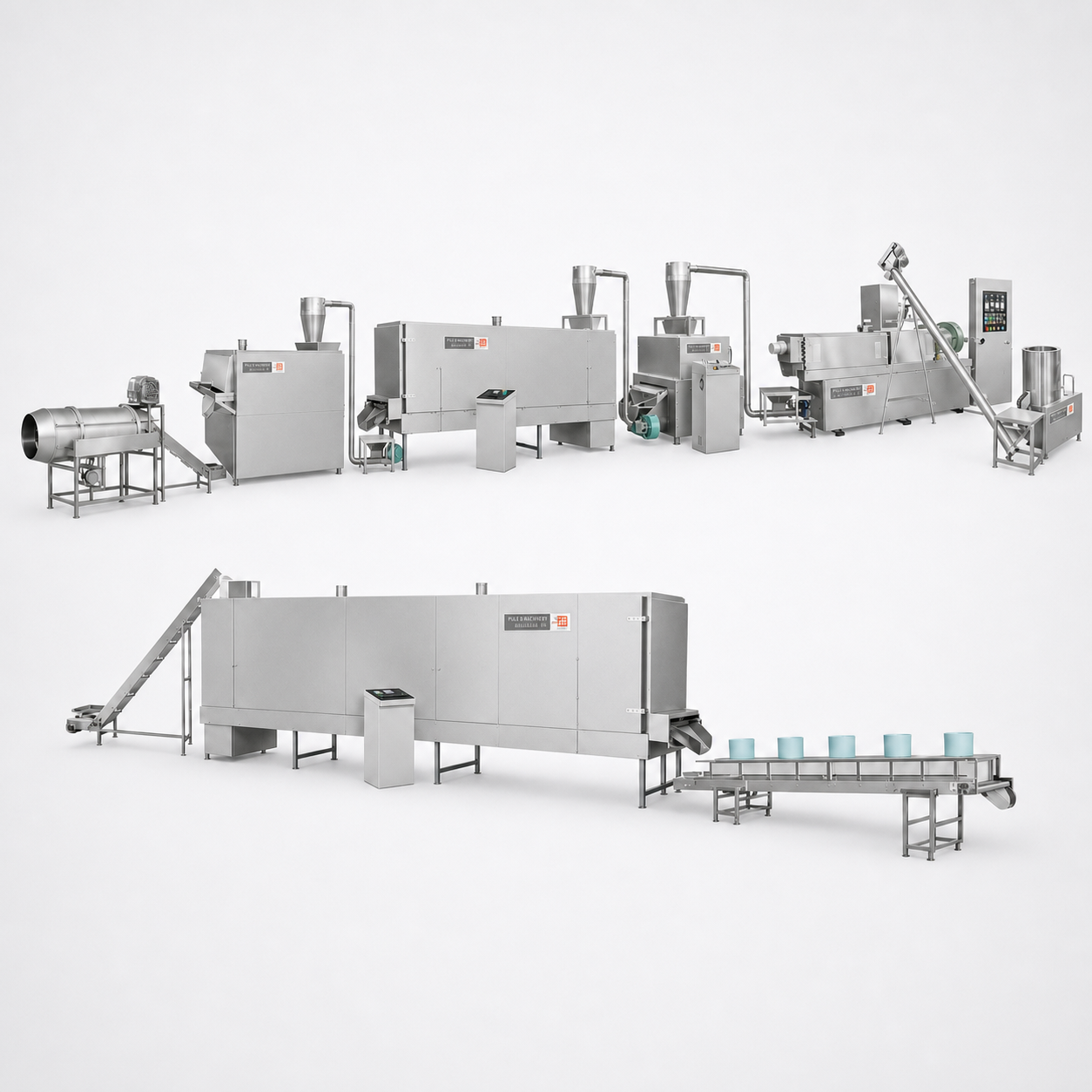
Snack Food Processing
Choose this if
You are producing potato products or extruded and puffed snacks.
Line routes
Potato chips and fries, extruded and puffed snacks.
Core stations
Washing, peeling, slicing, blanching, dewatering, continuous frying, seasoning, packing.
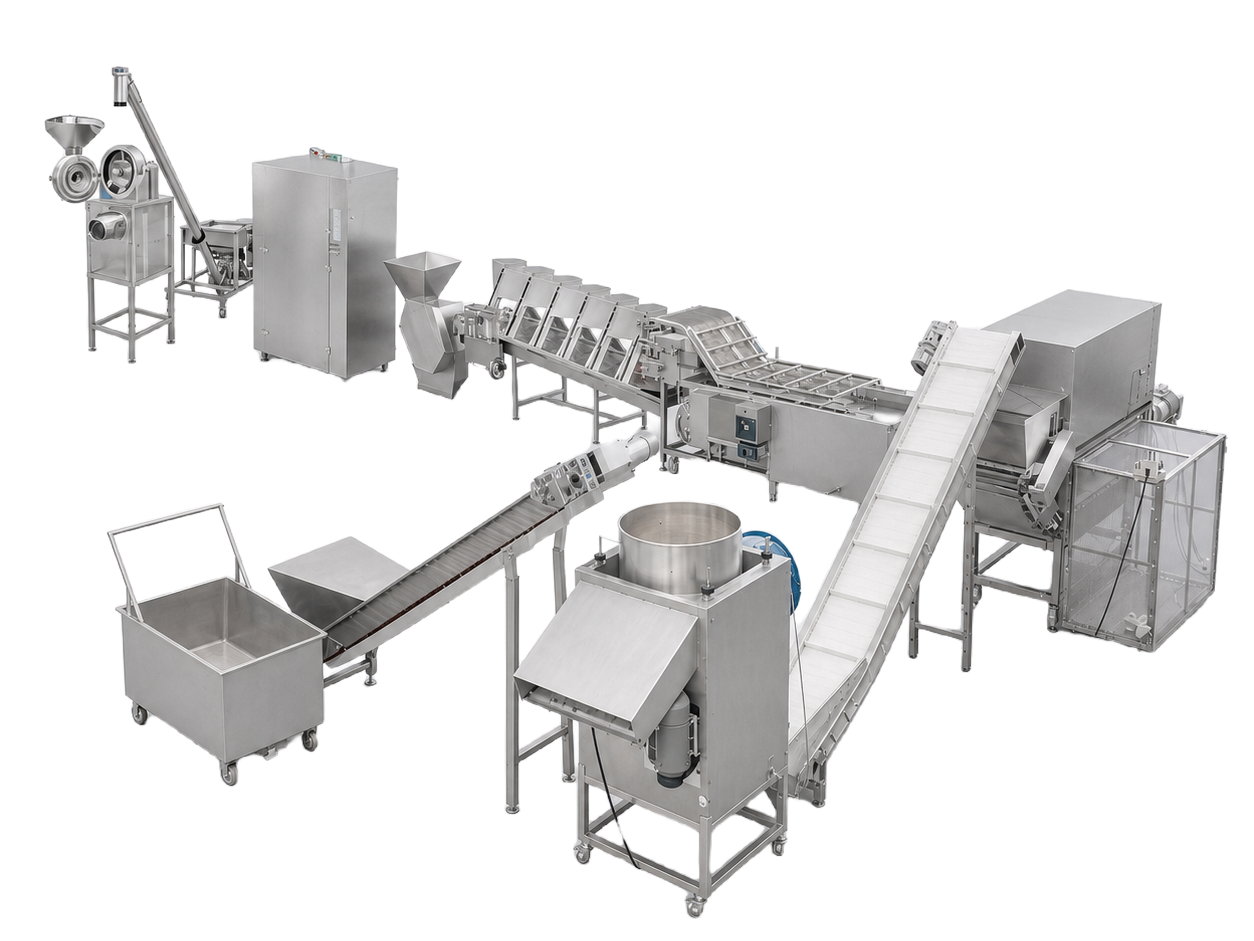
Freeze-Dried & Quick-Frozen Food
Choose this if
You are freeze drying or individually quick freezing finished products.
Line routes
Freeze-dried meat and seafood, instant soup and porridge, coffee and tea, quick-frozen food.
Core stations
Pre-cooking, quick freezing, vacuum freeze drying, metal detection, pouch packing.
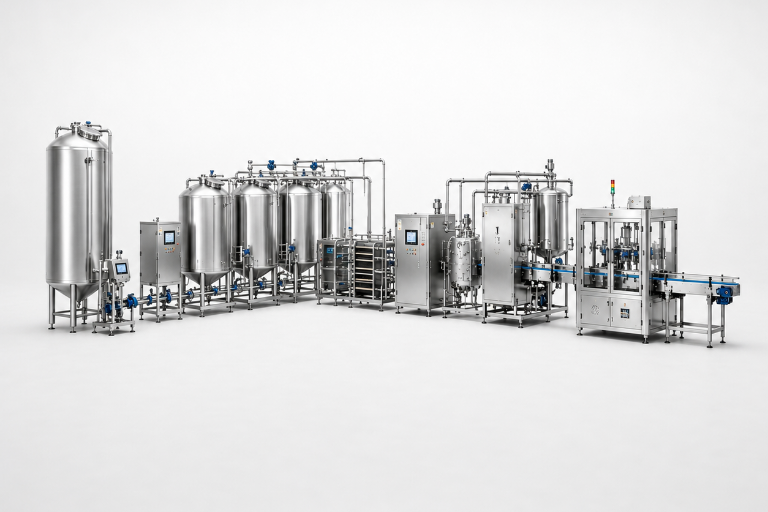
Dairy & Sauce Processing
Choose this if
You are in dairy and beverage work: liquid milk, fermented dairy or sauces.
Line routes
Pasteurized and UHT milk, yogurt, cheese and butter, tomato and chili sauce.
Core stations
Receiving, homogenizing, heat treatment, fermentation, evaporation, filling.
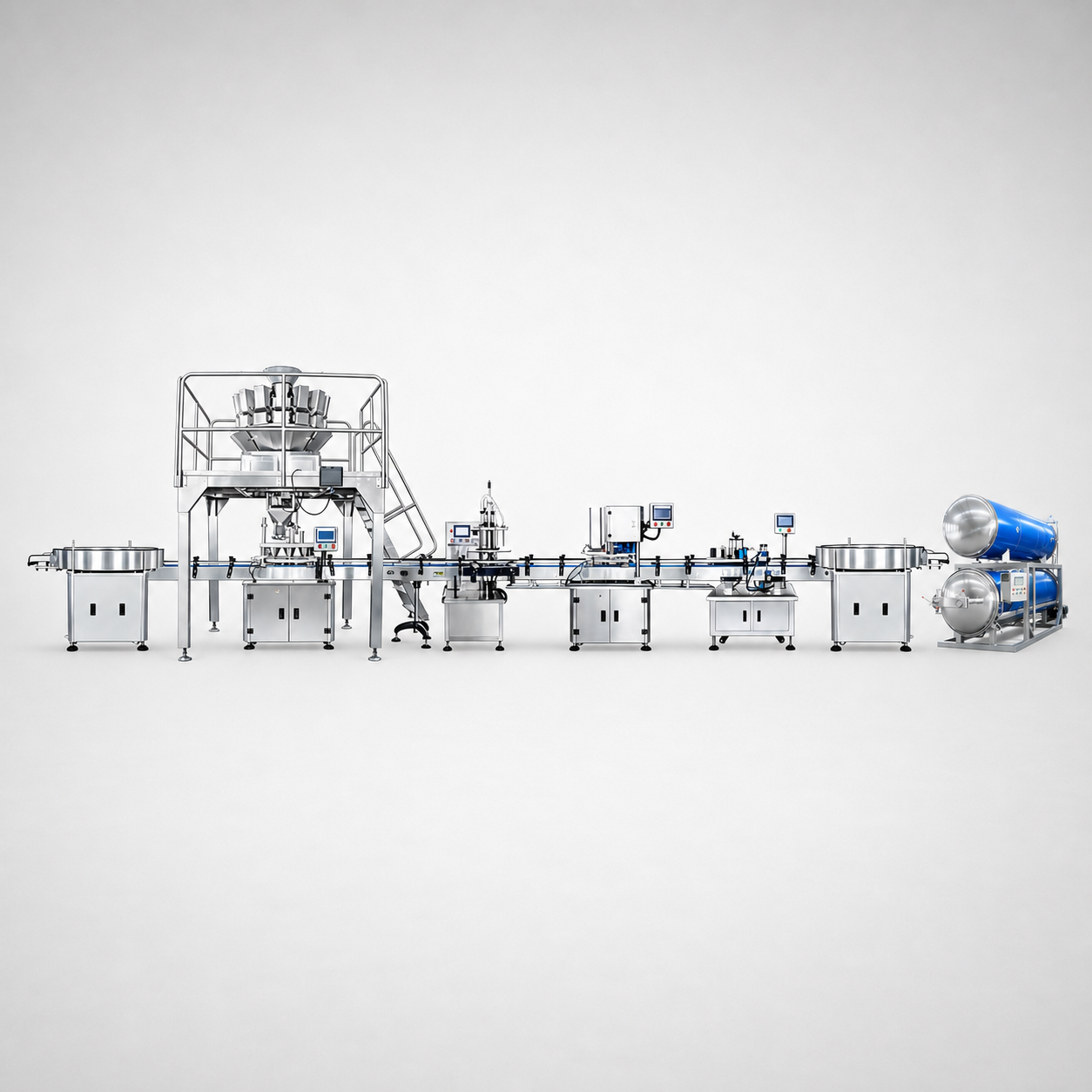
Sterilization & Aseptic Filling
Choose this if
Your shelf life target is set by the thermal process, not by the recipe.
Line routes
Retort canned and pouched, tunnel pasteurization, UHT aseptic filling.
Core stations
Filling, seaming or sealing, retort or tunnel or UHT, cooling, coding.
01 / 07
Process Equipment Categories
Food and beverage professionals who know the industrial machine they need already know the industrial food processing machine they need can skip the sector view and start here. Six equipment categories give direct access to the published specifications.
Industrial Food Processing Equipment by Process Stage
Category
What it does in the line
Models in this class
Where it sits
Category
Sterilization Equipment
What it does in the line
Sets commercial sterility and shelf life
Models in this class
Retort autoclave, UHT sterilizer, plate pasteurizer
Where it sits
After filling or sealing
Category
Extrusion Equipment
What it does in the line
Cooks and textures under pressure and shear
Models in this class
Twin-screw food extruder
Where it sits
Core forming stage
Category
Frying & Coating Equipment
What it does in the line
Applies batter and crumb, then fries continuously
Models in this class
Continuous fryer, battering and breading machine
Where it sits
Between forming and freezing
Category
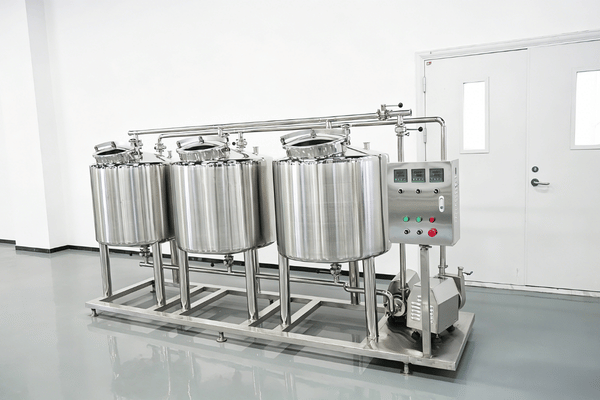
Cleaning & CIP Equipment
What it does in the line
Removes field soil, then cleans the line in place
Models in this class
Vegetable washing and peeling machine, CIP system
Where it sits
Line entry and across wet sections
Category
Quick-Freezing Equipment
What it does in the line
Drives product through the freezing zone fast enough to keep structure
Models in this class
Spiral belt freezer, tunnel IQF freezer
Where it sits
Before packing or freeze drying
Category
Freeze-Drying & Drying Equipment
What it does in the line
Removes water by sublimation or by hot air
Models in this class
Vacuum freeze dryer, mesh-belt hot-air dryer
Where it sits
After freezing or after blanching
Standalone Machine, Complete Line or Turnkey Project
The most important deciding question in food equipment sourcing isn’t which manufacturer you chose, but defining your supply chain boundary. 5 Delivery options, plus 2 ongoing Service levels gives clear definition on divided responsibilities
Delivery Scope Tiers
Tier
Project size
SHENGTU carries
You carry
Triggered when
Tier
Standalone machine
Project size
1 machine
SHENGTU carries
Manufacture, factory testing, export packing, machine documents
You carry
Site connection, utilities, installation
Triggered when
You are filling one gap in a running line
Tier
Station group
Project size
2 to 5 machines
SHENGTU carries
The above plus parameter matching between the machines
You carry
Layout, conveying between stations
Triggered when
You are expanding one process section
Tier
Complete production line
Project size
6 or more machines, single product route
SHENGTU carries
The above plus process design and line layout to EN 1672-2 hygiene requirements
You carry
Building, utilities, operators
Triggered when
You are adding a new product route
Tier
Turnkey project
Project size
Whole plant or several lines
SHENGTU carries
All 8 project stages from requirement study to after-sales
You carry
Building, permits, raw material, staffing
Triggered when
You are building a new factory
Tier
Automation upgrade
Project size
Retrofit layer on installed equipment
SHENGTU carries
PLC, HMI, equipment linkage, data records, alarms
You carry
Site network, system interfaces
Triggered when
The mechanics are fine and the control layer is not
Tier
Support after delivery
Project size
Ongoing
SHENGTU carries
Response times, remote support, on-site service and spare-parts arrangements are confirmed in the quotation and contract
You carry
Site access and operator availability
Triggered when
Anything goes wrong in service
Tier
Spare parts
Project size
Ongoing
SHENGTU carries
Spare-parts supply arrangements confirmed per order
You carry
Model and serial confirmation
Triggered when
Consumables and wear parts run down
Quotation, Cost Drivers and Delivery Scope
There is no price list for a food production line, because no two are the same. What a line costs follows the product specification, the target output, the process route, the level of automation you choose and the scope of supply you ask us to carry.
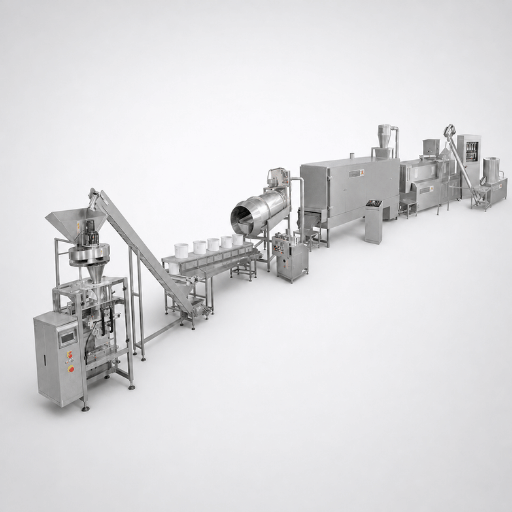
What Moves Your Figure
Driver
Effect on cost
What you control
DriverTarget capacity
Effect on costSets machine size across every station, not just the bottleneck one
What you controlState the capacity you need in year three, not only year one
DriverProduct mix
Effect on costEach additional format adds changeover parts and control recipes
What you controlRank the formats. A secondary format costs less added later than designed in badly
DriverProcess route
Effect on costThermal route and drying route are the two heaviest cost centres in most lines
What you controlConfirm the shelf life target early. It decides the route
DriverAutomation level
Effect on costControl, linkage and data records scale with the number of interfaces
What you controlSeparate what must be automatic from what can stay manual
DriverScope of supply
Effect on costA turnkey scope carries engineering that a single machine does not, so buying wide costs you where you already have the capability
What you controlPick the delivery tier that matches your in-house engineering
How Your Quotation Is Produced
Send the product, the capacity and the destination country. The engineering team reviews your requirement and confirms the quotation scope and response timing for the project.
- Machines and process steps listed by position or phase, not aggregated to single item components
- Control and automation scope stated separately
- Spare parts package priced on its own
- Document set named, per model and per destination market
- Export packing and the services included spelled out
Food processing machinery manufacturers differ most in how much of that they show. An all-up total number with no line items is not a quotation you can compare, and it is not what you will get.
What an equipment quotation does not settle. Trade terms follow the Incoterms 2020 rules, which set out who pays for and manages shipment, insurance, documentation and customs clearance. They do not set your duty rate, and they do not specify which documents the seller must supply for clearance in your country.
Hygienic Design, Documents and Quality Chain
Applicable certificates and documents are confirmed for the equipment model, configuration and destination country. Company management-system records are reviewed separately from product conformity documents.
Ease of cleaning is the thing nobody checks until it is a shutdown. Sanitary design is fixed at the drawing stage or it is not there.
How Every Order Is Checked
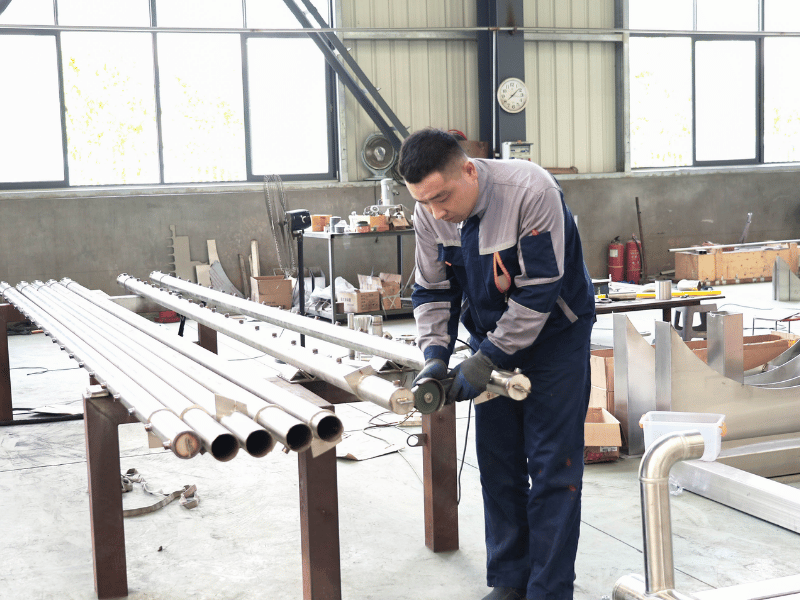
- Incoming inspection: material and bought-in parts are checked against specification before they go to production.
- In-process inspection: welding, forming and machining are checked at the stage they occur, not in the end.
- Assembly check: mechanical fit, guarding and control wiring are checked as the machine goes together.
- Factory testing: the machine is operated and its function checked against the agreed specification before it is packed.
- Packing inspection: export packing, marking and the document set are checked against the shipment list.
Hygienic Framework Layers
These frameworks each govern something different and are not interchangeable. Naming one is not the same as holding a certificate against it.
Framework
What it governs
How it lands on a specific machine
FrameworkEN 1672-2 and ISO 14159
What it governsEN 1672-2 supports CE marking for food processing machinery, ISO 14159 sets the equivalent machine-level hygiene requirements, and neither carries a stand-alone label
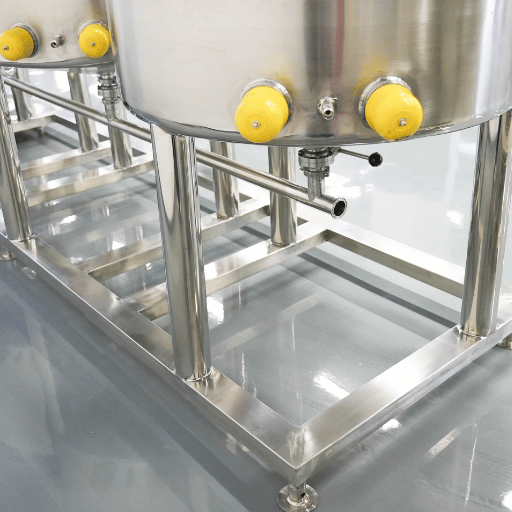
How it landsFixed in the mechanical design: geometry, drainability, accessibility for cleaning
FrameworkEHEDG Guideline Document 8
What it governsHygienic design principles and a certification scheme; the fourth edition was issued in December 2025 and is the reference for surface finish, internal radii and weld treatment
How it landsConfirmed in the equipment specification as surface finish, radii and weld treatment
Framework3-A Sanitary Standards
What it governsMainly dairy and liquid foods, with a third-party symbol programme
How it landsApplies to the wet sections of a dairy or sauce line, per model
FrameworkCodex CXC 1-1969
What it governsSmooth, non-absorbent, cleanable surfaces, with no numeric limit
How it landsSets the intent your auditor reads against
FrameworkISO 22002-1
What it governsPrerequisite programme level, with no measurable surface finish parameter; sits alongside your HACCP plan and the rest of your food safety standards
How it landsSits in your food safety system, not in the machine drawing
Framework21 CFR 117.40
What it governsUnited States rule: adequately cleanable design, corrosion resistance, nontoxic materials, smoothly bonded seams
How it landsMaterial grade, seam treatment and chemical compatibility are named in the specification
Surface Finish Reality Check
EHEDG and 3-A both put product-contact roughness at Ra 0.8 µm, and cold-rolled stainless sheet is usually already between Ra 0.2 and 0.5 µm. The headline number is often met before anyone treats the surface.
- EHEDG permits rougher surfaces where cleanability has been demonstrated by testing
- 21 CFR 117.40 sets no numeric roughness limit at all
- Two surfaces sharing one Ra reading can vary in topography, and therefore in how they clean
Ask your supplier this instead: how was the surface produced, how were the welds treated, and how was cleanability demonstrated with the cleaning chemicals you actually run. A number on a datasheet costs you nothing to get and tells you nearly nothing. We answer those three in the equipment specification, per machine.
Electrical and Guarding Scope
- Control panels are configured to the voltage and frequency of your destination market
- Electrical drawings and component lists ship with the equipment
- Guarding is checked at assembly, together with mechanical fit and control wiring
- Third-party electrical listing is confirmed per project during quotation
This matters because 29 CFR 1910.303 requires covered electrical equipment to be approved, and evaluates suitability for installation, insulation, heating effects, arcing effects, and classification by type, size, voltage and current capacity.
Documents and Certificates
Regulatory standards differ by destination, so the document set does too. Depending on the machine model, configuration, manufacturing base and destination market, we can provide CE certificates, SGS reports, ISO 9001, ISO 27001, test reports, factory inspection documents and export documents.
The applicable document scope is confirmed case by case during quotation or order confirmation. Certificates travel with models and configurations, not with a company name.
Request the document scope for a specific modelCompany records: Request the current holder, scope and validity details.
Equipment conformity: Confirm the documents for the model, configuration and destination country.
Order documents: Agree inspection records, manuals, drawings and shipment paperwork in the contract.
Where Our Machines Are Built
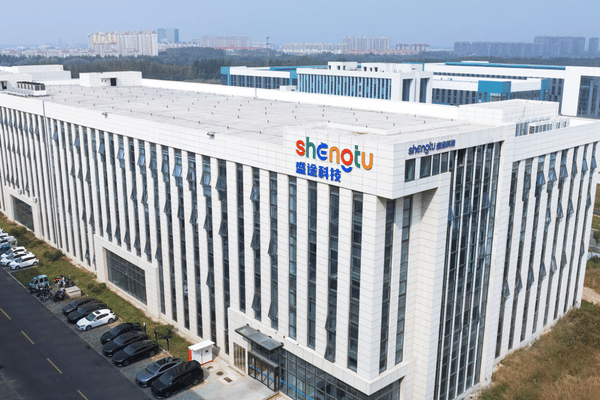
Four owned and self-built manufacturing bases cover around 80% of our main equipment categories. Around 20% of specialized or supplementary machines are supplied by long-term selected partner factories.
Why We Publish Our Sourcing Split
Buyers of retort vessels and freeze dryers are told by almost every supplier that everything is made in house. The claim is easy to make and hard to verify, so it has ceased to mean anything. We would prefer to state the split and confirm which base or partner builds which machine before you sign.
The Food Machinery Network Behind a Project
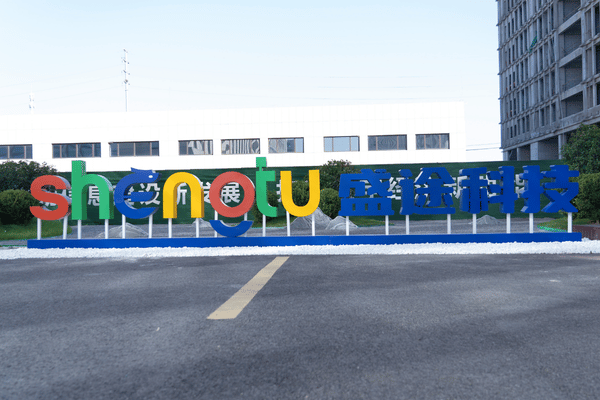
- Headquarters in Zhucheng, Shandong, with branches in Qingdao, Changzhou and Weifang.
- More than 20,000 m² of office and display space across the four cities.
- An approximately 5,000 m² food machinery showroom for equipment presentation and project confirmation.
- The Zhucheng food machinery cluster, which expands the range of equipment we can configure into one line.
- More than 100 software copyrights and 7 invention patents behind the control and data layer.
How an Order Runs
01
You send the requirement
Product, capacity, process needs, site conditions and destination country.
02
We review and ask
An engineer returns the gaps in the brief rather than guessing past them.
03
Written quotation
Itemised by station, control scope, spares, documents and services.
04
Manufacturing
Built across the four bases and the long-term partner factories, with the source confirmed per machine.
05
Factory testing before shipment
A machine that passes at our works can still require adjustment on your floor, which is why installation support is scoped rather than assumed.
06
Export delivery and handover
Packing, container loading, documents, installation support and operator training.
Verify Us Before You Order
The United States International Trade Administration tells exporters to check a counterparty’s current status and history, principal officers, trade and bank references, and ability to meet requirements. Reciprocal checks are normal practice, so here is what a food processing equipment company should be able to put in front of you.
01 / 04
RESOURCES
Project Sizing and Compliance Tools
Access our dedicated food processing equipment manufacturer tools. Assess scope boundaries, score brief readiness, and evaluate supplier compliance with these specialized checklists and selectors.
Awaiting Project Input
Tell Us About Your Food Processing Project
Share your raw material, target product, required capacity, process needs, site conditions, budget and destination country. Our engineering team will review your raw material, capacity, process and destination requirements and recommend the right machine or production line for your project. Response timing is confirmed for your project.
Frequently Asked Questions
A standalone machine is a single unit that you install and connect yourself. A complete line is 6 or more machines covering one product route, and at that tier the process design and the line layout are ours. A turnkey project takes in a whole plant or several lines and runs all 8 project stages, from the requirement study through to after-sales.
Begin with the product and the shelf life you need, because those two settle the thermal and drying routes, which carry most of the cost on most lines. Then size for the capacity you need in year three rather than year one, since capacity sets every station and not only the bottleneck. Send those three facts and we come back with a route and the reasoning behind it.
Cleanability is set in the design, so we confirm it in the equipment specification rather than in a slogan. That means the material grade, the surface production method, the weld treatment, the internal radii, the drainage slope, the demountable structure, and compatibility with the cleaning compounds and sanitizing agents you actually run. 21 CFR 117.40 asks for exactly those things and sets no numeric roughness figure at all.
Machine-level hygiene follows EN 1672-2, which supports CE marking, and ISO 14159, which sets the equivalent requirements at ISO level. Surface finish, internal radii and weld treatment follow EHEDG Guideline Document 8, whose fourth edition was issued in December 2025, while dairy and liquid food sections also take 3-A Sanitary Standards into account. Which of these applies is confirmed per machine and per destination market, not claimed across the catalogue.
Configuration is matched to your raw material, capacity, process and budget on every project, and the physical layout is built around your specific site. What we will not do is promise that any product can run on any machine. We check feasibility against the process and our production resources first, and we say no when the answer is no.
Equipment has been exported to 52 countries with more than 2,000 machines running worldwide. Customer names, site photographs and running videos are only shared once that customer has authorised it, so we do not publish them here. Ask for the project profile closest to your product and capacity and we will tell you what can be shared and what cannot.
Response times, remote support, on-site service and spare-parts arrangements are confirmed in the quotation and contract. Warranty duration, coverage and exclusions are confirmed in the quotation and contract. Remote diagnosis can be discussed based on the control configuration and fault information.
Tiered arrangements are settled at quotation stage against the project brief and the cooperation terms, so there is no published rate table. We compete on whole-life cost rather than headline price, which makes configuration and running cost the comparison worth making.
Export packing, container loading, export documents and shipment coordination are part of the delivery scope. CE certificates, SGS reports, ISO 9001, ISO 27001, test reports and factory inspection documents can be provided depending on the machine model, configuration, manufacturing base and destination market. The applicable set is confirmed case by case before quotation or order confirmation.
Panels are configured to the destination voltage and frequency, and the electrical drawings and component lists ship with the equipment. Third-party listing is confirmed per project rather than claimed across the range, because 29 CFR 1910.303 evaluates suitability for installation, insulation, heating and arcing effects, and classification by voltage and current capacity. Tell us the destination and the site supply and we confirm the scope in the quotation.
You or your appointed agent act as importer of record. The duty rate follows the exact tariff subheading of the specific machine, which your customs broker determines against your national tariff, and the Incoterms 2020 rules allocate carriage, insurance and customs formalities without setting that rate. We supply the commercial invoice, packing list, origin and technical description that support classification.
Yes, by live video tour of the bases and the 5,000 m² showroom, or in person. Remote methods are treated in ISO/IEC TS 17012:2024 as a way to strengthen confidence rather than as a replacement for an on-site audit, which is why we keep both open. Business licence and management system records are available for your due diligence file.