Get in touch with Shengtu Bufan Company

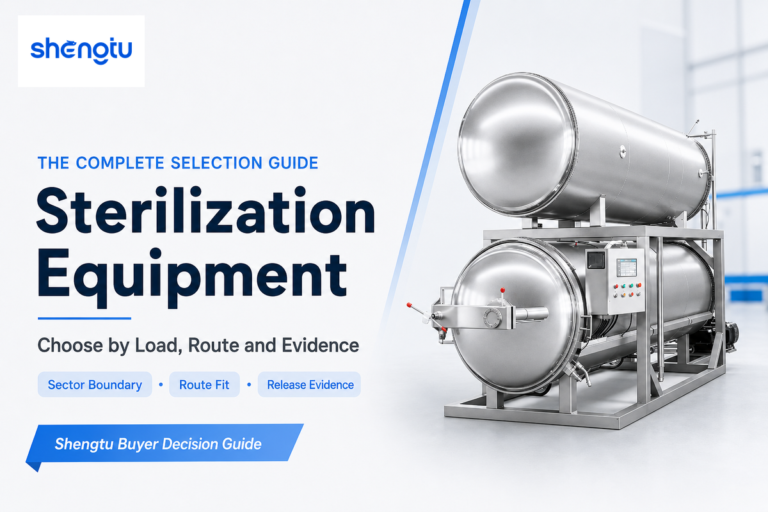
A food retort is a closed vessel or thermal-processing system used to heat packaged food under controlled conditions. In many applications, the product is filled into a can, jar, pouch or tray, hermetically sealed, loaded into the retort, heated according to a scheduled process, then cooled before release. Here, the machine supplies the controlled environment. It does not create a universal time-temperature recipe, approve the process or prove that every load is safe. Those conclusions depend on the defined product, package, loading pattern, process studies, critical factors and production records.
The short answer
A retort controls heating, pressure and cooling around a defined load. Validation connects that equipment to a specific food and package. Daily records then show whether each production lot followed the approved process. Remove any one of those links and a gauge reading by itself is not enough.
What Does a Food Retort Actually Do?
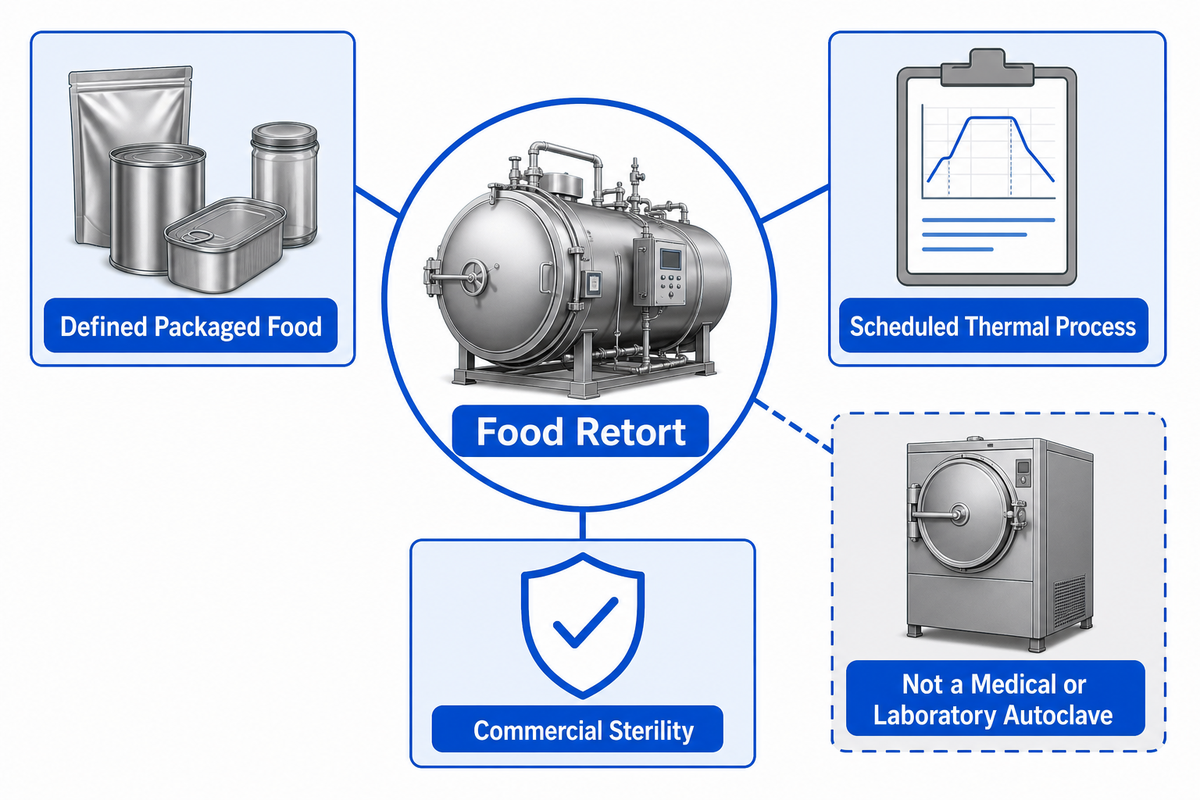
Within its U.S. scope for thermally processed low-acid foods packaged in hermetically sealed containers, 21 CFR Part 113 defines a retort broadly as a closed vessel or other equipment used for thermal processing. In practical plant language, the same equipment may also be called a food autoclave or an autoclave sterilizer. That overlap does not make a medical or laboratory autoclave suitable for food production. This guide is limited to industrial food-retort use.
In that limited context, the equipment executes a scheduled thermal process for a defined packaged food. “Sterilize” is not a stand-alone machine promise: the endpoint still depends on the product, package, studies, operating controls and review described below.
Careful wording matters for the desired endpoint. For thermally processed low-acid foods packaged in hermetically sealed containers within the U.S. scope of 21 CFR Part 113, commercial sterility is not an absolute claim that every living organism has disappeared. It concerns microorganisms capable of reproducing in the food under normal nonrefrigerated storage and distribution, including the public-health boundary described by the regulation. Commercial sterilization is a common search phrase, but the defined endpoint here is commercial sterility.
Pasteurization is different. A USDA-hosted scientific summary explains that pasteurization reduces the relevant resistant public-health microorganism to an acceptable level for the product’s intended distribution and storage, but it does not necessarily establish commercial sterility. That is why “pasteurized,” “commercially sterile” and “sterile” should not be swapped casually in a specification or sales discussion.
| Term | What it means here | Boundary |
|---|---|---|
| Food retort | A closed thermal-processing vessel or system used for a defined food load. | Equipment capability is not an approved scheduled process. |
| Food autoclave | An overlapping industry term for pressure-vessel food processing. | Medical and laboratory sterilizers are outside this article. |
| Pasteurization | A different product- and route-specific microbial reduction endpoint. | It is not automatically commercial sterility. |
If you are comparing food retorting with broader industrial or non-food routes, use the separate sterilization equipment selection guide. The rest of this article stays with food retorts.
In food-industry usage, retort technology is one route for food preservation. A food sterilization or retort sterilization process may support shelf-stable food, but the product’s packaging material, thermal-process evidence and storage basis still control the claim. This guide therefore makes no product-specific promise about food safety, product quality, nutritional value or shelf life.
Batch retorting, continuous retorting and aseptic processing are different system choices. The discussion below stays with batch retort equipment and validation evidence; it doesn’t compare continuous processing or aseptic processing.
The Retort Cycle Is a Controlled Evidence Chain, Not a Pressure-Cooker Recipe
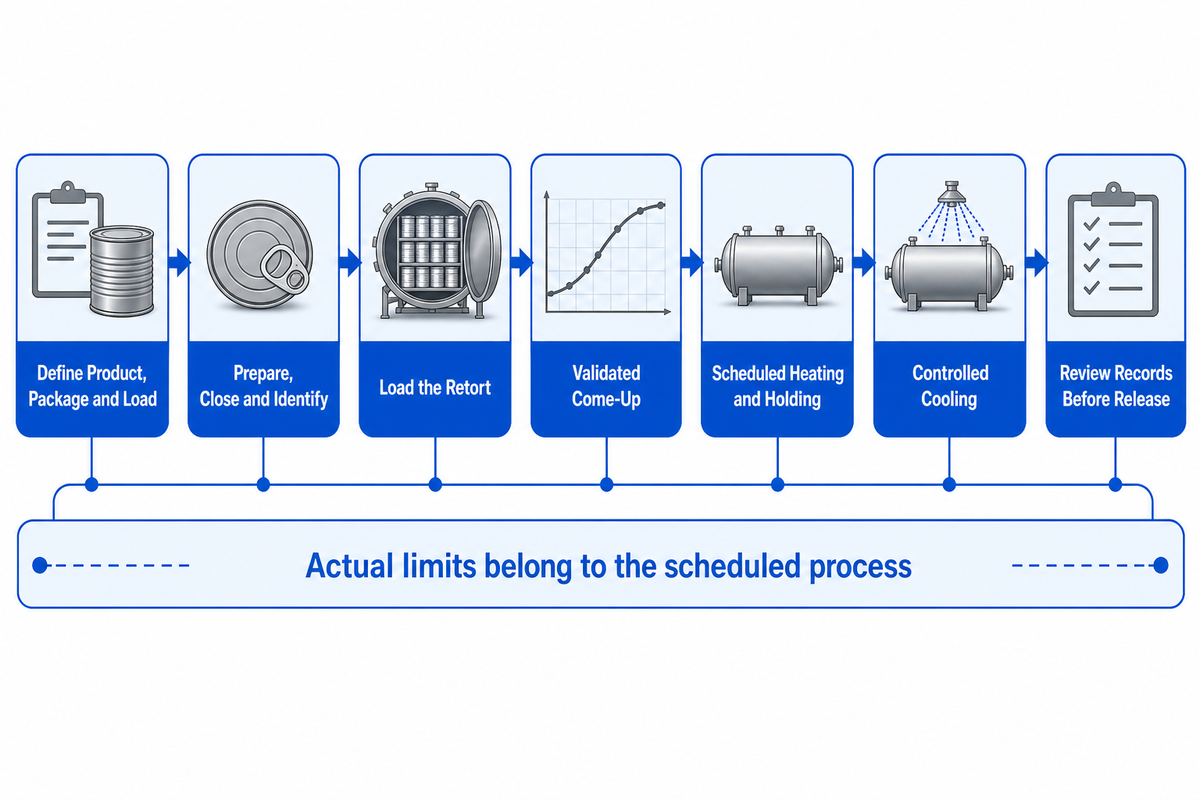
Most retort cycles can be described as a sequence, but the sequence is only a map. Actual operating steps, minimums, maximums and critical factors belong to a specific scheduled process.
- Start by defining the product, package and load. Formulation, fill, package dimensions, seal, headspace, orientation and basket pattern create the starting boundary.
- Next, prepare, close and identify the packages so the closure system and lot identity remain traceable through processing.
- Load the retort in the defined arrangement. Racks, dividers, baskets and package orientation can affect how the heating medium moves through the load.
- Establish the validated come-up condition. Depending on the system, this may include air removal, venting, circulation or another installation-specific procedure.
- Execute the scheduled heating and holding process. The retort control system follows the approved process while operators monitor the required conditions and critical factors.
- Cool under controlled conditions. Cooling ends thermal exposure and must also respect package integrity, pressure relationships and water conditions defined for the process.
- Review records before release. A completed cycle is not the same as a released lot. Plant review and the approved deviation system close the evidence chain.
Pressure deserves special attention because it is easy to misread. High temperature and pressure appear together in a retort cycle, but they do not prove the same thing. Taken together, the temperature and pressure trends describe retort conditions; they do not, by themselves, show how much thermal process reached the slow-heating part of the food. Retort pressure can support the heating medium and help manage the pressure inside the container relative to the retort during heating and cooling. High pressure alone cannot replace product temperature data, a scheduled process or the required record review.
Different process delivery methods in retort thermal processing determine which circulation, venting and cooling-stage conditions a study must address. Saturated steam, steam and water, spray and immersion routes create different evidence questions. They are types of retort operation, not interchangeable settings, and this guide doesn’t select an equipment route for a project.
Why the Same Retort Can Need Different Evidence for a Different Product
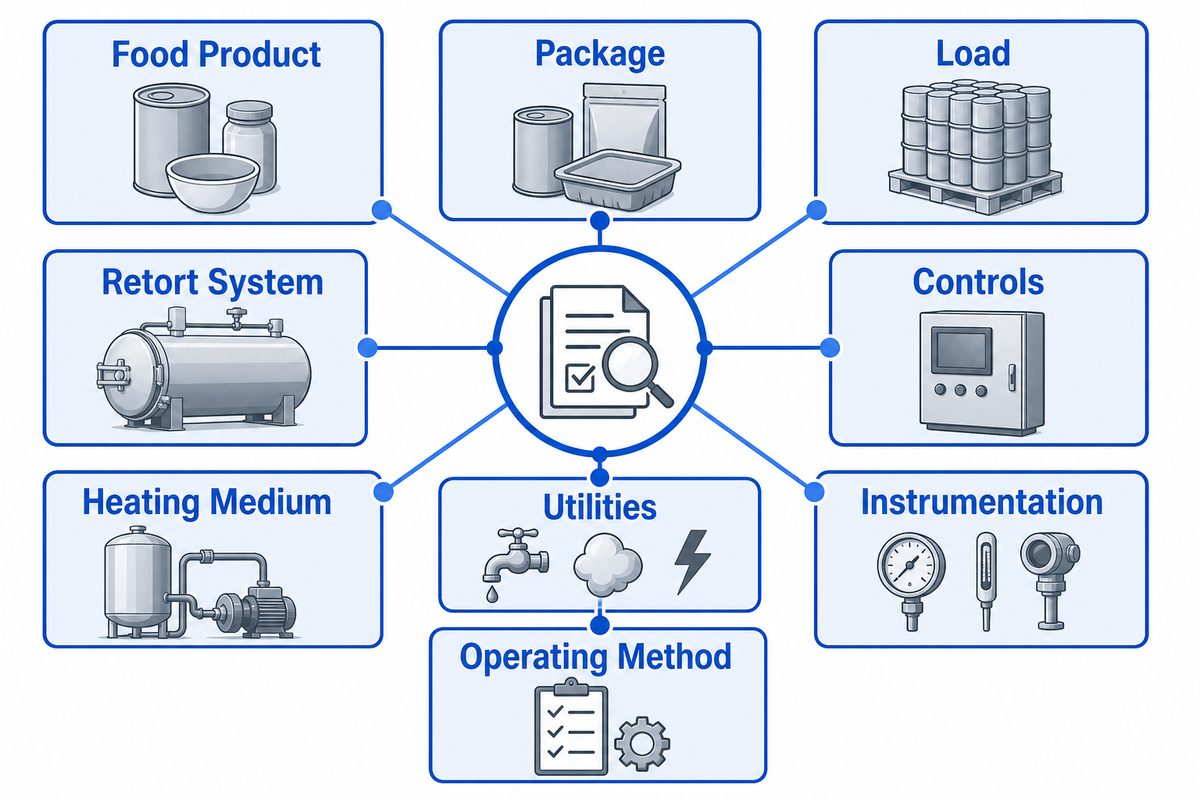
A vessel may be unchanged while the process question changes completely. Moving from a thin soup in a rigid can to a particulate sauce in a flexible pouch changes more than the label. Heat transfer inside the food, the package’s response to pressure, the likely slow-heating location, the loading support and the study design may all change.
| Variable group | Examples | Evidence it can question |
|---|---|---|
| Food product | Formulation, viscosity, particulates, fill, initial temperature | Heat-penetration assumptions and critical factors |
| Package | Can, glass jar, retort pouch, tray, seal, headspace, geometry | Slow-heating location, pressure response and closure evidence |
| Load | Basket pattern, orientation, rack support, load density | Temperature distribution and production repeatability |
| Retort system | Vessel geometry, plumbing, agitation and venting arrangement | Distribution evidence and installation-specific procedures |
| Controls | Sensors, software, alarms, recipes, time source, data handling | Execution, change control and record integrity |
| Heating medium | Steam or water delivery, flow, circulation, spray or immersion route | Come-up conditions and temperature-distribution assumptions |
| Utilities | Steam, water, air, power and cooling supply | Repeatability and installation-specific operating limits |
| Instrumentation | Sensor location, calibration, response and independent records | Measurement confidence and study comparability |
| Operating method | Load checks, vent steps, recipe selection and record review | Daily execution and operator-control assumptions |
Retort packaging can include rigid cans and glass jars, flexible pouches and semi-rigid trays. A liquid food, a viscous sauce and a particulate product can move heat differently even when the outer food packaging looks similar. The package label alone therefore can’t establish the slow-heating location or the process basis.
Part 113 calls a property or condition that may affect the scheduled process and attainment of commercial sterility a critical factor. Which factors are critical is not decided by a generic blog checklist. They are identified for the product, container and scheduled process, then controlled and recorded through production.
The advantages of retort are often described in terms of preserving food for shelf-stable distribution. Those benefits don’t by themselves ensure food safety, prove the shelf life of food or show that a machine will extend the shelf life of a new product. For retort processed foods, food safety and quality still depend on the complete evidence chain. High temperature or longer processing times can also affect product quality, so safety validation and quality optimization remain separate decisions.
Heat Distribution vs. Heat Penetration: The Key Validation Distinction
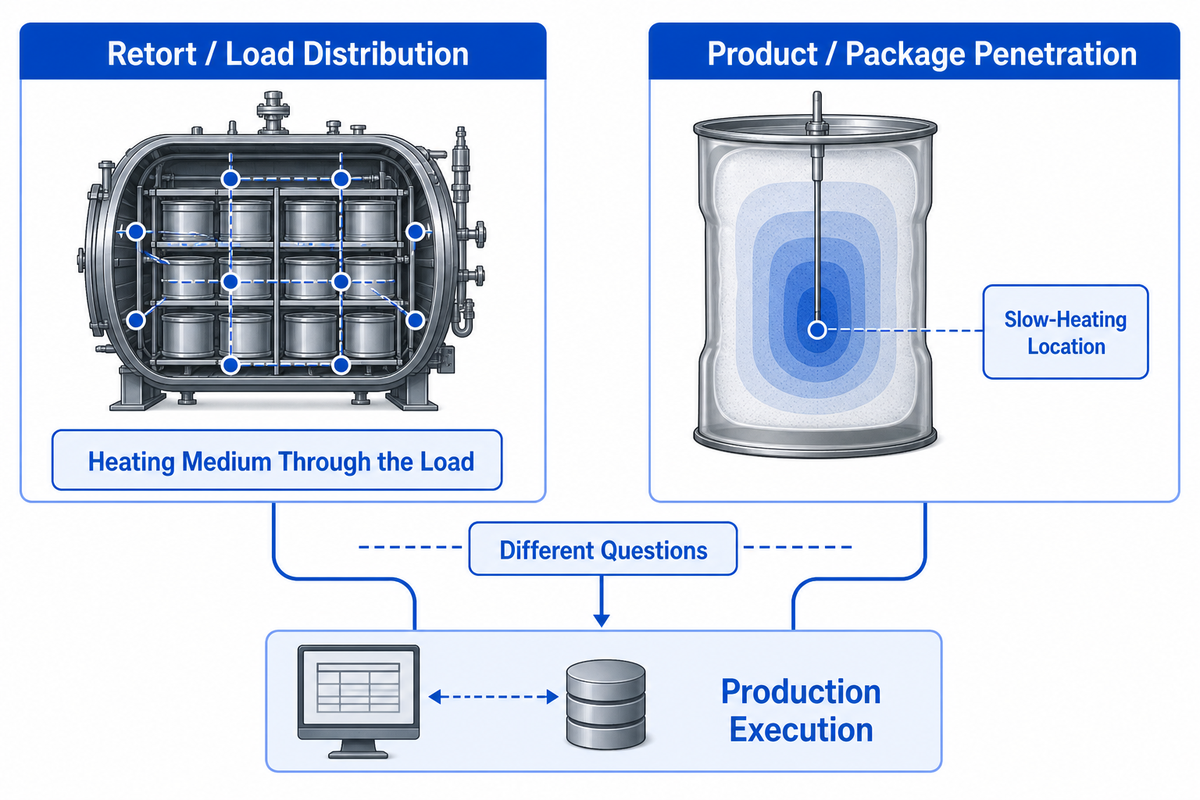
These studies answer different questions. FDA’s Low-Acid Canned Food inspection guide makes the contrast explicit: temperature distribution examines conditions throughout the retort, while heat penetration measures the heating rate inside the food product under consideration.
| Evidence type | Question answered | Misuse to avoid |
|---|---|---|
| Retort/load distribution | Does the heating medium reach the defined retort and load configuration adequately? | Using probes inside a few food containers as a substitute for a distribution study |
| Product/package penetration | How does the defined food and package heat at its slow location? | Applying one formulation or container result to another without review |
| Production execution | Did this lot run the approved process with its critical factors controlled? | Assuming a previously validated machine makes every future load valid |
| Product/process basis | Who established the scheduled process for this product and package? | Treating a supplier cycle example as process approval |
| Package and closure | Does the package remain within its defined thermal and pressure limits? | Assuming package appearance proves closure integrity |
| Management review | Was the completed record reviewed before product release? | Equating cycle completion with release authorization |
| Deviation disposition | Did an approved route evaluate and document the affected product? | Editing a record and releasing the lot without qualified review |
| Change control | Could the change affect a study assumption or critical factor? | Reusing old evidence after the supported boundary changes |
| Equipment acceptance | Does the installed system meet the contracted functional scope? | Mistaking mechanical acceptance for product-process validation |
For distribution work, relevant variables can include retort geometry, load configuration, steam or water delivery, circulation, agitation and venting. For penetration work, the slow-heating container, the slow-heating location within that container and the measured rate of heat penetration matter. Canadian Food Inspection Agency heat-penetration guidance also illustrates the documentation depth involved: product, package, fill, sealing, instrumentation, retort system, initial conditions and test events all belong in the study record.
This is why a successful study from a different retort, basket pattern or SKU cannot be pasted into a new project as a machine-performance guarantee. It may be useful background, but its assumptions must first match the proposed use.
Who Establishes the Scheduled Process, and What Does F0 Mean?
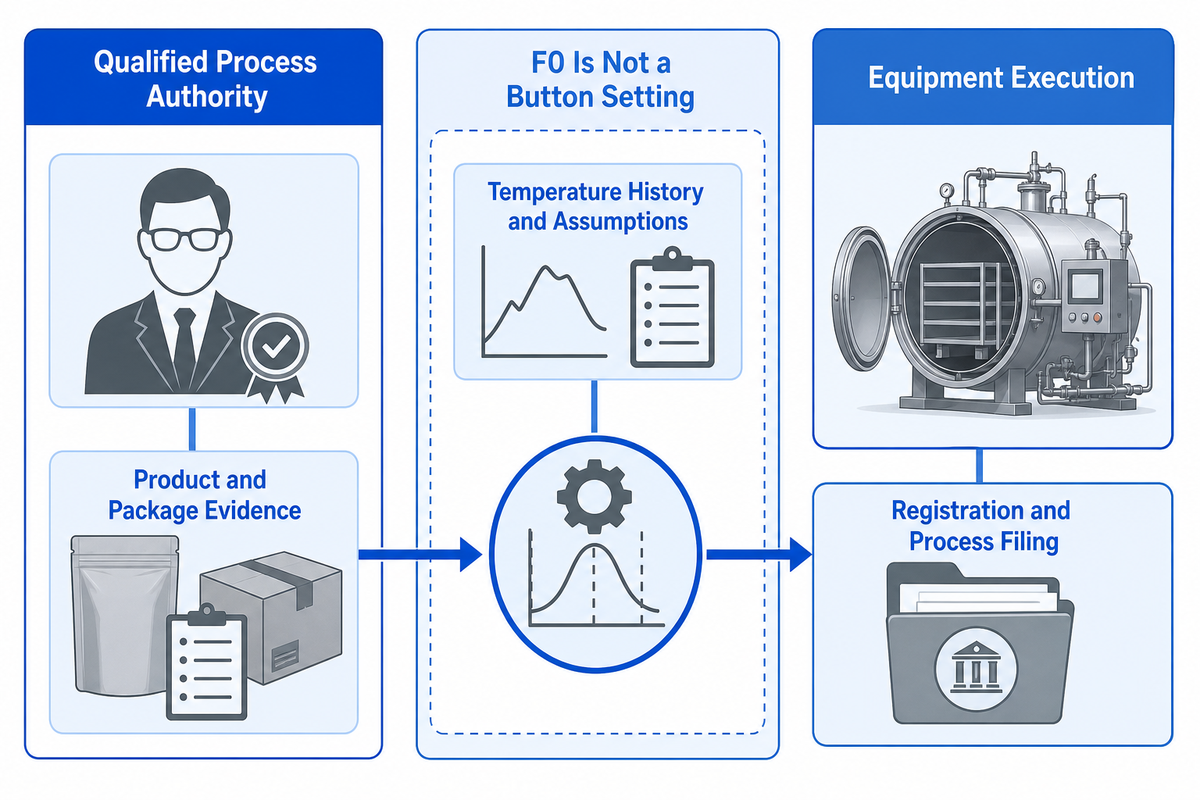
Distribution and penetration studies support, but do not replace, the authority decision. For thermally processed low-acid foods packaged in hermetically sealed containers within the U.S. scope of Part 113, scheduled processes are established by qualified persons with expert knowledge of thermal-processing requirements and adequate facilities. FDA inspection guidance also ties that work to product characteristics, heat-penetration studies, temperature-distribution evidence and evaluation of the factors that affect heating.
F0 is one way of expressing accumulated microbial lethality on a defined reference basis. It is calculated from a temperature history and stated assumptions; it is not a button setting that can be chosen safely from a supplier blog. Any target process must account for the organism of concern, the food, package, initial conditions, heat-transfer behavior and the destination market’s requirements. A better question is not “What F0 should this machine use?” but “Which qualified authority will establish and document the scheduled process for this product/container system?”
Buying equipment is also separate from regulatory filing. FDA’s current acidified and low-acid canned food information states that in-scope commercial processors serving the United States register establishments and file scheduled processes by product, style, container and processing method. That reminder is not a legal classification of any reader’s product; processors must confirm the applicable route for their own product and market.
Responsibility boundary
An equipment supplier can build and test the contracted mechanical, utility, control and documentation scope. Food processors and their qualified processing authorities remain responsible for the product-specific scheduled process, critical factors, production control and deviation decisions.
The Records That Connect Validation to Daily Production
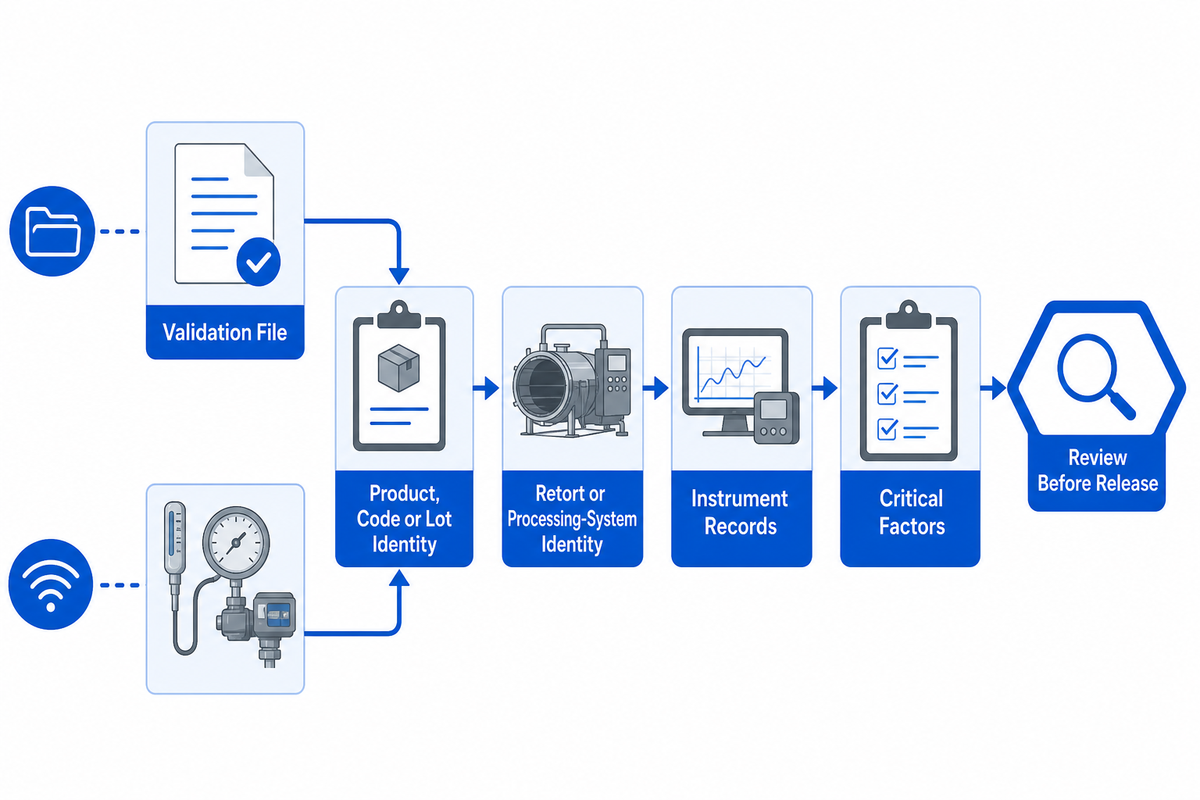
A validation file explains why a process is expected to work. A production record shows what happened to a particular lot. Both are needed. Under the stated Part 113 scope, processing information is entered when observed and correlated with the product, code, date, retort or processing system, container, initial temperature, actual process information and other applicable critical factors.
A useful lot-review checklist asks whether the record contains and connects:
- product, code or lot identity;
- retort or processing-system identity;
- container and defined load arrangement;
- initial conditions required by the scheduled process;
- actual time, temperature, venting, circulation, speed or other system data required for that process;
- product- or package-specific critical factors;
- instrument records that can be correlated with the operator record;
- deviations, alarms, interruptions and the approved response; and
- the required review, initials/signature and date.
For operations covered by 21 CFR 113.100, qualified plant management reviews the processing and production records no later than one working day after the process and before shipment or release for distribution. Most records covered by that section are retained at the plant for at least one year, then for an additional two years at the plant or another reasonably accessible location. Those are U.S. Part 113 requirements, not a global retention rule.
When a Change or Deviation Breaks the Evidence Chain
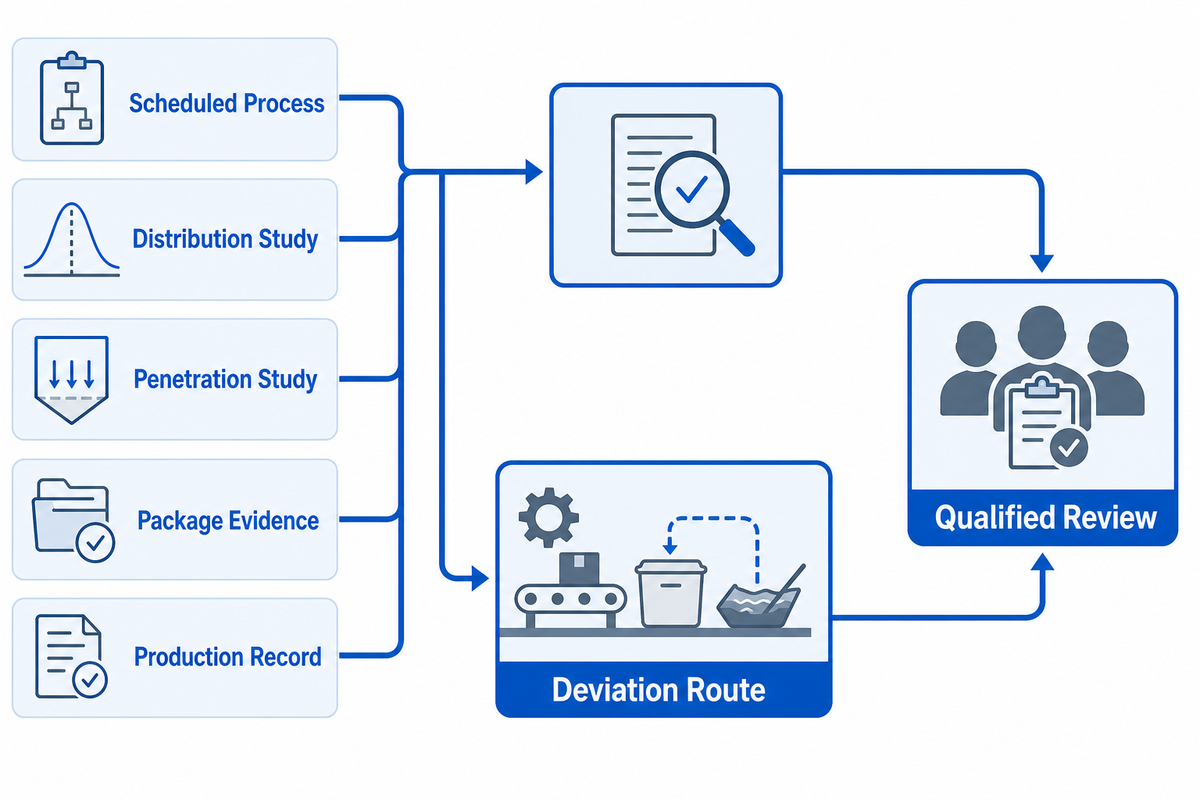
A process may begin with sound studies and still drift out of its supported boundary. Ask whether a change affects an assumption behind the scheduled process, the distribution study, the penetration study, the package evidence or the production record.
| Change | Question to ask | Likely owner of the next decision |
|---|---|---|
| Formulation, viscosity, particulates or fill | Does the heat-penetration basis still represent the food? | Processor and processing authority |
| Package, closure, size, headspace or orientation | Are package limits and slow-heating assumptions still valid? | Processor, package supplier and processing authority |
| Basket pattern, plumbing, venting, circulation or agitation | Does the current distribution evidence still represent the system? | Processor, equipment supplier and processing authority |
| Sensor, control logic, recipe or data-system change | Can the system still execute, alarm and record the approved process as intended? | Processor QA/OT, supplier and processing authority as applicable |
A deviation needs its own route. Under 21 CFR 113.89, product affected by a process below the scheduled process or by an out-of-control critical factor is not simply released after someone edits the record. Part 113 provides documented reprocessing or set-aside and competent evaluation routes, followed by the required disposition and records. This article cannot decide whether a lot is safe, releasable or recoverable. Such a decision belongs inside the processor’s approved system and qualified review.
Who Owns Which Part of a Food-Retort Project?
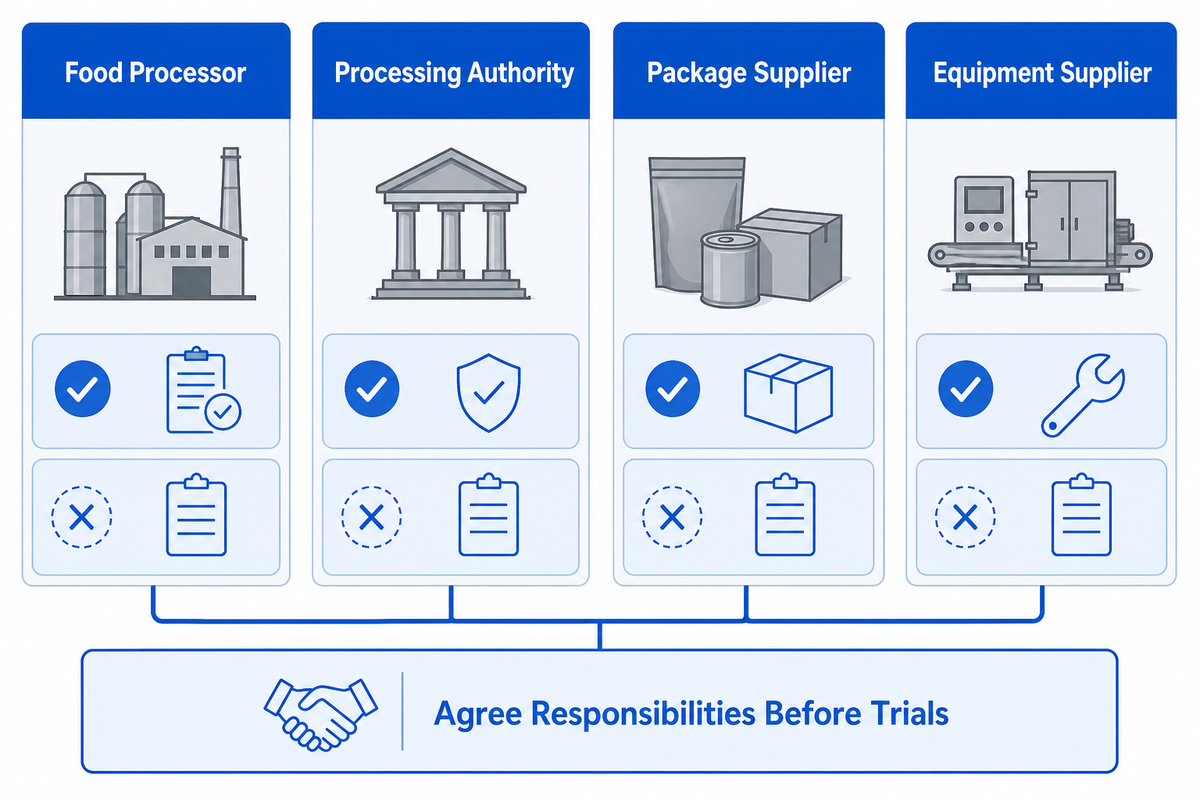
Once a change or deviation raises a process decision, clear ownership determines who supplies evidence, who evaluates it and who may release product.
| Party | Typically owns | Does not automatically own |
|---|---|---|
| Food processor | Product and market decisions, operating control, records, training and deviations | Thermal-process expertise it has not independently qualified |
| Processing authority | Scheduled-process establishment, critical factors and scientific evaluation | Machine supply or routine plant operation |
| Package supplier | Package construction, closure limits, test evidence and handling requirements | Approval of the product’s thermal process |
| Equipment supplier | Contracted vessel, utilities, controls, documents and functional acceptance | The customer’s product-specific scheduled process |
Control-panel automation does not move scheduled-process ownership to the equipment vendor. The responsibility matrix should be agreed before trials so that study work, acceptance testing, change approval and product release do not become unpriced assumptions.
Where This Guide Stops, and the Equipment Page Begins
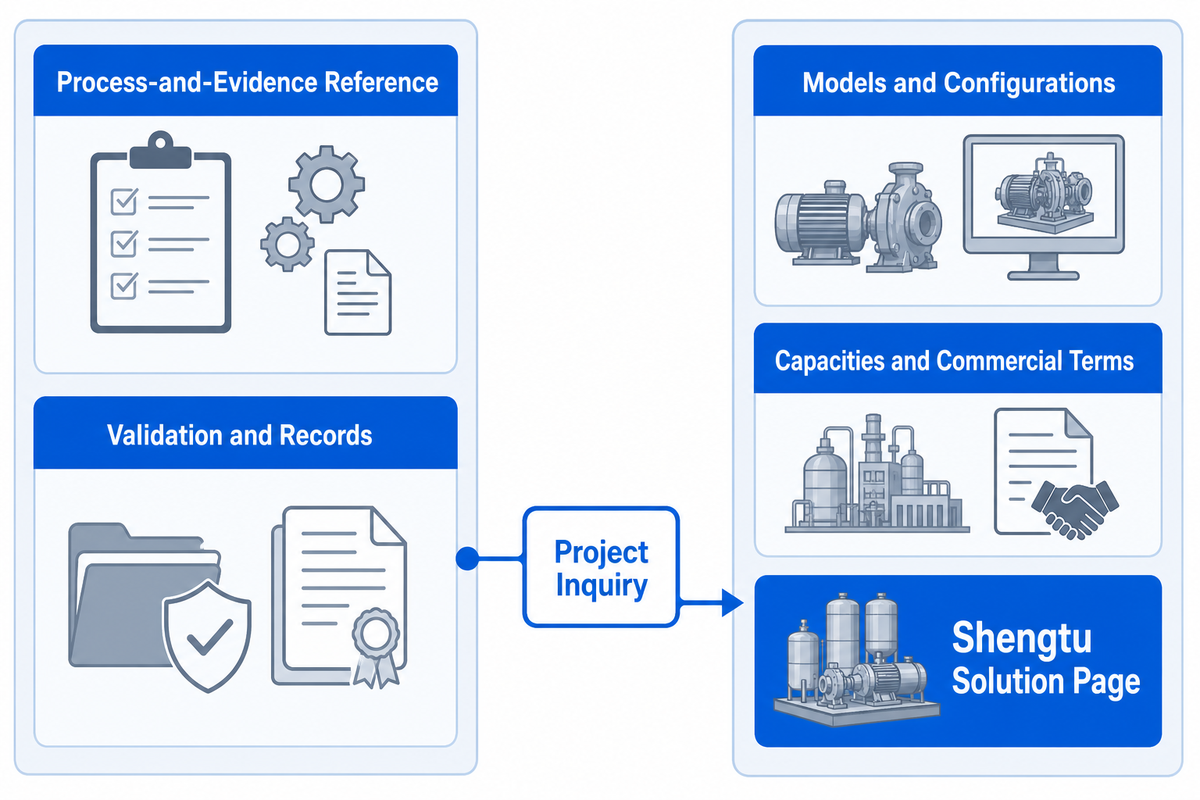
This article is the process-and-evidence reference. It deliberately doesn’t compare Shengtu models, configurations, capacities or commercial terms. It also doesn’t rank a static retort, saturated steam retort, spray retort, water spray retorts or a water immersion process, and it doesn’t promise a shelf life; those are equipment-configuration and product-process questions for the applicable suppliers and qualified authority. For those decisions and project inquiry, continue to the Shengtu food retort / autoclave sterilizer solution page. For company navigation only, see About Shengtu Machinery.
Moving From Process Guidance to Equipment?
Use the commercial solution page for configuration details, or open a project conversation when your application basis is ready.
Open a Project ConversationFood Retort FAQ
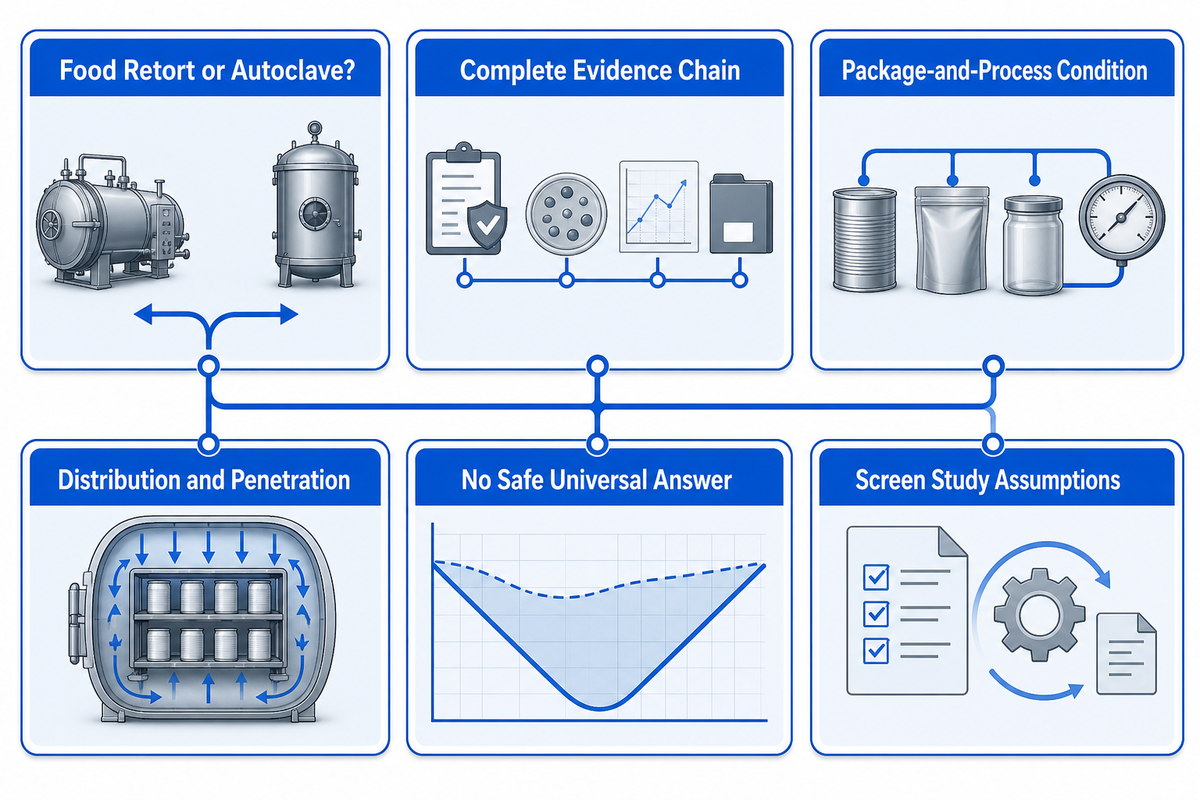
What is the difference between a food retort and an autoclave?
They overlap in food-plant language, but “retort” usually signals production processing of packaged food. “Autoclave” is broader and also covers laboratory and medical equipment, which is outside this guide.
Is retort food safe to eat?
Retort processing is an established preservation route, but no article can certify a particular product. For a real lot, confidence comes from the complete chain: a suitable package, a scheduled process established by qualified expertise, controlled critical factors, correct execution, intact records, management review and an approved deviation route. Break that chain and the general statement “retort food is safe” becomes too broad.
Why is overpressure used in retort processing?
Overpressure helps manage the pressure difference across some packages during heating and cooling. That may matter for a flexible pouch or semi-rigid tray. It’s a package-and-process condition, not independent proof of delivered lethality.
What is the difference between heat distribution and heat penetration?
Distribution asks whether the heating medium reaches the defined retort and load configuration adequately. Penetration follows heating inside a specified food-and-package system, including its slow location. Because the studies answer different questions, a few product probes shouldn’t be used as a substitute for distribution evidence.
What temperature and time should a food retort use?
No safe universal answer exists. Process time, process temperature, retort temperatures, pressure in the retort and cooling water requirements belong to the defined process for the specific food, package, load, equipment and market. Qualified thermal-processing expertise establishes that process; supplier examples and blog ranges are not process approval.
When does a retort change need re-evaluation?
Screen changes that may affect a study assumption or critical factor. Formulation, package, load arrangement, plumbing, circulation, agitation, sensors, control logic and utilities are common examples. Responsibility for deciding whether documentation, authority review or new study evidence is needed stays with the processor and processing authority.
References & Sources
- 21 CFR Part 113: Thermally Processed Low-Acid Foods Packaged in Hermetically Sealed Containers
- FDA Guide to Inspections of Low Acid Canned Food 22
- FDA Guide to Inspections of Low Acid Canned Food 10
- FDA Acidified and Low-Acid Canned Foods Guidance and Regulatory Information
- Understanding retort processing: A review
- CFIA Heat-Penetration Studies Guidance
- USDA-hosted NACMCF Pasteurization Summary

![How Is Freeze Dried Coffee Made? [Process Guide]](https://shengtumachinery.com/wp-content/uploads/2026/08/fd-coffee-tea-beverage-line-guide-featured-150x150.png)