Get in touch with Shengtu Bufan Company

Tunnel Pasteurization Line
Tunnel Pasteurization Line for Bottled Beverages
A tunnel pasteurization line is a post-fill thermal train that carries sealed packages through heating, holding and cooling zones on a moving belt, so every container receives a measured pasteurization dose before it is dried and labelled. SHENGTU designs, builds and commissions these lines for bottled beverages, cans and spouted pouches.
- Engineering response timing confirmed for the project
- Complete line in 90-120 days
- Glass, PET, cans and pouches on one thermal train
- FOB from a Chinese port
Your recipe, drawings and container samples stay confidential.
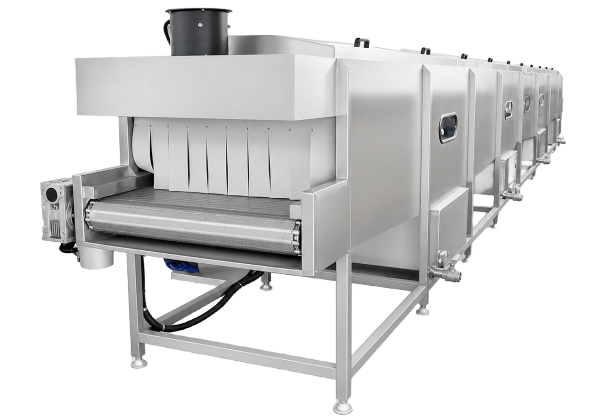
FIG 1. Tunnel pasteurizer with modular mesh belt, inlet strip curtains, sight windows and side spray manifolds.
Tunnel Pasteurizer Capability Overview
These are the standing commercial terms for our tunnel pasteurizers, from your first enquiry to the moment the pasteurizing section is running under load.
Engineer response
PARAM.01Within one business day of receiving your product and container details
Build time
PARAM.0230-60 days for a standalone machine, 90-120 days for a complete production line
Order size
PARAM.03One line or one machine, with no minimum-order quantity
Payment
PARAM.0430% on contract signing and 70% before shipment, by bank transfer
Shipping terms
PARAM.05FOB from a Chinese port, with EXW, CFR and CIF quoted on request
Acceptance
PARAM.06A witnessed factory acceptance run before shipment, then a site acceptance run after installation; PU measurement at the DIN 8784 cold spot is written into the acceptance protocol on request
Own manufacture
PARAM.07Around 80% of our main equipment categories are produced by our own manufacturing bases
With the machine
PARAM.08User manual, electrical drawings, factory inspection records and export documents
The Thermal Train from Container Infeed to Labelled Pack
A complete tunnel pasteurization line runs nine stations in sequence: container infeed, filling, capping, tunnel pasteurization, tumbling cooling, drainage, air drying, labelling and outfeed. The four thermal stations in the middle are the part that decides shelf stability, and every station around them is matched to the container you run.
Stations 1-3
-
01 scope per project
Container Infeed
An unscrambler table or infeed conveyor presents empty containers in single file at the filler. Bottle guide rails and change parts are cut for one container family and container size at a time.
-
02 scope per project
Filling
An enclosed filler doses product to volume or level, with twin product hoppers and guard doors around the filling head. Fill height matters downstream, because the pasteurization measuring point is referenced to it.
-
03 scope per project
Capping and Sealing
An inline spindle capper takes caps from a rotary sorter bowl and torques them through paired gripper wheels. A seal that leaks becomes a re-infection point in the water bath, so cap torque is verified before the run.
Stations 4-7
-
04 we build it
Tunnel Pasteurization
Sealed containers enter the tunnel behind strip curtains and pass under hot water spray nozzles on manifolds through heating, holding and cooling zones. The pasteurization dose is measured inside the package at the cold spot, not in the air inside the tunnel, following the measuring point defined in DIN 87841.
-
05 we build it
Tumbling Cooling
Packs tumble through a flood of cooling water so heat leaves the whole surface rather than one face. Controlled cooling protects glass from thermal shock and stops carry-over heat from cooking the product. Aim to cool the pack evenly, at the fastest rate the container will take.
-
06 we build it
Drainage
A drainage section sheds free water for discharge to drain before the packs reach the dryer. Removing bulk water here cuts the air volume the dryer has to move.
-
07 we build it
Air Drying
An air knife cabinet carries roughly twenty articulated nozzles over the conveyor under a curtained hood. Wet containers will not take a self-adhesive label cleanly, so drying is a labelling requirement rather than a cosmetic step. Condensation from cold-filled packs clears here too.
Stations 8-9
-
08 scope per project
Labelling
A wrap-around self-adhesive labeller applies the label from a reel through a peel plate and press roller. Label adhesive and shrink sleeve behaviour both react to residual pack temperature. Reducing condensation before this point is what makes an in-line labeller work.
-
09 scope per project
Outfeed and Collection
A collection table or accumulation conveyor buffers finished packs ahead of case packing. Buffer length is sized against the slowest downstream machine.
Where Our Scope Starts and Stops
Stations 4 to 7 — the water bath tunnel, tumbling cooling, drainage and automatic drying — are the thermal train we build and commission as one unit.
Filling, capping and labelling are quoted as an integrated scope when you want them, and the interface is written into the contract rather than assumed.
Where you already own a filler or labeller, we quote the tunnel and the transfer conveyors that connect to it, once the interface to the machines already on your floor is confirmed.
Related beverage processing equipment sits on our coffee, tea and beverage line page, and fruit and vegetable preparation on our dehydration line page.
Ask an Engineer One Question
One sentence and an email address are enough. You do not need drawings or a capacity figure to ask.
One Thermal Train Runs Glass Bottles, PET, Cans and Pouches
Container format decides more of a tunnel pasteurization line than throughput does. Glass, aluminium cans, PET bottles and spouted pouches each set their own ramp rate, carrier, guide rail and drying load, which is why the container is the first question we ask and the last thing we change.
The Container-Format Envelope
What changes across the line when the container changes. Glass differentials follow the pass/fail test condition in ASTM C1492.
The PET Boundary, Stated Plainly
PET runs through a tunnel pasteurizer and the mechanical handling works too. Independent beverage development services report that PET is expensive to pasteurize in a tunnel and weak at extending shelf life, because the wall passes oxygen over the months a beverage has to survive. So if your product needs long ambient shelf life in PET, say so at the enquiry stage: hot filling or aseptic filling often answers that brief better than a tunnel does.
Beer, Cider and Kombucha
A beer pasteurizer is the same machine with a different target. Brewing, cider and kombucha all leave residual fermentable sugar and live yeast in the package, so the dose is set to stop fermentation rather than to sterilize the beverage.
Send Your Container Spec for a PU Check
Give us the container format, the beverage and your target shelf life. You get back a target PU range and a first view on zone count, with no drawings and no price attached.
Thermal Zones, Heat Recovery and the Options That Change Running Cost
Eight configuration choices separate two tunnel pasteurizers of the same nominal output: zone count, spray manifolds, heat recovery, heating source, cleaning, control and PU recording, the cooling and drying end, and the interface to neighbouring machines. Each one moves capital cost, running cost or floor space.
From a published assessment of an industrial tunnel, not from our own test bench: overall process efficiency measured 40.57%, and the nominal recipe held the coldest point above 72°C for 17 to 18 minutes against a 12-minute requirement7. The same study estimates that trimming the ten-minute holding stage in that nominal recipe to five minutes would cut holding-stage thermal energy from 97.15 to 48.58 MJ and total process energy demand by roughly 33.7%, a first-order figure its authors flag as needing experimental confirmation7. The bottles in that study held a viscous herbal liquid rather than beer, so the reading to take from it is the direction of travel on holding time, not the numbers themselves.
| Option | What it does | When it earns its place | In-house / Partner |
|---|---|---|---|
| Zone count and layout | Splits the tunnel into heating, holding and cooling sections, each with its own water circuit and set point. Third-party patent literature, now expired, describes a tunnel divided into three heating, four holding and three cooling zones5. | Always. The main lever on PU accuracy and glass survival alike. | In-house |
| Spray manifolds and water spray density | Delivers hot water evenly across the belt, so packs at the edge see the same dose as packs in the centre. Published design gives a spray density above 285.19 L/min per m² (7 gal/min per ft²)6. | Always. Uneven water spray is the first cause of PU scatter. | In-house |
| Regenerative heat recovery | Runs a heat exchanger between cooling and heating circuits, so heat leaving cooled packs helps pre-heat incoming ones. | Multi-shift operation, or expensive steam or power. Buys running cost with tunnel length. | In-house |
| Heating source: steam or electric | Raises the circulating hot water from a steam boiler through a heat exchanger, or with immersion heaters. | Steam wins where a boiler already runs; electric wins on small lines and greenfield sites. | In-house |
| Clean-in-place and water treatment | Circulates cleaning solution through the spray circuits and filters the recirculated water. | Any line running daily. Untreated spray water raises breakage, energy and water use, scale removal work and total cost of ownership together. | In-house |
| Control system and PU recording | Logs zone temperatures, belt speed and calculated PU per batch, and holds a recipe per container format. The measuring point follows DIN 87841. | Any product with a food safety plan, and any customer who audits suppliers. | In-house, on our own control platform |
| Tumbling cooling, drainage and air drying | Brings packs to handling temperature, sheds free water and dries the surface for labelling. Where mains water cannot reach the cooling target, a chilled or glycol circuit is quoted as an option. | Any line that labels in line, and every glass line. | In-house |
| Upstream and downstream interface | Transfer conveyors, accumulation and signal exchange with the filler, capper and labeller. | Whenever the tunnel joins machines you already own. | In-house, partner factories for selected specialized items |
Build scope in the table above is stated at category level and confirmed item by item in the quotation.
What Your Site Has to Provide
- A frame with adjustable feet for floor levelling; product-contact and spray surface material is confirmed in the quotation against your product and destination market.
- Utilities to prepare: supply at your destination voltage, treated water make-up, a drain, and steam or extra electrical load for heating.
- Floor space to reserve: tunnel length, a working aisle both sides, and infeed and outfeed accumulation.
- Check every dimension against your building before the order is placed, not after the steel is cut.
Pasteurizing Route Against Cold Chain Route
The choice that decides running cost is often not which pasteurizer to buy, but whether to pasteurize at all instead of holding the product cold to the shelf. Our comparator puts equipment, utilities and floor space in one column against cold storage, refrigerated transport and shelf-life losses in the other, with your own tariffs in the input cells.
Open the pasteurizing versus cold chain cost comparator →Target PU Sets the Zone Count and Length of a Tunnel Pasteurization Line
Tunnel pasteurization temperature and target PU together set residence time, and residence time sets zone count, tunnel length and floor space. Two inputs are needed rather than one, because the same PU target is reached at many combinations of temperature and time. Your beverage sets the ceiling on how high the temperature is allowed to go.
1 PU is one minute at 60°C on the beer basis, so PUs are a dose rather than a temperature.
Target PUs follow your product and its spoilage risk, not the machine you buy.
Reference temperature differs between the treatment of beer at 60°C and juice at 80°C, so beer and other beverages cannot share one PU number.
The PU-to-Length Chain
- Fix the target PU and state its basis. A PU figure without a basis is not a specification, because the pasteurization of beer references 60°C while juice references 80°C.
- Choose the holding temperature. Flavour and container set the ceiling; a warmer hold reaches the same PU in less time, so a higher temperature buys back tunnel length.
- Calculate residence time. Published formulas give minutes at that temperature, measured at the cold spot inside the package.
- Convert time to zones. Holding time divides into holding zones; heating and cooling zones are added either side to respect the ramp limit of the container.
- Convert zones to length and floor space. Zone count times zone length gives tunnel length; add infeed, outfeed and service aisles for the footprint.
Technical Specifications
Process envelope for tunnel pasteurization. These are published process constants and design limits, not a model-by-model specification of SHENGTU machines; the values that describe your line are confirmed in your written proposal.
| Process parameter | Value and basis |
|---|---|
| PU formula, beer basis | PU = t × 1.393(T − 60), reference temperature 60°C, z ≈ 7°C, t in minutes |
| PU formula, juice basis | PU = t × 1.259(T − 80), reference temperature 80°C, z = 10°C, t in minutes |
| Measuring point | Cold spot 10 mm above the inside base of the package, or one third of fill height, on the vertical centreline (DIN 8784) |
| Zone architecture, published design | 3 heating zones, 4 holding zones and 3 cooling zones, 10 zones in total |
| Sensitivity of PU to holding temperature | 120 minutes at 59.0 / 62.5 / 66.0°C gives 86 / 275 / 877 PU on 330 mL canned lager in a published model, beer basis |
| Glass thermal-shock test differential | 42°C differential in the routine pass/fail test method for glass containers (ASTM C149) |
| Spray density, published design | Above 285.19 litres per minute per m² (7 gal/min per ft²) |
| Product-contact material | Confirmed in the quotation against your product and destination market |
| Heating medium | Recirculated hot water raised by steam from a boiler through a heat exchanger, or by electric immersion heating |
| Acceptance criterion at handover | The acceptance protocol can specify measured PU against the value set in the control unit, at rated capacity |
A Worked Example on the Beer Basis
- Target: 25 PU on the beer basis, packaged lager in 330 mL cans.
- Holding temperature, shown as hold temp on most control screens: 62°C, which keeps the flavour load low.
- Residence time: 1.393 raised to 2 is 1.94, so 25 divided by 1.94 gives about 12.9 minutes at temperature.
- Move the holding temperature to 66°C and the same 25 PU arrives in about 3.4 minutes, roughly a quarter of the holding length.
That single 4°C decision changes tunnel size, floor space and price more than any brochure feature does.
There is no optimal PU that suits every beverage. That same arithmetic explains why a PU figure quoted without its basis cannot be checked: the juice basis references 80°C, and no fixed factor converts one basis into the other.
Nine variables behind cost, lead time and payment terms
Tunnel pasteurization cost follows capacity, container format, zone count and tunnel length, heating source, heat recovery, control and recording level, steel grade and surface finish, integration scope, and destination voltage and certification. There is no price list in this part of the beverage industry for a line built around your product, so the figure reaches you in a written proposal rather than on this page.
What Moves Your Price
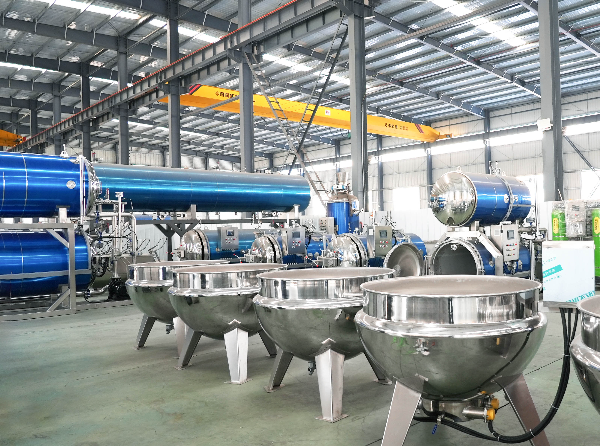
-
VAR.01
Capacity
Sets belt width and tunnel cross-section, which drive steel weight and water volume.
How to control itSize the tunnel on real demand, not on peak filler speed.
-
VAR.02
Container format
Glass needs more zones and gentler ramps than cans for the same PU.
How to control itFreeze the container family before the line is designed.
-
VAR.03
Zone count & length
The single largest driver: more zones means more steel, more pumps and more floor.
How to control itAccept a slightly higher holding temperature where flavour allows.
-
VAR.04
Heating source
Steam from an existing boiler is cheaper to run; electric heating is cheaper to install.
How to control itTell us what utilities the site already has before we quote.
-
VAR.05
Heat recovery
Adds tunnel length and a heat exchanger, and lowers energy per pack.
How to control itJustify it against your own tariff and shift pattern, not a percentage.
-
VAR.06
Control & PU recording
Recipe handling, batch records and audit trails add control hardware and software.
How to control itSpecify the records your customers actually audit.
-
VAR.07
Steel grade & finish
Contact-surface grade and finish change material cost and cleaning behaviour.
How to control itApply the higher grade where product touches, not across the frame.
-
VAR.08
Integration scope
Interfacing to a filler, capper or labeller you already own adds engineering and commissioning time.
How to control itSend the make and model of the machines either side at enquiry.
-
VAR.09
Destination voltage
Voltage, frequency and destination market documents change electrical design and paperwork.
How to control itConfirm destination country and voltage in the first email.
Lead Time and Payment Terms
-
Build time, complete line
90-120 days from the cleared down payment, confirmed in writing with your quotation.
-
Standalone machine
30-60 days from the cleared deposit.
-
Payment
30% on contract signing and 70% before shipment, by bank transfer.
-
Trade terms
FOB from a Chinese port, with EXW, CFR and CIF quoted on request.
-
After-sales response
For a line we supplied that is already in production, engineering response timing and spare-parts dispatch are confirmed against the agreed service terms and part availability.
Inspection Records, Shipping Documents and Certificate Scope
Applicable certificates and documents are confirmed for the equipment model, configuration and destination country. Company management-system records are reviewed separately from product conformity documents.
Pasteurization is a food safety step, so the records that leave our factory carry as much weight as the steel. Every line is run against a written acceptance criterion before it ships, and the document set that travels with it is fixed in the contract rather than promised loosely.
How Every Line Is Checked
01
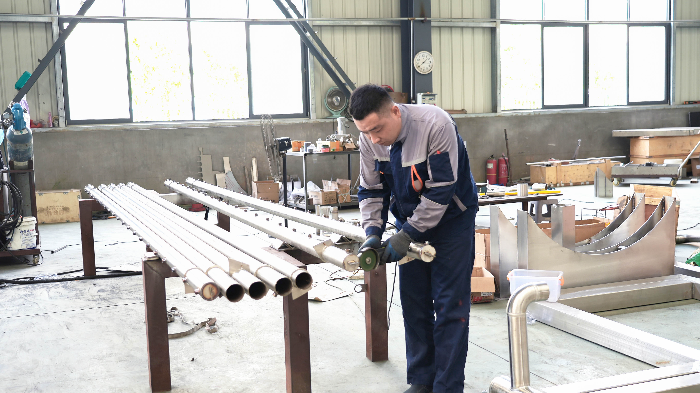
Incoming material check on plate, tube and product-contact components before fabrication starts.
02
Welding and surface inspection on product-contact and spray surfaces, with defects reworked before assembly continues.
03
Dry commissioning of drives, pumps, valves and the control system, with zone temperature and belt speed verified against the recipe.
04
Witnessed factory acceptance run with your containers and product; where the protocol calls for it, measured PU is recorded against the value set in the control unit at rated capacity.
05
Site acceptance run after installation, repeating the same checks on your floor to show how the line performs with your utilities, including the PU measurement where the acceptance protocol calls for it.
06
Operator and maintenance training on the line, covering recipe changes, spray circuit cleaning and PU record handling.
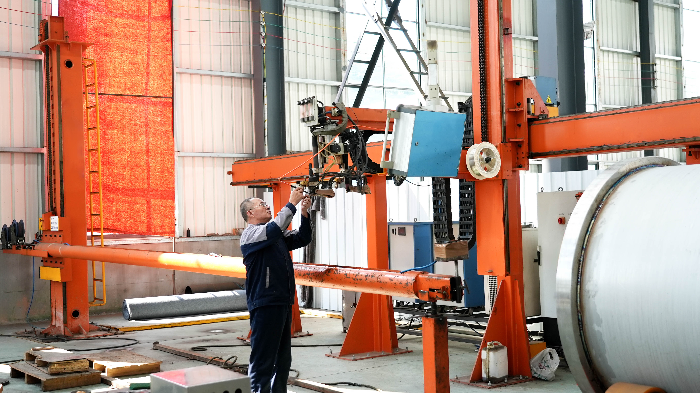
Documents That Ship With the Line
- User manual covering operation, recipe setup and routine maintenance.
- Electrical drawings for the control cabinet and field devices.
- Factory inspection records, including the acceptance run data.
- Export documents: packing list, commercial invoice and the shipping paperwork your forwarder needs.
Certificate Scope
Request current company management-system records and any applicable data-management assessment for your supplier review. Check the holder, scope, issuing body and validity before relying on them.
CE, SGS, ISO 9001, ISO 27001, product test reports, patent certificates, software copyright records, trademark records and the business licence are available on request.
The exact certificate and document set is confirmed item by item against your equipment list and destination country before quotation, contract confirmation or shipment.
Ask any supplier to name the stainless steel grade on product-contact and spray surfaces — 304 or 316L against your product chemistry and cleaning regime — in the equipment list itself rather than leaving it to a drawing note, and to list the mill certificates issued for that grade in the same entry.
What Pasteurization Delivers in the Package
A pasteurized beverage is not sterile. The dose is set to inactivate the vegetative microorganisms and spoilage yeasts that would otherwise restart in the sealed package, which is what turns a filled container into a stable one.
Shelf life comes from three things together: the pasteurization dose, the pack barrier and the storage temperature. A tunnel controls one of them.
21 CFR 114 covers acidified foods, meaning low-acid products brought to a finished equilibrium pH of 4.6 or below by added acid; carbonated beverages, naturally acid foods and products stored, distributed and retailed under refrigeration are excluded from it. Low-acid products above that threshold fall under the thermally processed rules in 21 CFR 1133.
Which side of pH 4.6, or of a water activity of 0.85, your product sits on changes the process authority review, not the machine.
In a high-acid beverage each surviving microbe is a shelf-life risk rather than a safety failure, which is why target PU is set on spoilage stability.
Product integrity at the end of the line is the sum of dose, cooling rate and pack handling, not of any single set point.
From Enquiry to Commissioning in Six Steps
-
STEP 01
Requirements and product data — you send the beverage, container, target output and destination; an engineer replies within one business day.
-
STEP 02
Process design and layout — we return a zone concept, tunnel length and a general arrangement drawing sized to your building.
-
STEP 03
Proposal and contract — scope, interfaces, acceptance criteria, documents, trade terms and build time are written down together.
-
STEP 04
Manufacture and factory acceptance — the line is built at one of our own bases and run in front of you or your agent before it is packed, with PU logged at the DIN 8784 measuring point where the acceptance protocol calls for it.
-
STEP 05
Shipment and export documents — we pack, load and issue the export paperwork; we do not take responsibility for customs clearance in your country.
-
STEP 06
Installation, commissioning and training — we set the line up on your floor, repeat the acceptance run and train your operators and maintenance staff.
Air temperature in a holding zone tells you what the machine is doing, not what the beer inside a 330 mL can has received. PU logged at the DIN 8784 cold spot during the acceptance run, at rated capacity, is the number your shelf life is built on. A line that hits its zone set points but is never measured against a PU figure has not really been proven.
What We Need to Quote
- Your product and container spec, target output in bottles per hour, water and utility data, and your building layout or site dimensions.
- Target shelf life and the market the product is sold into.
- Make and model of any filler, capper or labeller the tunnel has to join.
- Destination country, supply voltage and frequency.
- System integration with your existing plant systems requires confirmation of the system type, interface, data format, network conditions and target data before it is quoted.
Book a 20-Minute Line Sizing Call
Twenty minutes and a rough output target. We walk the capacity, zone count, length and floor space chain out loud so you know whether the route fits before anyone draws anything.
FROM ENQUIRY TO COMMISSIONING IN SIX STEPS
you send the beverage, container, target output and destination; an engineer replies within one business day.
we return a zone concept, tunnel length and a general arrangement drawing sized to your building.
scope, interfaces, acceptance criteria, documents, trade terms and build time are written down together.
the line is built at one of our own bases and run in front of you or your agent before it is packed, with PU logged at the DIN 8784 measuring point where the acceptance protocol calls for it.
we pack, load and issue the export paperwork; we do not take responsibility for customs clearance in your country.
we set the line up on your floor, repeat the acceptance run and train your operators and maintenance staff.
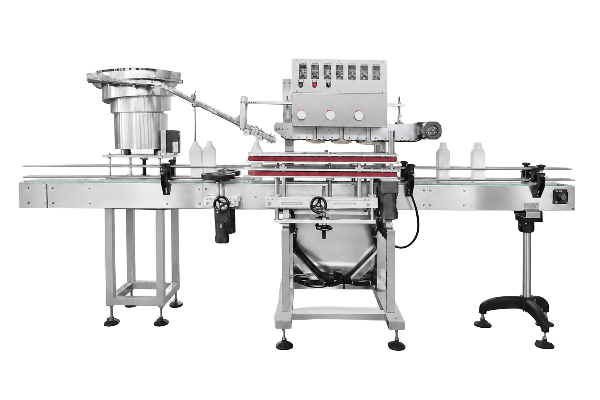
FIG 1.0 / PASTEURIZATION LINE
Air temperature in a holding zone tells you what the machine is doing, not what the beer inside a 330 mL can has received. PU logged at the DIN 8784 cold spot during the acceptance run, at rated capacity, is the number your shelf life is built on. A line that hits its zone set points but is never measured against a PU figure has not really been proven.
DATA // INPUT
What We Need to Quote
- Your product and container spec, target output in bottles per hour, water and utility data, and your building layout or site dimensions.
- Target shelf life and the market the product is sold into.
- Make and model of any filler, capper or labeller the tunnel has to join.
- Destination country, supply voltage and frequency.
- System integration with your existing plant systems requires confirmation of the system type, interface, data format, network conditions and target data before it is quoted.
Book a 20-Minute Line Sizing Call
Twenty minutes and a rough output target. We walk the capacity, zone count, length and floor space chain out loud so you know whether the route fits before anyone draws anything.
BOOK A CALLFour Owned and Self-Built Manufacturing Bases and 2,000+ Machines in Service
SHENGTU has four owned and self-built manufacturing bases. The company also has 20,000+ m² of office and display space across its headquarters in Zhucheng and branches in Qingdao, Changzhou and Weifang, including an approximately 5,000 m² food machinery showroom. 2,000+ machines are in service in 52 countries. Around 80% of our main equipment categories are produced by our own manufacturing bases, and selected specialized or supplementary equipment comes from long-term partner factories.
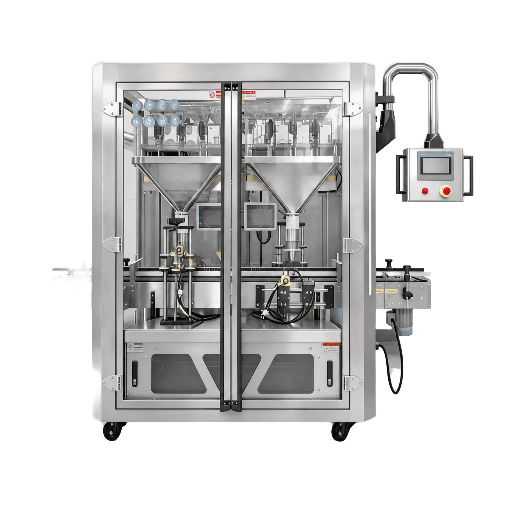
Enclosed filler with twin product hoppers, guard doors and swing-arm control panel.
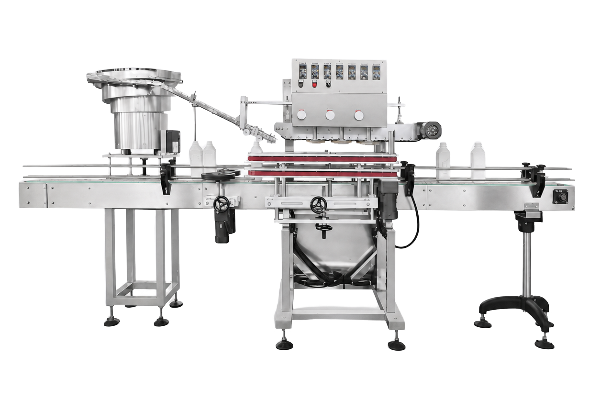
Inline spindle capper with rotary cap sorter, cap chute and paired gripper wheels.
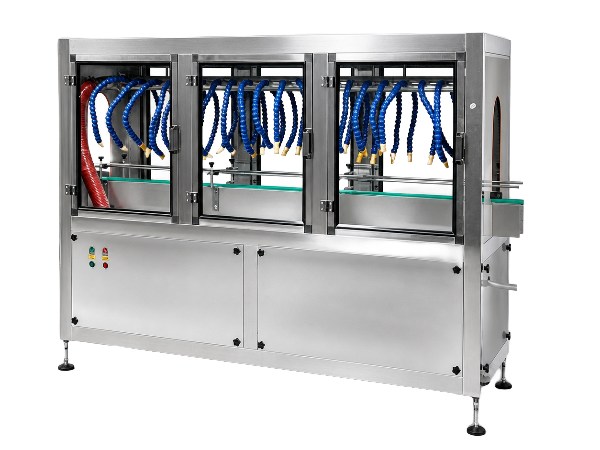
Air drying cabinet with articulated nozzles over the conveyor and ducted blower feed.
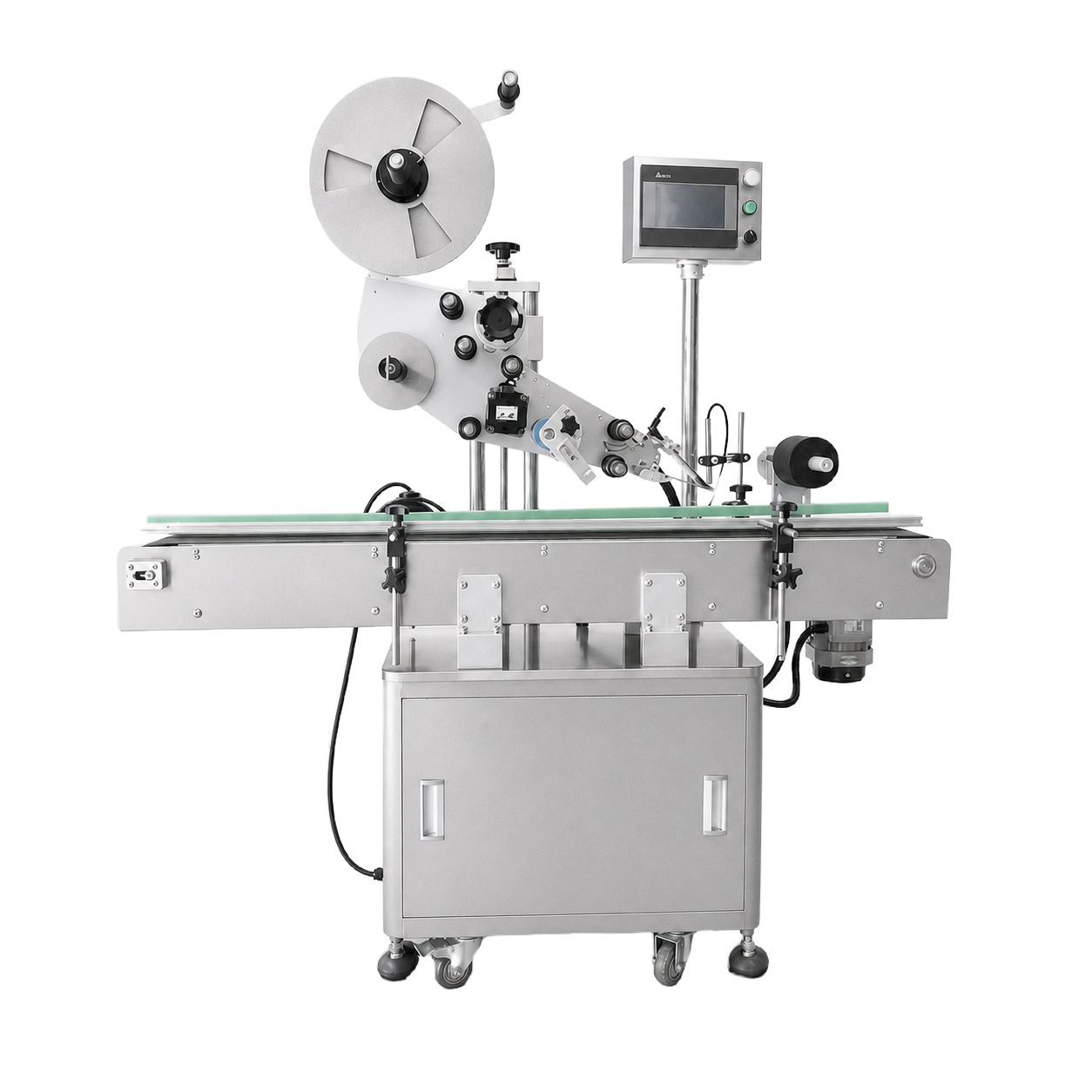
Self-adhesive wrap-around labeller with reel, peel plate and press roller.
What Stands Behind the Line
Owned and self-built bases
Headquarters in Zhucheng, inside the Zhucheng food machinery industrial cluster, with further sites in Qingdao, Changzhou and Weifang. Inspect running machines in the showroom, or arrange a remote factory audit. More on our company and manufacturing bases page.
Engineering team
The team behind these lines brings 10+ years of team experience in food machinery, across process design, mechanical design and controls. Company-level records and any applicable assessment should be requested and checked for holder, scope and current validity.
Controls built in-house
Our industrial control boxes, multi-protocol gateways and the STUnit industrial internet platform are developed in-house, together with machine-motion simulation and vision-based counting. Automation and IoT upgrades are evaluated per project and are not fitted by default.
Turnkey production line solutions
We build complete production lines as well as standalone machines, which is why the tunnel is quoted with its interfaces rather than as a lone box.
Industries We Build For
Breweries and cider makers
Packaged beer and cider in cans and glass, where the dose is set against residual yeast rather than a sterility target.
Juice and beverage plants
High-acid juices, teas and functional drinks on the juice basis, in glass, heat-set PET and pouches.
Kombucha and fermented drinks
Producers moving from a chilled route to an ambient one, where pasteurizing is a commercial call first.
Contract fillers
Sites running several container formats, where recipe handling and changeover time matter as much as peak output.
Ask an Engineer One Question
Ask about the workshop, the acceptance run or where a specific sub-assembly is made. An engineer answers within one business day, and you are not put into a quotation loop for asking.
Where Tunnel Pasteurization Stops and Another Process Starts
A tunnel pasteurization line is the wrong purchase in several real production situations, and stating so before the quotation prevents a wasted capital budget. Heat-sensitive products, small fermentation-driven batches, very high throughput and pre-package treatment each point somewhere else.
Five-Way Decision Table
Where the heat, or the filter, actually sits. Trade press reports a heat-transfer coefficient ratio of roughly 24:1 between flash and tunnel treatment, which is why the same PU is reached so much faster in a heat exchanger8.
[SYS-NOTE.03] parameter adjustment
Two Assumptions Worth Dropping
-
The tunnel need not match your full line speed. Running it as a buffered island against average demand rather than peak filler output reduces both capital cost and floor space, which is one of the largest savings available on a small line.
-
A genuinely small tunnel pasteurizer is close to a contradiction. Below a certain output the right machine is an immersion batch unit, measured at the same DIN 8784 cold spot but in batches, and equipment sold under a tunnel heading at that scale is often a batch cabinet.
Tunnel Pasteurization Engineering Tools
Pasteurization Unit Calculator
Calculate precise Pasteurization Units (PU) based on thermal processing parameters to ensure microbiological stability.
Access Calculator
Tunnel Length and Footprint Estimator
Estimate the required equipment length and facility footprint based on target production throughput and container size.
Access Estimator
Pasteurizing Against Cold Chain Cost Comparator
Compare operational expenses and ROI between tunnel pasteurization processing and continuous cold chain logistics.
Access Comparator
Frequently Asked Questions
There is no single pair, because time and temperature trade against each other around a target PU. On the beer basis, a published model of canned beer pasteurization gives 86, 275 and 877 PU for 330 mL canned lager from the same 120-minute treatment at 59.0, 62.5 and 66.0°C. Holding zones between roughly 60 and 72°C, with residence times from a few minutes to the better part of an hour, cover most beverage work.
The difference is where the heat is applied. Flash pasteurization heats the beverage in a heat exchanger before filling; tunnel pasteurization heats the sealed package after it. Flash pasteurizers are faster and smaller, but they leave the filler and capper as the last contamination risk, whereas a tunnel processes whatever is inside the sealed pack.
Beverage plants use in-package pasteurization, continuous in-line pasteurization and batch pasteurization. In-package covers tunnel pasteurizers and immersion cabinets; continuous in-line covers flash and high-temperature short-time systems built around a heat exchanger; batch covers vat and water bath treatment. Container, throughput and heat sensitivity decide which thermal process fits.
A beer pasteurizer moves sealed bottles and cans through zoned water spray on a slow conveyor. Heating zones raise the pack step by step, holding zones keep it at the set temperature long enough to accumulate target PU, and cooling zones bring it down before labelling. The dose is measured at the cold spot inside the package, not in the tunnel air (DIN 8784).
Any heat treatment alters flavour, and the size of the change follows total heat load rather than peak temperature alone. Over-treatment in beer manifests as a stale, bready note; in juice it appears as a cooked character. Control it by holding at the lowest temperature that still reaches target PU, then cooling fast.
A properly sealed pack does not lose carbonation, because the carbon dioxide has nowhere to escape. What changes is internal pressure, which increases rapidly with temperature and defines the ceiling on holding temperature for carbonated products. Cap torque, seam integrity and headspace are verified before a carbonated line runs, since a weak seal appears as a leaker in the water bath.
We do not publish a figure, because a tunnel is priced against the nine variables listed above, and none of them is known before you describe the product. Send those details and a written proposal follows. There is no minimum-order quantity, and payment is 30% on contract signing and 70% before shipment.
This is the decision behind the equipment decision, and it is a cost comparison rather than a technical one. The pasteurizing route carries equipment, utilities and floor space; the cold chain route carries cold storage, refrigerated transport and the shelf-life losses of a short window. Our comparator sets both columns side by side, with your own tariffs in the input cells.
No, and assuming it must is one of the most costly errors on a small line. A filler rated at 50 cpm does not need a tunnel rated at 50 cpm, because the tunnel is sized on residence time and can run as a buffered island against average demand. Sizing on peak filler output instead adds zones, length and floor space that the production schedule never needs.
Yes, and it is a common position, because a tunnel that is mechanically correct still needs its recipe built. The work is measuring actual PU at the cold spot at rated capacity, then adjusting zone set points and belt speed until measured PU matches the control unit value. For lines we supplied, response timing and spare-parts dispatch follow the agreed service terms and part availability; on a machine from another maker, diagnosis and recipe work are quoted per project.
We work from your product and container spec, target output in bottles per hour, water and utility data, and your building layout or site dimensions. Target shelf life, destination country, supply voltage and the machines the tunnel has to join complete the picture. An engineer replies within one business day.
Your line ships with the user manual, electrical drawings, factory inspection records and export documents. CE, SGS, ISO 9001, ISO 27001, product test reports, patent certificates and software copyright records are available on request. The exact certificate and document set is confirmed item by item against your equipment list and destination country before quotation, contract confirmation or shipment.
![F&V Freeze-Drying Line Process Guide [2026]](https://shengtumachinery.com/wp-content/uploads/2026/09/fv-freeze-drying-line-guide-featured-150x150.png)