Get in touch with Shengtu Bufan Company

Project-Specific Documents
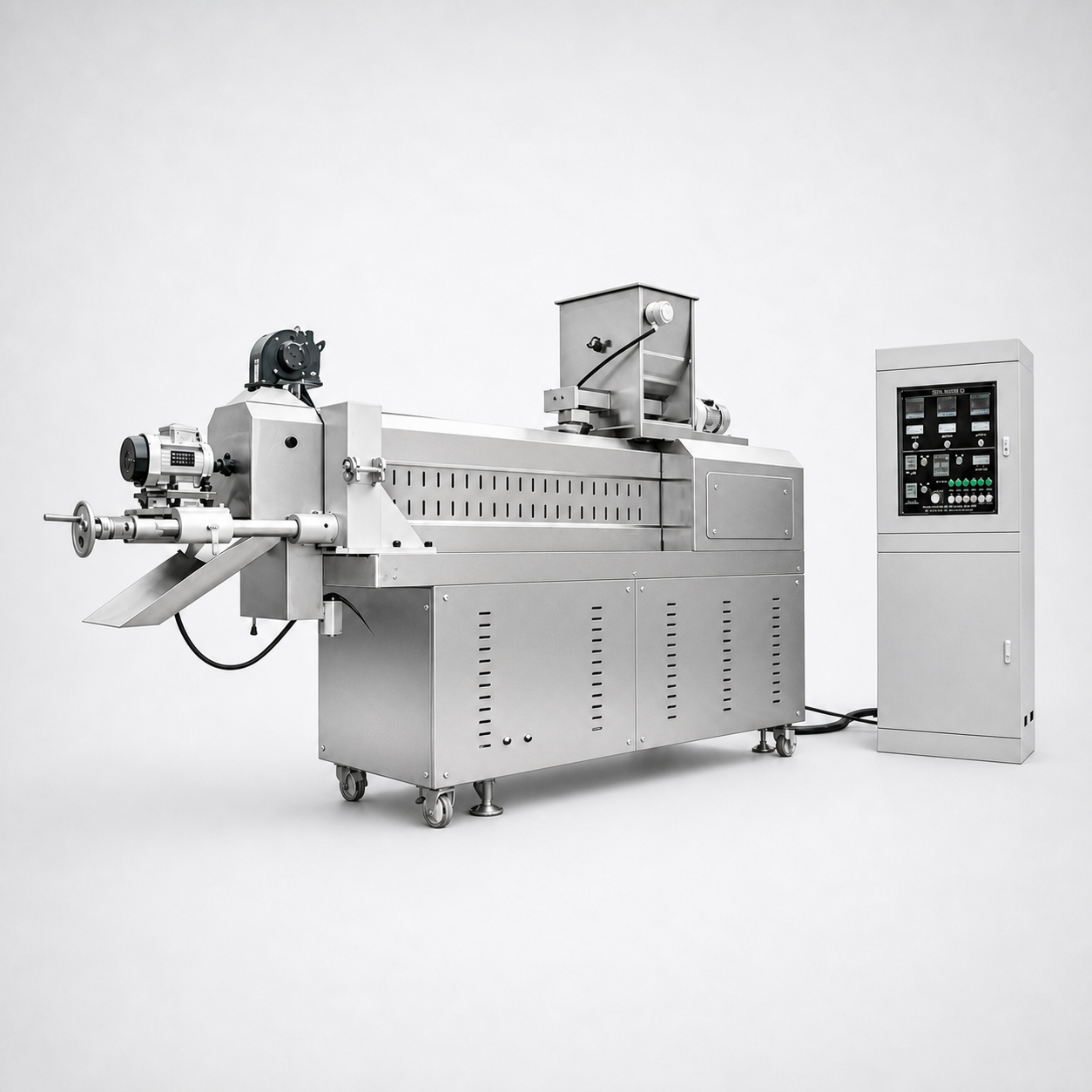
Twin-Screw Food Extruder
Twin-Screw Food Extruder for Configured Food Processing Lines
A twin-screw food extruder should be scoped around your formulation, finished-product target, production schedule and line boundaries. Shengtu Machinery reviews those inputs before a machine, control package or downstream scope is written into a proposal.
- Recipe and product target first
- Single-machine or line-scope review
- Controls and data requirements mapped
- No unverified model claim
Send Your Process Requirements
Share what you know now. Missing items are listed as open engineering questions instead of being filled with assumptions.
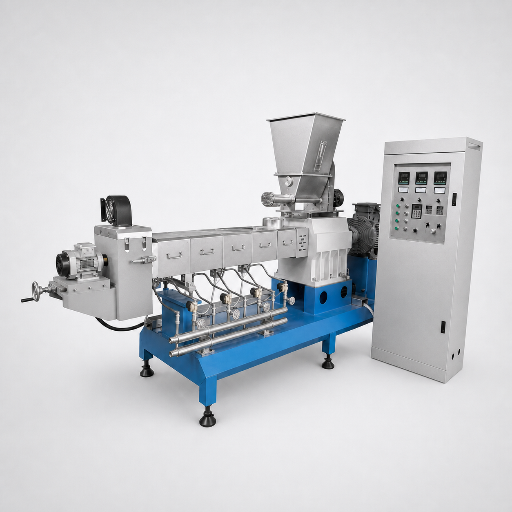
6 input groups
Formulation, target product, throughput, process window, line scope and deployment.
3 buyer tools
Readiness score, process-window matrix and supply-boundary builder.
11 + 2
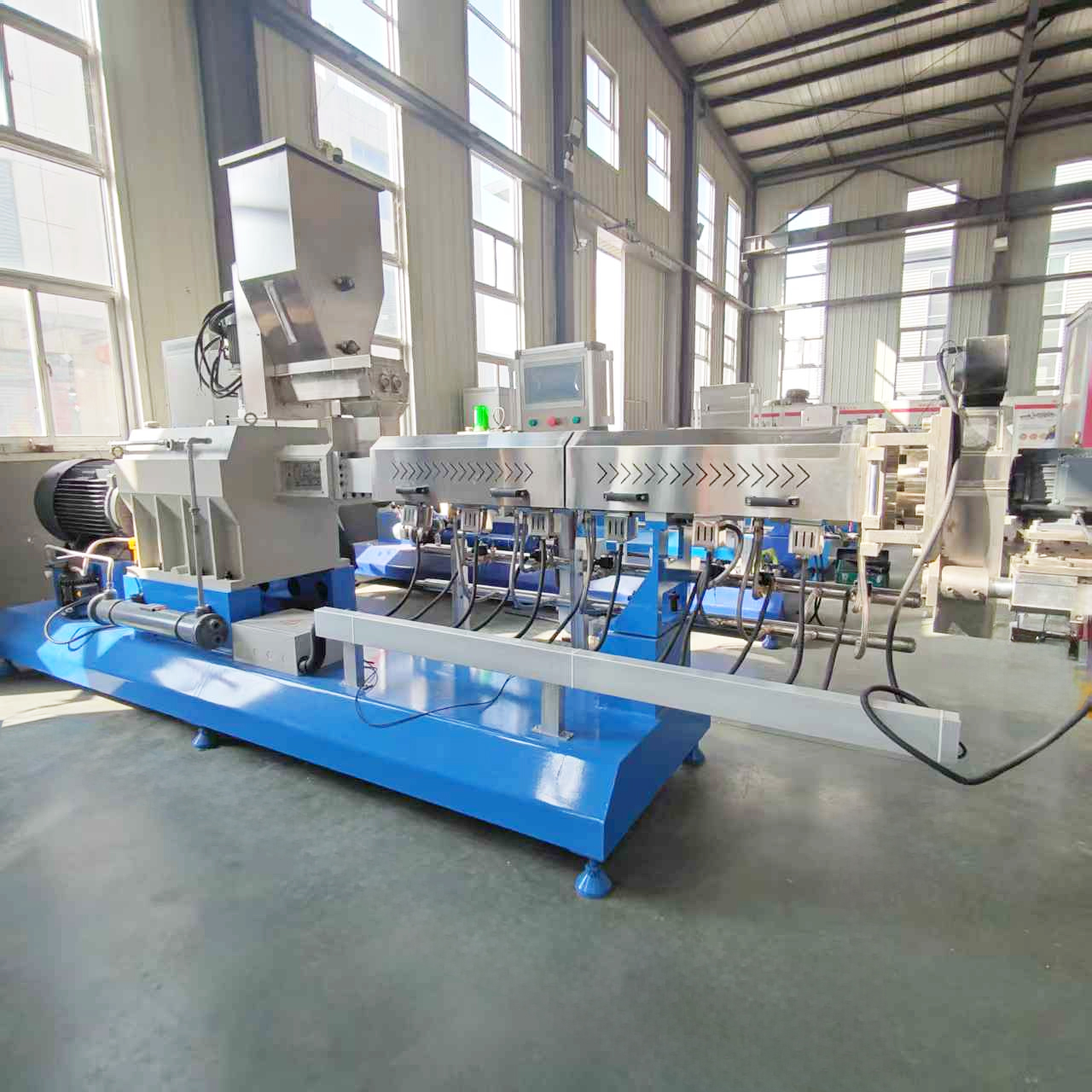
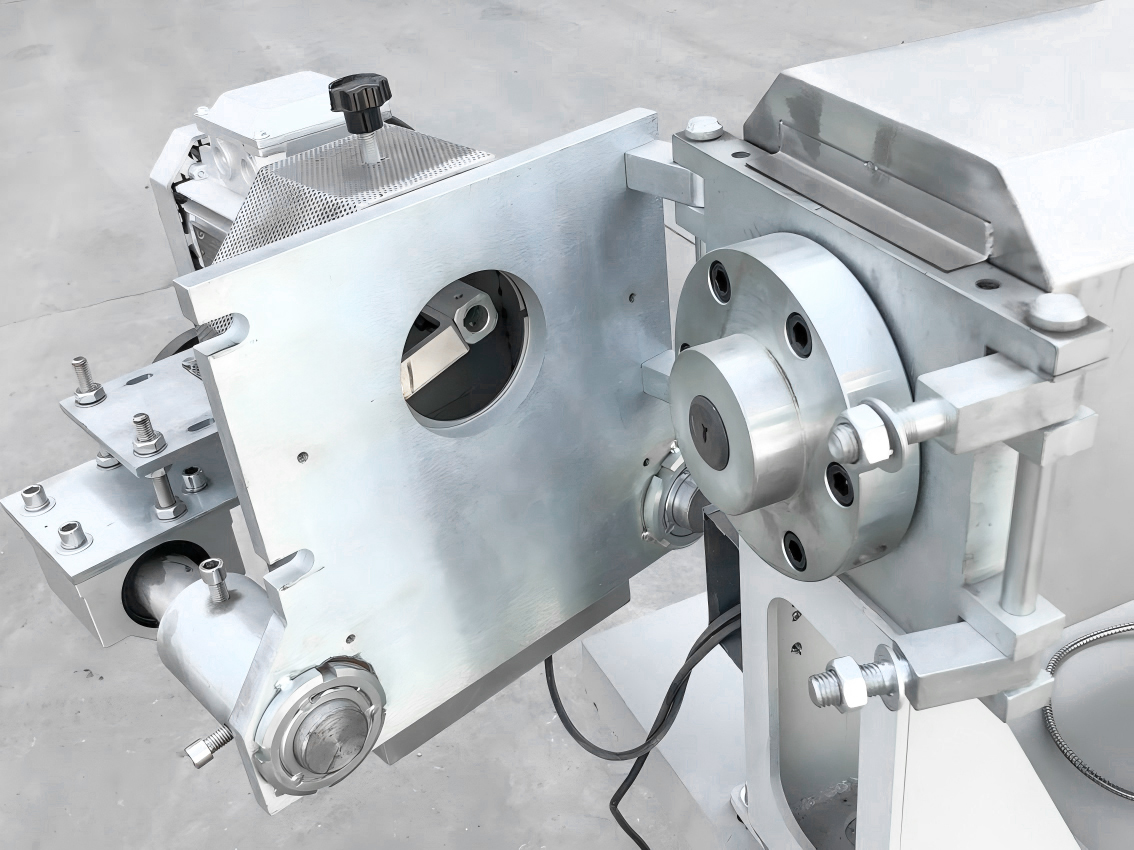
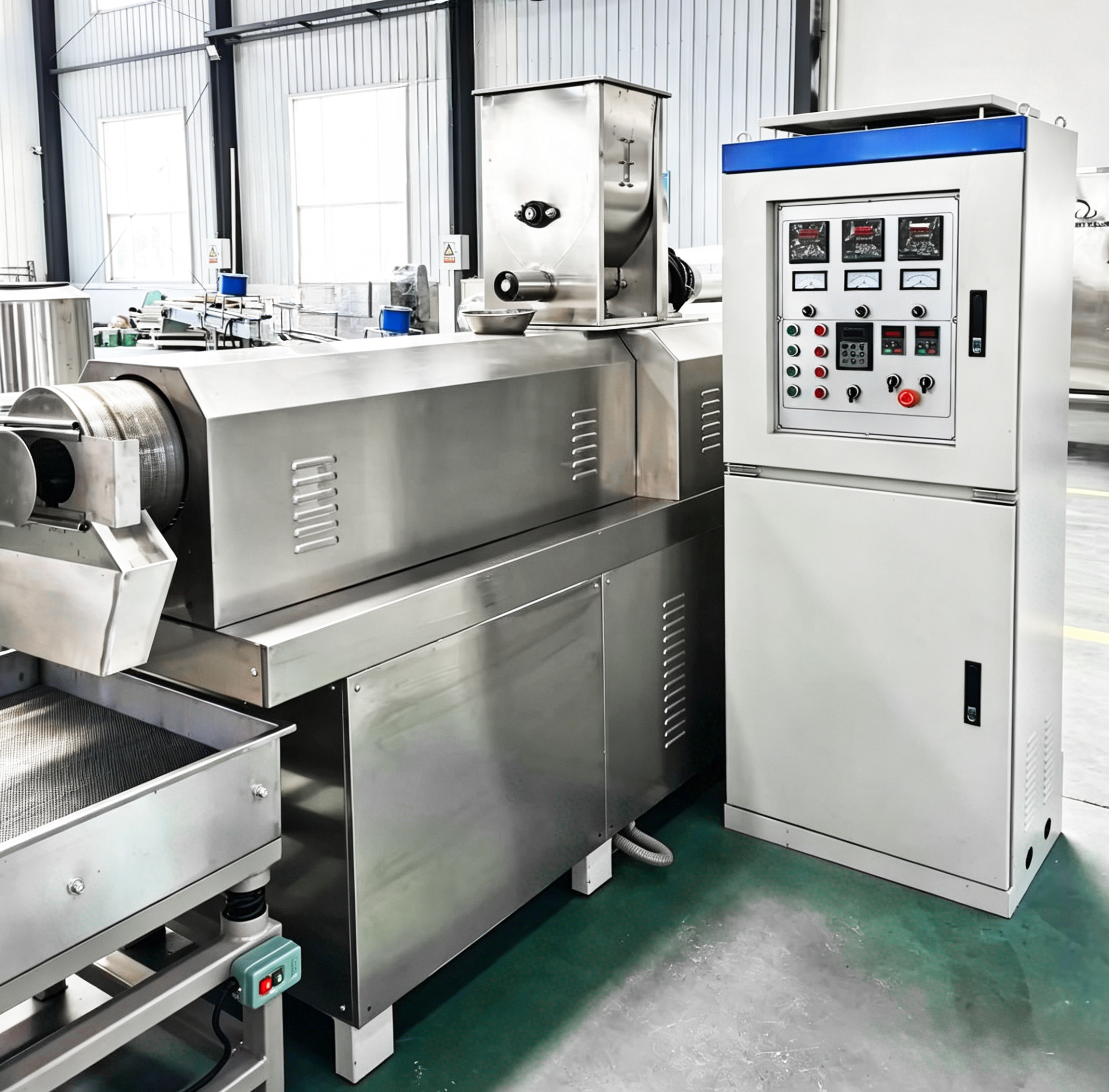
Client packet: 11 real product/factory images and 2 product videos.
Company scope
Digital and control capabilities are discussed only as optional project scope.
Written boundary
Supplied, buyer-supplied and third-party work packages stay separate.
Engineer review
Application fit remains subject to material, trial and acceptance evidence.
Extrusion Configuration and Control System Capabilities
Food extrusion is continuous processing, but the inputs do not act independently. Raw material, formulation, moisture, feed rate, screw configuration, shear, residence time, die geometry and downstream conditions have to be reviewed as one process chain.3, 4
Mechanical project scope
- Feeding and hopper interface
- Twin-screw extruder and extruder barrel requirements
- Whether the proposed screws are co-rotating and intermeshing, and whether screw elements are modular
- Die, cutting and product-handling interfaces
- Access, cleaning and maintenance questions
Control and data scope
- Local control system and process control requirements
- Which process parameters, torque signals and alarms need recording
- Plant signals and multi-protocol gateway needs
- Historian, MES or IT/OT handoff
- Remote access and update ownership
An automation discussion should separate operator usability, control ownership and integration burden from the mechanical process decision. Mechanical scope and digital scope are not interchangeable; a gateway does nothing for an undefined process window.
Food Processing and Process Control Inputs We Review
An application label such as cereal, snack or protein product is not the starting point. Material and target-output information controls feeding, mixing, thermal input, pressure development, die behavior and downstream treatment.3, 4
| Input group | What to provide | Why it changes the review |
|---|---|---|
| Raw material | Main ingredients, percentages, particle form, incoming moisture and known variability | Changes feeding behavior, melt rheology, shear and energy demand. |
| Formulation | Water, oil, fiber, protein, starch, additives and any temperature-sensitive component | Changes the workable process window and trial plan. |
| Finished product | Shape, size, texture, density, final moisture and reference sample | Defines die, cutting, drying, cooling and product quality acceptance checks. |
| Production pattern | Normal flow, peak flow, shifts, hours, changeovers and future products | Separates a headline rate from usable annual output. |
A food entrepreneur may arrive with a target product but no proven recipe; that is a process-development input, not permission to assume machine fit.
Food Processing Line-Integration Requirements
An extrusion core is merely one aspect of a food processing line. Commercial scope should specify who owns preparation, dosing, extrusion, forming, drying, cooling, conveying, packaging, utilities, controls and acceptance.5, 6
| Boundary | Questions To Close | Written Evidence |
|---|---|---|
| Upstream | Ingredient release, batching, grinding, dosing, liquid addition and preconditioning | Equipment list, interface points and owner |
| Extrusion | Feed interface, processing zones, die/cutter interface, access and local control | Quoted supply list and drawings |
| Downstream | Drying, cooling, coating, conveying, inspection and packaging capacity | Mass-flow basis and handoff conditions |
| Plant Systems | Utilities, layout, supports, signals, data, remote access and cybersecurity | Utility schedule and interface register |
Configuration Data Required Before Sizing
This is the page’s main specification table, but its numbers identify RFQ data points rather than machine performance. Every value in the right column comes from the buyer or a later trial and must be recorded with units.3, 4
| RFQ Data Point | Buyer-Supplied Specification | Decision Affected |
|---|---|---|
| 01 — Formula mass balance | Ingredient percentages totaling 100%, including added water and oil | Feeding, mixing and process-window review |
| 02 — Incoming material condition | Moisture in %, particle-size range in mm or mesh, and bulk-density test method | Hopper, feeder and preconditioning questions |
| 03 — Finished-product window | At least 1 approved sample or measurable limits for size, density, texture and final moisture | Die, cutting, drying and acceptance plan |
| 04 — Production basis | Normal and peak kg/h, hours/shift, shifts/day and recipes/week | Core equipment and downstream capacity match |
| 05 — Trial status | 0, 1 or more repeat trials, with recorded settings and product results | Need for development, pilot confirmation or scale-up work |
| 06 — Site utilities | Voltage, phase, frequency, water, steam, compressed air and drainage availability | Electrical, thermal and installation scope |
| 07 — Layout envelope | Available length × width × height in mm, access route and floor-loading limit | Line arrangement, service access and rigging |
| 08 — Acceptance plan | Sampling count, test method, pass limits and FAT/SAT witness roles | Written acceptance and deviation closure |
Recipe-To-Extruder Process Window Matrix
The 100% formula balance is a risk check: missing water or oil creates a sizing mismatch and can force rework.
| Dependency | Hidden Bottleneck | Review Response |
|---|---|---|
| Formula ↔ process state | Moisture, feed rate, screw speed and screw design affect one another | Review the complete input set; do not change one setting in isolation. |
| Extruder ↔ downstream line | Drying, cooling or packaging can cap usable throughput | Rate the whole line on the same mass-flow and moisture basis. |
| Product target ↔ acceptance | Appearance alone may miss density, texture or moisture drift | Use an approved reference and written test methods. |
| Product mix ↔ changeover | Cleaning, allergen control and recipe changes reduce production time | Include changeover frequency and cleaning responsibility in scope. |
Engineering Review and Food-Equipment Quality Responsibilities
For US human-food use, 21 CFR 117.40 makes cleanability, maintenance and contamination control part of the equipment responsibility discussion. OSHA 1910.147 also makes hazardous-energy control a site and machine-servicing question.1, 2
Acceptance questions to close before order
- Identify food-contact materials, surface and joint requirements in the written scope.
- Define access, disassembly, drainage, cleaning method, allergen changeover and validation evidence.
- List energy sources, isolation points, stored-energy hazards and site LOTO ownership.
- Write FAT/SAT test material, sampling, pass limits, witness roles and deviation closure.
- Confirm maintenance access, wear-part list, training, documents and escalation path.
Contamination risk exists because cleanability and energy-isolation duties cross machine and site boundaries. Shengtu Machinery engineers use the written RFQ, FDA rule 21 CFR 117.40 and OSHA 1910.147 as review inputs for written acceptance criteria; those sources are not product certifications.
Material scope is not whole-machine proof
A material or component standard cannot establish the hygienic performance of an entire extruder. Product-level claims need drawings, material declarations, design review and acceptance evidence attributable to the offered scope.
×
![Enlarged view]()
Fit Boundaries for Twin-Screw Extrusion
A twin-screw platform can be the wrong answer for some food processes. Selecting the right route depends on the material, target structure, process development status, cleaning burden and economics of the whole line.3, 4
Situation
Why the route is weak
Better next step
No defined product target
Equipment cannot be accepted against a label such as “snack” or “protein product.”
Create an approved sample and measurable product window first.
Unknown formulation behavior
Coupled variables can make a borrowed recipe or single setting misleading.
Run formulation development or a controlled pilot before final sizing.
Downstream line is the real limit
Drying, cooling or packaging may cap usable output.
Reconcile mass flow, moisture basis and buffer capacity across the line.
Simpler process is sufficient
Extra flexibility adds cost and maintenance without creating value.
Compare single-screw and other process routes against the same product and acceptance criteria.
The right call is to confirm against a trial and written acceptance plan; unlike a catalog-only selection, this route exposes line constraints before sizing.
No universal setting
Peer-reviewed work shows that screw speed, temperature, moisture, feed rate, screw layout and die conditions interact. A tested process window is the safe commercial answer, not a copied setting.
For related planning details, see the twin-screw food extruder guide.
Twin-Screw Food Extruder: Project Planning & Evaluation Tools
01
Recipe-to-Extruder Process Window Matrix
Set the status of the information you already have. The matrix ranks the next review tasks; it never selects a model or predicts a production result.
Access Matrix02
RFQ Readiness Scorecard
Check the inputs you can already provide. The score measures inquiry completeness only; it does not predict machine size, output or recipe fit.
Evaluate Scorecard03
Extrusion-Line Supply Boundary Matrix
Assign a proposed owner to each work package. Every choice remains provisional until it appears in the written quotation and acceptance documents.
View Boundary MatrixApplicable certificates and documents are confirmed for the equipment model, configuration and destination country. Company management-system records are reviewed separately from product conformity documents.
FAQs: Twin-Screw Food Extruder
Define the material, formulation, target product, production basis, process-development status, utilities, line boundary and acceptance method. Those inputs reveal whether a trial is required before any machine configuration is proposed.
Start with the 8 RFQ data points in the sizing table: formula, incoming condition, target product, production basis, trial status, utilities, layout and acceptance. An engineer can then decide which questions require a trial and which belong in the equipment scope.
Product range depends on formulation, screw and die work, process window, cleaning and downstream equipment. A list of planned recipes and changeovers is more useful than a general yes/no claim.
Provide the 6 input groups shown on this page, plus destination, site constraints and files. Use the RFQ Readiness Scorecard to find missing items before sending the inquiry.
Price follows the process challenge, required flow, core and change parts, controls, supplied-line scope, testing, site work and destination. No fixed number is shown because the current project scope is not defined.
A quotation should identify the schedule baseline, buyer approvals, manufacturing scope and excluded site work. This page does not state a lead time without a Shengtu project record.
Use 21 CFR 117.40 as a responsibility starting point, then request attributable material, joint, access, drainage, cleaning and validation evidence for the offered equipment. A certificate name alone is not enough.
Map energy sources, isolation points, guards, access, stored energy and site LOTO duties. OSHA 1910.147 is relevant to servicing and maintenance where unexpected startup or energy release could cause injury.
No installed feature is implied. STUnit, gateways, OTA and IT/OT work are company-level capabilities; the quotation must identify the functions, interfaces and owners included in this project.
Current evidence includes 11 real product/factory images and 2 product videos, plus company identity and R&D facts. These support supplier identity and project discussion, not a capacity, application or hygienic-design claim.


![F&V Freeze-Drying Line Process Guide [2026]](https://shengtumachinery.com/wp-content/uploads/2026/09/fv-freeze-drying-line-guide-featured-150x150.png)