Get in touch with Shengtu Bufan Company

Quick-Freezing Equipment for Food Processing Lines
Shengtu configures quick-freezing equipment to fit the food, production rate, temperature target, line flow and plant constraints that determine your actual freezing duty. Review the differences between tunnel and spiral routes, then enter the inputs needed for an engineering configuration.
- Product and piece geometry
- Incoming and target temperature
- Production rate and duty cycle
- Footprint, utilities and sanitation
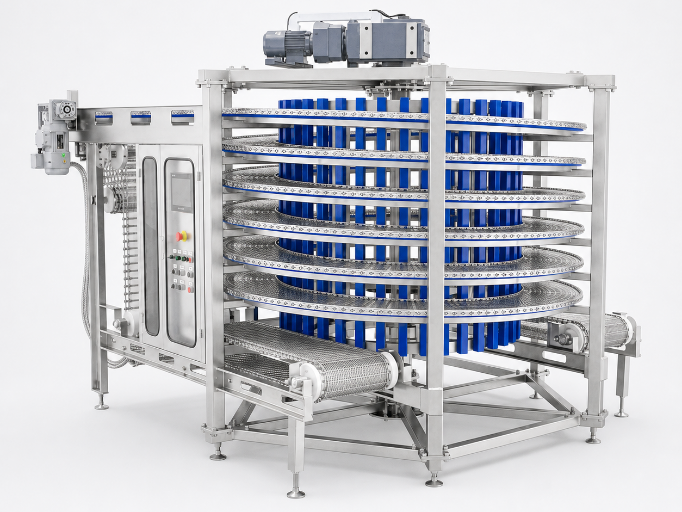
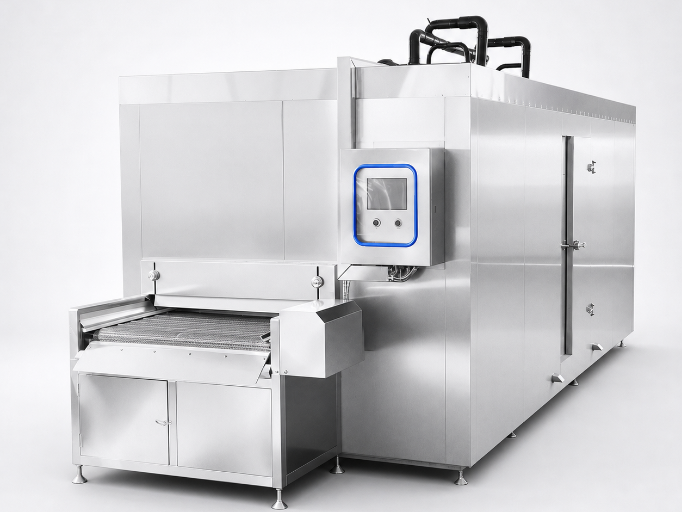
Product form
Loose pieces, formed portions, packaged units or trays
Piece geometry
Thickness, shape, mass variation and contact surface
Temperature path
Incoming condition, target thermal-centre condition and hold point
Line rate
Hourly output, peak demand, loading depth and duty cycle
Building envelope
Floor area, ceiling height, line direction and access zones
Refrigeration
Architecture, refrigerant constraints, available duty and defrost plan
Sanitation
Allergens, soil load, wash method, drainage and inspection access
Acceptance
Test product, probe location, rate condition and pass/fail record
A freezer name is not a sizing basis, and a model label is not a substitute for a defined duty. A capacity quote without product dimensions, loading, temperatures and heat-transfer conditions cannot establish freezing time at the thermal centre.1
Format-to-Footprint Decision Lens
Tunnel and spiral formats each solve different layout and residence-time problems. This lens helps narrow the possible route; the final choice still depends on product testing, refrigeration duty and the building envelope described in FAO selection guidance. A freezer can fit the process yet fail the building when clear height, floor area or line direction is ignored.
Decision condition
Straight-through tunnel route
Vertical spiral route
Question to resolve
Line direction
Fits a direct upstream-to-downstream conveyor path
Can change elevation while maintaining continuous travel
Must the infeed and outfeed stay on the same level?
Floor and height
Uses length to create residence time
Uses vertical belt travel to compress the plan area
Is floor length or clear height the tighter constraint?
Product handling
Supports a simple, visible belt path
Requires review of transfer points and belt support through the spiral
How fragile, sticky or unstable is the product?
Cleaning access
Long straight zones must be reachable and drainable
Multiple levels and the central structure must remain accessible
What must be opened, removed or inspected between runs?
Residence requirement
Longer duty generally consumes more line length
Longer belt path can be arranged vertically
What thermal-centre target must be met at the agreed line rate?
Quick-Freezing Equipment Options
These product cards route category-level inquiries towards the correct equipment family. They should not replace a project’s sizing activity or duplicate the technical details of the child pages.
SYS // 01
Spiral Belt Freezer
Evaluate this alternative where vertical belt travel resolves a lengthy residence-time requirement on a confined plan. Product stability and movement, clear height, cleaning and sanitation need project review at this stage.
View Spiral Belt FreezerSYS // 02
Tunnel IQF Freezer
Evaluate this alternative where product and plant flow favor a straight-through conveyor belt. Product load, fluidization or air exposure, floor space, defrost and sanitation need project review at this stage.
View Tunnel IQF FreezerProducts and Line Conditions That Change the Choice
Individual quick-freezing equipment has to match how the product moves and exchanges heat, not solely its product category name.
FAO selection guidance1 calls for product dimensions, geometry, temperatures and heat-transfer conditions in a freezing-time calculation.
Loose pieces
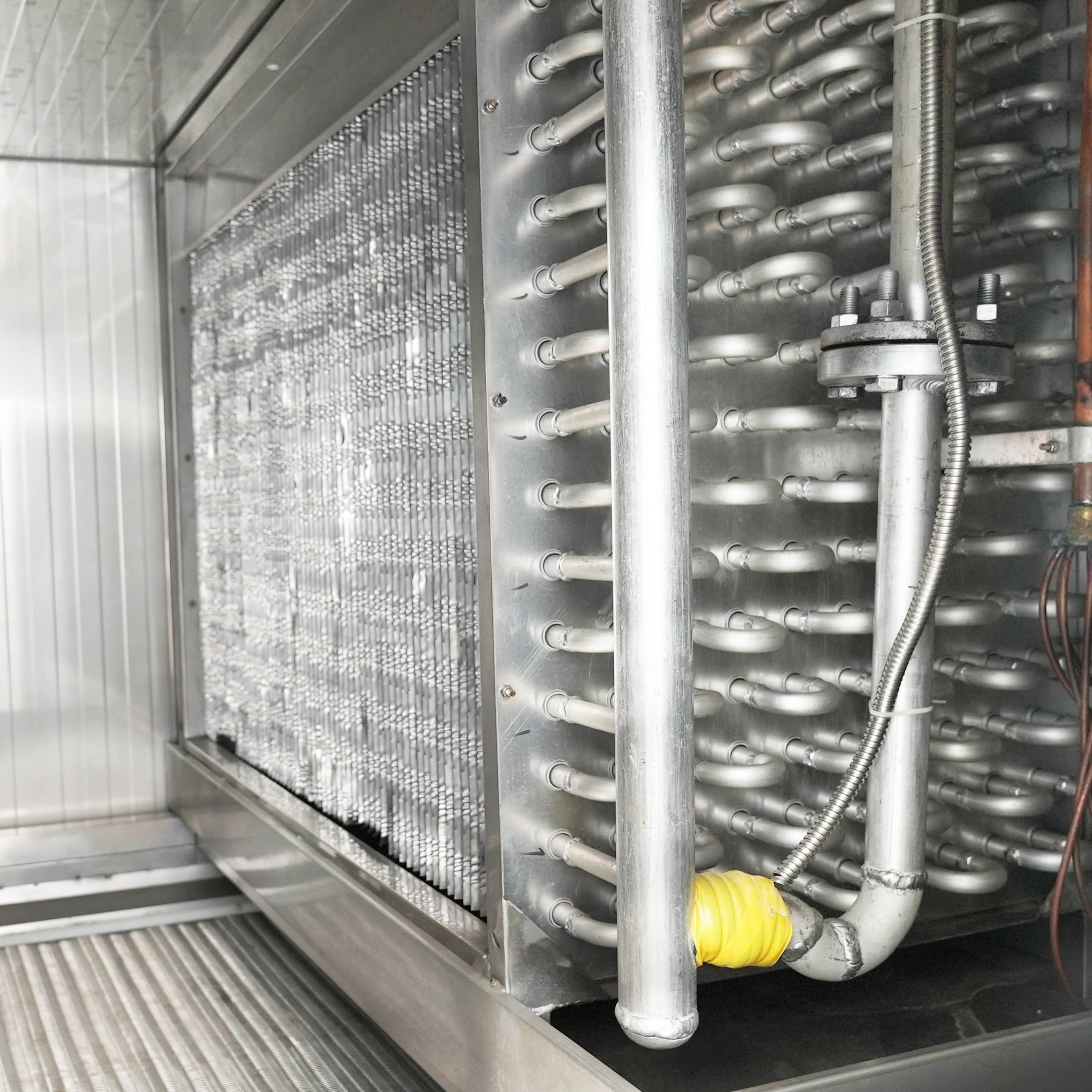
Loose, sticky or fragile pieces such as vegetables, fruit, seafood or diced foods may need separation control, stable loading depth and airflow through the product bed. For a fluidized product type, state size distribution, stickiness, surface moisture and acceptable clumping.
Formed products
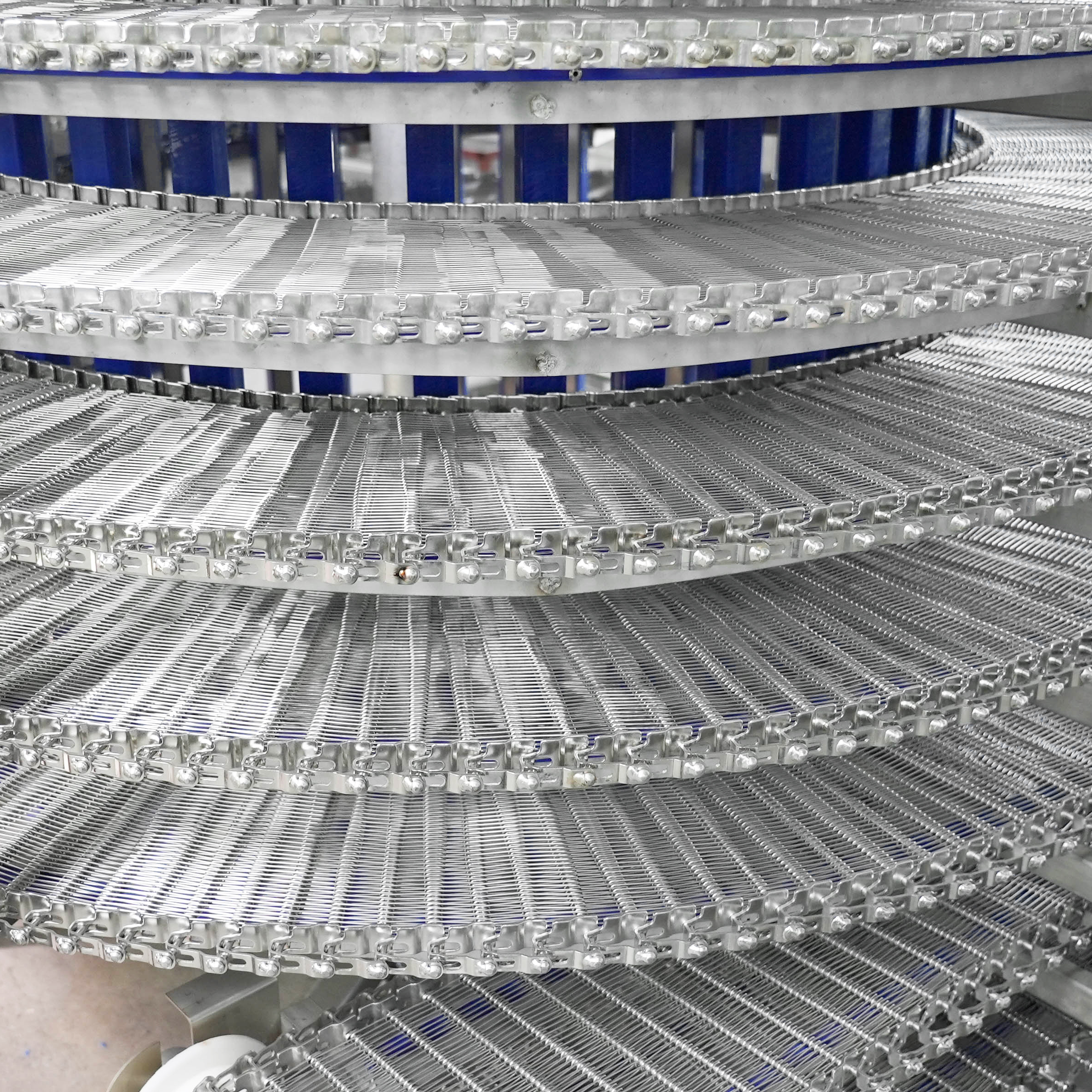
Patties, meat portions and bakery products put shape retention, belt transfer and contact marking into the acceptance plan. Include thickness tolerance and the condition at infeed.
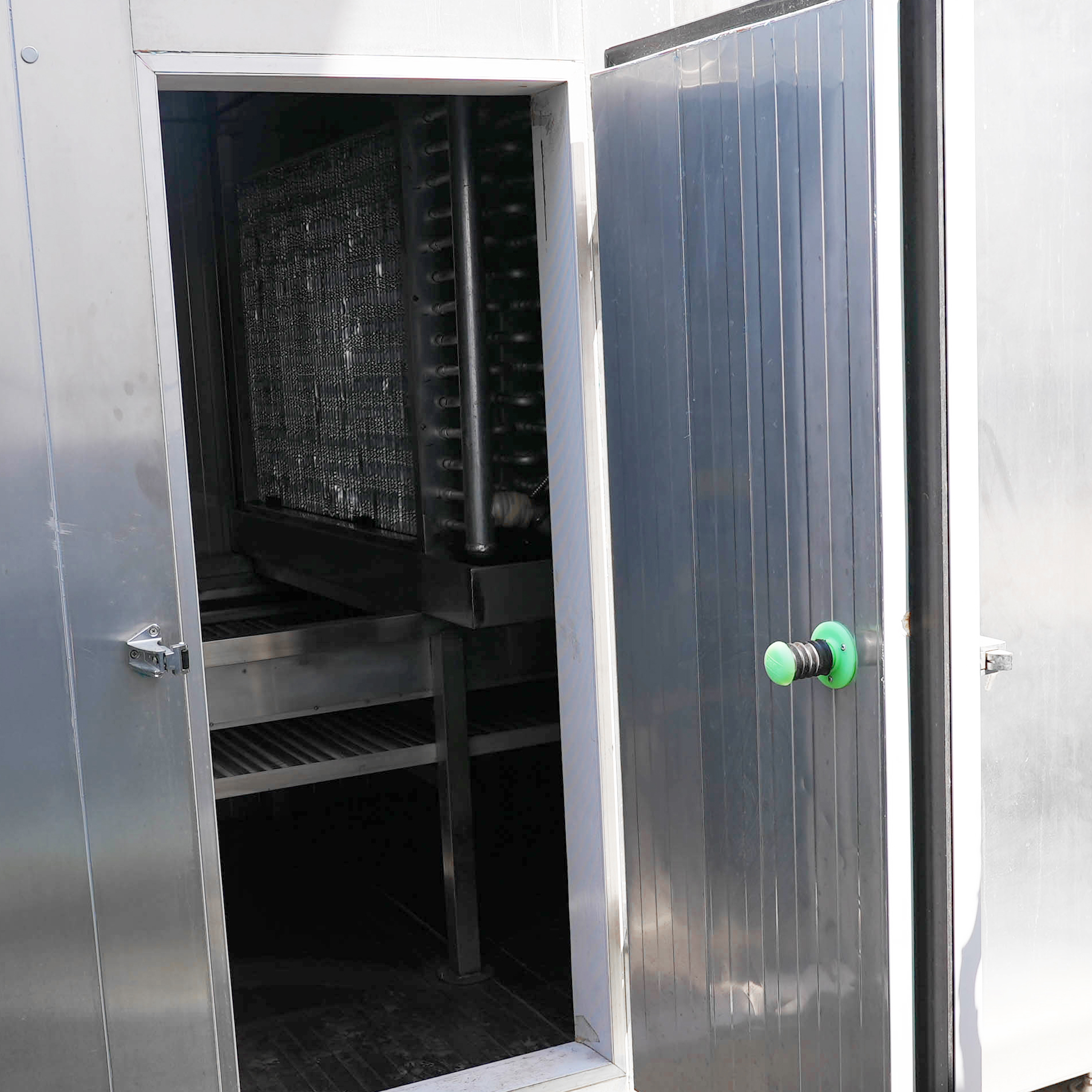
Packaged units
Quick frozen food products in trays, cartons or pouches shift the duty toward package dimensions, material, seal integrity and stacking pattern. Set the target measurement point inside the pack.
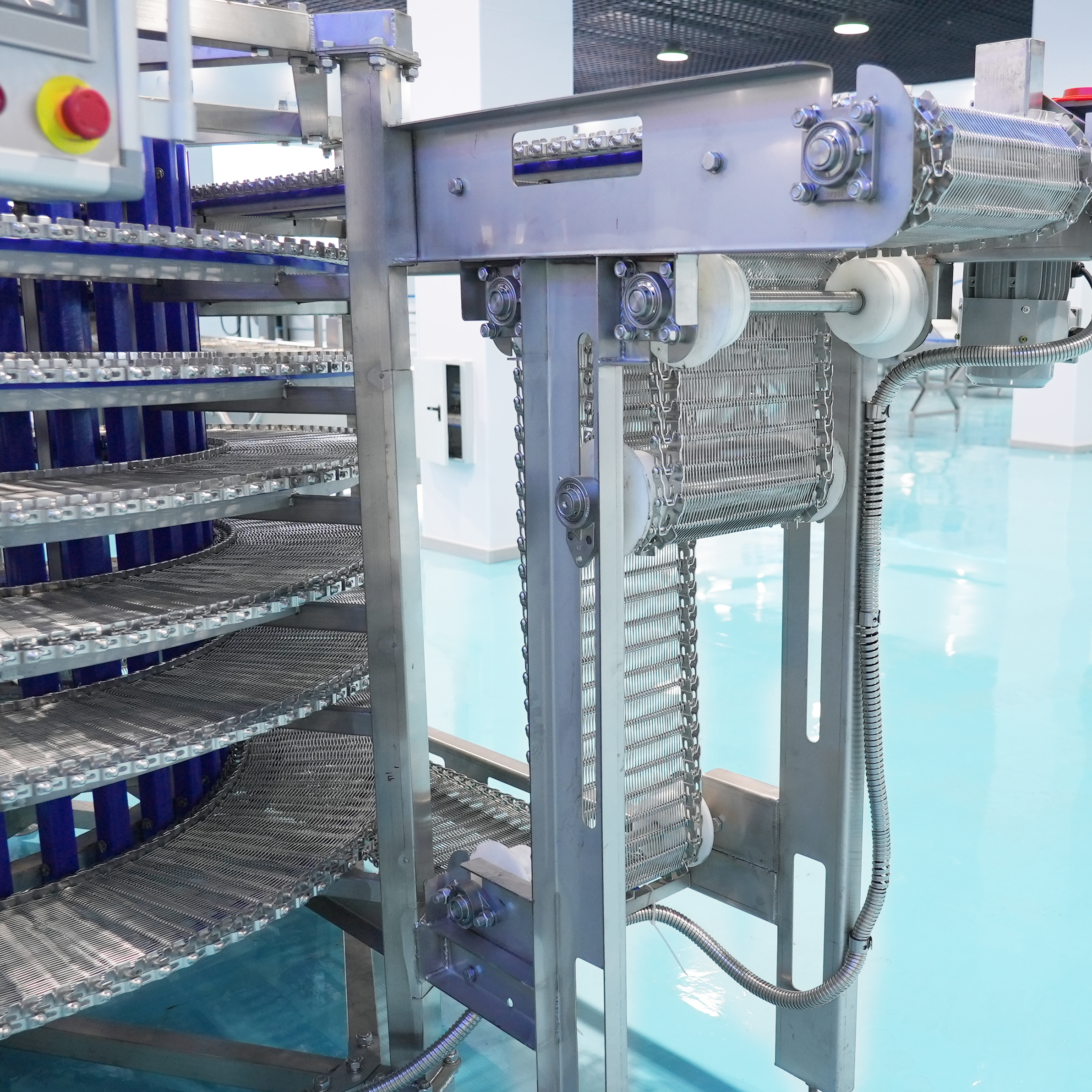
Fragile or sticky foods
Delicate berries, shrimp, soft portions and wet products may be damaged by handling or fail to separate under the wrong airflow and belt condition. A product trial should record appearance as well as temperature.
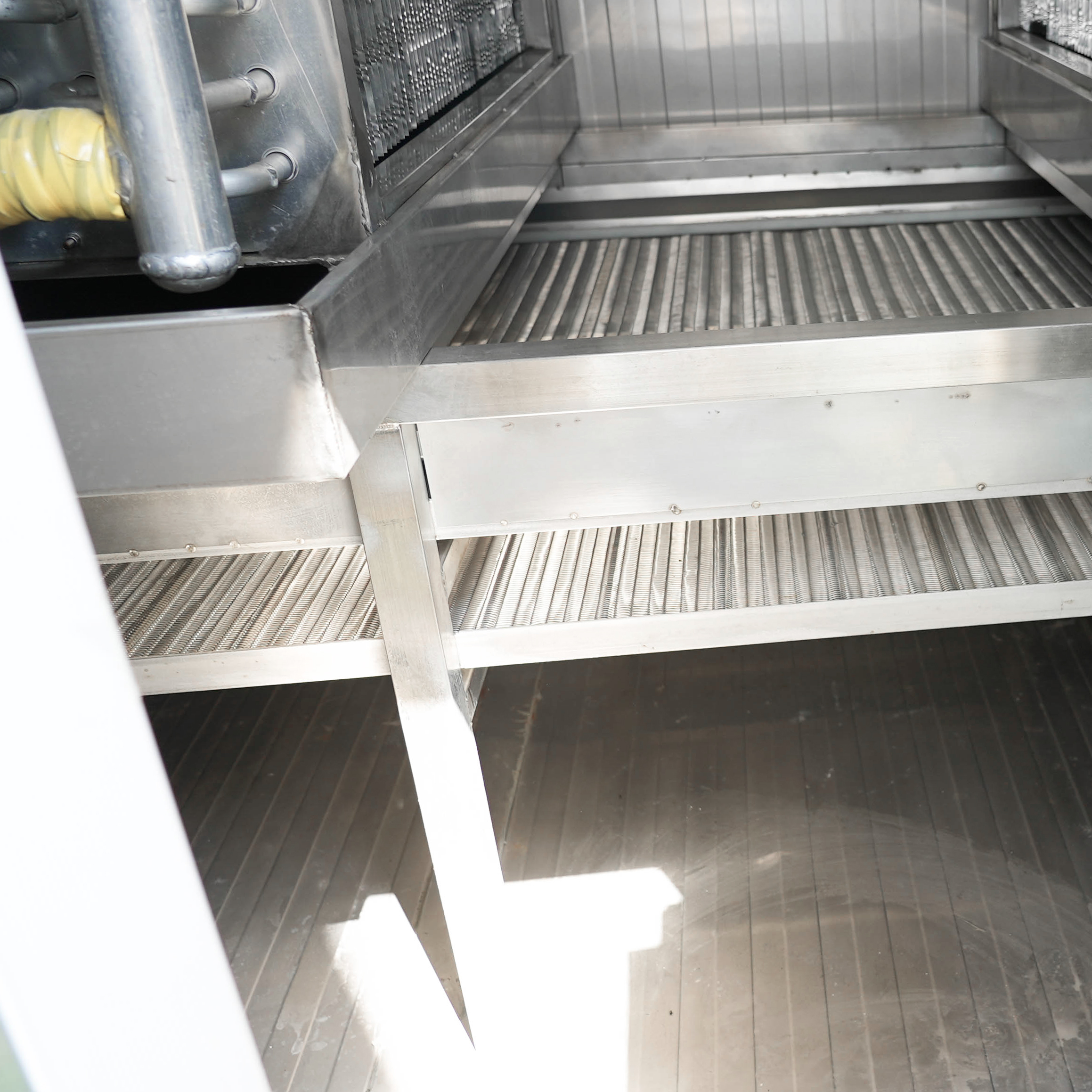
Mixed product lines
A wide product range changes recipe control, changeover, sanitation, loading and residence settings across the rapid freezing process. List the minimum and maximum duty cases rather than designing around an average product.
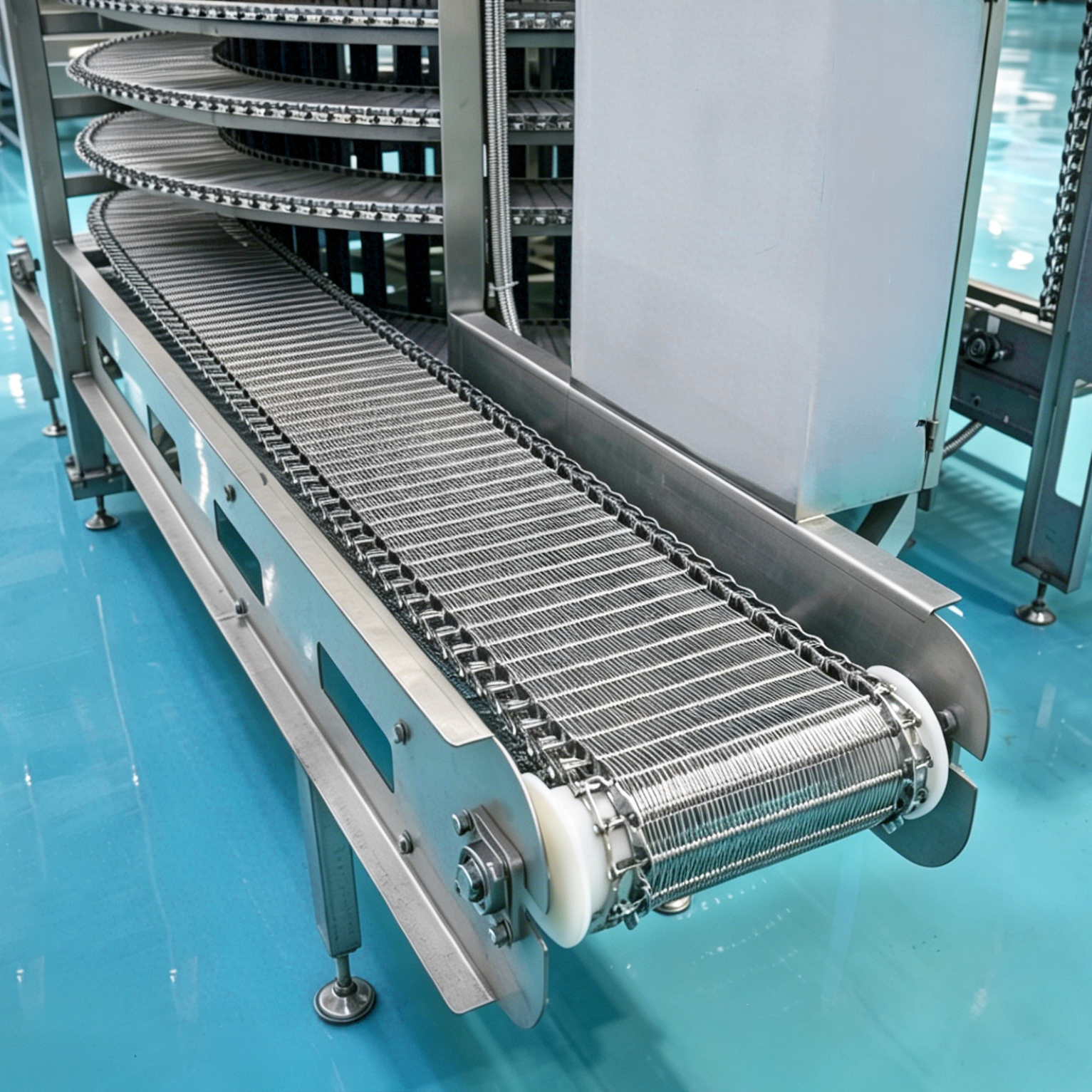
Upstream and downstream flow
Loading consistency, belt speed, conveyor belt utilization, pre-cooling, glazing, weighing and packaging can constrain the line before the freezer reaches its design duty. Map each handoff with its rate and accumulation limit.
Freezing Duty Input Canvas
A usable configuration request connects the food, the line and the facility in one scope. The ten input groups below become the basis for thermal review, layout discussion and acceptance planning.
Input group
What to send
Why it changes the configuration
Product
Food name, formulation, surface condition, requested stainless steel grade and other product-contact material limits
Defines handling, soil load and heat-transfer behavior
Piece or pack geometry
Dimensions, mass range, shape, thickness and size distribution
Changes thermal-centre travel and belt loading
Loading cycle
Continuous or batch feed, layer depth, spacing and interruptions
Sets exposure consistency and accumulation risk
Temperature path
Incoming condition, target thermal-centre condition and measurement location
Defines the duty and the acceptance endpoint
Production demand
Normal rate, peak rate, operating hours, shifts and changeovers
Separates steady load from peak and recovery conditions
Footprint and flow
Available length, width, clear height, infeed/outfeed elevations and access aisles
Determines whether a straight or vertical route fits the building
Airflow and handling
Separation need, fragility, allowable marking, belt contact and product movement
Guides belt, air distribution and transfer review
Refrigeration architecture
Available system, refrigerant, operating conditions, defrost concept and destination market
Links the cabinet to plant duty, safety and regulatory constraints
Utilities and interfaces
Electrical supply, drainage, compressed air, network and adjacent-machine signals
Prevents late building and integration changes
Sanitation and acceptance
Allergens, cleaning method, inspection access, test product, sampling and pass/fail records
Turns hygienic operation and performance into written criteria
Thermal-centre rule
Define completion at an agreed measurement point and temperature condition for the stated product, loading and heat duty. A target air set-point temperature is not a substitute for product-core evidence.1
Freeze the acceptance condition before freezing the equipment design: product, loading, target, rate and evidence must describe the same test case.
Controls, Data and Line Integration
Shengtu uses the STUnit platform to support smart-equipment development and project-defined upgrade paths. The company capability set includes standalone OTA upgrades, line integration, smart factory planning, IT/OT digital empowerment, low-code control boxes, multi-protocol gateways, YOLO vision and edge algorithms; each freezer project's actual functions and interfaces must be confirmed in its scope.
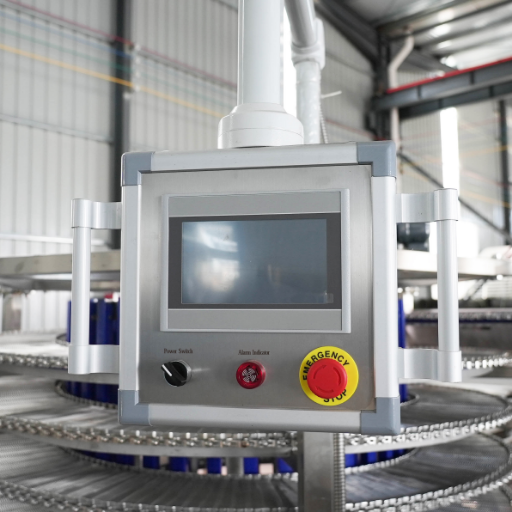
Machine behavior
- Operating modes and state transitions
- Recipe ownership and change control
- Alarm history and event timestamps
- Manual, local and remote command boundaries
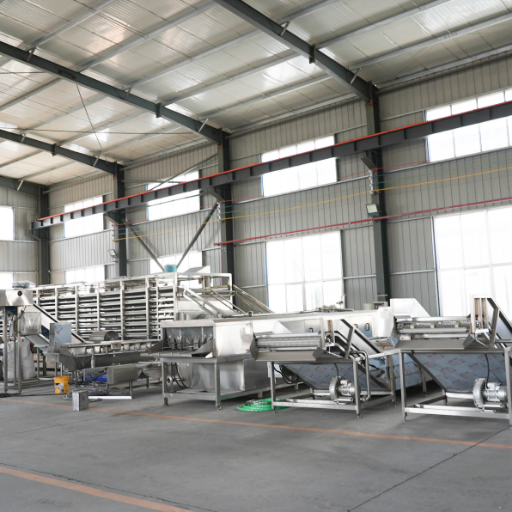
Line handoff
- Permissives with upstream and downstream equipment
- Rate, accumulation and stop/restart logic
- Required tags, units and update rates
- Historian, dashboard and report destinations

Network governance
- Protocols and gateway responsibility
- Network zones and remote-access approval
- Backup, restore and upgrade testing
- Account, log and patch ownership
Interoperability is a scoped deliverable
Controls integration fails late when the required states, tags, protocols and network boundaries are omitted from the equipment quotation. OPC 30050 maps PackML machine information into an OPC UA model, while NIST SP 800-82 Revision 3 describes security guidance for operational technology with performance, reliability and safety constraints. Protocol availability is not a substitute for an agreed interface schedule and acceptance test.
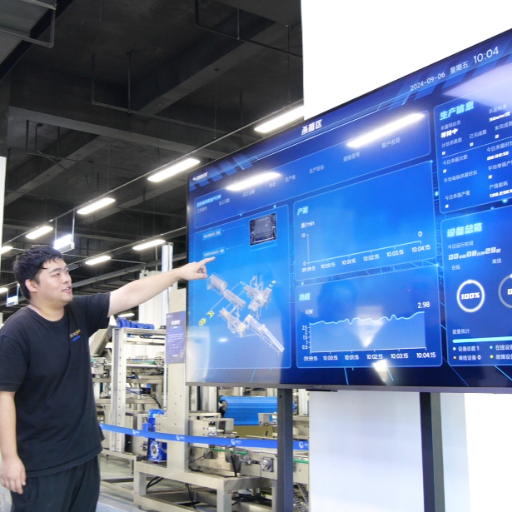
Price and Project Schedule Drivers
A quick freezing machine is custom equipment, so price and schedule follow the approved duty, mechanical scope, refrigeration boundary, controls, site interfaces and acceptance work. A headline equipment figure is not a substitute for a quotation that separates what is included from what the plant, refrigeration contractor and installer must provide.
- Belt path, enclosure and product-handling features
- Required residence path and production duty
- Cleaning access, drainage and defrost concept
- Product trial, FAT and SAT evidence
- Refrigeration rack, evaporator and piping boundary
- Civil, floor, platform and access work
- Electrical distribution, drainage and utilities
- Controls handoff, network work and commissioning
Bronze business-case model
Use plant inputs, not a universal ROI percentage.
- Saleable output and product loss by validated product case
- Refrigeration, electrical, defrost and sanitation demand
- Labor, changeover, planned cleaning and unplanned downtime
- Maintenance scope, consumables, floor area and integration work
Quote normalization fields
| Compare this field | Require the supplier to state | Risk if omitted |
|---|---|---|
| Design basis | Product, rate, incoming condition, target, loading and duty cycle | Quotes appear comparable but solve different duties |
| Mechanical scope | Infeed/outfeed, belt, enclosure, access, drainage and excluded auxiliaries | Late additions change cost and footprint |
| Refrigeration boundary | Coil, valves, controls, rack, piping and refrigerant responsibility | Cabinet price is mistaken for installed project cost |
| Controls scope | Panel, instruments, protocols, tags, data storage and remote-access boundary | Integration becomes an unpriced change |
| Acceptance | FAT/SAT test case, instrumentation, sampling, records and remediation path | Performance cannot be judged against one written baseline |
| Site work | Delivery split, rigging, foundations, platforms, utilities and commissioning support | Schedule ownership remains ambiguous |
Hygiene, Cleaning, Defrost and Validation
Contamination risk rises because frost, inaccessible surfaces and unverified instruments can break the acceptance chain. Shengtu builds the review around the plant case; for U.S. facilities, FDA's 21 CFR Part 117 makes cleanability, allergen control, conveying-system condition and accurate instruments part of equipment review.3 Freezing itself is not a validated pathogen-kill step.
01
Access and disassembly
- List parts opened or removed for cleaning
- Show how belt surfaces and return paths are reached
- Define tools, lifting needs and safe access
02
Allergen and soil control
- State product soils and allergen changeovers
- Define cleaning method, chemistry owner and rinse verification
- Identify harborage and conveyor cross-contact points
03
Frost and defrost
- Map moisture ingress and warm-product load
- Define defrost trigger and product-protection sequence
- Confirm drainage, recovery and restart evidence
04
Instrument accuracy
- Name product, air and refrigeration measurements
- Set calibration and verification responsibility
- Preserve units, locations and timestamps in test records
05
Process acceptance
- Fix the test product and loading case
- Agree the thermal-centre probe location
- Record line rate, environment and pass/fail rule
06
Facility interfaces
- Confirm refrigerant and destination-market restrictions
- Review ammonia inventory against OSHA applicability
- Assign plant, refrigeration and equipment responsibilities
U.S. project boundary
According to OSHA Appendix A, anhydrous ammonia has a 10,000 lb threshold for process-safety applicability review; EPA restrictions depend on the sector, subsector and compliance date.45 These data inform facility design; they are not quick-freezing equipment certifications.
From Product Data to an Approved Configuration
Boundary
Hidden bottleneck
Evidence to request
Upstream
Inconsistent loading, product temperature or surface moisture
Rate profile, buffer logic and worst-case product condition
Inside the freezer
Clumping, transfer damage, frost accumulation or inaccessible soil
Product-trial record, access review and defrost sequence
Refrigeration
Insufficient duty, recovery or defrost coordination
Load calculation, operating envelope and control ownership
Downstream
Packing cannot accept the discharge rate or product condition
Accumulation study and handoff permissives
Data
Tags, timestamps, recipes or remote access have no owner
Interface schedule, network boundary and acceptance test
Company Context and Project-Relevant Capabilities
Shandong Shengtu Bufan Intelligent Technology Co., Ltd. is a Weifang enterprise providing food machinery research and development, manufacturing and whole-plant digital solutions for the food industry. Our work connects equipment hardware, line integration and factory-level digital planning around the approved project scope.
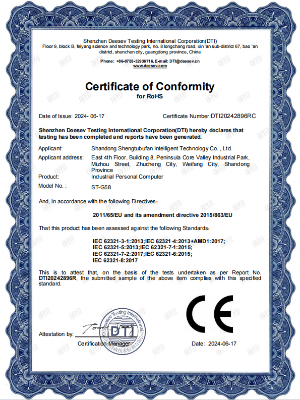
Hardware and machinery
We develop custom food machinery and control hardware; self-produced hardware supports deep integration where the approved project requires it.
Equipment intelligence
The STUnit platform supports smart-equipment development, standalone OTA upgrades and project-defined upgrade paths.
Plant integration
Our company capability covers line integration, smart factory planning, IT/OT digital empowerment and project-defined data handoffs.
Engineering Planning Tools
Freezing Duty Input Canvas
Open Canvas
→
Format-to-Footprint Decision Lens
Open Lens
→
Freezer Quote Normalization Scorecard
Open Scorecard
→
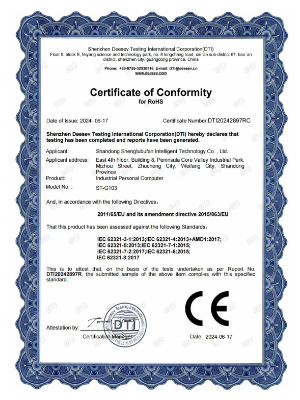
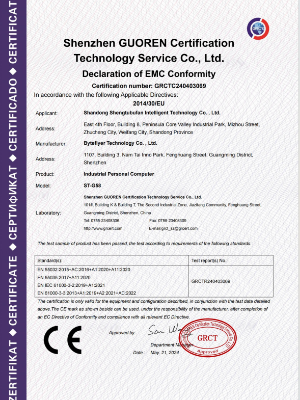
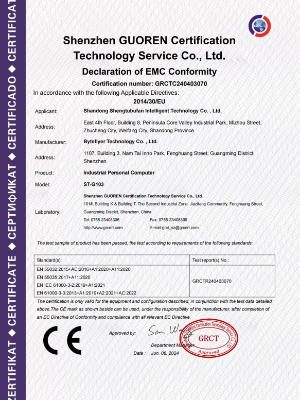
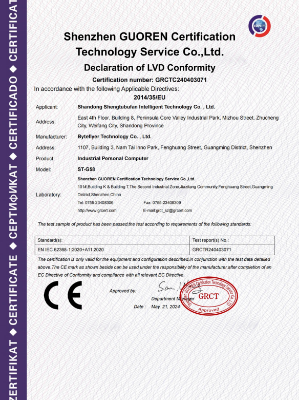
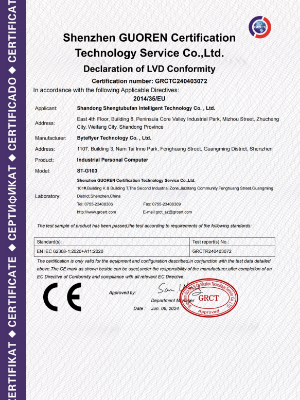
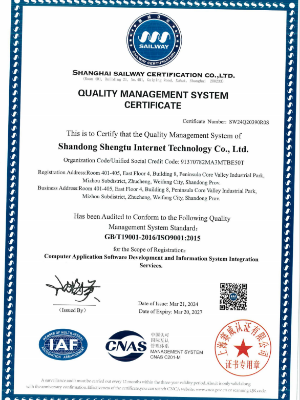
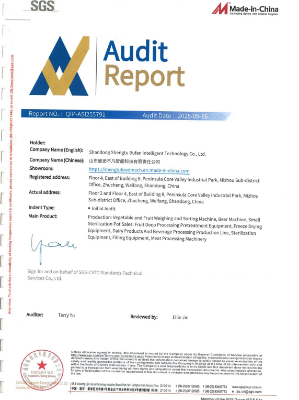
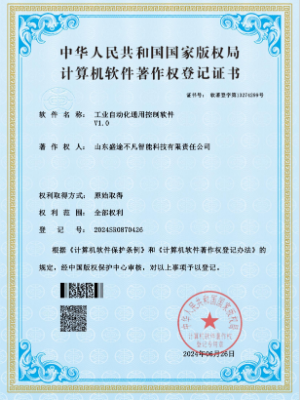
Applicable certificates and documents are confirmed for the equipment model, configuration and destination country. Company management-system records are reviewed separately from product conformity documents.
KNOWLEDGE BASE
Quick-Freezing Equipment FAQ
It is industrial equipment that removes heat rapidly from food under defined product, loading and refrigeration conditions. For procurement, the useful definition includes the product thermal-centre target, rate and acceptance method rather than only an air temperature.
Individual quick freezing aims to freeze pieces separately so they remain free-flowing, while block freezing treats a mass or packed load as one thermal unit. Product form, bed depth, airflow and handling determine whether individual separation is achievable.
Compare them when line direction, floor area, clear height, residence path, product transfer and cleaning access are still open design choices. The correct route is the one that meets the stated product and duty case inside the building constraints.
Send product geometry, loading pattern, incoming and target conditions, normal and peak rate, duty cycle, footprint, refrigeration, utilities, sanitation rules and acceptance test. The ten-row input canvas above is the minimum useful starting point.
Constraints include refrigeration load, airflow pressure drop, dehydration, frost, product damage, cleaning access and the building envelope. Faster air or a colder setting is not automatically a better validated process.
No. USDA explains that freezing inactivates microbes but does not reliably destroy them, so the plant must maintain its validated food-safety controls before and after freezing.2
The approved duty, belt and enclosure, refrigeration boundary, sanitation access, controls, site work and acceptance scope move the price. Compare written inclusions and exclusions rather than a headline equipment figure.
Define machine states, commands, permissives, tags, protocols, historian ownership, remote access and test cases in an interface schedule. OPC 30050 and NIST SP 800-82 Revision 3 provide reference models and guidance, but actual compatibility remains project-specific.
Send the product specification, representative images or samples, rate profile, temperatures, available layout, refrigeration information, utilities, sanitation requirements and desired FAT/SAT evidence. Add the target installation market so refrigerant and facility obligations can be reviewed.
![F&V Freeze-Drying Line Process Guide [2026]](https://shengtumachinery.com/wp-content/uploads/2026/09/fv-freeze-drying-line-guide-featured-150x150.png)