Get in touch with Shengtu Bufan Company

System Overview
Spiral Belt Freezer — IQF Spiral Freezer Systems
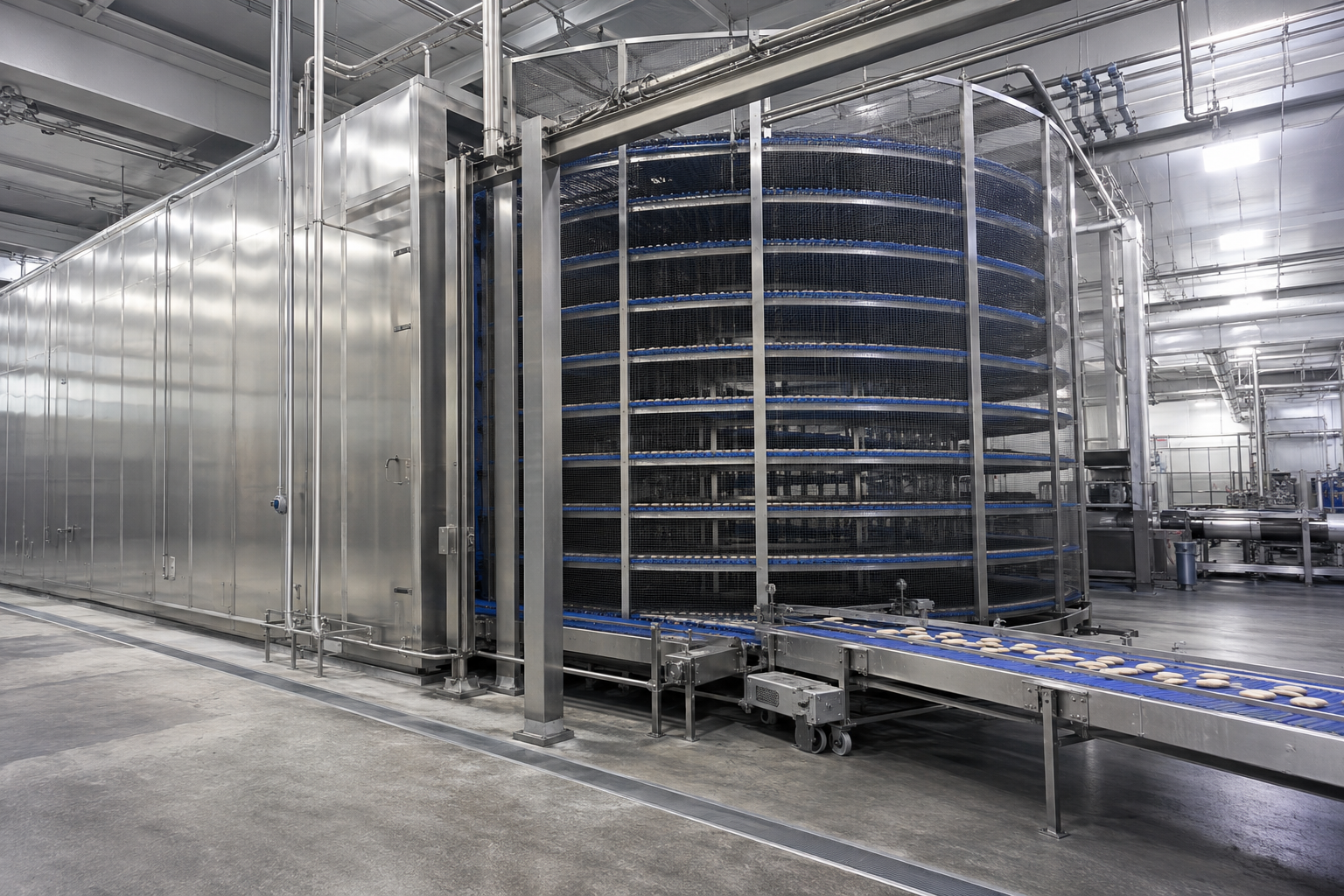
A spiral belt freezer stacks a long conveyor belt into a vertical helix, so food processing lines can hold product in cold air for minutes without giving the floor to a straight tunnel. We build these towers in Weifang, Shandong, China for continuous IQF duty on poultry, seafood, prepared meals, bakery goods and pastry. Send the product, the rate and the entry temperature, and an engineer works the sizing.
- Engineer-reviewed quotation within 3 working days
- Build scheduled at 45 to 60 days after down payment
- Product core to -18 °C
- Every contact surface in 304 stainless steel
Drawings, product data and line layouts you send are treated as confidential, and we sign a non-disclosure agreement on request.
Spiral Freezing Capabilities: Airflow, Dwell Time and Belt Travel
The tower does one job: hold product in moving cold air long enough for the core to reach target, then hand it on still separated piece by piece. Air inside the freezing zone runs -30 to -40 °C. Air velocity across the belt is 3 to 6 m/s, which is what strips heat out of the surface.
Specification 01
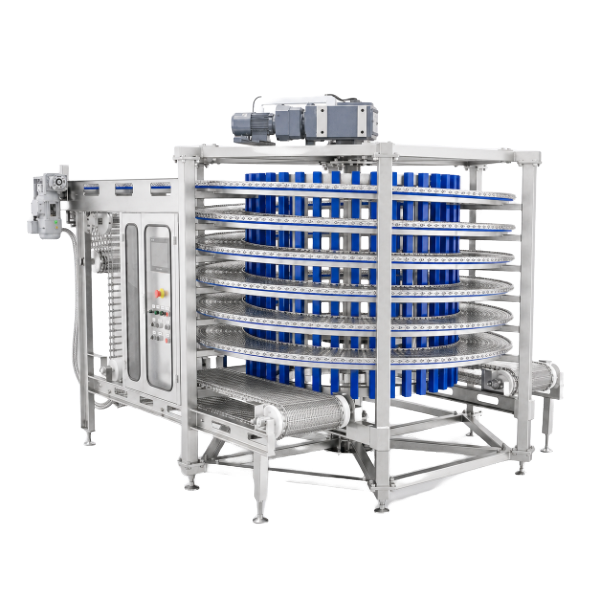
Continuous spiral conveyor
Specification 01
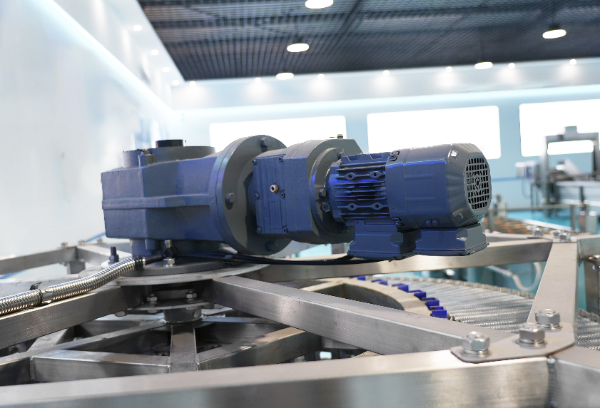
One belt enters at the bottom, climbs the cage and leaves at the top, with no batch break inside the enclosure. Belt travel and infeed run on two independent variable frequency drives, so the tower holds its dwell time while the upstream line changes rate.
Specification 02
Mechanical refrigeration duty
Specification 02
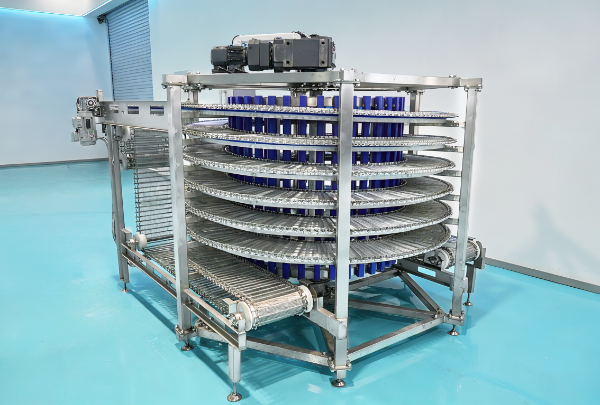
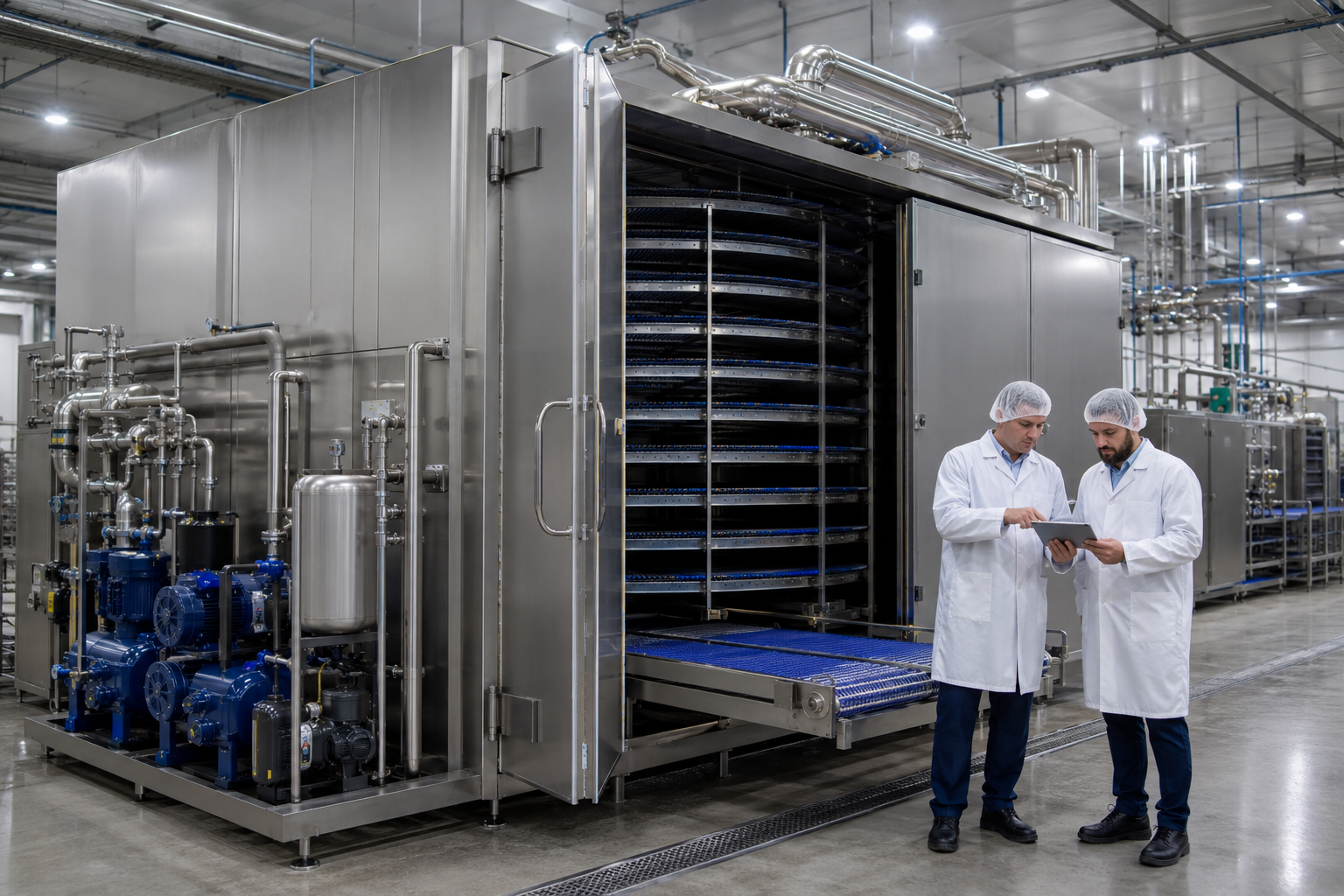
Heat leaves by forced convection from a mechanical refrigeration circuit rather than by a consumable gas. Product enters at up to 10 °C and leaves with a core temperature of -18 °C, the point where an individually quick frozen piece is stable for cold store.
Specification 03
Adjustable dwell time
Specification 03
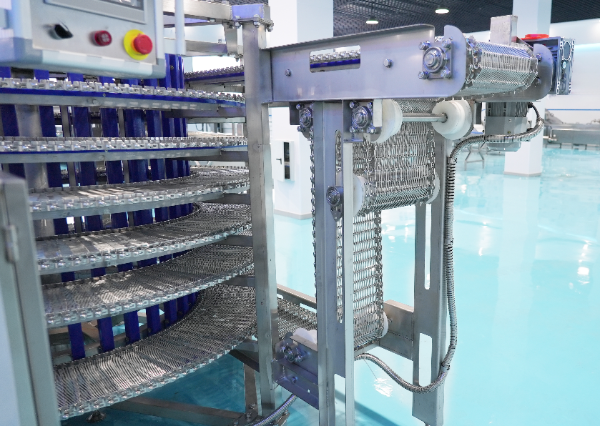
Dwell time is set between 15 to 45 minutes, adjustable, and it decides whether a thick piece finishes. Belt speed and product spacing are traded against each other to hold throughput without losing the finished core. Product quality is settled inside that window: freezing slowly grows larger ice crystals in the piece, which surfaces later as drip loss and softened texture.
Product families this tower is sized for
Poultry portions, wings, nuggets and coated pieces
Fish fillets, shrimp and other seafood requiring rapid freezing
Ready meals and prepared foods on trays or in film
Bakery goods, dough pieces and pastry before packing
Vegetables and fruit destined for individually quick frozen packs
Meat patties, meatballs and other formed protein pieces
Freezing route trade-off ledger
The four routes below fail in different places rather than one being better everywhere. Read the middle column first: geometry is what decides whether the machine fits your building and your product.
| Freezing route | How heat leaves the product | What the geometry costs | Where it fits |
|---|---|---|---|
| Spiral belt freezer | Forced cold air over a belt climbing a helix | Belt length is stacked vertically, trading floor area for headroom and a taller enclosure to insulate | Continuous lines needing minutes of residence time in a compact footprint |
| Straight tunnel freezer | Forced cold air over a flat belt in one pass | Residence time is bought with floor length, so a long dwell time becomes a long building | Short freezing times, thin product, low ceilings |
| Cryogenic tunnel | Liquid nitrogen or carbon dioxide boiling against the product | Machine cost is low and gas cost is permanent, so economics follow your gas contract | Delicate or high value product and short runs |
| Impingement or fluidised bed | High velocity jets or an air stream lifting the pieces | Works only inside a narrow piece size and density band, and clumping defeats it | Small uniform free-flowing pieces such as peas or diced vegetables |
Contact Materials and Belt Options
Two decisions here survive the whole life of the machine: what the belt is made of, and what the product touches on the way through. Both are cheaper to change on a drawing than after commissioning.
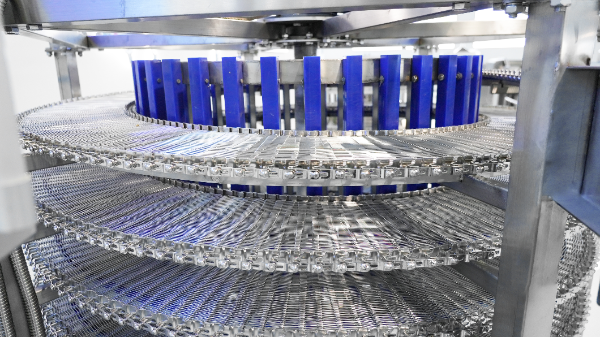
- Construction
- Woven or welded stainless wire mesh, driven through the cage by drive bars
- Why engineers pick it
- Open area lets cold air pass through the product bed, not only over it, and the mesh takes hot wash-down without deforming.
- Watch out for
- Wire marking on soft surfaces, and a heavier belt mass to cool down after every defrost.
- Construction
- Interlocked plastic modules on rods, replaceable module by module
- Why engineers pick it
- A flat carrying surface is kinder to coated, delicate or sticky product, and a damaged section is swapped without splicing the belt.
- Watch out for
- Lower open area in some patterns, and a temperature and chemical window to check against your cleaning agents.
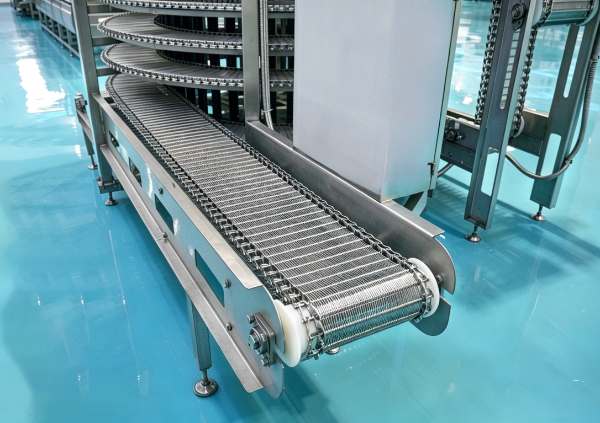
What the product touches
- Every product contact surface is 304 stainless steel.2
- The enclosure is built from 120 mm polyurethane panel, which sets the thermal envelope around the tower.
- Frame, guarding and walkway steel are specified with the enclosure so wash-down water has a path out.
- Belt type is confirmed against your product before drawing approval, not after the tower is welded.
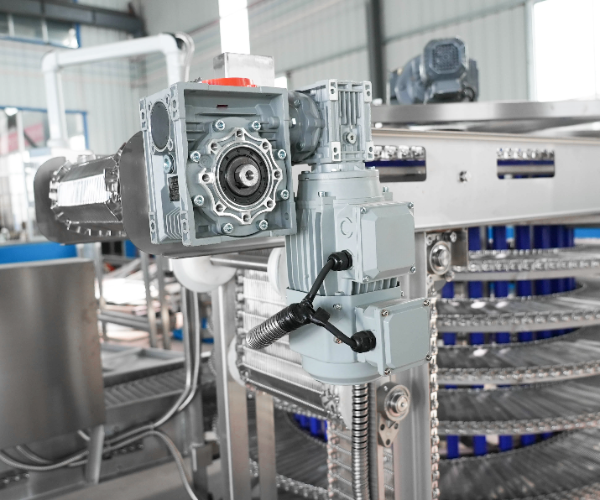
- Cage drive bars engaging the belt edge. This interface is where belt tension, overdrive and wear all show up first.
A belt or material we have not listed
Send the grade or the belt reference with your product data and we’ll confirm suitability and price in the quotation. Where a belt is wrong for your product, we say so before it goes on the drawing.
Hygienic Surfaces, CIP Access and Frost Management
Hygienic design literature splits a freezer into three zones: what the food touches, what splashes onto it, and everything else.2 The rules tighten toward the first zone, and handover arguments come from parts designed as though they sat in the third.
Frost is not a fault in the machine. It is the water that walked in on the product and in the room air, and every decision below is about where that water collects and when you get to take it out.
| Zone | What sits there | What the design has to deliver |
|---|---|---|
| Product contact | Belt surface, transfer plates, guides | Smooth, drainable, corrosion resistant, no crevice that holds product; 304 stainless steel as the base specification |
| Splash zone | Belt supports, cage bars, lower framing, drip paths | Surfaces that shed water and can be reached with a lance without dismantling the tower |
| Non-contact | Enclosure panels, walkways, drive housings | Sealed penetrations, no horizontal ledges, no gap letting warm humid air into the cold envelope |
Frost is a scheduling problem, not a cleaning problem
Water leaves the product and the room air and lands on the coil, the belt and the enclosure walls. Once frost blocks the coil face, airflow falls and dwell time stops buying you the same core temperature. Defrost belongs in the production plan, not the maintenance backlog.
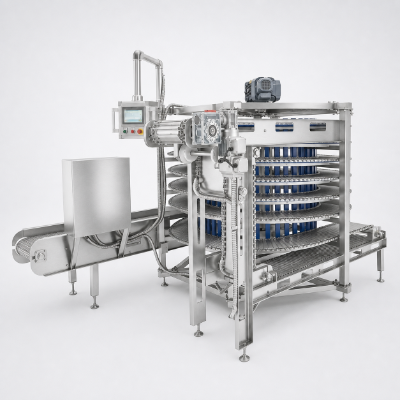
Production window planning ledger
| What drives the frost load | What it does inside the tower | What to settle in the specification |
|---|---|---|
| Product surface moisture and glazing | Adds water straight into the air stream, loading the coil faster on wet product | State the entry condition, including glazed, marinated or surface wet |
| Ambient air pulled in at the openings | Warm humid room air carries far more water than cold air holds, and frosts at the first cold surface | Agree infeed and outfeed sealing and the room conditions around the tower |
| Run hours before sanitation | Decides whether the coil survives a shift or a full day between defrosts | Give production window and sanitation window as two separate figures |
| Defrost method the site supports | Water defrost is fast but needs supply and drainage; other routes trade speed for site independence | Confirm water and floor drainage at the enquiry stage, before the route is fixed |
| Cleaning access and belt open area | Sets how long a wash takes, which is time out of the same daily window | Specify CIP coverage and what must be reachable without tools |
A site with no process water and no floor drain isn’t a smaller job — it’s a different machine. Raise it first, because the defrost route drives the enclosure design.
Spiral Belt Freezer Specifications
These are the values we hold on the machines we build, not a range collected from catalogues. Anything not on the table is confirmed in writing against your configuration.
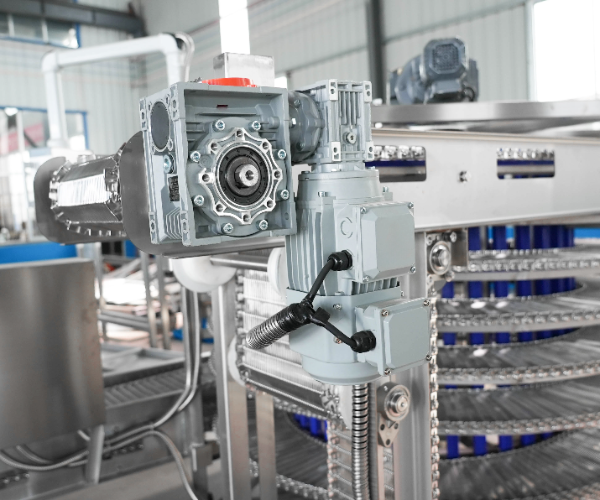
| Freezing zone air temperature | -30 to -40 °C |
| Air velocity across the belt | 3 to 6 m/s |
| Product entry temperature | Up to 10 °C |
| Product core temperature at exit | -18 °C |
| Dwell time | 15 to 45 minutes, adjustable |
| Product contact material | 304 stainless steel |
| Enclosure panel | 120 mm polyurethane panel |
| Power supply | 380 V three phase |
| Control system | PLC with a touch screen |
| Belt and infeed drives | Two independent variable frequency drives |
| Conformity marking | Supplied CE marked |
| Operator interface language | Operator panel legends are in English |
| Annual build capacity | 70 sets per year |
Spiral Freezer Price Formation and Lead Time
Price follows belt area, enclosure size, refrigeration duty, belt type and the control and hygiene scope you ask for. There’s no price list for a custom tower, because two plants freezing identical product to identical output can still need different machines. Your figure comes back in a written quotation tied to a configuration you’ve approved.
What moves the number
| Driver | Effect on cost | How to hold it down |
|---|---|---|
| Required rate at a fixed dwell time | Drives belt area, and with it cage size, enclosure volume and refrigeration duty | Give the real sustained rate and state the peak separately |
| Product thickness and entry temperature | Sets the dwell time the core needs, so a thicker piece buys belt length even when the hourly output is unchanged | Confirm the thickest piece you will actually run, not the average |
| Belt type and width | A major line item and a lifetime consumable, and width multiplies through the structure | Match the belt to the product surface instead of over-specifying |
| Hygiene and cleaning scope | CIP coverage, drainage detailing and access platforms add fabrication hours | Define which zones need CIP and which are hand cleaned |
| Defrost route and site services | A site without process water or drainage needs a different defrost design | Settle water, drainage and room conditions before the enclosure is designed |
| Stage | Time | What it covers |
|---|---|---|
| Quotation | Within 3 working days | Sizing, configuration, scope of supply and commercial terms |
| Manufacturing | 45 to 60 days | Fabrication, assembly, wiring, workshop testing and packing |
| Ocean transit | Quoted per destination | Port to port movement, which sits outside the manufacturing window |
- Payment is by T/T or L/C at sight, with terms confirmed in the quotation.
- We ship EXW, FOB or CIF; the port of loading is confirmed with your order.
- Minimum order is 1 set.
- Machines ship in a standard export wooden case.
- Customs classification is HS 8418 61 20.
- Warranty duration, coverage and exclusions are confirmed in the quotation and contract. Technical-support scope is confirmed in the same written terms.
Manufacturing is scheduled at 45 to 60 days after the down payment and the approved technical configuration, excluding ocean transit. Both conditions matter: a signed order with an open configuration doesn’t start the clock, because the drawing is what the workshop builds from.
Factory Acceptance Testing and Handover Documents
Applicable certificates and documents are confirmed for the equipment model, configuration and destination country. Company management-system records are reviewed separately from product conformity documents.
A freezer is bought on paper and judged on a running line, and disputes live in the gap between the two because the criteria were never written down first. Close that gap by fixing the acceptance criteria before the machine is built, using the same figures that went into the sizing.
How every machine is checked before it ships
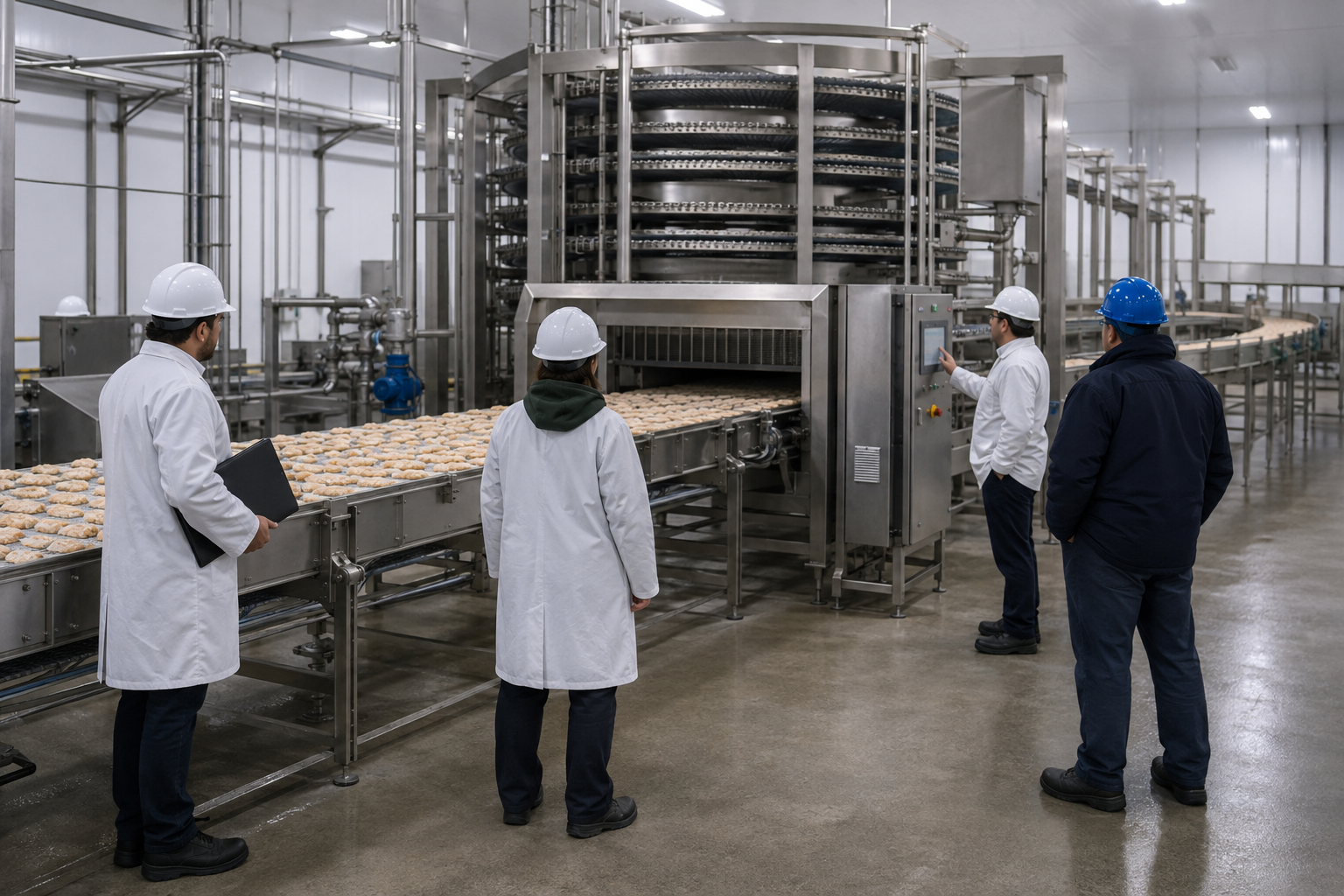
- Configuration freeze against your approved drawing, with the sizing inputs recorded beside the outputs
- Mechanical run of belt and cage without load, checking tracking, tension and drive bar engagement
- Control system test on the PLC with a touch screen, covering belt speed range, interlocks, alarms and defrost sequence
- Electrical verification on 380 V three phase supply, including the two independent variable frequency drives and their parameter set
- Documented workshop acceptance record kept under our ISO 9001 quality system, with any deviation written down rather than settled verbally
Documents that travel with the machine
- Electrical schematics and the terminal list for the cabinet as built
- Layout and installation drawing with service clearances marked
- Operation and maintenance manual, including belt tension and defrost procedures
- Workshop acceptance record for the mechanical, control and electrical checks
- Packing list and the export documents required for HS 8418 61 20
Policy & Cover
A machine that misses an agreed criterion is corrected against the same written criteria used at the workshop check. Warranty coverage, duration and ongoing technical support are confirmed in the quotation and contract.
Factory acceptance test checklist
Mechanical, control, electrical and documentation checks run before a tower is packed, written so your own engineer can repeat them at handover.
Open the factory acceptance test checklistFrom Enquiry to Commissioning in Six Steps
01 Send your product and line data
— piece size, entry temperature, target core, sustained rate and the site constraints around the tower.
02 Engineering review
— a refrigeration engineer works the sizing and comes back naming the gaps, not with a generic form.
03 Written quotation
— configuration, scope of supply, commercial terms and exclusions, returned within 3 working days.
04 Configuration freeze and drawing approval
— the manufacturing clock starts here, together with the down payment.
05 Manufacturing and workshop acceptance
— build, wire, test and document, with deviations recorded and resolved before packing.
06 Delivery, installation support and commissioning
— we stay on the machine through start-up and hand over the acceptance record with it.
What to send with your enquiry
| Item | What to state | Why it changes the machine |
|---|---|---|
| Product and piece geometry | Thickest dimension, weight per piece, whether pieces touch on the belt |
Sets dwell time and therefore belt area
|
| Entry and target temperature | Infeed temperature and the required core at the outfeed |
Sets the heat load the refrigeration circuit removes
|
| Sustained and peak rate | Kilograms per hour you will actually run, plus the peak separately |
Belt area follows the sustained rate; the peak drives margin
|
| Daily window | Production hours and sanitation hours as two separate figures |
Decides how defrost is built into the design
|
| Site services and space | Ceiling height, floor area, power, process water and drainage |
Decides tower geometry and whether a water defrost route exists
|
Freezing capacity match worksheet
One page that walks your product data through dwell time, belt area and daily window, so you arrive with the inputs an engineer would ask for.
Inside the Build
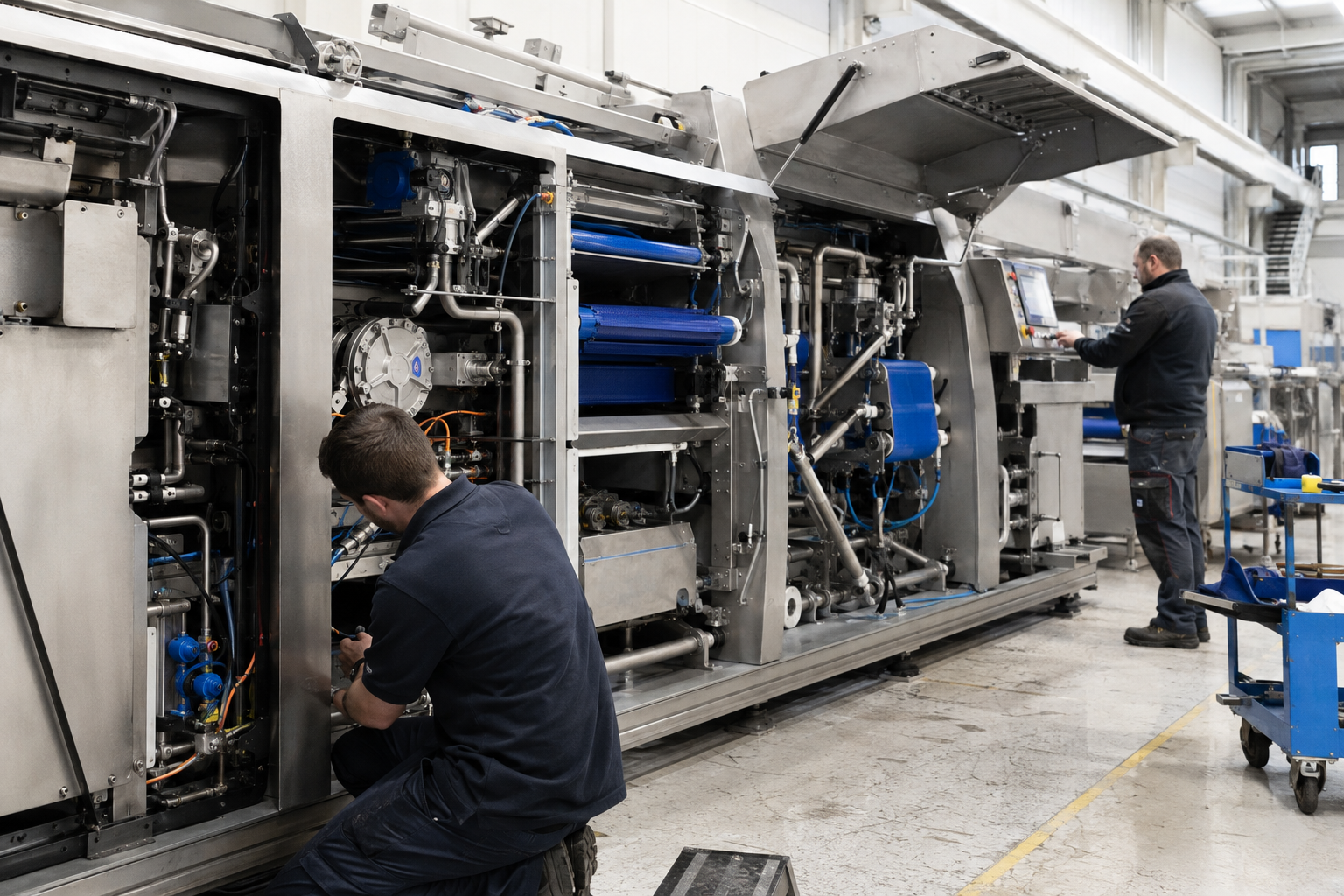
Photographs throughout this page were taken while our machines were undergoing test prior to leaving Weifang; they show detail that’s responsible for reliable service rather than an artist’s impression of a closed box.
Who builds the machine
Shandong Shengtu Bufan Intelligent Technology Co., Ltd. is a high-tech enterprise in Weifang working on food machinery research, manufacturing and whole-plant digital projects. The engineering base behind the freezing lines includes more than 100 research and development projects, more than 100 software copyrights and 7 patents. Request the current management-system records relevant to the supply arrangement; confirm their holder, scope and validity separately from the handling requirements for your drawings and product data.
- Control hardware is developed in house on the STUnit platform, so the freezer control layer isn’t a bought-in black box.
- Digital scope covers standalone OTA upgrades and line-level integration, so a freezer delivered as one machine can join a line later.
- Where the tower is one machine inside a wider line, the same engineering team scopes the IQF frozen food production line around it.
Not ready to send an enquiry yet? Work your own product through the freezing capacity worksheet and see whether your numbers hang together first.
When a Spiral Belt Freezer Is Not the Right Choice
A spiral tower is a continuous machine with a fixed enclosure and a belt that runs whether or not product is on it. Unlike a batch freezer, it only earns its cost when the line keeps feeding it. Four situations make it the wrong shape, and in each one the right call is a different machine.
| Situation | Why it works against you | What to do instead |
|---|---|---|
| Low or intermittent volume | Enclosure, fans and belt are cooled and run for a short production burst, so fixed cost per kilogram climbs | Use a batch blast room or trolley freezer, and revisit the spiral when the line runs continuously |
| Regular blocks or boxed product | Air freezing a block is slow because heat travels out through the product, and belt area is the expensive way to buy that time | Use a plate freezer, where metal contacts both faces of the block |
| Product that cannot take belt transfer | Every infeed, outfeed and transfer point is a chance for damage, and the tower adds two at minimum | Cut transfer points in the line layout first, or use an impingement or fluidised bed unit |
| No process water and no floor drainage | Water defrost and hose-down cleaning are both unavailable, which changes the defrost design, not just the cleaning method | Say so at the enquiry stage so the enclosure is designed for a dry site from the start |
Spiral Belt Freezer Engineering Tools
Freezing Capacity Match Worksheet
Calculate exact freezing capacity requirements for your production line. Optimize thermal exchange efficiency based on specific food product characteristics.
Spiral Freezer Factory Acceptance Test Checklist
Standardized FAT protocols for pre-shipment inspection. Verify mechanical integrity and refrigeration performance against engineering specifications.
Spiral Freezer RFQ Checklist
Comprehensive request for quotation framework. Define technical parameters, footprint constraints, and hygienic design standards for accurate vendor evaluation.
Spiral Freezer FAQ
What is a spiral belt freezer and how does it work?
It’s a continuous freezer whose belt is wound into a vertical helix around a rotating cage inside an insulated enclosure. Product enters at the bottom, spends the climb in cold air, and leaves at the top frozen and still separated piece by piece. That geometry buys minutes of residence time without buying metres of building.
How is dwell time decided for a spiral freezer?
It comes from the thickest piece you’ll run, its entry temperature and the core you need at the outfeed. On our machines it’s set between 15 to 45 minutes, adjustable, with belt speed as the control. Size it on an average piece rather than the thickest and this is the number that fails first.
How much weight does product lose during air blast freezing?
Published FAO measurements put typical individually quick frozen weight loss in an air blast freezer at 1.2 to 2.5 percent, against 0.3 to 0.8 percent in a liquid nitrogen freezer and nil where metal touches the product directly.1 The same source notes that physical losses in a freezer suited to the product need not exceed about one percent. Treat it as a design target you influence with glazing, packaging and air management, not a fixed property of the machine.
How often does a spiral freezer need defrosting?
No interval transfers between plants, because frost load follows product moisture, room air and run hours rather than a timer. What’s commonly done is to plan the defrost window into the production day: one documented UK installation was specified for 20 hours of production a day with a four hour defrost window.4 Give us your production and sanitation windows separately and the defrost strategy is designed around them.
What is the difference between a spiral freezer and a tunnel freezer?
Both are air blast machines, and the difference is where the belt length goes. A tunnel lays it flat, so a long dwell time becomes a long building; a spiral stacks it vertically, trading floor area for headroom. Tunnels suit short freezing times and low ceilings; spirals suit products needing minutes.
Which belt should I choose, stainless steel mesh or modular plastic?
A mesh belt offers a higher proportion of open area, facilitating airflow through the bed of the product, and withstands wash-down temperatures without issue. A modular plastic belt provides a smooth surface that’s ideal for coated, sticky or delicate products, and a faulty section can be easily replaced by module. The choice of belt is based on the suitability for the product’s surface rather than the cost of the belt itself.
What do you need before you can quote a spiral belt freezer?
Thickest piece dimension, entry temperature, required core, sustained rate, daily production and sanitation windows, and site services including ceiling height, power, water and drainage. With those, quotations are returned within 3 working days, reviewed by an engineer. Without them, any number from any supplier is a guess dressed as a quotation.
How long does delivery take once the order is placed?
Manufacturing is scheduled at 45 to 60 days after the down payment and the approved technical configuration, excluding ocean transit. Ocean transit is a separate clock, and industry-wide timeliness data for the week to 27 July 2026 put the Asia to North Europe leg at 58.2 days5, measured from the cargo ready date at the exporter to the container leaving the destination port. Plan the two windows end to end rather than reading the build time as a delivery date.
What documents and support come with the machine?
Electrical schematics, layout and installation drawings, the operation and maintenance manual, the workshop acceptance record, and the packing list with the export documents for HS 8418 61 20. Machines ship in a standard export wooden case, and warranty and technical-support terms are confirmed in the quotation and contract. Payment is by T/T or L/C at sight, and we ship EXW, FOB or CIF.
Does a CE marked freezer satisfy United States requirements?
No, and treating the mark as a global pass is where buyers lose time. Europe runs a machinery directive with harmonised standards under it, and the mark travels with the machine. The United States has no single equivalent machinery directive, so food equipment there is judged against a combination of federal food safety regulation and voluntary standards written by industry bodies. Ask about contact material and surface finish, splash zone cleanability, and how the control enclosure is washed down, because those are the questions both routes actually turn on. We supply CE marked and will state what that covers rather than claim it settles a second jurisdiction.

![F&V Freeze-Drying Line Process Guide [2026]](https://shengtumachinery.com/wp-content/uploads/2026/09/fv-freeze-drying-line-guide-featured-150x150.png)