Get in touch with Shengtu Bufan Company

Industrial pet food processing solution
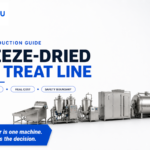
Freeze-Dried Pet Treat Line
A Freeze-Dried Pet Treat Line project starts with your material, batch and facility inputs. Shengtu configures industrial production equipment from preparation through vacuum freeze-drying, inspection and pack handoff, because the right route is defined by the treat—not by a generic machine list.
- Preparation
- Vacuum freeze-drying
- Detection
- Packaging handoff
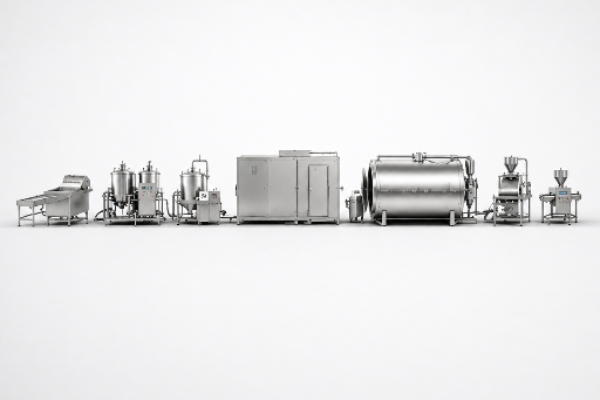
Line Scope by Processing Station
Station
Visible scope
Input needed before confirmation
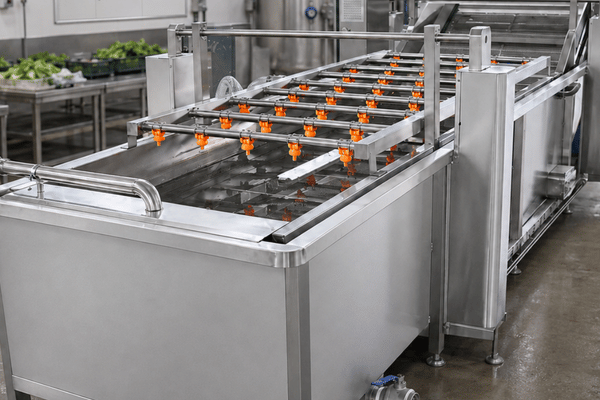
Bubble washing
Material washing route
Incoming condition, soil load and hygienic requirement
Dicing
Portion-size preparation
Target geometry, tolerance and product fragility
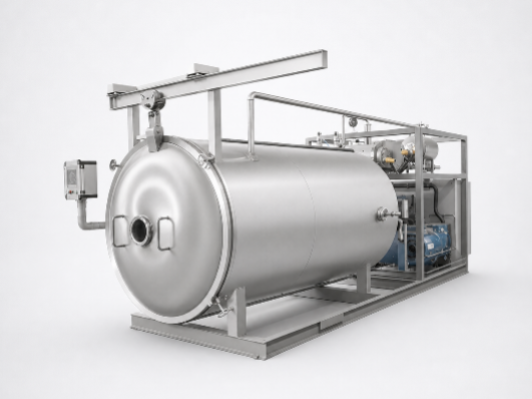
Vacuum freeze dryer
Batch drying chamber
Product state, tray load, endpoint and utility data
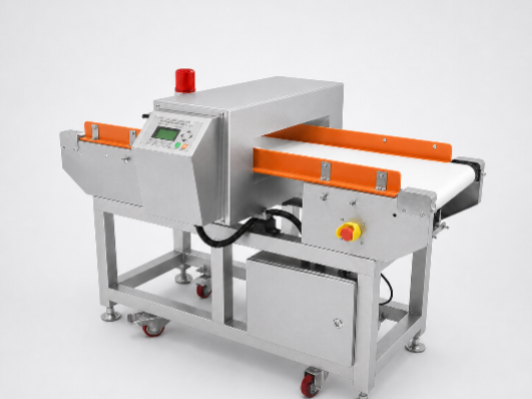
Metal detection
Foreign-material inspection point
Product effect, package state and test-piece standard
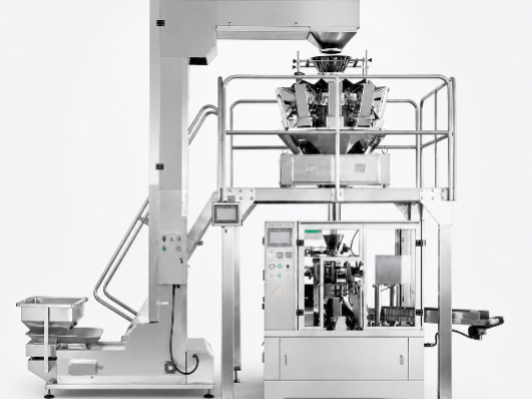
Premade-pouch packaging
Pack handoff
Fill weight, pouch, atmosphere and seal criteria
Digital scope is selected, not assumed
Low-code control boxes, multi-protocol gateways, remote-update functions, vision and edge algorithms may be reviewed as project options. Protocol ownership, remote access, update controls, recovery and plant security requirements must be agreed before inclusion.
Equipment scope follows the product
Freeze-drying pet food and freeze-dried pet food products can share equipment categories while requiring different product and hygiene decisions. As a pet food industry supplier, we confirm what will be produced, what the buyer supplies and where each interface sits.
Define the Pet-Treat Product and Batch Load
Starting a line review with the incoming material helps. It is not enough to call the material “meat treats” to select a chamber, load pattern or sanitation boundaries.
CLASSIFICATION
Raw-product classification
A raw material description must clarify whether the route remains raw pet food, becomes cooked product or applies another validated control. This difference matters on a cat food or dog food project because the freeze dryer is not assumed to be the default lethality step.
SPECIFICATIONS
Product definition
- Animal protein or formulated input category
- Raw, cooked, pasteurized or other validated route
- Incoming condition and pretreatment
- Piece geometry, dimensions and fragility
PARAMETERS
Batch and release definition
- Frozen handoff and tray-loading pattern
- Planned batch demand and operating schedule
- Endpoint method and release authority
- Allergen, sanitation and market boundaries
Pretreatment and Product-Form Decisions
Changing the geometry influences heat and mass transfer, tray efficiency and downstream handling. That is the reason one freeze drying recipe should not be migrated across unrelated products.
Define the Freeze-Drying Endpoint Before Acceptance
Freezing, primary drying and secondary drying describe physical process steps. Each batch will require product-specific records, sampling and an agreement over release.
Evidence layer
Planning purpose
Project decision
Recipe-development indicators
Compare product and load behavior
Defined during product review or trials
Batch process record
Document the agreed cycle and deviations
Fields confirmed with the controls scope
Final product acceptance
Apply buyer-approved test criteria
Limits, methods and sampling owned by named parties
ACCEPTANCE PLAN
Drying evidence is not lethality evidence
Moisture content and water activity are not interchangeable, and neither value alone demonstrates pathogen reduction or microbiological release. Raw, cooked and validated-lethality routes therefore remain separate in the acceptance plan.
EVIDENCE CRITERIA
Why published research numbers do not become line settings
One peer-reviewed pet-treat study combined a specified water activity with 10 minutes of atmospheric cold plasma and 7 days of storage. For a purchasing team, those parameters show why a dry endpoint is not a substitute for a documented control plan. The conditions belong to that experiment; the project’s product, method and release plan need their own evidence.
Proposal Scope and Project Economics Start with Inputs
We do not publish a universal price, cycle-time or payback figure. Before product trials, our proposal states the design basis and the assumptions tied to the defined product. Comparable estimates must use the same product, capacity basis, equipment footprint, utility requirements and acceptance criteria.
CATEGORY 01
Product and batch
- Recipe and geometry
- Tray and chamber arrangement
- Operating schedule
CATEGORY 02
Facility and hygiene
- Electrical, refrigeration, vacuum and air
- Water, drainage and ambient conditions
- Segregation and sanitation boundaries
CATEGORY 03
Pack and controls
- Detection test and pouch format
- Dosing, atmosphere and sealing
- Protocols, data and third-party interfaces
Our 20 m²-Class Proposal Baseline
We provide this as the standard starting point when the buyer has an industrial requirement but has not yet completed product trials. We then bind the model to the final load definition, required utilities and floor plan.
Reference parameter
Our proposal baseline
Scope boundary
Batch-load planning
At least 150 kg per batch
Confirmed against product density, incoming moisture and tray depth
Effective freeze-drying area
At least 19.8 m² effective freeze-drying area
Approximately 20 m² industrial configuration
Shelf-temperature range
−45 °C to +80 °C
Equipment range; recipe setpoints are product-specific
Cold-trap temperature
At or below −60 °C
Empty-load equipment reference
Ice-capture capacity
At least 300 kg ice capture per batch
Matched to incoming water load
Installed electrical load
At or below 88 kW at 380 V / 50 Hz
Freeze-dryer module; connected line utilities are separate
Reference module envelope
No greater than 7,600 × 2,100 × 3,600 mm
Service clearances and connected equipment are additional
Cost comparison rule
Compare dryer utilization, utilities, labor, cleaning, sanitation, maintenance, packaging and evidence work on a common operating basis. If a quote omits a facility or validation boundary, it is not yet comparable.
Prevent quote mismatch
Missing utility, validation or pack-handoff scope creates cost and schedule risk because each supplier may price a different boundary. Define the trade-off between a narrow equipment quote and a wider interface scope before comparison. Request a specific scope comparison after the input set is ready.

Food-Safety and Inspection Responsibility Boundaries
Equipment can support an approved process, but it does not create a facility food-safety plan. Assign ownership before the line layout is released.
Responsibility
Examples to assign
Buyer facility
Hazard analysis, allergen and sanitation programs, environmental monitoring, quarantine, release limits and records
Shengtu project scope
Agreed equipment surfaces and access, instrumentation, control records and interface documents
Third-party or shared
Validated lethality, laboratory method, metal-detector validation, packaging material and plant data systems
United States project note
Animal-food facilities apply the relevant requirements of 21 CFR Part 507. Manufacturers using uncooked or unpasteurized poultry or cattle ingredients in cat or dog food should also review the FDA guidance on H5N1 food-safety-plan reanalysis.
Other markets
Requirements in your target market need their own assessment. Resources shown below support initial planning; they do not approve Shengtu equipment or the buyer’s facility.
Contamination does not cease to be a concern because the product entered the vacuum chamber. Shandong Shengtu Bufan Intelligent Technology Co., Ltd. documents the agreed equipment interfaces, while the buyer owns its validated food-safety plan and compliance with applicable requirements, including FDA 21 CFR Part 507 where relevant.
No unsupported preservation claim
We do not state shelf life, nutritional-value retention or preservative value without product-specific evidence. Any such claim depends on the documented product, process method and validated control plan.
Compliance Documentation & Certifications
From Product Data to an Acceptance Scope
Maintaining all product, equipment and responsibility elements together throughout this process ensures it is manageable and keeps quotation uncertainties to a minimum at each step.
- Confirm load definition Product path/geometry, frozen product hand-off, tray plan, and expected batch demand.
- Map interfaces Outline hygiene, utilities, conveyance, packaging and automation zones with regard to the clear product path.
- Establish configuration of proposal Define included equipment, buyer responsibilities/services, and third-party system scope.
- Confirm the evidence plan Identify recipe-development records, required batch parameters, acceptance methods, and responsibility for approval and release.
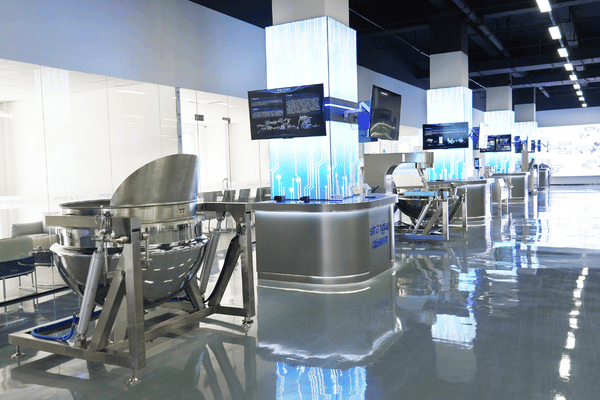
Directly Relevant Equipment Views
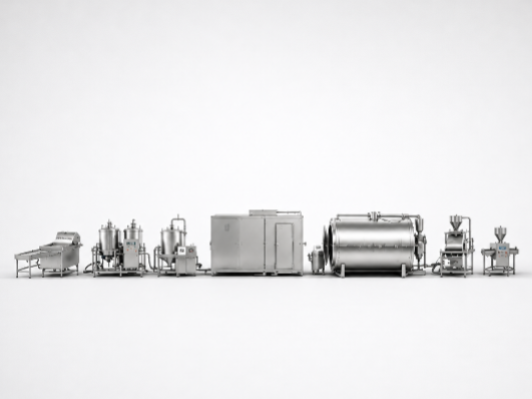
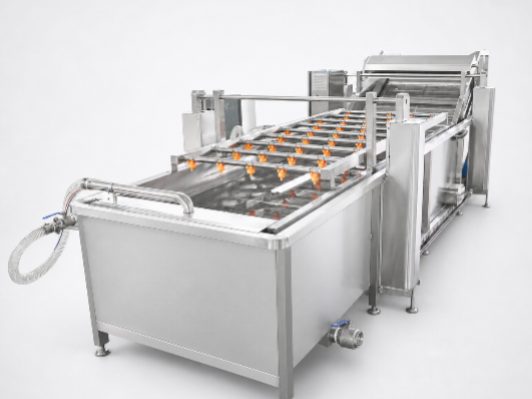
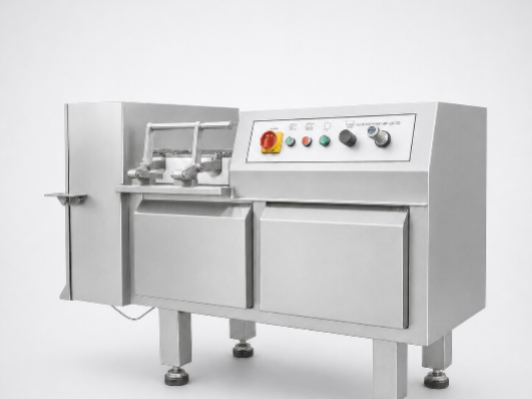
Define Your Project Scope
Access the Pet-Treat Load Definition Sheet, Freeze-Dry Endpoint Evidence Ladder, and Pack-Ready Exposure Clock to establish your equipment baseline and acceptance criteria.
KNOWLEDGE BASE
FAQ: Freeze-Dried Pet Treat Line
There is no one-size-fits-all freeze-dried production process. Product composition, dimensions, pretreatment, frozen condition, tray loading, chamber position and endpoint method must be evaluated for the intended product.
Production capacity starts with the intended batch load, loading pattern, cycle assumptions, operating schedule and the bottleneck outside the freeze-dryer chamber. We verify the project basis before providing a throughput estimate.
Your supplied route shows bubble washing, dicing, metal detection and premade-pouch packaging around the vacuum freeze dryer. We confirm final inclusion, conveying and interface ownership in the proposal.
Buyer and project team representatives define the test method, sample plan, target and approval authority. Moisture content and water activity (aw) are different measurements, and neither alone proves microbial inactivation.
For related planning details, see the freeze-dried pet treat line guide.
Provide the available electrical supply, refrigeration and vacuum interfaces, water, plant air, drainage, ambient conditions and construction constraints for your freeze-dried pet food manufacturing plant. The exact list follows the selected station configuration.
Project-level optional interfaces and interconnections can be explored after the process controls and protocols, control of data responsibility, the authority for remote monitoring, controls for process updates, and cyber protection concerns have been resolved. No general compatibility claim or protection promise is extended.
No. Freeze-dried products or freeze-dried pet treats are not automatically treated as a pathogen-kill step. The applicable hazard-control, validation and release plan needs its own evidence and named owner.
Provide product geometric data, product classification, its pretreatment type, the ready-to-freeze condition and hand-off form, intended batch size, the anticipated end-point process, the physical location where process components will be installed and the associated utilities, product package information, and the specific target market to which it will be exported.
Applicable certificates and documents are confirmed for the equipment model, configuration and destination country. Company management-system records are reviewed separately from product conformity documents.
![F&V Freeze-Drying Line Process Guide [2026]](https://shengtumachinery.com/wp-content/uploads/2026/09/fv-freeze-drying-line-guide-featured-150x150.png)