Get in touch with Shengtu Bufan Company
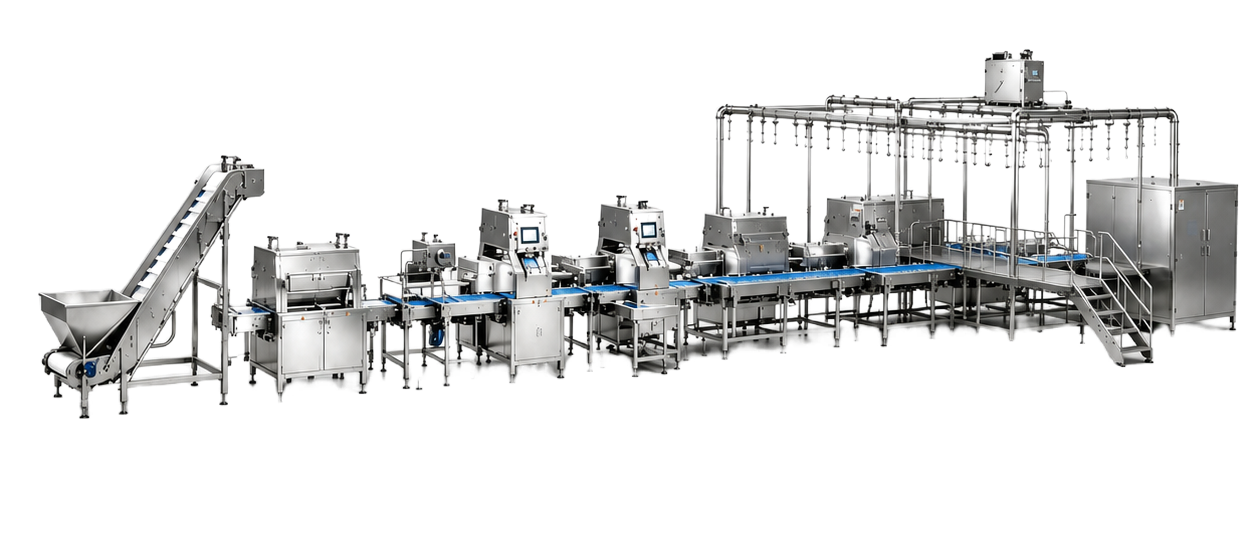
Meat and Poultry Processing Lines Built Around Your Product Route
Shengtu configures meat and poultry processing lines for nuggets, meatballs, fishballs, patties, sausage, ham, hot dogs, and beef, lamb or poultry cutting. Choose the closest product route first, then define product state, target output, hygiene, packaging, controls and site interfaces before the line scope is fixed.
Meat Processing Equipment at a Glance
Commercial qualification, not a catalogue shortcut
For a processor in the meat industry, the essential comparison is the complete meat processing line rather than an isolated motor rating. Shengtu uses these four routes to expose scope gaps before detailed engineering begins.
-
CHK_01
Commercial meat processing equipment is compared by process fit and responsibility boundary, not by a single machine rating.
-
CHK_02
Buyers comparing meat processing equipment manufacturers should ask how packaging, controls, cleaning and acceptance connect to the process modules.
-
CHK_03
Poultry processing equipment manufacturers may serve very different intents; this page covers further-processing lines, not farm-scale plucking or primary slaughter.
Shengtu Line Engineering and Digital Integration
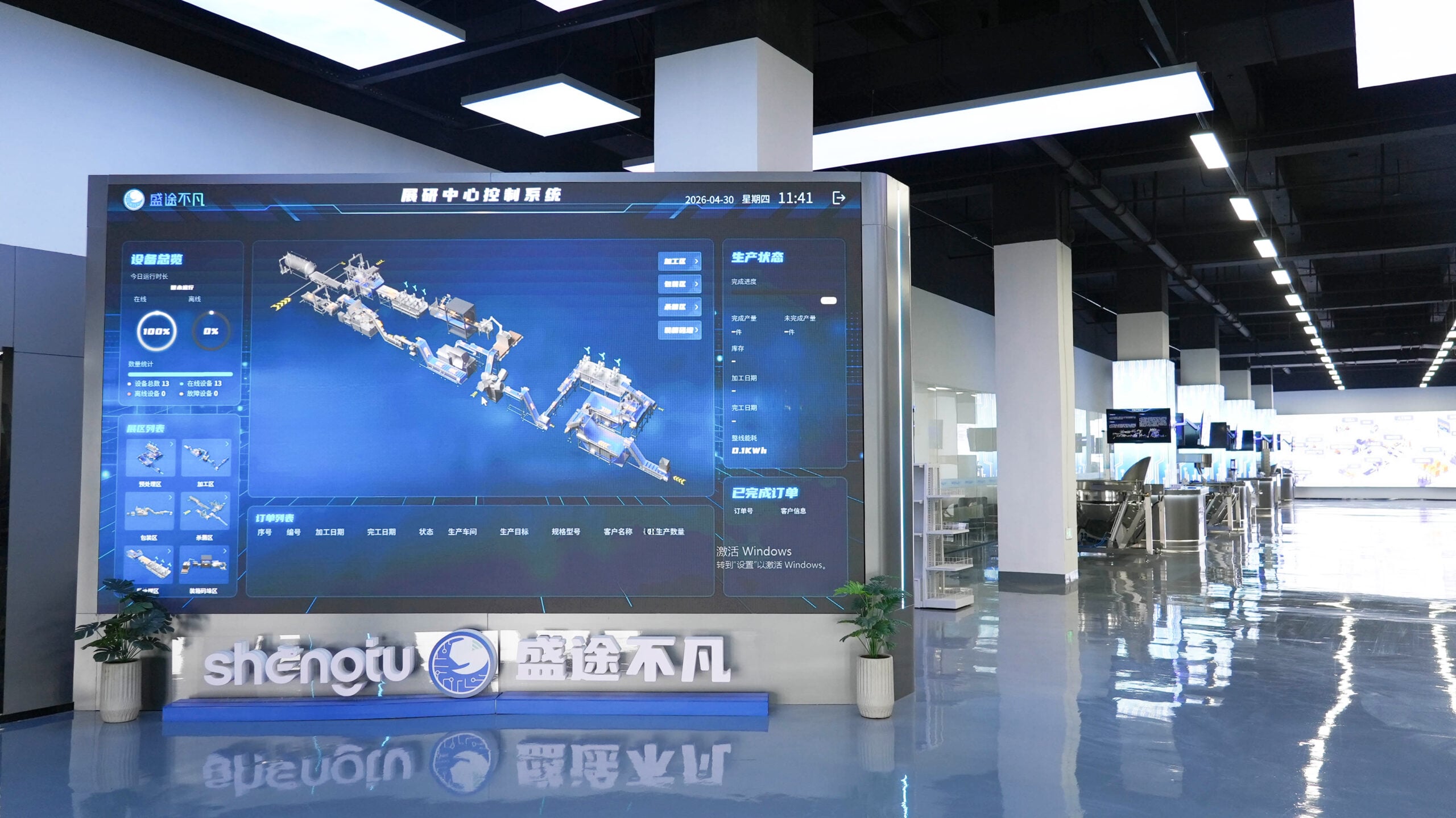
Shengtu self-produces control hardware for deeper machinery, controls and data integration. Because connected operation creates an OT risk boundary, its architecture keeps each interface visible from preparation through packaging; NIST SP 800-82 Rev. 3 informs the responsibility questions used during review.
Processing equipment is selected around the product route, batch behavior, cleanability, maintenance access and the rate at which the next module can accept product.
STUnit, low-code control boxes and multi-protocol gateways support project-configured machine coordination, data collection and upgrade paths.
YOLO vision and edge algorithms can be scoped where inspection or process monitoring has a defined data source, acceptance rule and response owner.
“A machine rating becomes a line commitment only after the product, interfaces, buffers, cleaning cycle and acceptance test are defined together.”
STUnit supports standalone OTA upgrades, line integration, smart-factory planning and IT/OT digital empowerment. Remote access, accounts, backups, update approval, recovery and network segmentation remain named project responsibilities rather than default promises.
Four Processing Routes for Different Finished Products
This Four-Route Processing Scope Map is a navigation and qualification asset. It separates documented stages from the product-state, hygiene, packaging and integration decisions that still need project evidence.
Documented Shengtu line families
Chicken Nugget Coating-Frying Line
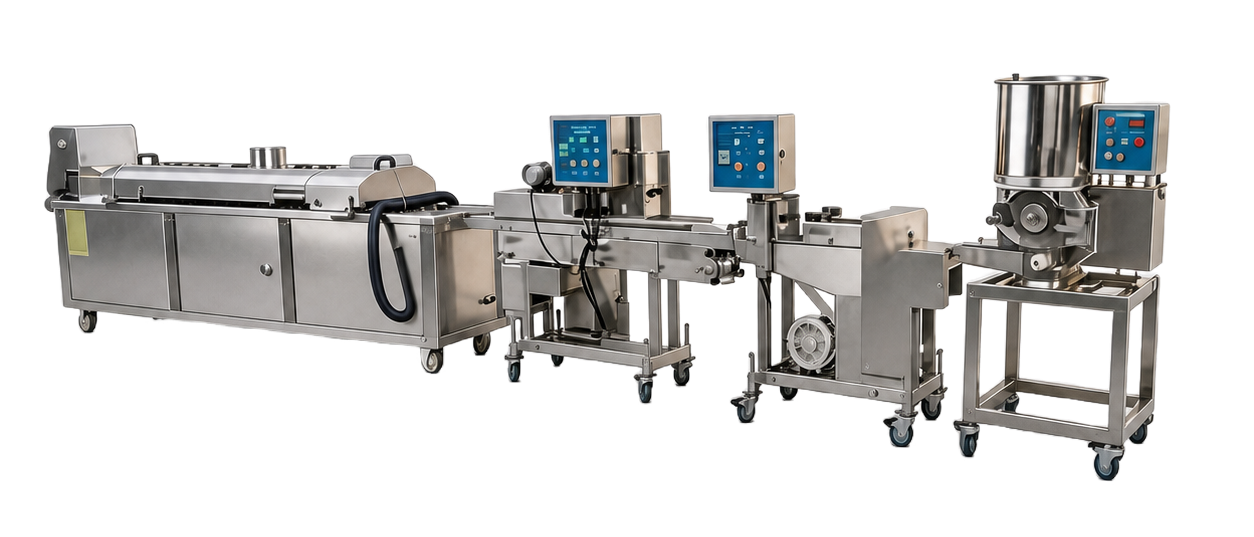
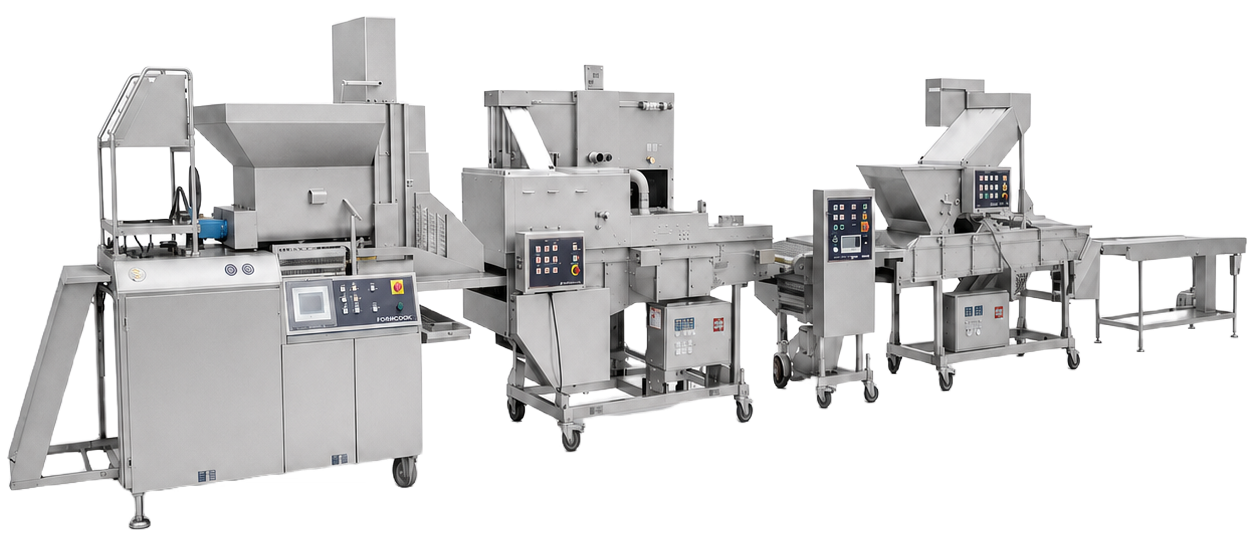
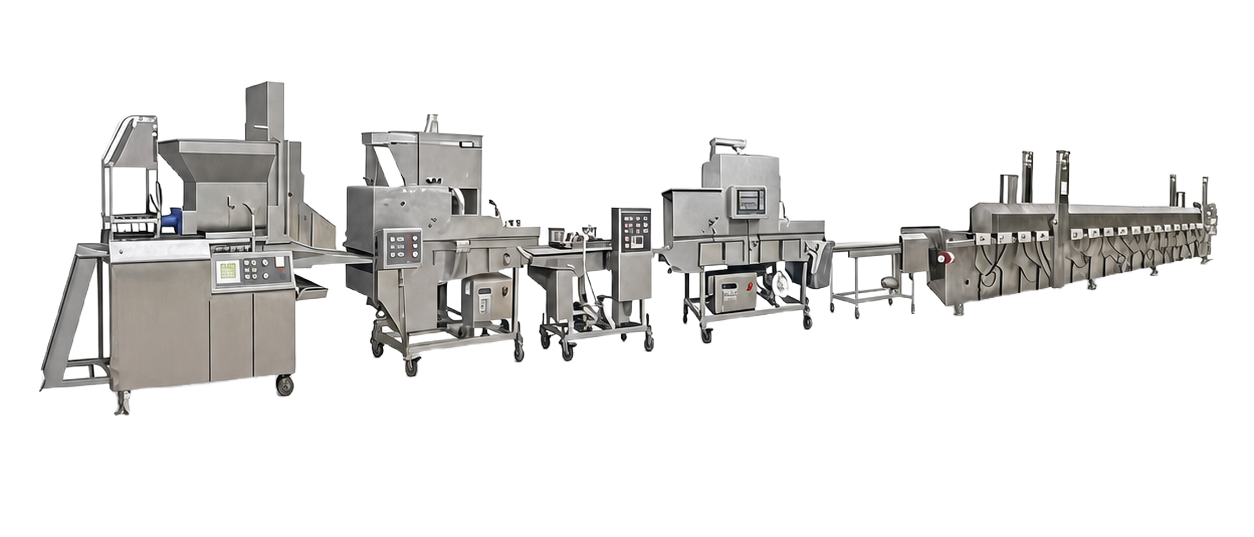
Chicken Nugget Coating-Frying Line media documents marinating, battering, breading and frying stages, while also showing freezing, packaging and metal detection modules.
Meatball / Fishball / Patty Line
Meatball / Fishball / Patty Line media documents grinding and forming stages, followed by blanching, freezing, packaging and metal detection modules.
Sausage / Ham / Hot Dog Line
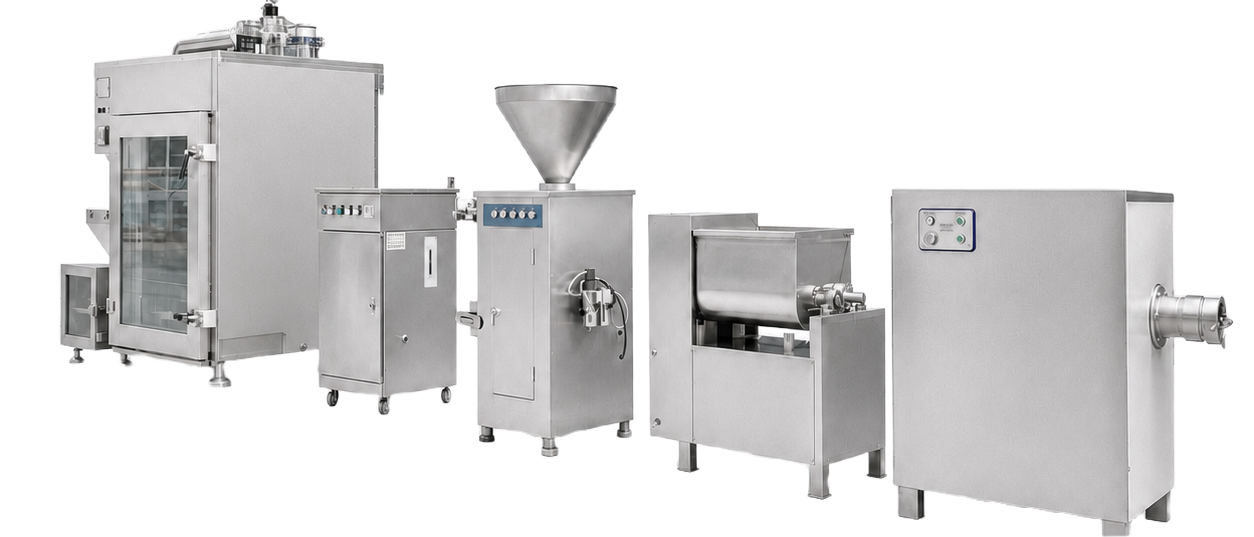
Sausage / Ham / Hot Dog Line media documents grinding, bowl cutting, tumbling and stuffing stages, with a smokehouse, packaging and metal detection in the supplied module set.
Beef / Lamb / Poultry Cutting Line
Beef / Lamb / Poultry Cutting Line media documents a meat saw and skinning stage, with metal detection and packaging modules. Any meat slicer or other slicer is added only when the required cut and product condition justify it.
Line Modules, Controls and Plant Interfaces
Overview
Buyers scaling from manual work often start with a machine list, but product movement between modules is where delay, contamination risk and inconsistent output appear. Product behavior can change at industrial scale, so recipe trials and acceptance conditions belong beside the equipment scope.
Raw material
species, temperature, recipe, allergens
Preparation
grind, mix, tumble or marinate
Form or cut
shape, slice, stuff, saw or skin
Thermal step
fry, blanch, smoke or hold
Cool or freeze
product state and exposure
Inspect
defined foreign-material control
Package
format, rate, coding and handoff
Three interface layers below the product flow
Guarding, emergency stops, safety functions, module interlocks and hazardous-energy isolation are scoped around the completed assembly and cleaning access.
Tags, recipes, traceability events, users, remote access, backups and update ownership are defined before connected operation is enabled.
Signals, speeds, heights, product transfers, utilities, cleaning boundaries and responsibility for modified machinery are checked before retrofit.
Project Specifications for a Configured Processing Line
This proposal input schedule turns a broad request into comparable scope. It is also the safest place to separate what the buyer defines, what Shengtu configures and what the project team must validate.
Thermal & cold steps
Packaging
Output target
Recipe and allergens
Site and utilities
Market and acceptance
Quotation, Production Schedule and Commercial Terms
Line price follows the product route, target good output, module count, automation depth, hygienic design, packaging, controls, utilities, documentation and site-service scope. An equipment list without these boundaries is not a comparable quotation.
Bronze TCO decision card
No Shengtu-specific payback percentage is published here. Compare purchase scope with changeover time, reject handling, maintenance access, spare-parts readiness, utilities, packaging stops, commissioning and the cost of unresolved interfaces.
Cost drivers that belong in the comparison
Quality, Machinery Safety and Project Evidence
Food safety and machine safety meet at cleaning, maintenance and product-transfer points. A clean design cannot leave rotating or nip-point hazards exposed, and a guard cannot create an inaccessible contamination trap.


- Stainless steel grade, product-contact finish and compatibility
- Access for inspection, cleaning and maintenance
- Drainage, hollow areas and product or liquid collection
- Raw-to-cooked separation and post-lethality exposure
- Allergen scheduling, changeover and cleaning release
- Point-of-operation, nip-point and rotating-part guarding
- Emergency stop and safety-function boundaries
- Electrical, mechanical, pneumatic, hydraulic and thermal energy isolation
- Safe access for unjamming, sanitation and maintenance
- Responsibility for the completed machinery assembly
Inspection is a system, not a badge
Metal detection is configured only after the establishment defines the foreign-material hazard, product and package, test pieces, reject path, monitoring, calibration and corrective action.
Traceability likewise needs a defined lot boundary and data event at each useful process point.
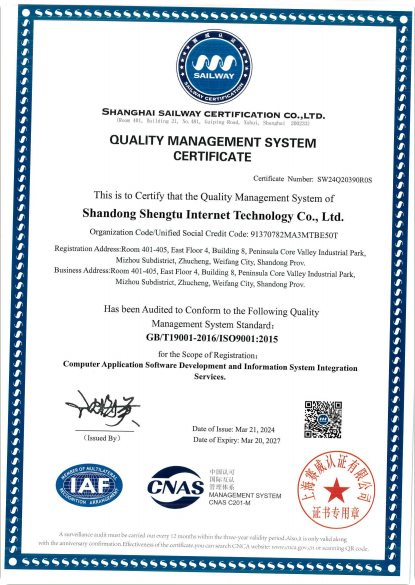
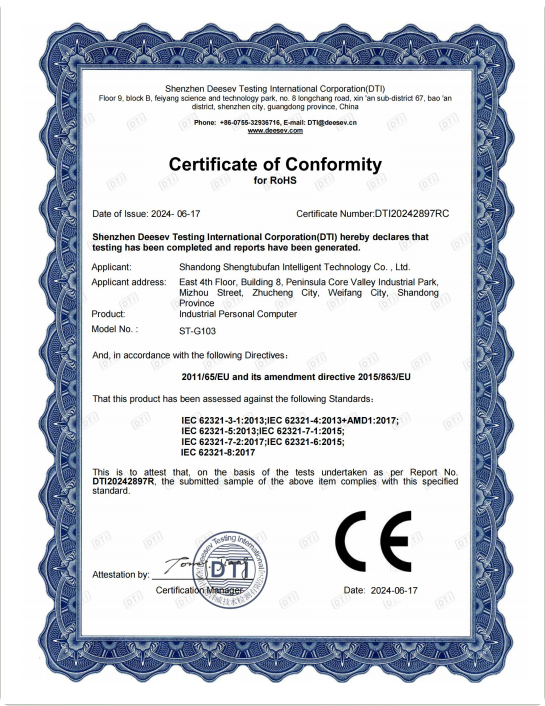
Each proposal identifies the target market, technical documentation, conformity tasks and acceptance evidence that apply to the actual configuration.
From Product Brief to Commissioned Line
You provide the product, recipe, state, output, package and site information.
Shengtu maps preparation, forming or cutting, thermal, cold, inspection and packaging stages.
Both teams freeze transfers, utilities, controls, guarding, hygiene zones and existing-equipment boundaries.
Scope, exclusions, documentation, FAT method, commissioning tasks and site criteria are written together.
The agreed mechanical, electrical and control tests are run before release for shipment.
Site utilities, real product, live interfaces, training, punch-list closure and acceptance complete the handover.
Real Line Media and Documented Company Capability
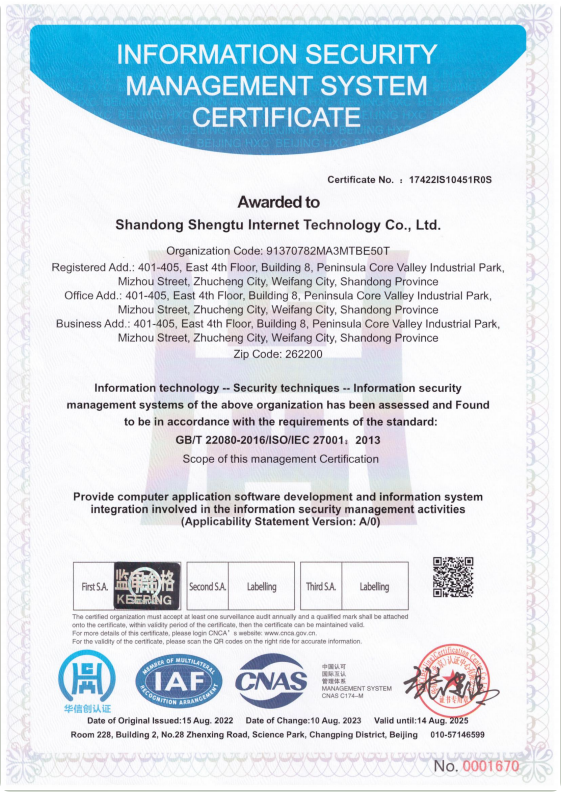
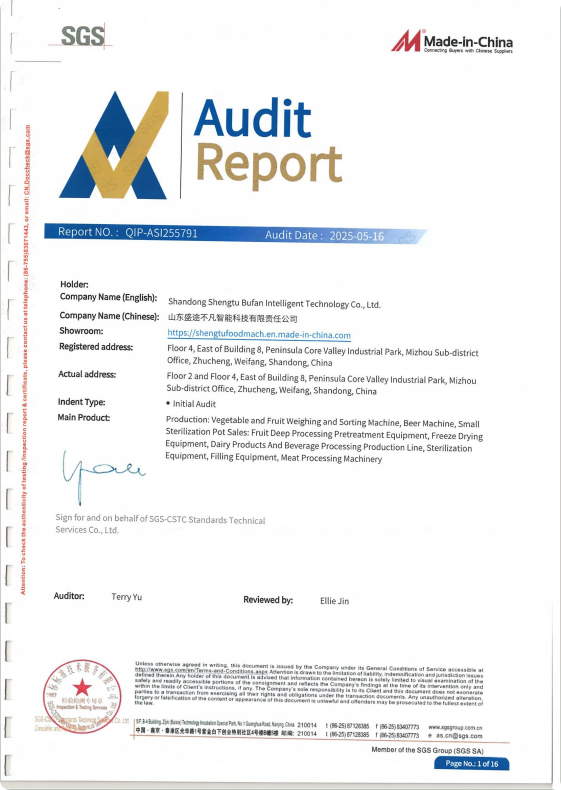
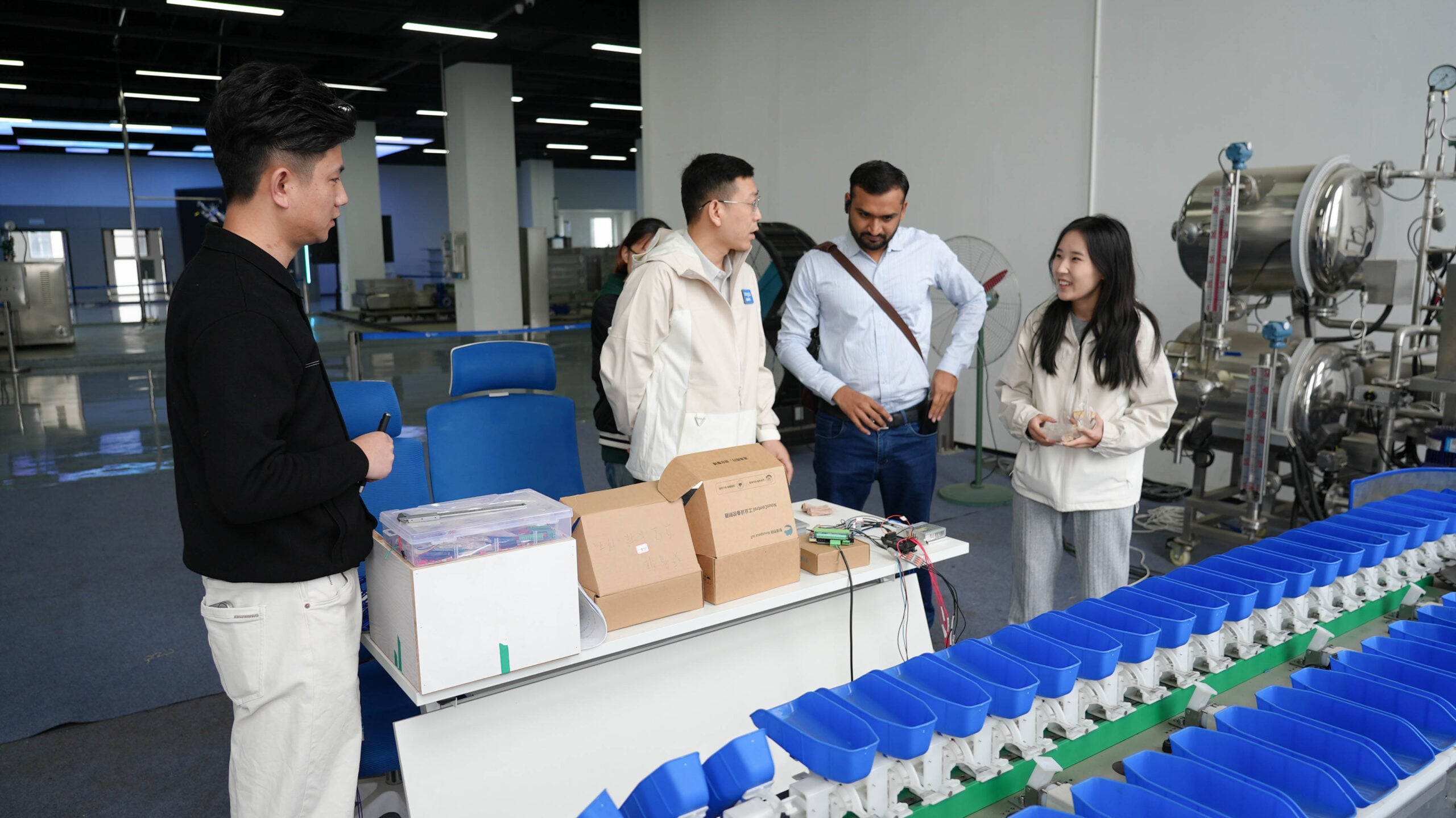
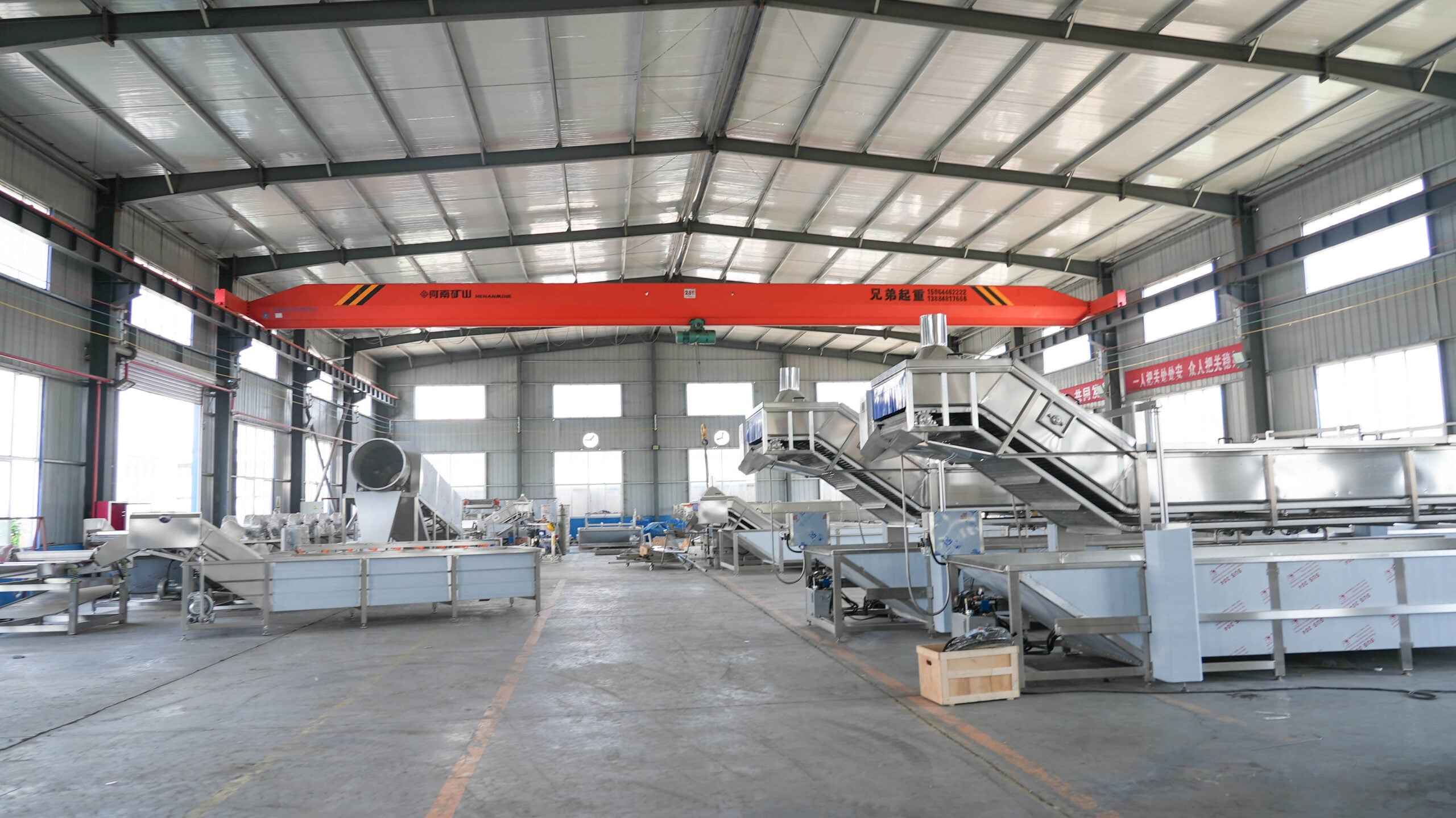
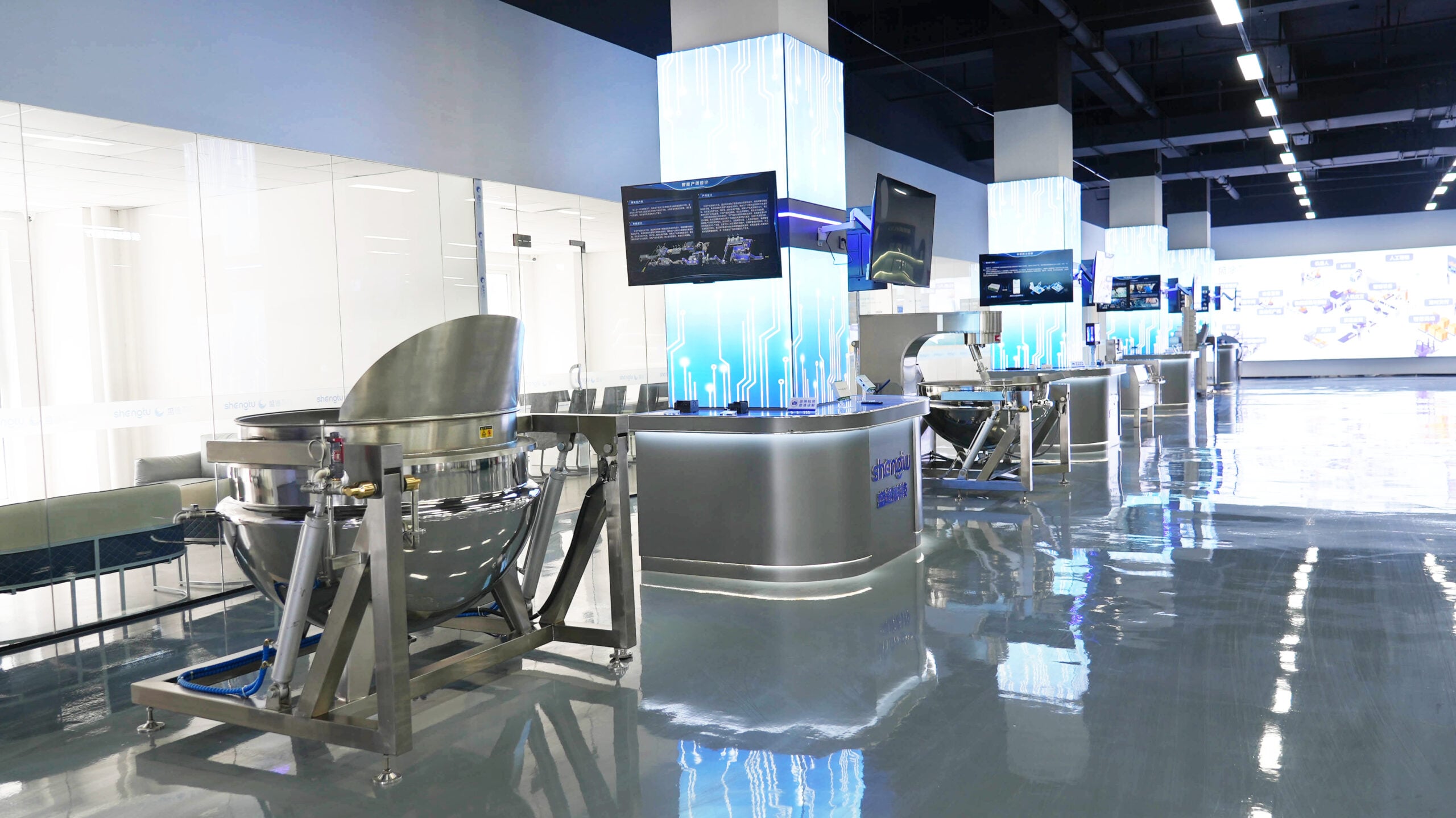
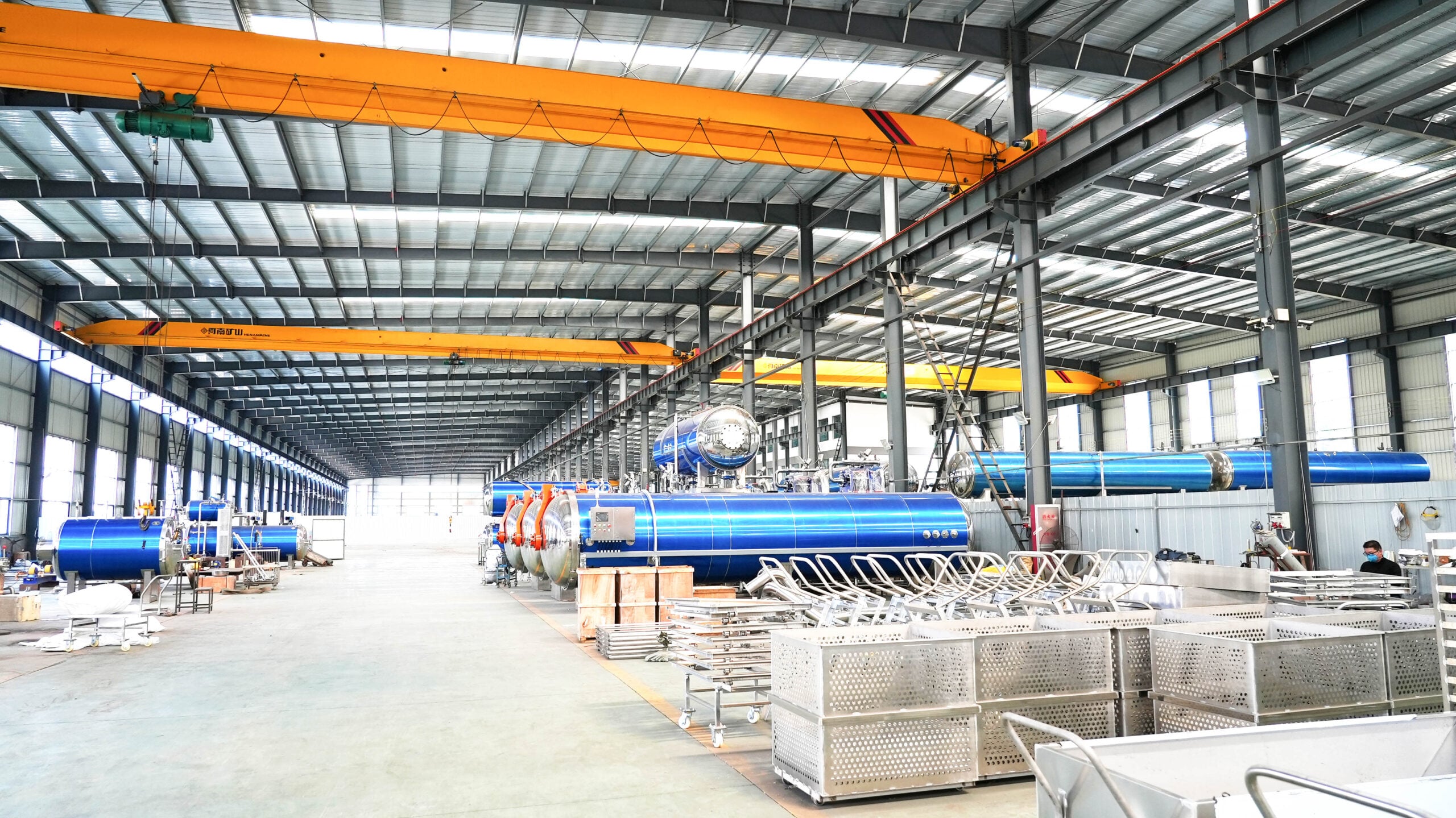
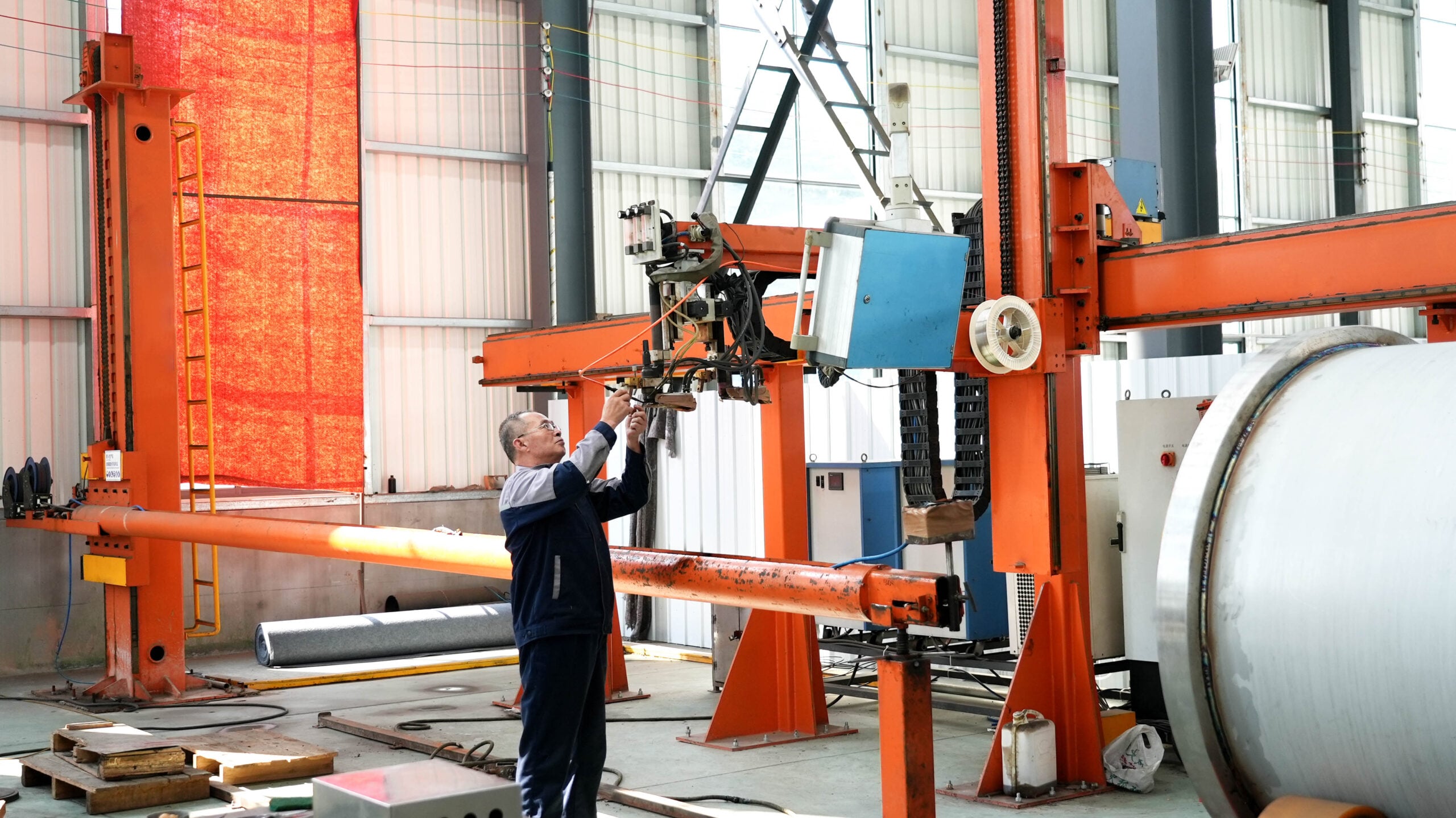
Shengtu has operated since 2018 with 150–200 employees in Zhucheng City, Weifang. Its team combines food machinery R&D and manufacturing with whole-plant digital planning.
Chicken nugget, meatball/fishball/patty, sausage/ham/hot dog, and beef or poultry cutting media anchor the four public product cards.
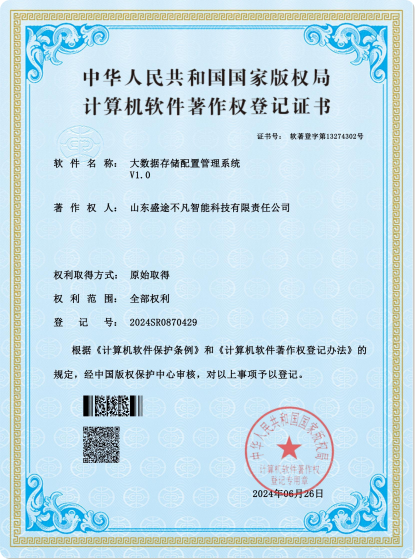
Documented control and digital capabilities include STUnit, low-code control boxes, multi-protocol gateways, YOLO vision and edge algorithms.
Whole-line throughput, footprint and monetary outcomes stay tied to the product, configuration, acceptance method and project record that produced them.
Full-Line, Retrofit and Phased Integration Paths
Automation depth should follow the current process constraint. The least expensive initial purchase may still carry higher project risk when it depends on unreliable retained equipment.
New full line
Best when the process, layout and control architecture are being designed together and a single integration boundary reduces coordination risk.
Existing-equipment retrofit
Best when sound grinders, mixers, freezers or packaging machines can stay after heights, rates, signals, guarding and sanitation interfaces are checked.
Phased integration
Best when the budget or operating schedule favors one proven constraint at a time, followed by measured reassessment before the next phase.
Common assumption check
More speed at one module does nothing for daily output if the real constraint is changeover, product accumulation, inspection recovery or packaging. A modular plan buys you evidence before the next investment and exposes the trade-off between flexibility, automation and single-point responsibility.
Line Engineering & Planning Resources
Define product routes, calculate module balance, specify site conditions, and map OT integration using our standardized engineering frameworks before locking the equipment scope.
Line Route Selector
Map the required preparation, forming, thermal, and packaging stages based on your specific meat or poultry product state.
Launch Route SelectorLine Balance Calculator
Identify rate gaps, determine required buffer zones, and calculate target good output across interconnected processing modules.
Open Balance CalculatorProposal Input Checklist
Compile necessary product data, hygiene requirements, site utilities, and existing equipment boundaries prior to quotation.
Start Input ChecklistIntegration Path Planner
Define data tags, safety interlocks, recipe ownership, and IT/OT network boundaries for connected plant operation.
Access Integration PlannerMeat and Poultry Processing Line FAQ
Start with the four product cards: coating and frying for nuggets; grinding, forming and blanching for meatballs or patties; grinding through stuffing and smoking for sausage; or sawing, skinning and packing for fresh cuts. Final configuration follows your product state, package and output target; this industrial cutting route is not a butcher-shop equipment catalogue.
Enter the good-product rate, downtime and changeover allowance for each stage, then test the proposed line with your product and package. The lowest stable handoff, not the highest catalogue number, sets the current line constraint.
Yes, after the mechanical, product-transfer, utility, control, safety and sanitation interfaces are reviewed. A retrofit is quoted only when the responsibility for every modified or retained interface is clear.
Provide the finished product, recipe and allergens, RTE/NRTE state, target good output, process steps, package, layout, utilities, existing equipment, destination market and acceptance method. The 08-input schedule above keeps those items in one RFQ.
Options can include recipe control, module interlocks, event records, gateways, vision and edge processing. Accounts, remote access, update approval, data retention, backups and recovery are scoped with the plant's OT owner.
The project identifies allergen families, product sequence, cleaning method, access, release criteria and cross-contact boundaries. Metal detection follows the plant's hazard analysis, specified test pieces, reject handling and verification plan.
Send the available footprint, product-flow direction, floor and drainage constraints, power, water, steam, compressed air, ventilation and cold-chain interfaces. Mark maintenance and sanitation access around retained machines.
The proposal identifies point-of-operation and rotating-part hazards, safety functions, emergency stops, service access and every electrical, mechanical, pneumatic, hydraulic or thermal isolation point. Responsibility follows the completed machine assembly and the destination market.
They are fixed in the written quotation after route, module scope, bought-out items, documentation, test method and site service are known. Shengtu's signed quotation is the source of lead-time and payment commitments.
Compare scope, exclusions, line balance, cleaning, packaging, FAT, commissioning, spares and interface ownership. A commercial poultry processing equipment page or meat processing plant equipment for sale list is useful only when it states the same product and acceptance boundaries.
The poultry processing route can be evaluated for chicken, turkey or duck after raw-material geometry, temperature, process, cut or formed output and package are defined. Species naming alone is not proof that the same machine or recipe window applies.
Consistency comes from controlled raw material, grind or slice condition, meat mixer or stuffing recipe, thermal state, buffer logic, inspection and packaging handoff. Each batch needs an acceptance method tied to the finished product, not a general quality adjective.

![Dry Kibble Extrusion Line: Process Control Guide [2026]](https://shengtumachinery.com/wp-content/uploads/2026/08/dry-kibble-extrusion-line-guide-featured-150x150.png)