Get in touch with Shengtu Bufan Company

CIP Cleaning System
CIP Cleaning Systems — Clean-in-Place Skids for Food and Beverage Plants
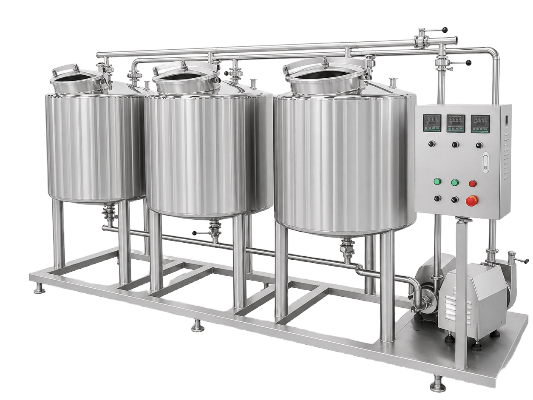
We build single-tank, multi-tank and portable CIP cleaning systems — skids that clean food processing equipment in place, without disassembly. Each skid is sized around your circuit list — how many loops, how long, how dirty — instead of around a catalogue model. Send the circuits and a process engineer comes back with a scope, a cycle and a price.
We treat the process data you send as confidential.
Quote in one business day
30–45 day build
One set minimum
EXW, FOB or CIF
- Quote turnaround Written scope and price within one business day
- Build time 30–45 days from approved drawing
- Minimum order One set
- Warranty Warranty terms confirmed in the quotation and contract
- Payment 30% deposit, balance settled before shipment
- Trade terms EXW, FOB or CIF
- Before packing Every skid is water-tested, witnessed on site or by live video
- With the shipment Commercial invoice, packing list, bill of lading, certificate of origin and the operation and maintenance manuals
CIP System Configurations and Circuit Capability
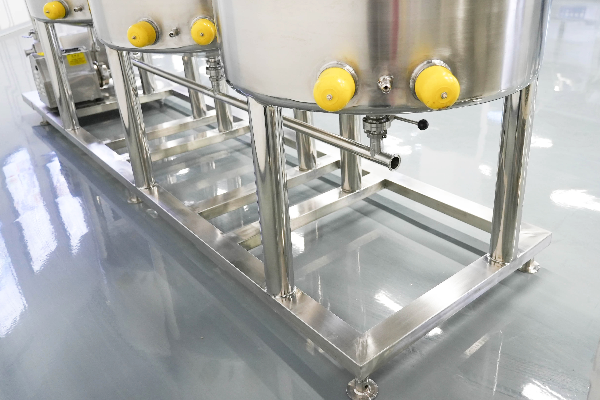
Sizing a CIP system starts with circuits, not with floor area. One circuit is a single closed loop — supply line, the equipment being cleaned, return line — that the skid can fill, heat, recirculate and drain as a unit. Count the loops first, and tank count, pump duty and pipe sizes follow.
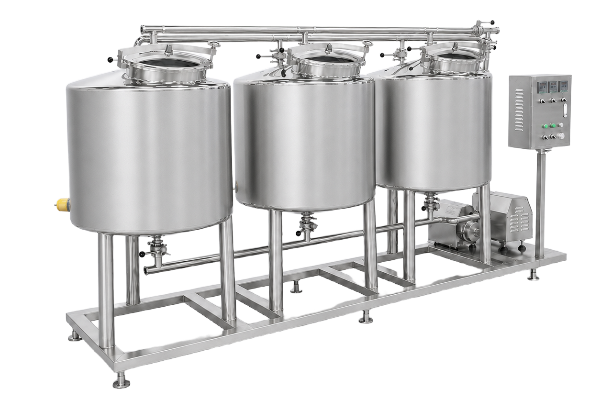
Single-Tank CIP Skid
Circuits per cycle
One at a time, in sequence
Chemistry
Single-use. Cleaning solution is made up fresh each cycle and sent to drain
Where it fits
One filling line, one product family, cleaned once or twice a day
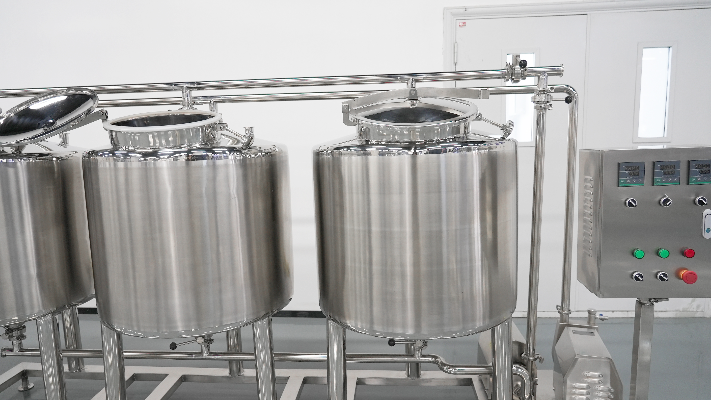
Two-Tank CIP Skid
Circuits per cycle
One at a time, with the caustic charge recovered
Chemistry
Recovery. Caustic in one tank, rinse water in the other, so detergent is reused across cycles
Where it fits
Dairy, juice and sauce lines cleaned every day
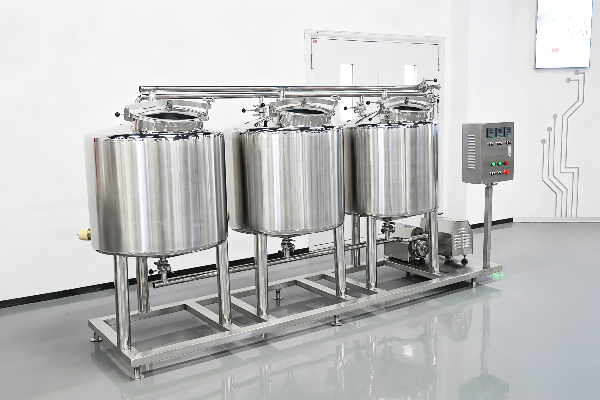
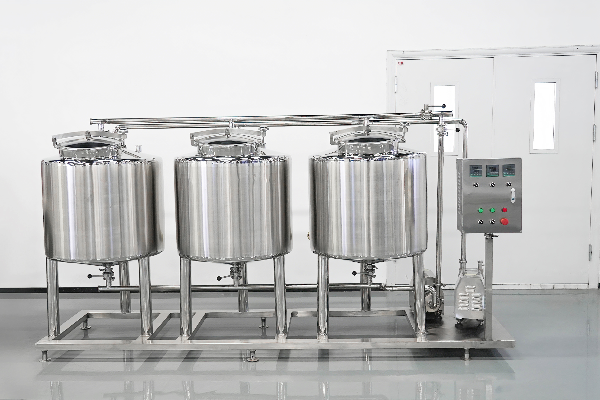
Three-Tank and Larger CIP Skid
Circuits per cycle
Two or more in parallel, each on its own supply pump
Chemistry
Caustic and acid both recovered, with fresh water held separately so the final rinse is never reused
Where it fits
Multi-line plants with frequent changeover and an automated CIP schedule
Portable CIP Cart
Circuits per cycle
One, connected by hose at the machine
Chemistry
Single-use, drained after every cleaning cycle
Where it fits
Occasional cleaning of one tank, or a plant not ready to plumb a fixed loop
Parts of the Plant a CIP Skid Cleans
- Storage and buffer tank circuits, through spray balls or rotary jet heads sized to the vessel
- Plate and tubular heat exchanger circuits, where cleaning solution must hold velocity through narrow channels
- Filler circuits including product bowls, filler valves and the pipe runs that supply them
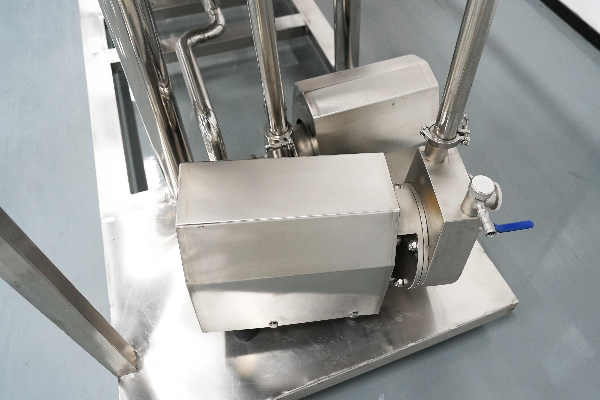
- Transfer pump and pipework circuits, which set the return flow rate for the whole cycle
- Homogeniser and batching tank circuits, cleaned after every product change
- Filtration and membrane circuits, cleaned to the membrane supplier chemical limits
Wetted Materials And Hygienic Construction
Hygiene is decided at the joint, not at the tank wall. Grades below are selected against EN 10088-1, which lists stainless steels by name and number; the American designations come first because that is how most buyers write a specification.
304 (1.4301) Stainless Steel
- Grades304 (1.4301), selected against EN 10088-1
- Why engineers pick itStandard wetted grade for water, caustic and most food soils
- Finishes availablePolished, pickled and passivated
- Relative price / Lead-time$ | None. Standard stock
316L (1.4404) Stainless Steel
- Grades316L (1.4404), selected against EN 10088-1
- Why engineers pick itChosen where acid, chloride or brine touches the surface — pickle lines, cheese brine, tomato, citrus
- Finishes availablePolished, pickled and passivated
- Relative price / Lead-time$$ | A few days more when the full circuit comes from mill stock
EPDM Seals and Gaskets
- GradesFood-grade EPDM, in kits matched to the fitting standard
- Why engineers pick itThe default CIP elastomer, comfortable with hot caustic and steam
- Finishes availableMoulded profiles per connection type
- Relative price / Lead-time$ | None. Wear parts and key spares are quoted and shipped on request after handover
FKM Seals and Gaskets
- GradesFood-grade FKM, specified per position rather than across the skid
- Why engineers pick itUsed where fats, oils or aggressive acid swell EPDM. It is the wrong answer on a pure hot-caustic position, so seal materials are mixed by duty
- Finishes availableMoulded profiles per connection type
- Relative price / Lead-time$$ | A few days more if a full set is ordered in
Sanitary Fittings and Valves
- GradesClamp connections by default; DIN 11851 screw connections where your plant already runs them — expanding in DN 10 to DN 100, butt weld in DN 10 to DN 150
- Why engineers pick itClamps come apart for inspection and reseal without a thread. In its standard form the DIN 11851 threaded connection does not meet the 3-A or EHEDG design criteria, so we offer the clamp route on every circuit
- Finishes availableButterfly, seat and mix-proof valve bodies
- Relative price / Lead-time$$ to $$$ | Mix-proof bodies are the long pole; availability is confirmed before the quote goes out
Spray Balls and Rotary Jet Heads
- Grades304 (1.4301) or 316L (1.4404) bodies, drilled to the vessel rather than to a catalogue pattern
- Why engineers pick itStatic spray devices wet by flooding and suit soluble soil; rotary jet heads put mechanical energy on the wall, which is what dried or baked soil needs
- Finishes availableDrilling pattern set from vessel diameter and internals
- Relative price / Lead-time$ to $$$ | None for static devices; rotary heads follow supplier stock
Surface Treatment
and Weld Finishing
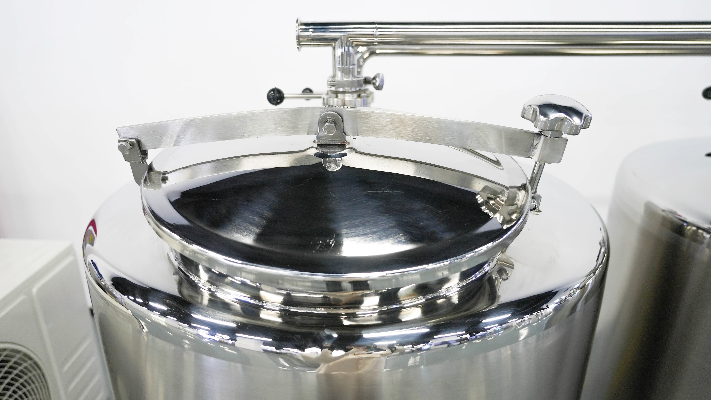
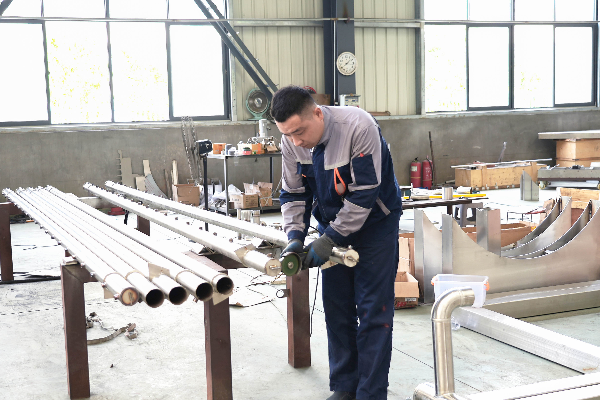
Surface work is where a hygienic skid is either made or quietly lost, because every crevice left behind becomes soil the next cleaning cycle cannot reach. Six processes carry the wetted surface from cut tube to a circuit that will clean itself, and the quotation names where each one is carried out.
-
01
Mechanical polishing of wetted surfaces
Standard ASTM A380/A380M-25ResultUniform directional finish, no visible scoring or embedded abrasive
-
02
Degreasing and descaling before assembly
Standard ASTM A380/A380M-25ResultFree of oil, drawing compound and weld scale before the circuit is closed
-
03
Pickling and passivation of wetted components
Standard ASTM A967/A967M-25, citric acid routeResultNo visible corrosion pits, pitting or frosting on the treated surface
-
04
System-level cleaning of the assembled skid
Standard ASTM A380/A380M-25 (covers installed systems & parts)ResultCircuit flushed and drained clean before the water run
-
05
Butt welding of wetted tube and pipe
Standard AWS D18.1/D18.1M & EHEDG Guideline 35ResultFully penetrated joint, bore left free of crevices
-
06
Structural welding of frame, legs and jacket outer seams
Standard ISO 5817:20238ResultLoad-bearing joints graded for imperfections; never touch cleaning solution
CIP Process Parameters and Standard Lead Time
Most supplier pages describe cleaning processes without ever printing a number. Here’s the working envelope our skids are built to, with public sources against the rows that carry one so you can check them before you call us. Your own numbers move inside those bands once we see the soil and the circuit.
#
Process parameter
What we build to
-
01Caustic strength0.5 to 2.0% in the cleaning solution, set by soil type rather than by habit
-
02Acid strength0.5 to 1.5%, run at ambient or warm temperature according to the soil being removed
-
03Caustic temperature71–82 °C (160–180 °F) on hot caustic circuits, inside the wider 57–82 °C envelope published for clean-in-place work2
-
04Return line velocityAt least 1.5 m/s (5 ft/s) in the return line, which is the condition that keeps pipeline flow turbulent12
-
05Contact time20 to 45 minutes of recirculation, sized to the circuit. Detergent or sanitiser is never left standing on a stainless steel surface for more than 20 minutes before rinsing1
-
06Final rinse and coverage proofRinse until return conductivity comes back to the incoming water reading. Coverage is proven with riboflavin and an ultraviolet lamp; one static spray device covers roughly 2.4 m (8 ft) of effective diameter at 20 to 30 gal/min and 20 to 30 psi1
-
07Standard build time30–45 days from approved drawing
Rows carrying a reference number are drawn from published university extension and instrument-maker guidance; the unreferenced rows and the build time are our own design bands and our own commitment.
Why Four Variables Trade Against Each Other
Temperature, time, concentration and mechanical action are interchangeable, and that is the trade-off nobody prints on a datasheet. Drop the caustic temperature to save energy and you pay it back in minutes or in strength. Pump pressure is not the fourth lever either; what does the work is return velocity and the contact clock, which starts when the return line reaches temperature rather than when the supply line does.
CIP Circuit Data Sheet
Seven inputs, filled in by you, produce a circuit list you can paste straight into an enquiry. Cycle time is optimised against your changeover matrix once those seven numbers exist.
CIP System Pricing and Lead Times
Price depends on five things: how many circuits the skid handles, how many tanks it carries, how it heats, how far the automation goes and what wetted material you specify. There is no list price for a CIP skid because no two circuit lists are the same.
ID
Driver
Effect on cost
How to reduce it
01
Number of circuits
Each circuit adds valving, instrumentation and a recipe to hold
Group lines sharing soil and bore instead of giving every machine its own
02
Number of tanks
The second tank buys you caustic recovery; the third buys acid recovery and a protected rinse water supply
Start single-use if you clean once a day, and leave layout space for a second tank
03
Heating method
Steam injection, a plate heat exchanger and electric elements sit at different capital and running costs
Use the utility already on that side of the plant
04
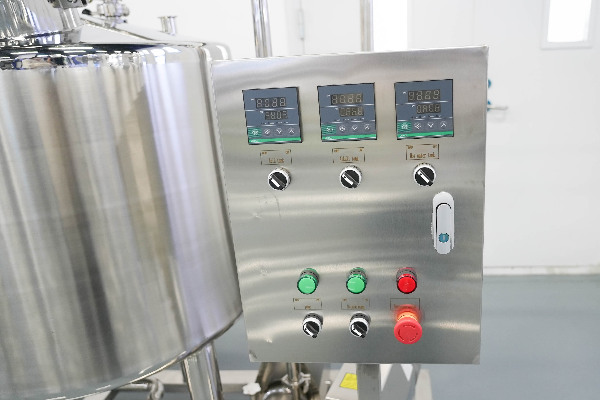
Automation level
Manual valves, semi-automatic recipes and full parameter logging are three different builds
Specify logging where an auditor will ask for it, manual valves where nobody will
05
Wetted material
A full 316L circuit costs more than 304 with 316L only where acid or chloride touches it
Let us map grade by position from your product list
ID
Order stage
Lead time
What it covers
A
Quotation
One business day
Circuit grouping, cycle proposal, scope and price
B
Drawing approval
Set by your review
General arrangement, circuit schematic and instrument list
C
Production
30–45 days
Fabrication, surface treatment, assembly, wiring and the water run
How Your Quote Is Produced
Send a circuit list, a plant layout or a photograph of the pipework, and a process engineer reviews the inputs for a written scope and price, with quotation timing confirmed for the project. That reply names the circuits we grouped, the cycle we assumed and the parameters we set, so you can argue with the engineering rather than with a number.
Build time starts when the drawing is approved and excludes sea freight and customs clearance at your end.
Orders are confirmed with a 30% deposit, and the 70% balance is settled before shipment. We quote EXW, FOB or CIF, and the trade term you choose is fixed in the contract rather than revisited at packing.
Quality Assurance, Testing and Shipping Documents
Applicable certificates and documents are confirmed for the equipment model, configuration and destination country. Company management-system records are reviewed separately from product conformity documents.
Buyers of Chinese hygienic equipment ask the same three questions: is the steel what the drawing says, are the electrical parts authentic and who welded this.
We answer those three questions with a sequence you can watch, not a badge you have to trust. Our own acceptance rules are what the water run is checked against, and you are invited to that run.
How Every Skid Is Checked
-
01
Scope check
Before anything is cut, the circuit grouping, cycle and parameter set go back to you in writing, inside one business day of receiving the circuit list.
-
02
Build check
Fabrication, surface treatment and wiring are signed off against the approved drawing within the 30–45 days quoted, and any change you request is repriced before it is made.
-
03
Water-run check
Every skid is water-tested before it is packed, with pumps, valves, heating and the control sequence run as a cycle. You can witness that run at the factory or by live video.
-
04
Document check
The export document set is assembled and inspected against your destination requirements before the crate is closed.
Third-Party Audit of the Supplier
SGS-CSTC audited our operation under report QIP-ASI255791, dated 2025-05-16. That report examines the supplier, not any individual skid, and we quote it as exactly that — evidence about how we work, not a product approval for a CIP system.
The export document set travels with the shipment: commercial invoice, packing list, bill of lading and certificate of origin, together with the operation and maintenance manuals. A mis-declared grade is the one risk that surfaces years later as pitting, so the wetted grades are named in the contract drawing rather than left to the shipping paperwork. Measurements and test results are checked against the agreed scope under the same written acceptance rules used at the water run, before the skid is packed.
How We Work: From Circuit Survey To Commissioning
Lines, tanks, equipment and the soil on each. Pictures of the pipework and a plant layout are sufficient to get started.
We group the loops, size the return line and identify the equipment that cannot share a cycle.
Circuits, cycle, parameters, materials and build time, back inside one business day.
General arrangement, circuit schematic and instrument list, all before fabrication begins.
If the skid will not run its cycle on our floor, it is not packed.
Crate, documents, and remote guidance while your team runs the first cycle.
Number of circuits
Tank count, pump count and how many recipes the control holds
Largest tank diameter
Whether a static spray device covers the wall or a rotary jet head is required
Longest line length and bore
Return pump duty, because return velocity is the parameter we have to hit
Soil type on each circuit
Step count, chemistry, and whether caustic alone will do the job
Available utilities
Heating method: steam, hot water or electricity
Drain capacity
Whether single-use chemistry is realistic or recovery tanks are the only route
Target cycle time
How much of the temperature, time and concentration trade-off you will spend
| Steps | Soil type | Industry examples | Tanks needed |
|---|---|---|---|
| 1 | Light soluble residue between batches of one product | Water and clear beverage lines | None, hot water rinse only |
| 3 | Ordinary food soil one chemistry will lift | Bakery slurry, sauce transfer, small breweries | One tank, single-use |
| 5 | Protein and mineral soil together, caustic then acid | Dairy, juice, plant-based drinks, cheese | Two or three, with recovery |
| 7 | Soil plus a documented sanitising step and verified final rinse | Dairy and pharmaceutical work where the record is part of the product | Three or more |
Caustic runs before acid because alkali lifts protein and fat first; the intermediate rinse between them is not optional, since mixing the two neutralises both.
Manufacturing Footprint and Factory Gallery
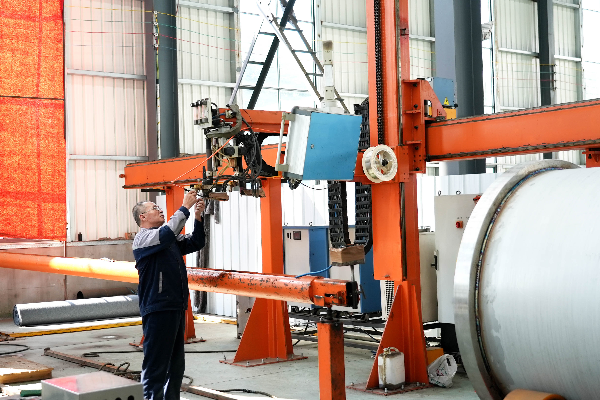
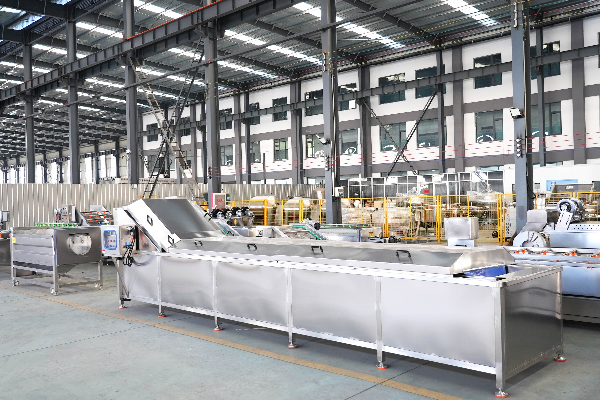
Shengtu builds food machinery in four owned and self-built manufacturing bases, and around 80% of our main equipment categories are produced inside them. The remainder comes from selected long-term partner factories, named in the quotation rather than hidden behind our own label.
More than 20,000 m² of office and display space across four cities includes a food machinery showroom of roughly 5,000 m².
When Clean-in-Place Is Not the Right Answer
Clean-in-place is one cleaning method among several, and forcing it onto the wrong equipment is the wrong answer even when the skid is perfect. Plants use CIP where the loop closes, and reach for other cleaning methods where it does not. Below are the three cases where we will tell you to spend the money on a different method of cleaning — a point one member of the 3-A workgroup that drafted the CIP hygienic standard makes plainly:
Why it works against you
Filler nozzle exteriors, silo sample valves and door seals sit outside any closed loop. No amount of circulating cleaning solution reaches a surface the loop does not include, and pretending otherwise hides a contamination risk instead of removing it.
What to do instead
Clean those items out of place in a wash cabinet or a soak tank, and keep the CIP skid for the circuits it can actually close
Why it works against you
The fixed skid costs you pipework, valves and floor space that a once-a-week cleaning cycle will never repay
What to do instead
Use a portable cart or a documented manual routine, and revisit the fixed skid when a second line arrives
Why it works against you
Baked-on soil and hard scale have already passed the point where chemistry and velocity work; running longer cycles at higher strength just burns chemical cost and can create new soil
What to do instead
Break the deposit mechanically or with a dedicated pre-treatment first, then let the CIP system hold the clean surface
CIP SYSTEM ENGINEERING TOOLS
-
CIP Circuit Data Sheet
Download standard technical specifications and fluid parameter requirements to configure your specific processing line cleaning circuits.
Access Tool -
1/3/5/7-Step CIP Cycle Selector
Evaluate and select the optimal cleaning cycle sequence based on your target soil load, sanitary standards, and water recovery goals.
Access Tool -
CIP Scope Readiness Score
Assess your facility’s current utility infrastructure and automation capabilities for automated clean-in-place integration.
Access Tool
FAQ: CIP Systems, Cycles and Quotations
Get a QuotePre-rinse, caustic wash, intermediate rinse, acid or sanitiser, and final rinse. The intermediate rinse is not padding: without it, caustic and acid meet and neutralise each other.
Clean-in-place circulates the cleaning solution through equipment that stays assembled, so nothing is disassembled to reach the soil. Clean-out-of-place takes the parts off and cleans them in a cabinet or a soak tank. Most food plants run both, because filler nozzles, valve seats and gaskets sit outside every closed loop no matter how the pipework is drawn.
One tank for single-use chemistry, two once you want to recover caustic, and three or more when acid recovery and a protected rinse water supply both matter. The single-tank skid has to be single-use, since one vessel cannot hold and separate two chemistries.
Three-step and five-step cleaning cycles usually land between 30 minutes and two hours; the seven-step cycle with a sanitising stage and a verified final rinse runs nearer 60 to 90 minutes. Contact time is 20 to 45 minutes of that, and the rest is fill, heat, drain and changeover.
Caustic soda at 0.5 to 2.0% lifts protein and fat, and nitric, phosphoric or organic acid at 0.5 to 1.5% removes mineral scale. Sanitiser follows as its own step where the process demands one.
Clean-in-place removes soil so a surface is clean; steam-in-place raises that surface to a sterilising condition and holds it there. Your CIP skid can leave a circuit spotless and still leave microorganisms alive, which is fine for most food and beverage work and not fine for aseptic filling. Plants that need both specify both, and we say so at the survey rather than after the order.
Cleaning sits in most food safety plans as a prerequisite programme rather than a critical control point, but the verification evidence still has to exist. Auditors ask for cycle parameters, not for the words cycle complete, so build the record around temperature, time, concentration and conductivity.
Seven things: number of circuits, largest tank diameter, longest line length and bore, soil type on each circuit, available utilities, drain capacity and target cycle time. Most of them come straight off a plant layout or a photograph of the pipework. Anything missing, we assume conservatively and mark the assumption in the quotation so you can correct it.
Build time is 30–45 days from approved drawing. Orders start with a 30% deposit and the balance is settled before shipment, on EXW, FOB or CIF terms.
Yes. Every skid is water-tested before packing, and you can attend that run on site or join it by live video. Remote factory verification of the workshop itself can be arranged in the same session, which is how most overseas buyers use it.

![F&V Freeze-Drying Line Process Guide [2026]](https://shengtumachinery.com/wp-content/uploads/2026/09/fv-freeze-drying-line-guide-featured-150x150.png)