Get in touch with Shengtu Bufan Company
Incompatible allergen profiles
Why it works against the project
Validated changeover can take more time and evidence than production planning allows.



A Shengtu meatball fishball patty production line is configured around your recipe, piece geometry, thermal endpoint, freezing load, pack format and plant interfaces. Common equipment is separated from product-specific decisions so a meatball production line, fish ball production route and patty production line are not treated as one fixed machine list.
Send the target products, sellable output, incoming condition, final condition, layout and utilities. Those inputs become a written route, module list, responsibility matrix and acceptance basis.
Start with an RFQ even if the plant layout is not final; unknown items can be marked for engineering confirmation.
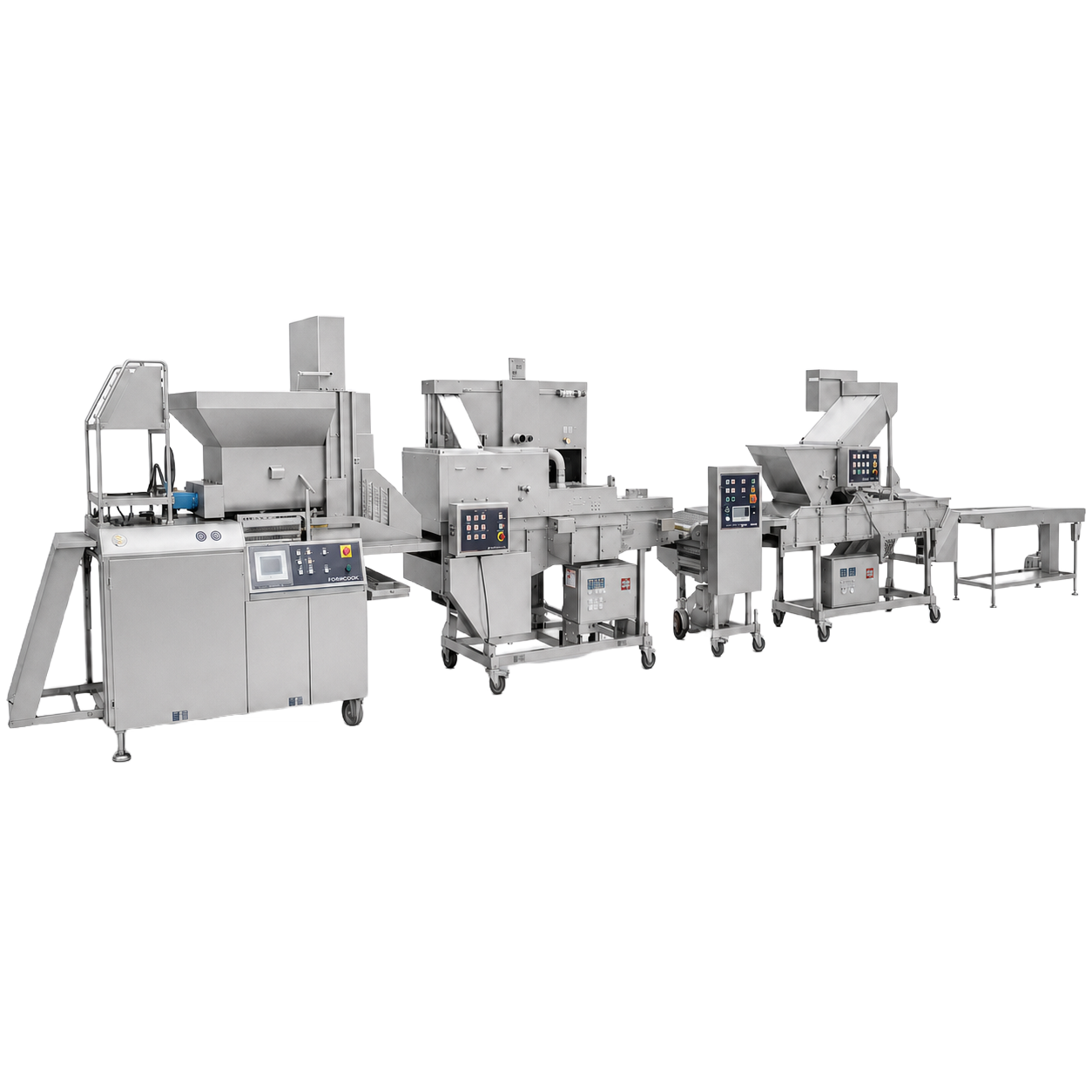
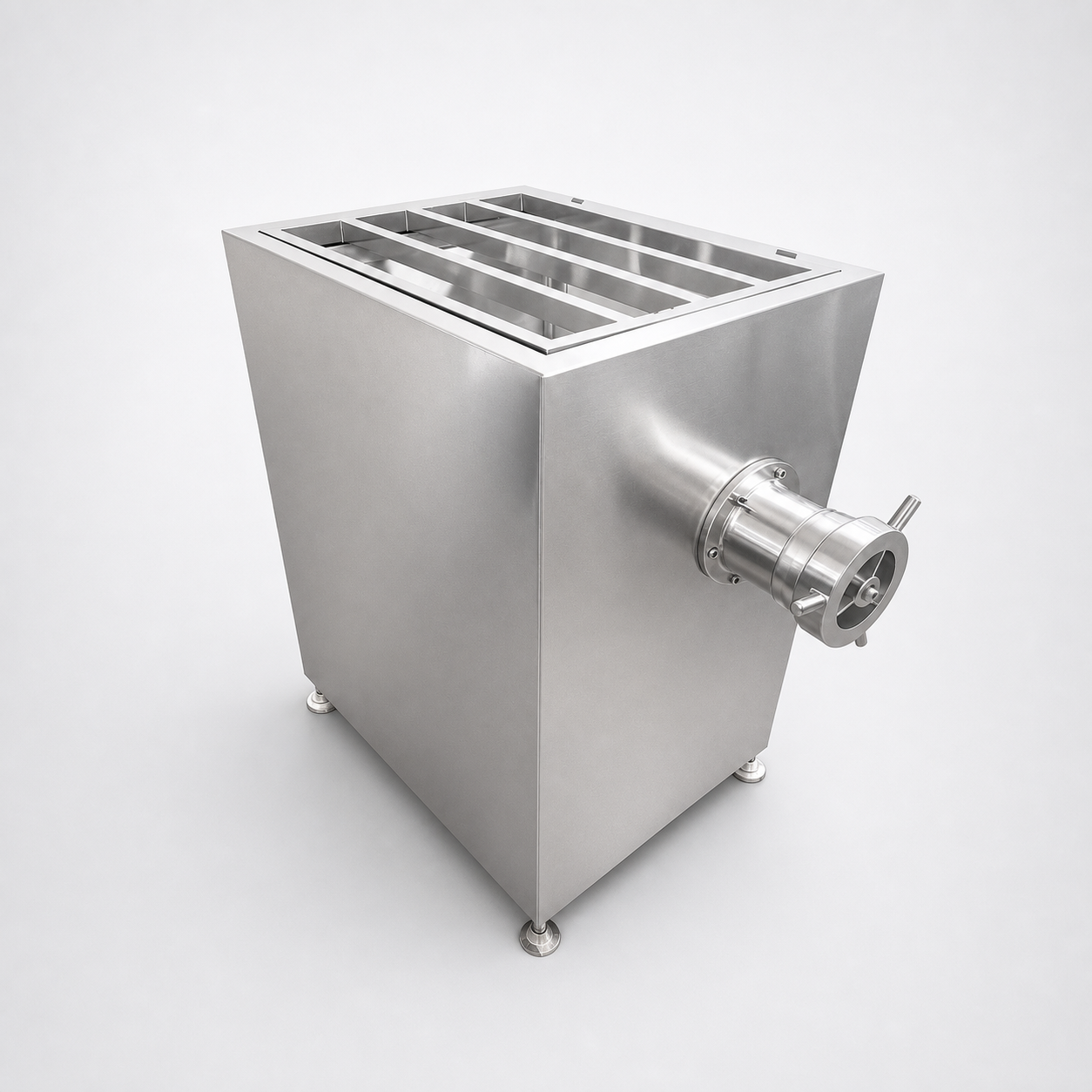
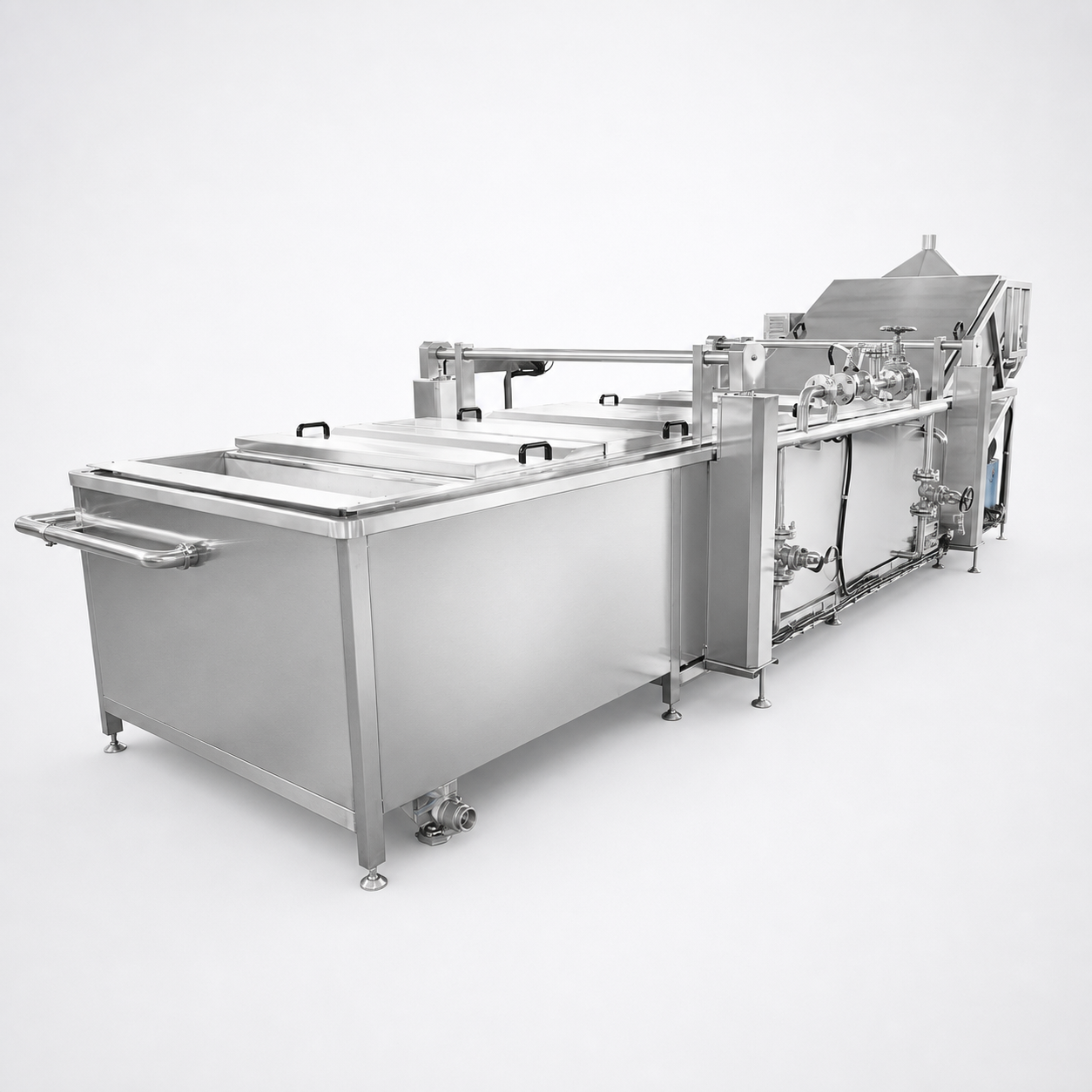
Shengtu configures food processing machinery from raw material preparation to packing instead of quoting an isolated making machine. Client-supplied visual evidence covers a meat grinder, forming machine, blanching machine, IQF freezer, packaging machine and metal detector, together with a complete production line render.
Route development starts with the product and works backward. Sharing the same stainless steel conveyor does not make formulas equivalent, and product routes are not interchangeable merely because they share a meat processing machine.
FDA notes that allergen cross-contact can result from inadequate cleaning of shared equipment, segregation failures, rework and scheduling. That is why the allergen profile and cleaning-validation owner are configuration inputs, not a label-only issue.
Downstream equipment is selected from the required market condition: raw chilled, fully cooked chilled, raw frozen, cooked frozen or another written endpoint. Only the steps required by that endpoint are connected.
A blanching or cooking line must define product entry condition, residence-time method, temperature sensing, product handling and the acceptance test for the required core condition. Automatic temperature control is useful only when sensor location, calibration, alarm and record responsibility are also specified.
Cooling protects the next step from an uncontrolled heat load. FAO guidance explains that freezing time depends on initial and final temperature, dimensions, shape and heat transfer, while freezer capacity also depends on product load and holding time.
Packaging-machine selection follows product condition, pack weight, bag or tray format, sealing method and required line speed. Its infeed must accept the same saleable flow as the freezer and inspection system; otherwise accumulation or starvation shifts the bottleneck.
A metal detector is a control step, not a badge. FDA’s seafood guidance connects detector operation with validated sensitivity standards, challenge checks, corrective action and records; product effect, package and detector position still belong in the buyer’s hazard plan.
Destination-market split: the buyer owns the product hazard analysis and market authorization. Shengtu can configure equipment and control points against the written user requirement, but the equipment page does not certify a finished food or replace the buyer’s food-safety plan.
Documented numbers below come from the supplied Shengtu IQF equipment file. They remain module ratings and are not converted into a guaranteed fish ball, meatball, hamburger patty or complete-line rate. A module rating is not a substitute for an acceptance test on the buyer’s actual recipe, piece geometry and operating conditions.
Line price follows the confirmed module list, contact materials, controls, instrumentation, tooling, conveyor interfaces, utilities, refrigeration scope, documentation, testing, installation responsibility and destination. Those items are returned in a written technical-commercial proposal; the public page does not publish a fixed price list or an unsupported lead time.
More sizes, shapes, recipes or allergens can add tooling, validation and changeover work
SKU matrix and annual mix
Raw, cooked, chilled and frozen endpoints require different equipment and controls
Incoming and required final condition
A sellable-output target must be balanced across every required step
kg/h and pieces/min by SKU
Refrigeration, steam, water, air, power, drainage and access can change project work
Utility schedule and layout
FAT, SAT, product trials, instruments, records and witness needs change effort
User requirement and acceptance plan
Compare acquisition with delivery, installation, utilities, energy, cleaning time, changeover loss, wear parts, preventive maintenance, calibration, software support, spares and end-of-life handling. Use the same technical baseline and assumptions for every supplier; a single point estimate without scope, sensitivity and operating inputs is not a decision-grade comparison.
Commercial terms—including schedule baseline, shipping allocation, payment, warranty, service, commissioning and exclusions—are confirmed in the quotation and contract. This keeps a short website sentence from overriding the product-specific route and responsibility matrix.
Equipment review focuses on cleanability, access, properly serviced equipment, controlled product flow and testable acceptance items. U.S. food-equipment rules, for example, require equipment to be adequately cleanable and installed to facilitate cleaning and maintenance; the applicable rule still depends on the buyer’s product and market.
Full formula and allergen-profile data are required before shared equipment is approved. Buyer and sanitation teams define the cleaning method, sampling or verification method, acceptance limit, record, release authority and revalidation trigger for a new product, ingredient form, tool or process.
Sensors, alarms, setpoints and records are mapped to the agreed product endpoint. Product owners define the hazard-based limit; the equipment test verifies the written method rather than assuming one time-temperature set works for every food.
The supplied metal-detection module can be integrated into the agreed pack and conveyor route. Detector location, product effect, validated sensitivity, challenge pieces, frequency, reject security, hold/rework action and record review must appear in the acceptance plan.
Requested drawings, manuals, parts lists, control backups, instrument evidence, test records, punch lists and handover items are defined in writing. No document is assumed to ship with every project unless it appears in the accepted scope.
Where meat and poultry requirements apply, sanitation and HACCP controls are tied to the actual product and process. One plan can cover multiple products only when their hazards, critical control points, limits and procedures are materially the same; product-specific differences must be separated.
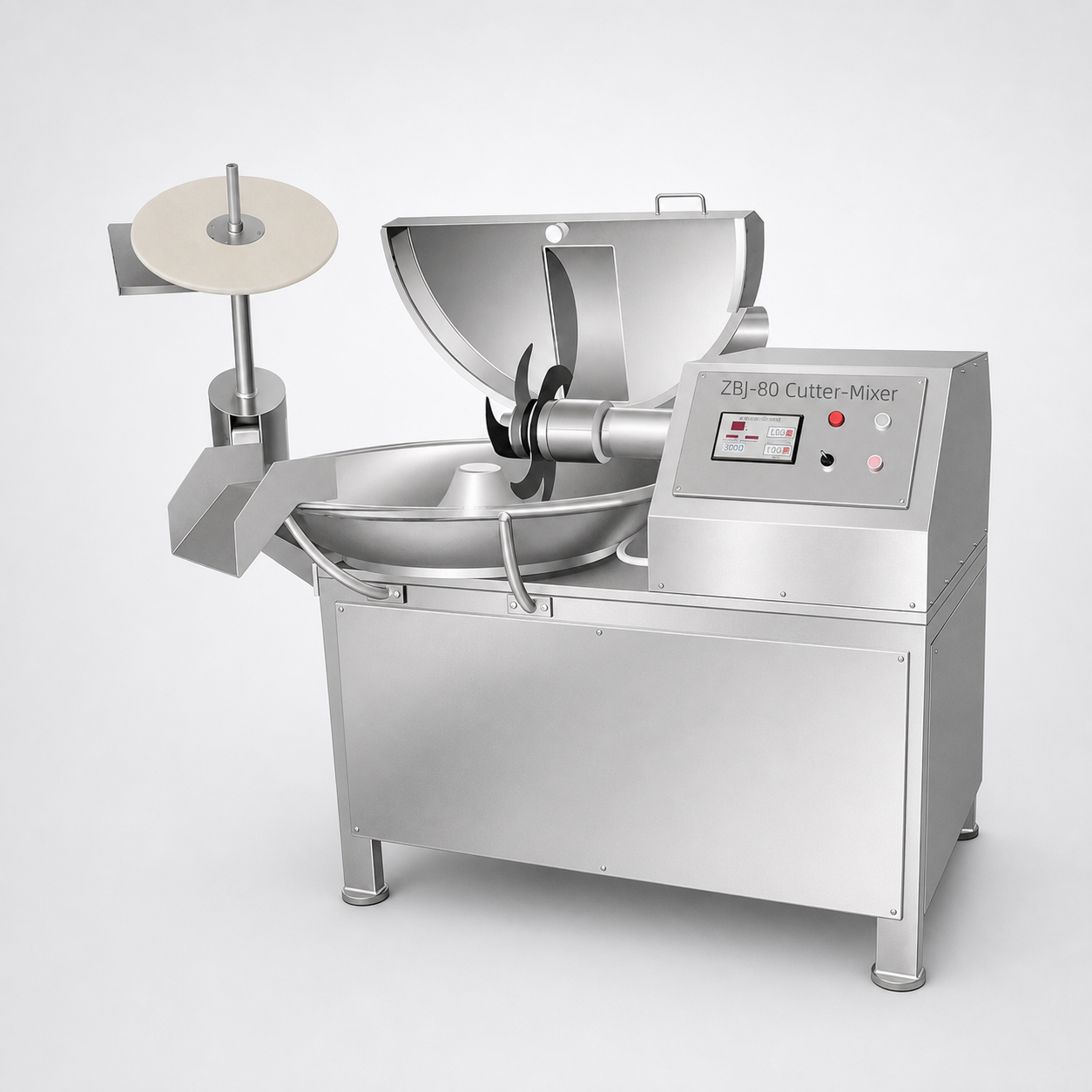
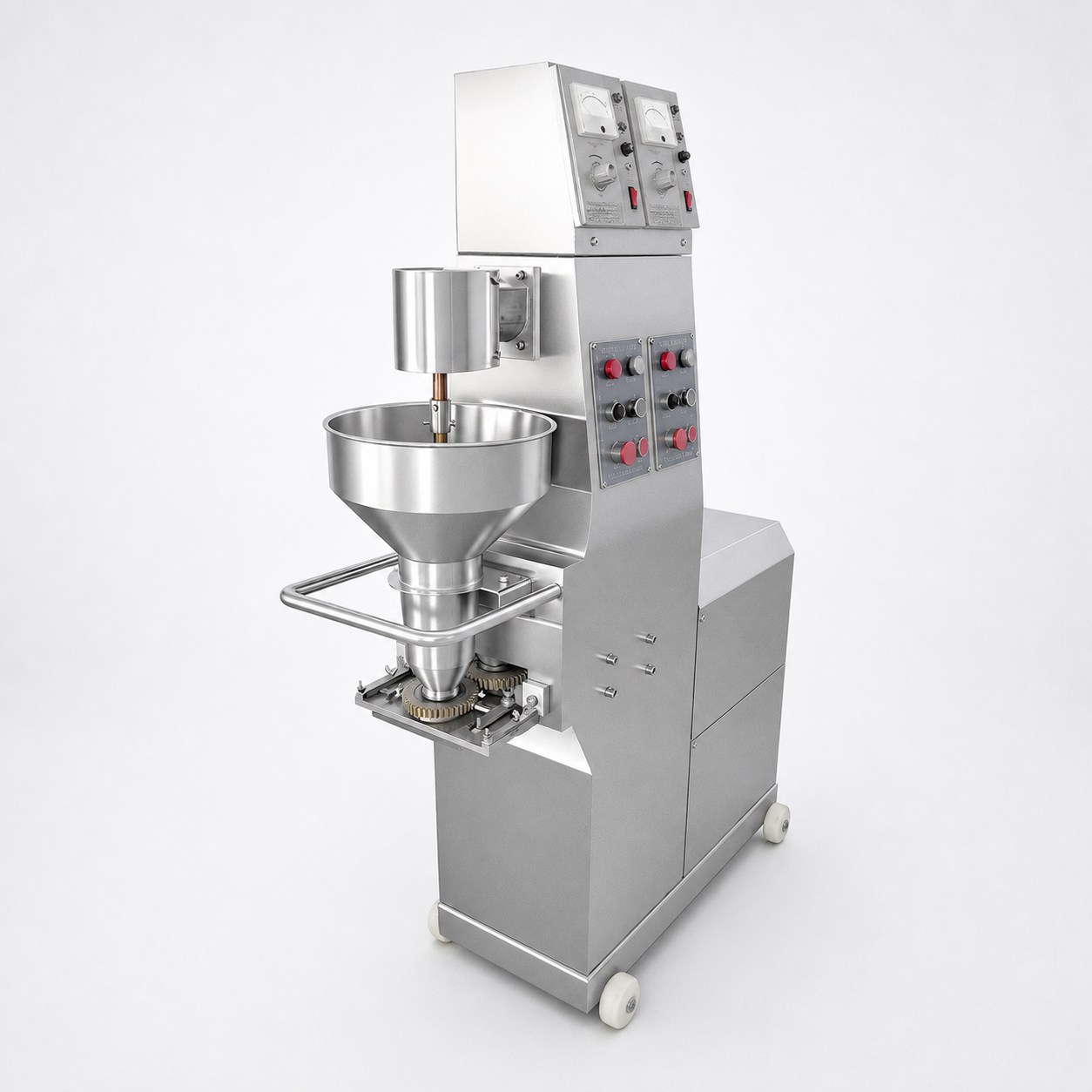
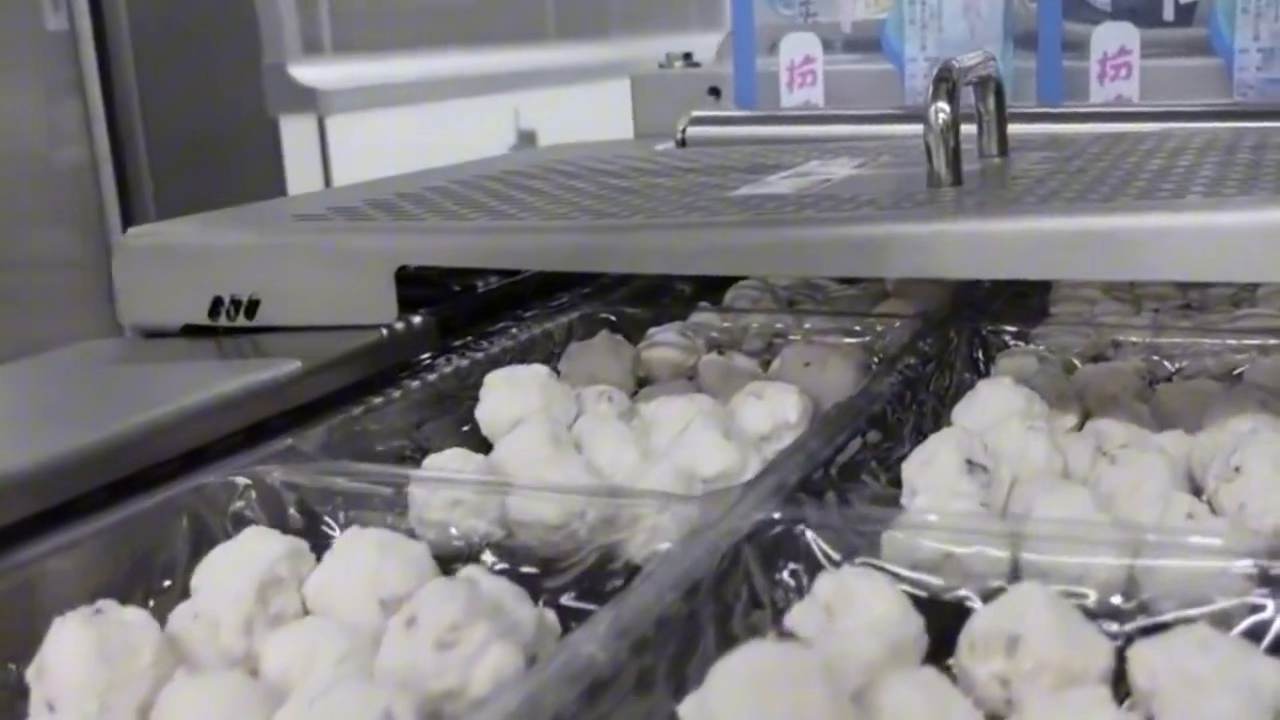
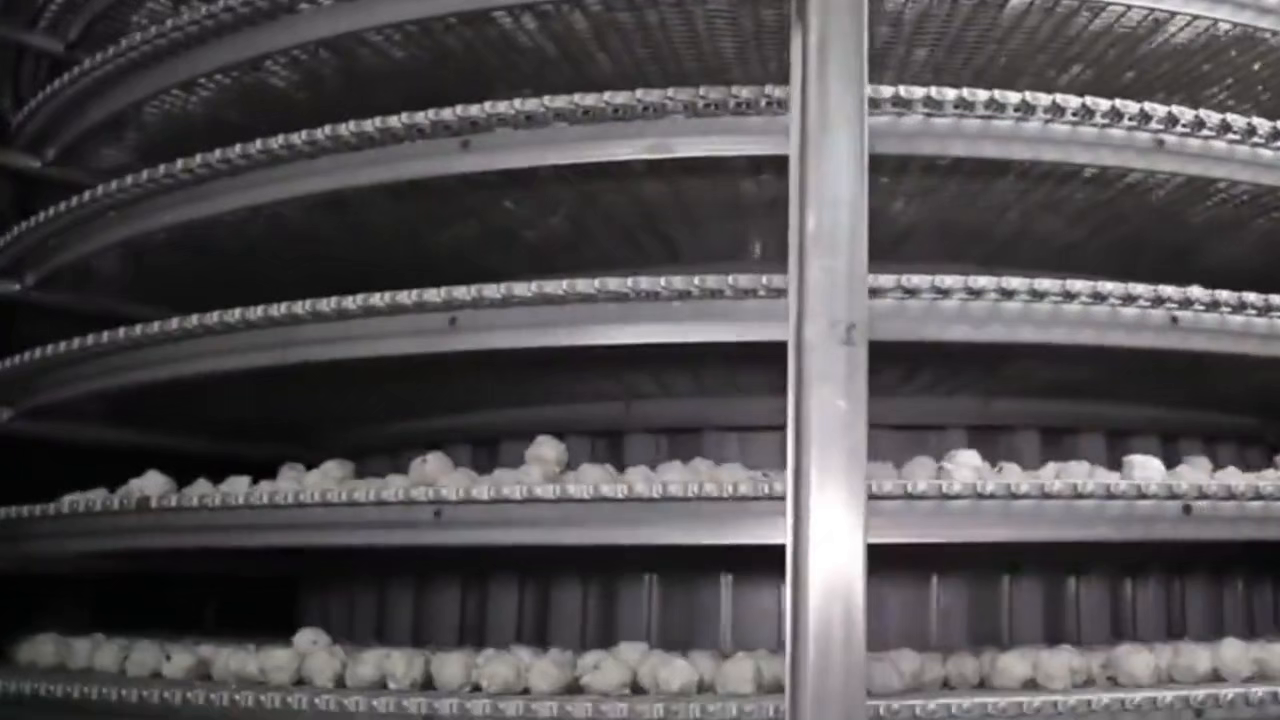
Provided product files include a complete-line render, individual equipment renders and operating footage that support the physical module sequence below; they are not a named customer case, factory audit or measured operating-performance record.
Client-supplied render showing the integrated production-line concept and connected modules.
Frame from the supplied footage: ball products moving through a controlled hot-water section.
Frame from the supplied footage: downstream product handling and packed output.
A combined production line is not always the best operating trade-off. It is the wrong call when shared modules undermine food safety, product quality or availability. A separate-route review is advised when the operating burden of shared use outweighs the equipment-scope savings.
Validated changeover can take more time and evidence than production planning allows.
Dedicated contact parts, segregated modules or separate lines.
Hygiene zoning, thermal controls and post-cook exposure differ.
Split raw and post-lethality handling zones.
Fish balls roll and float; thin patties can deform or overlap on a conveyor belt.
Dedicated former discharge and transfer sections.
Accumulation, starvation and long holds can reduce sellable output.
Resize modules, add buffers or run separate production lines.
Refrigeration or electrical limits can strand installed capacity.
Utility upgrade, lower-load module or phased installation.
Remote support or OTA can conflict with OT security and change control.
Local-only control, controlled gateway or offline update workflow.
A general rule of thumb: fix the real constraint first. A bigger freezer, former or packer outside that constraint might add expense without increasing sellable output.
Use the configuration and review tools below to evaluate freezing options, identify line constraints, and prepare facility data for your integrated line proposal.
Compare IQF module options based on heat load, cycle time, and product-specific freezing requirements for meatball, fishball, and patty lines.
Identify operational constraints, review transfer interfaces, and map production limits across your integrated preparation, forming, and thermal sequence.
Verify required product families, target formulations, pack formats, and available site utilities needed to define a complete RFQ engineering scope.
The route can include raw material preparation, meat grinder, mixing or bowl cutter, meatball forming machine, blanching or cooking, cooling, quick freezing, packaging and metal detection. The final list is written against 1 product/SKU matrix rather than copied from a standard diagram.
It can share selected modules when the 3 product routes have compatible feed, hygiene, transfer, thermal and output conditions. Forming tooling, sanitation validation and downstream handling still need separate approval for each route.
Start with rates for every required step on the same product basis, then include changeover, sanitation, defrost, quality holds, yield and packaging. Shengtu’s supplied IQF document lists 8 freezer models, but no module rating alone proves whole-line capacity.
The supplied range includes 4 tunnel models from 100 to 1,000 kg/h and 4 spiral models from 300 to 1,000 kg/h. Selection depends on product geometry, loading, incoming temperature, target core condition, holding time, footprint, cleaning access and refrigeration duty.
We can customize the forming discussion around the requested piece weight, dimensions, mold and transfer behavior. Approval requires product tests and written tooling scope; “uniform size” is an acceptance item, not a claim without a defined tolerance.
Send the exact raw material, temperature, grind or emulsion state, formulation and allergen profile. Fish is one of the major allergens identified by FDA, so a single shared line needs product-specific segregation, cleaning and validation controls.
Yes, they can be evaluated as a separate extension for products such as chicken nuggets, breaded patties or another coated meat product. The batter, breading, crumb, coating and fry sequence is not included in the confirmed base scope unless it appears in the written module list.
Placement follows the product hazard analysis, pack format and point where all product can pass through the control. FDA Chapter 20 links the detector to validated sensitivity, challenge checks, corrective action and records; those 4 elements belong in the acceptance plan.
There is no single global standard statement for every destination and product. The design review can reference the buyer’s applicable rules, such as 21 CFR 117.40 for equipment cleanability, while the order defines the exact jurisdiction, user requirement and acceptance evidence.
They are 2 different evidence stages: the factory review checks the agreed build and functions before shipment, while the site review checks the delivered system with final utilities and interfaces. Test product, duration, acceptance limits and records must be written for the project.
Optional scope can include STUnit, low-code control boxes, gateways, YOLO vision and edge functions. NIST IR 8259 highlights at least 5 update questions—availability, trigger, delivery, responsible entity and authentication—that should be answered before OTA is approved.
Send the 12 core groups: product/SKU matrix, formula and allergens, piece geometry, raw condition, final condition, target output, thermal route, pack format, utilities, layout, destination, and FAT/SAT expectations. Add digital interfaces if smart controls are required.
Applicable certificates and documents are confirmed for the equipment model, configuration and destination country. Company management-system records are reviewed separately from product conformity documents.
![F&V Freeze-Drying Line Process Guide [2026]](https://shengtumachinery.com/wp-content/uploads/2026/09/fv-freeze-drying-line-guide-featured-150x150.png)