Get in touch with Shengtu Bufan Company
Fresh product with no smoke/cook stage
A thermal module would add irrelevant scope and distort the process flow.
Configure preparation, filling, handling, packaging and cold-chain interfaces only.
Shengtu configures a sausage production line around the product you intend to make—not around a fixed machine bundle. Start with product form, recipe constraints, casing, thermal route, package format, output target and factory conditions; the technical proposal then defines the process flow, equipment scope and interfaces.
Use your target values as project inputs. Shengtu ratings and commercial terms are confirmed only in the written proposal.
We can configure grinding, cutter-mixing and vacuum tumbling from the documented equipment set when those operations match the approved recipe and texture target.
We can include sausage stuffing and define the required interfaces for casing, portioning, linking, hanging or transfer equipment.
We can include smoking/cooking, chamber packaging and metal detection while keeping process validation, package design and reject logic explicit.
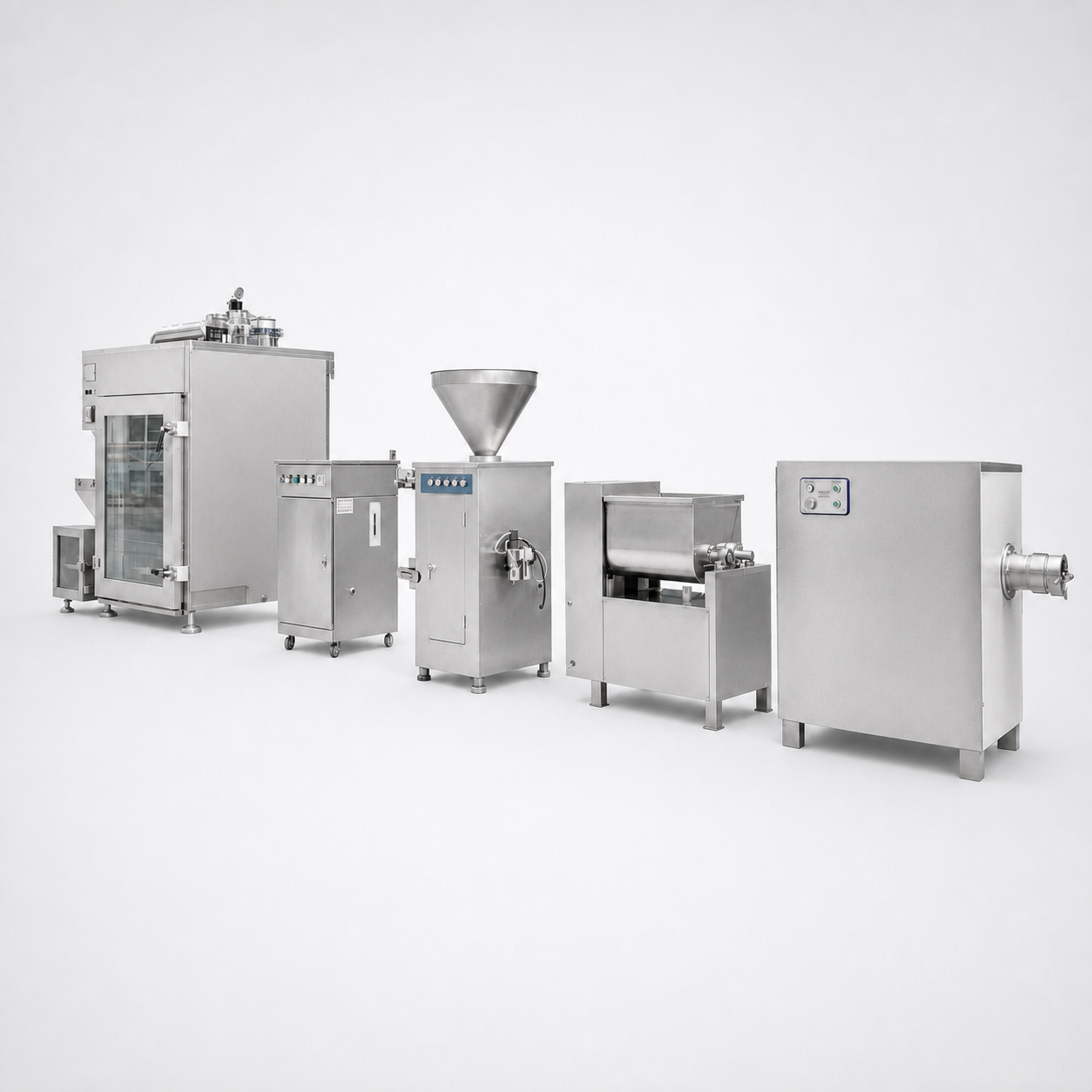
Line qualification rule: the seven documented equipment categories are a configuration map, not a standard bill of materials. Modules may be added, omitted or reordered after product and site review.
“Freeze the product route before freezing the machine list.”
We map each machine by what enters, what leaves and what the next stage must accept. This catches mismatches in product temperature, batch size, discharge height, buffer need, control signal, cleaning method and utility connection before the equipment list is frozen. Each transfer point is also a hygienic-design decision, so ISO 14159 is the review reference for contact surfaces, drainage and cleanability where one module hands product to the next.
Linking and clipping sit between stuffing and thermal treatment on linked products, and both are decided per product rather than assumed. Sausage linking separates a continuous rope into individual links, either through a twisting machine or through a clipping machine where the product is portioned and closed at both ends. Upstream, meat grinding and meat mixing are not interchangeable with the chopper that follows them: grinding defines particle size, while chopping drives an emulsion. Whichever of the two leads the production process decides how sausage meat arrives at the stuffer.
We can review an existing grinder, stuffer, smokehouse, packer or detector and map the product, mechanical, electrical, controls, utility and responsibility interfaces.
These are the equipment ratings we hold on file for this line. Read them as a starting configuration and a sizing reference, not as a whole-line guarantee: the rate you get depends on product, recipe, casing, batch pattern and how the seven modules are balanced against each other.
| Module | Documented rating | Connected load | Footprint (mm) |
|---|---|---|---|
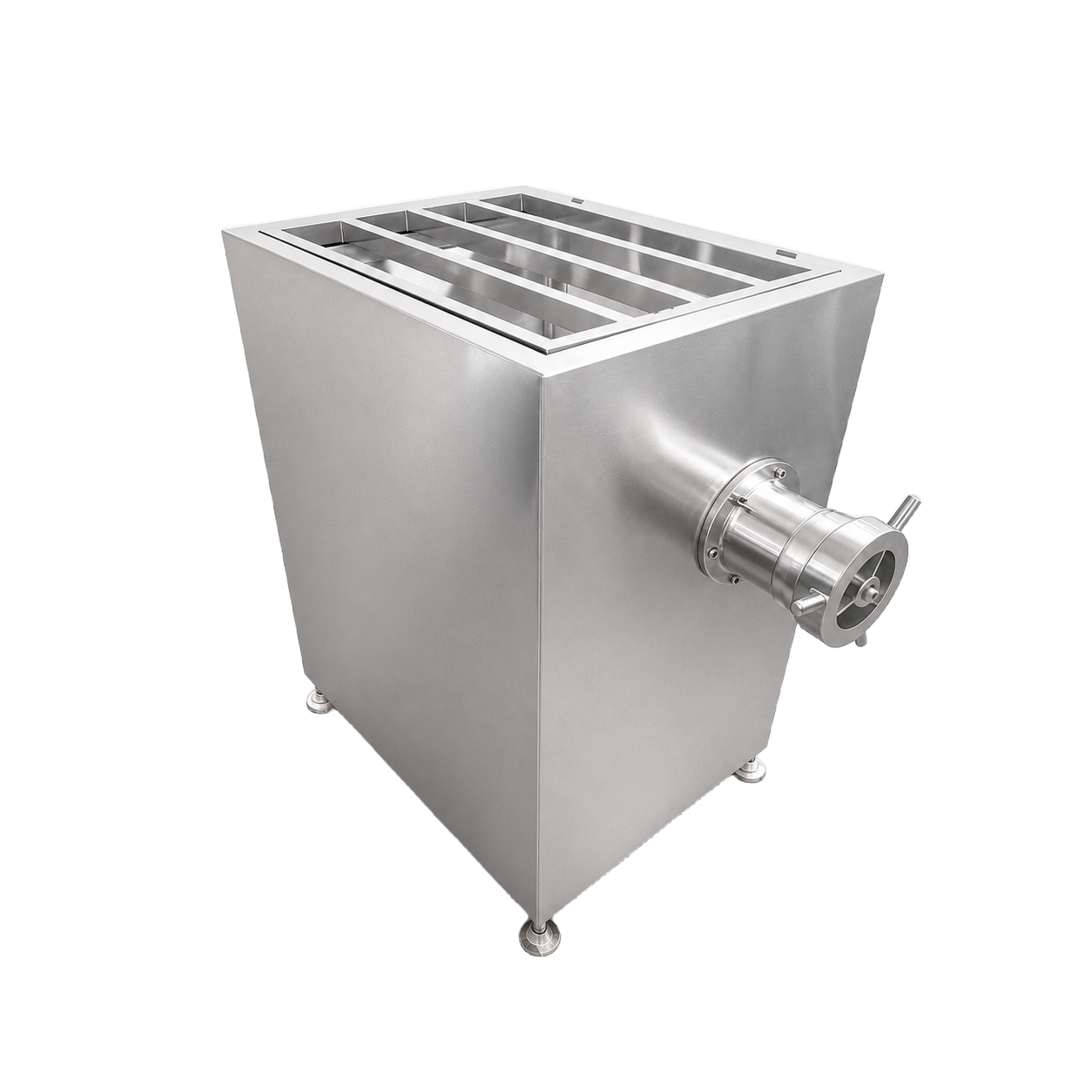
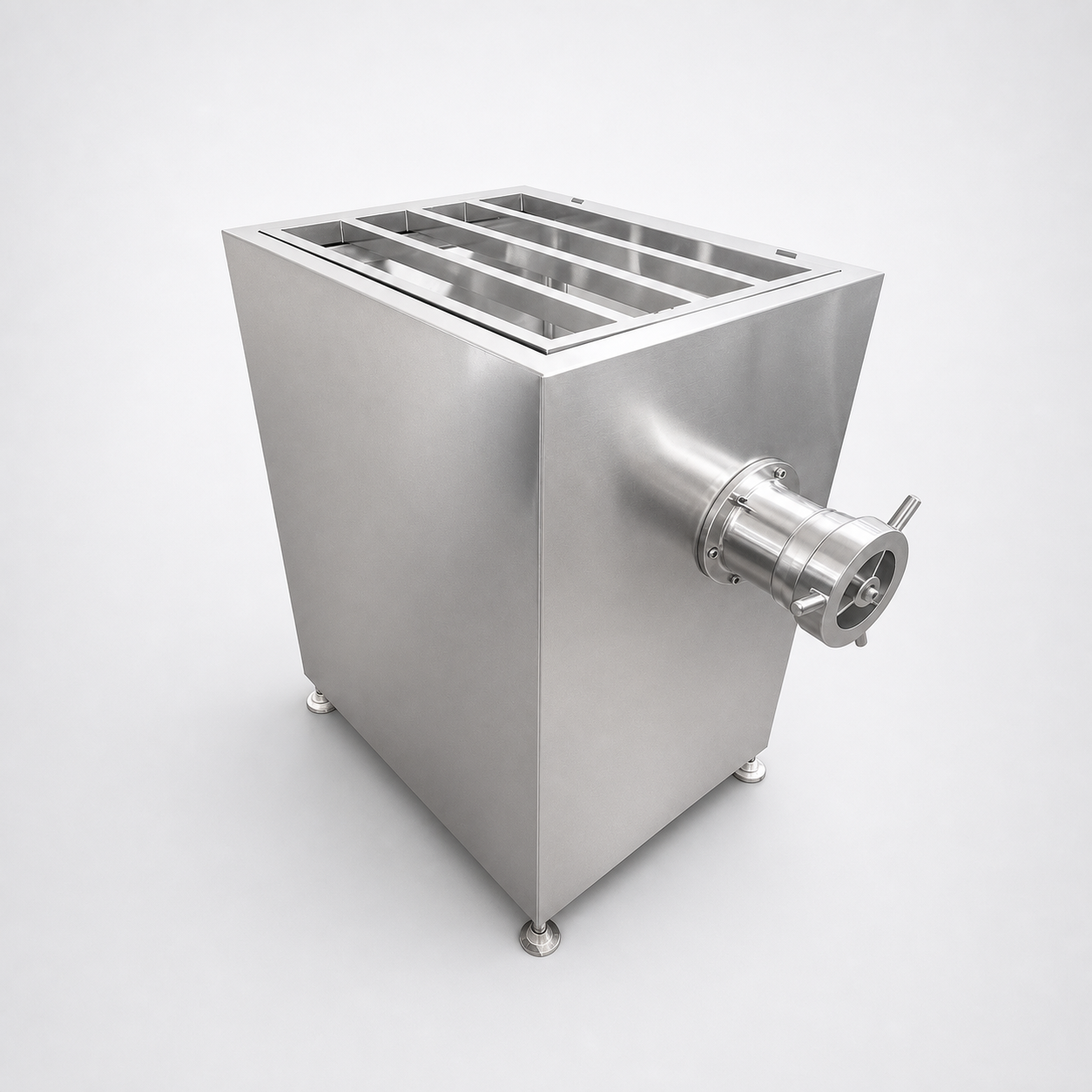
| Meat grinder (TYW120W) | 600 kg/h | 4 kW, 380 V | 900 × 560 × 940; 190 kg |
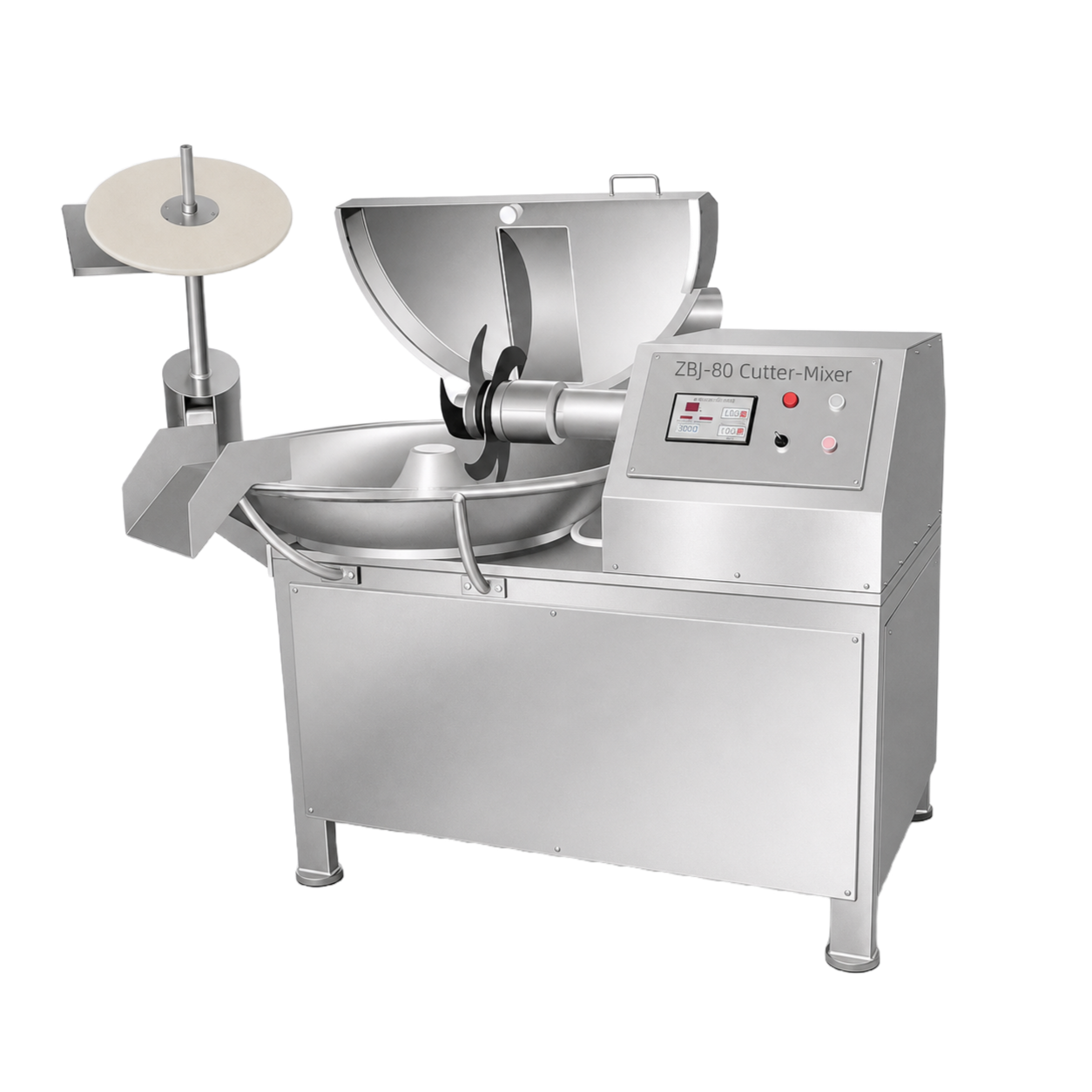
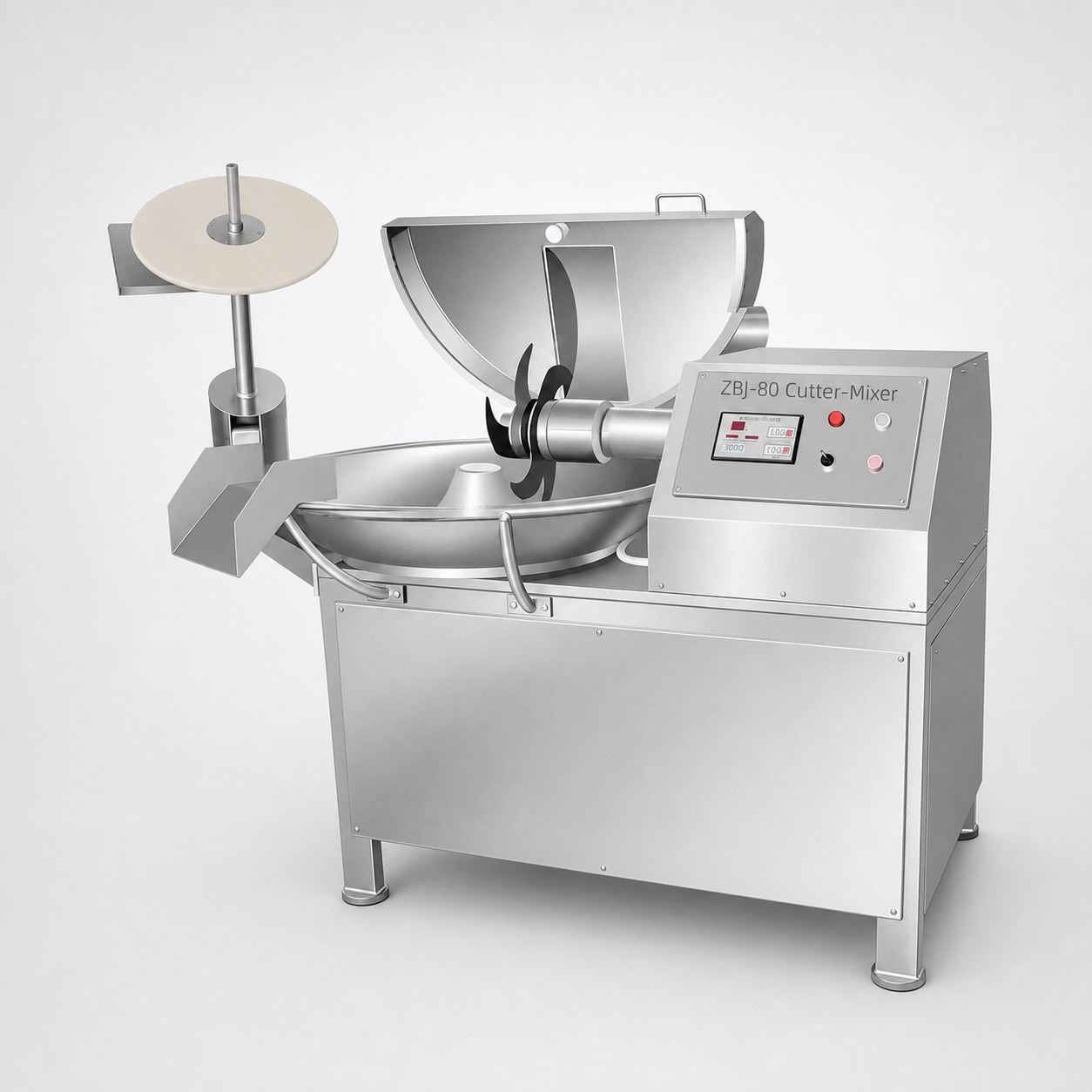
| Cutter-mixer | 50–60 kg/batch; 978 mm bowl; 6 knives | 11 + 2 kW | 1820 × 1380 × 1260; 700 kg |
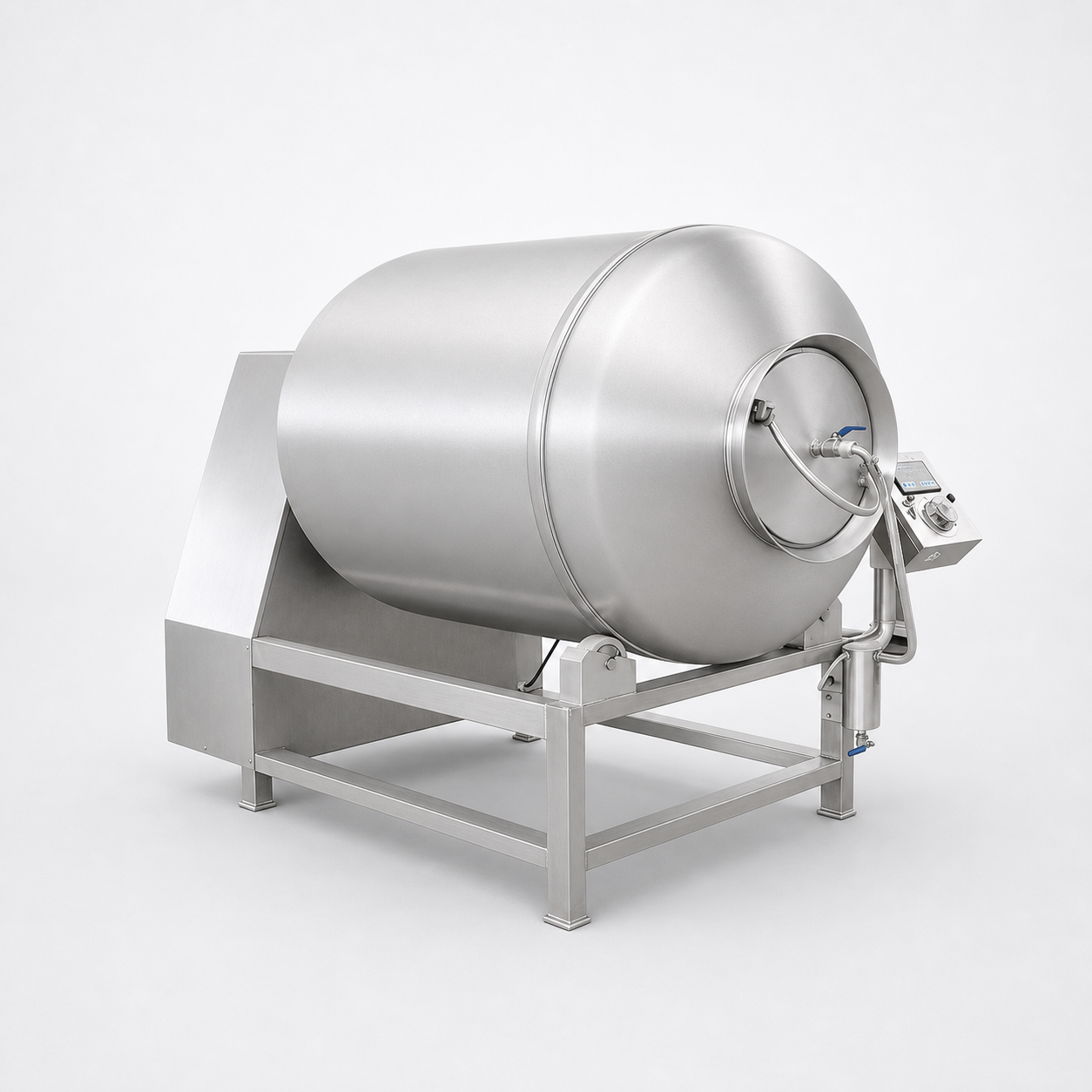
| Vacuum tumbler | 600 kg working load in a 1,583 L drum | 3 kW, 380 V / 50 Hz | 2250 × 1100 × 1650 |
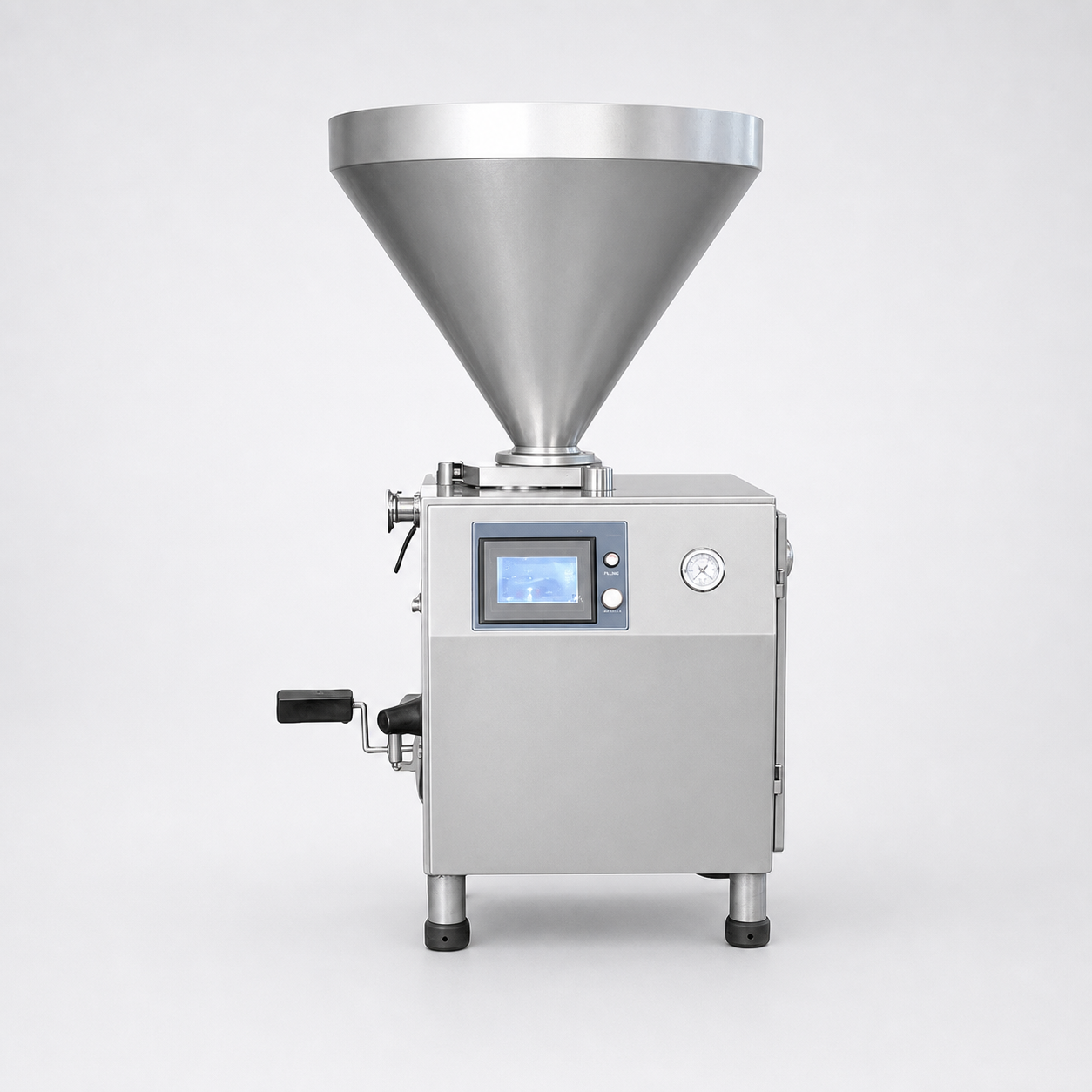
| Sausage stuffer | 5 g to 1,000 g portions; 50 L hopper | 50 W, 220 V / 50 Hz | 1050 × 650 × 1500; 130 kg |
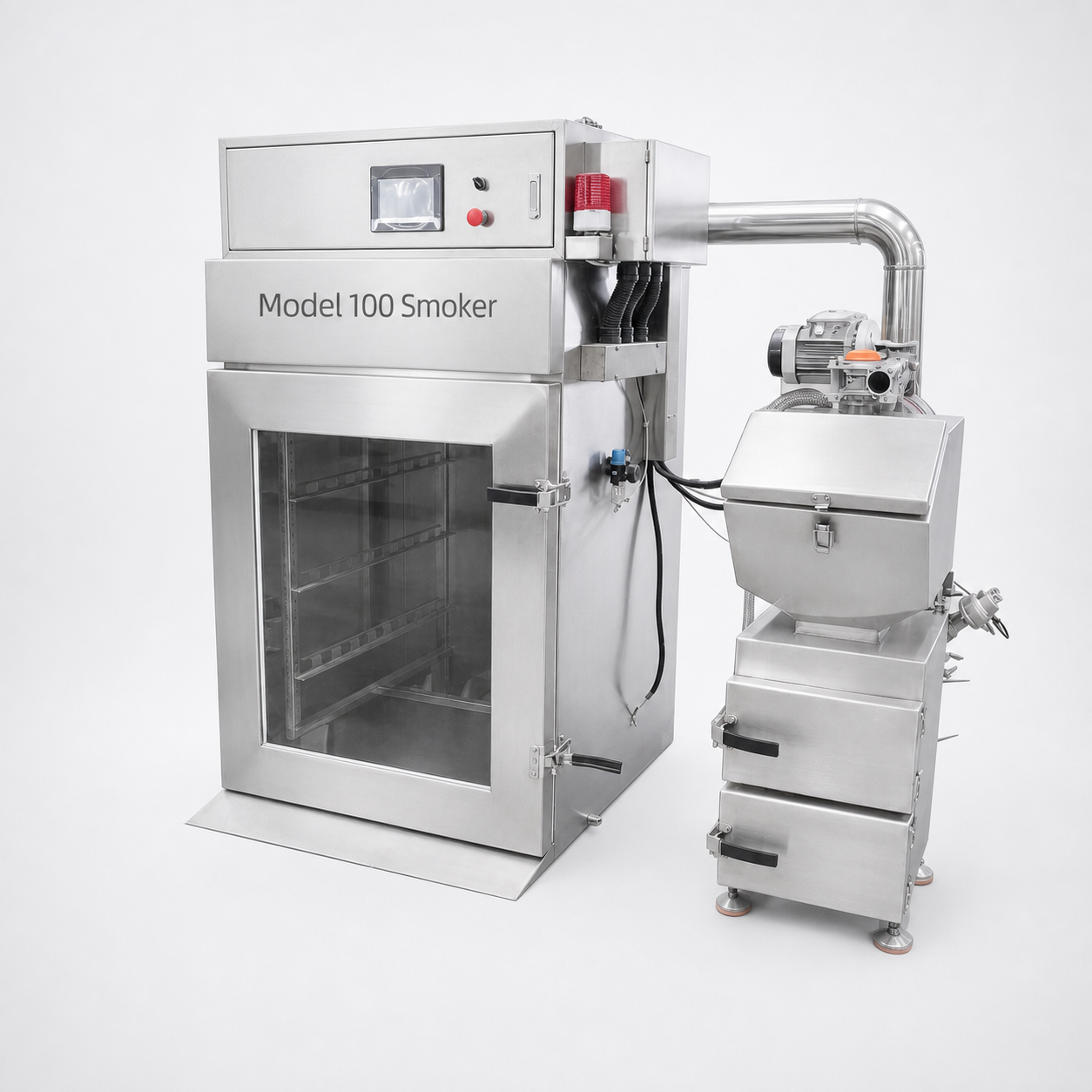
| Smokehouse | 50 kg per batch; chamber 930 × 820 × 1070 mm | 20.2 kW total | 2150 × 1200 × 1900 |
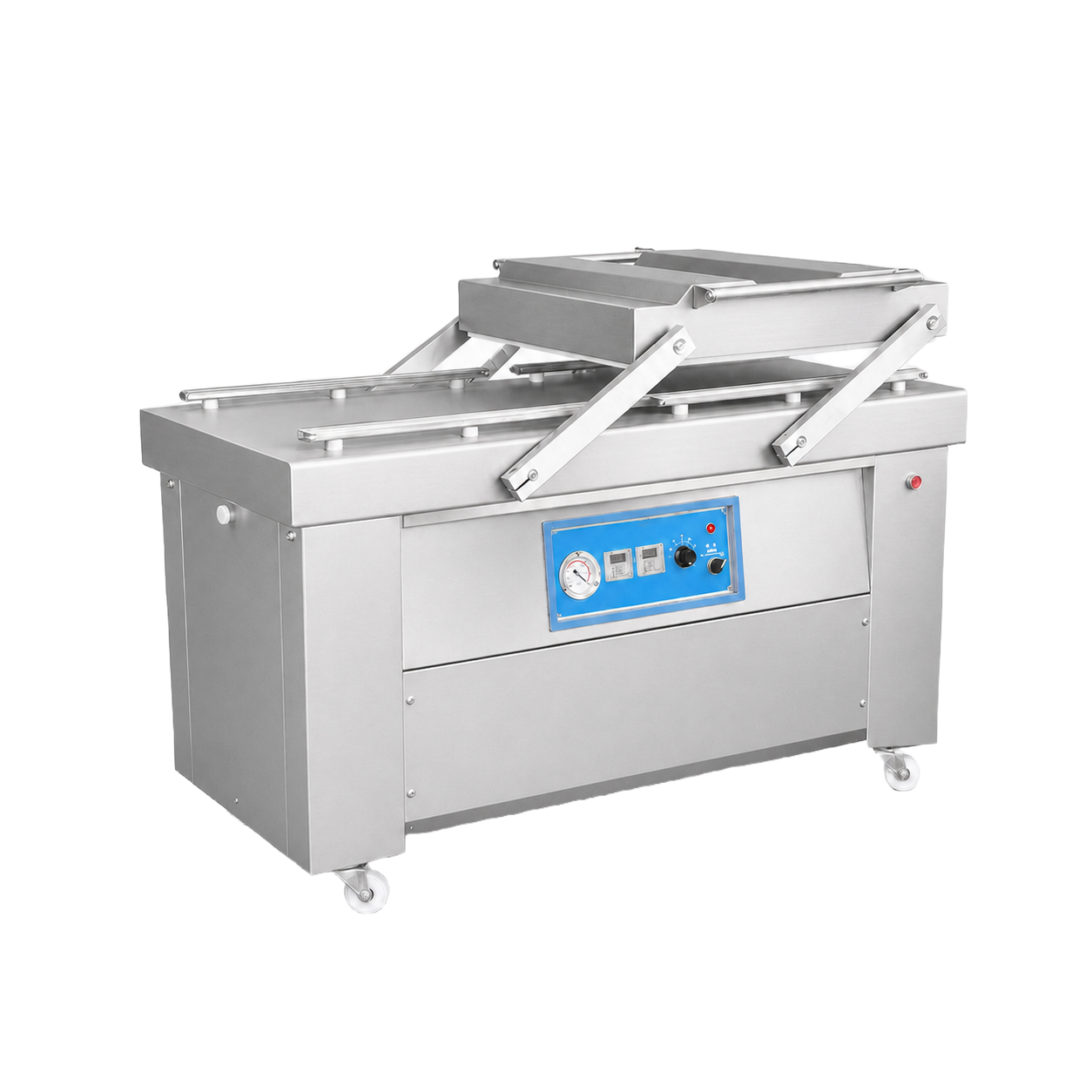
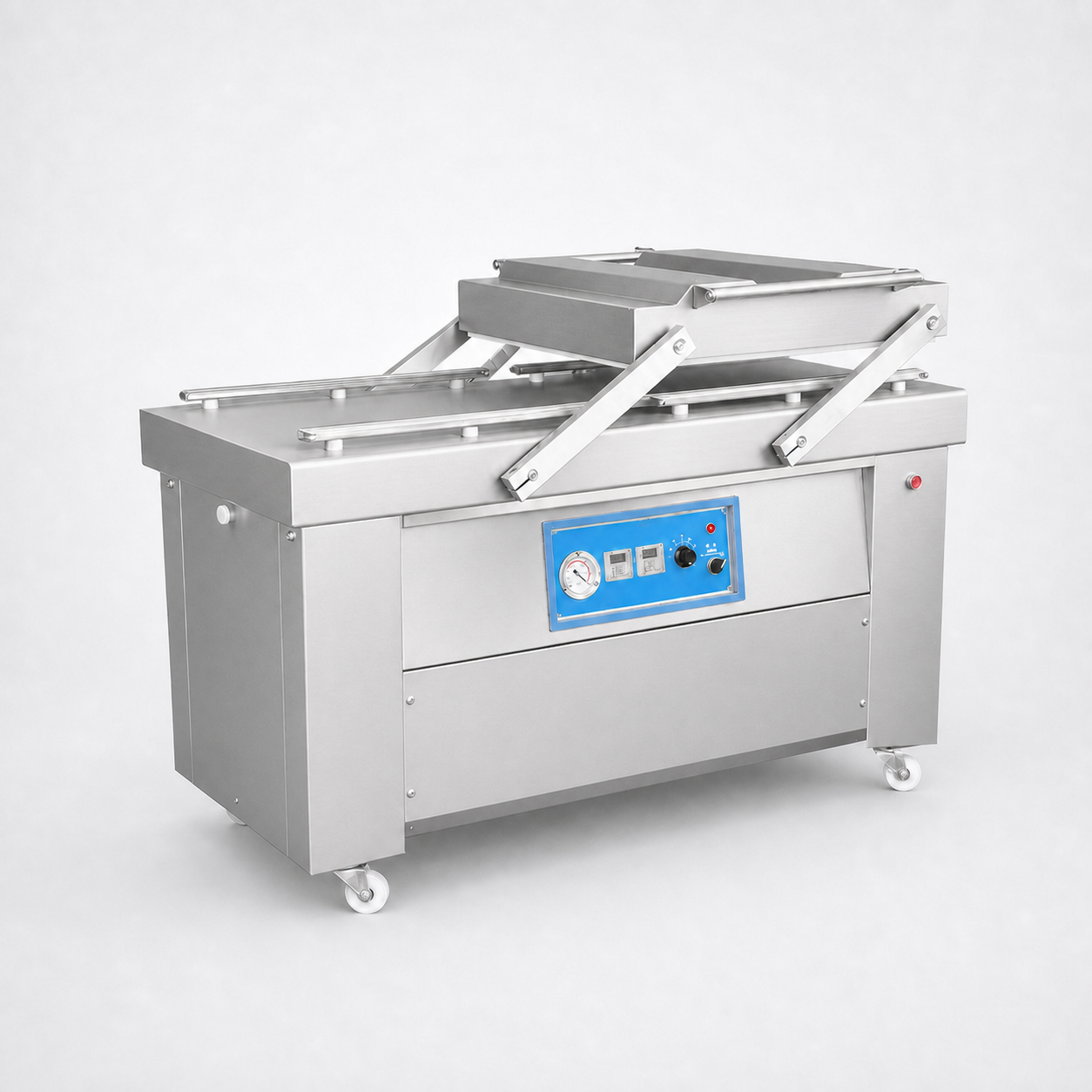
| Chamber packager | Working chamber 720 × 600 × 130 mm | 3.8 kW, 380 V / 50 Hz | 1440 × 720 × 910 |
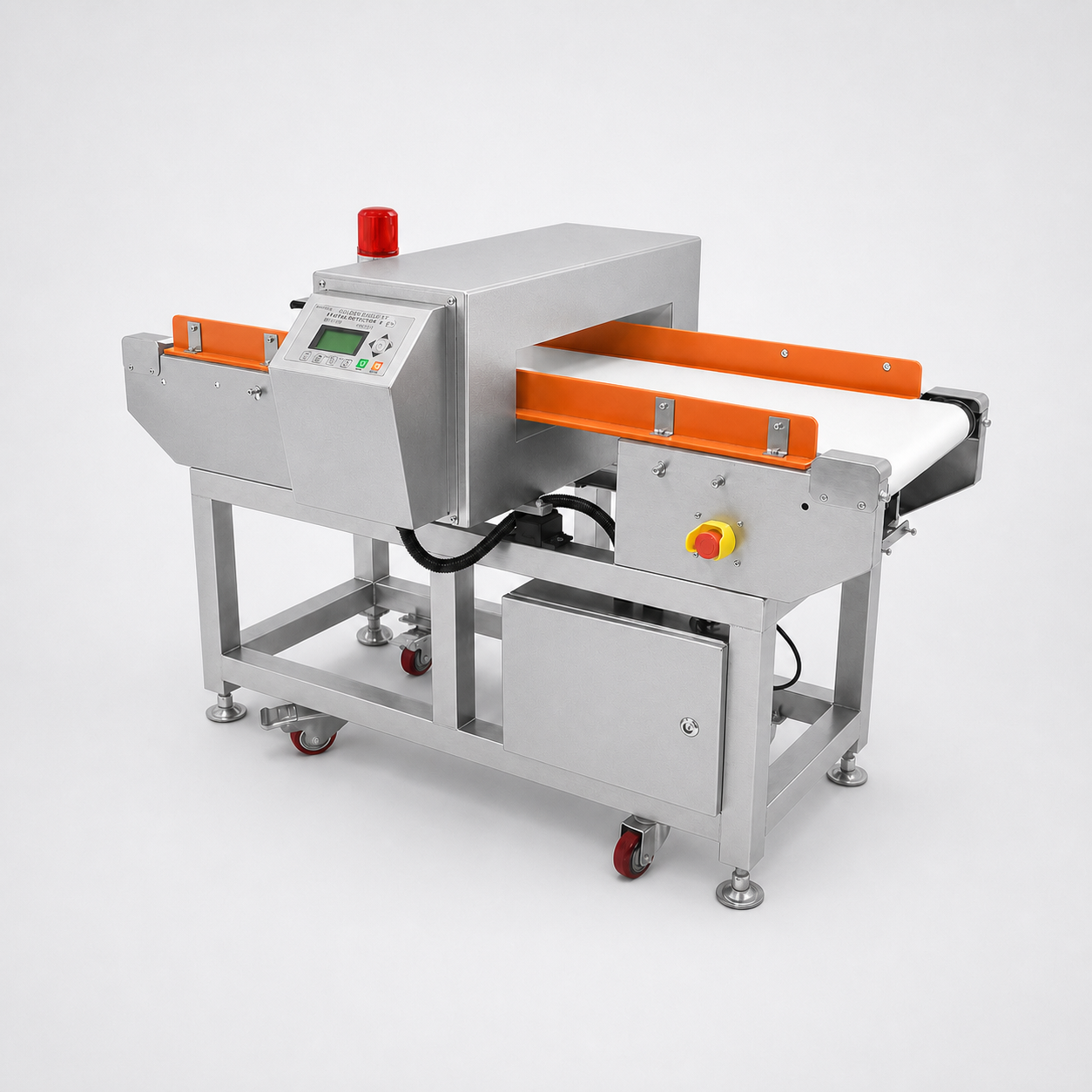
| Metal detector | Aperture 400×120 mm; Fe 0.8 mm sensitivity | Conveyor 1400 mm | 1400 × 820 × 920 |
Downstream scope is where otherwise similar production lines diverge. We separate the thermal process, cooling and exposure path, pack format, inspection logic and optional plant-control integration so each owner and acceptance record is visible.
Vacuum packaging is where most chilled and cooked routes end, and pack format decides chamber size, seal bar length and cycle rate long before a machine is chosen. Where the line feeds meat processing plants that already run their own packing halls, that boundary moves upstream and the interface, not the machine, becomes the deliverable.
Remote access and OTA are not a substitute for an agreed plant-control boundary. The modular digital layer is included only after the use case and security responsibilities are defined. NIST SP 800-82 Rev. 3 is the reference the plant OT owner and our team work from when remote access, network segmentation and update paths are reviewed.
This schedule separates buyer targets from supplier-confirmed capability. Send what you know; Shengtu reviews the gaps and returns the selected equipment, assumptions and confirmed values in the proposal.
Capacity selection without batch pattern, product mix and operating context can set the wrong automation level. More automation is not always the better investment when transfer, cleaning, changeover and maintenance work have not been mapped. Layout answers carry the same weight: 21 CFR 117.40 treats installation access and cleanability as design questions, which is why floor, drain and clearance data belong in the schedule rather than in a site visit after delivery.
Fresh sausage, emulsified hot dog/frankfurter, smoked/cooked sausage, ham or another defined product
Applicable process route and excluded routes
Raw/cooked and RTE/NRTE status for the destination market
Process-control and zoning assumptions
Meat state, formulation constraints, allergen considerations and permitted temperature range
Preparation method and recipe-control boundary
Particle definition, emulsion requirement, visible inclusions and finished bite objective
Grinding, mixing and cutter-mixer selection logic
Required rate, shift pattern, batch size, product mix and future expansion case
Confirmed line rating, bottleneck assumptions and operating basis
Diameter, length, portion or weight range and shape tolerance
Filling, portioning, linking and handling compatibility
Natural, collagen, cellulose, casingless or clipped format; supplier and loading method
Casing/closure equipment and consumable interface
Smoke, cook, dry or other program; process authority and monitoring requirements
Smokehouse scope and validation responsibility
Cooling method, product handling and any exposure after lethality
Transfer, zoning and post-lethality control boundary
Pack type, product count, dimensions, film and labeling requirements
Packaging module, infeed and outfeed scope
Target contaminant, test standard, reject method, record and disposition workflow
Inspection/reject functions and acceptance method
Available electrical supply, compressed air, water, steam, drainage, exhaust and cooling services
Utility schedule and connection points
Available area, access, floor/drain conditions, personnel and material routes
Layout concept, clearances and installation assumptions
Model, rating, drawings, elevation, controls, utilities and observed limitations
Reuse decision and interface/responsibility matrix
Country, documentation needs, requested Incoterm and named place, installation/training expectations
Documentation, supply boundary, commercial scope and exclusions
Line price follows the selected process stages, equipment models, automation, third-party interfaces, documentation, destination, site work and service scope. Shengtu returns the commercial figure after the product route and project boundaries have been reviewed in writing.
Changes machine selection, number of parallel operations, buffers and changeover demand
Current and future product mix, batch pattern and output target
Adds controls, handling, zoning, monitoring and cleaning-design requirements
RTE/NRTE status, process authority, sanitation method and exposure map
Changes infeed, pack handling, controls, reject logic and downstream interfaces
Pack samples/drawings, label flow, inspection target and disposition method
Reuse can save hardware but may add survey, retrofit, controls and responsibility work
Nameplates, manuals, layout, utility data and interface drawings
Adds sensors, control integration, networks, data mapping, cybersecurity and acceptance tasks
Control architecture, protocols, data owners, remote-access policy and use case
Freight, unloading, installation, commissioning, training and destination documents carry different obligations
Requested Incoterm and named place, access conditions and service responsibilities
These are the terms a sausage, ham or hot-dog line inquiry runs on unless your project scope changes them in writing.
One set minimum order. We accept a complete line and we accept a single machine.
Production runs are scheduled at up to 60 working days after deposit and final technical confirmation.
30% deposit and 70% balance under the contract schedule, by wire transfer. We review a letter of credit for qualified large projects.
Factory testing is documented by video before shipment. We arrange third-party inspection inside the order plan when you ask for it.
A commercial invoice and packing list ship with your order. Destination-specific documents are confirmed in the contract.
Quality planning starts with the intended product, cleaning method, destination requirements and acceptance responsibilities. We turn those inputs into review points for machine construction, installation, process controls, inspection and documentation.
A detector without a defined test, reject and disposition method leaves an acceptance gap. Because machine presence is not validation, Shengtu converts the agreed product and destination basis into acceptance criteria; ISO 14159 and 21 CFR 117.40 provide review inputs.
Hygiene standards and food safety are engineering inputs on this line rather than a closing paragraph. Contact surfaces have to be easy to clean at the frequency the product needs, and where the product is chilled between stages the plan has to state where it is refrigerated and for how long, because bacteria growth in the gaps between operations is what shortens shelf life. Quality control points, and the product quality evidence that goes with them, are agreed in the proposal instead of being discovered at commissioning.
We review product-contact materials, cleanability, seams and joints, access, drainage, adjacent-space cleaning, cleaning chemistry and the intended sanitation method. ISO 14159 and destination requirements can be used as review inputs without implying certification. Where the intended sanitation method is wet cleaning in place rather than manual strip-down, the cleaning circuit belongs in the same review, and the circuit, chemistry and verification questions that decide it are set out on the Shengtu clean-in-place cleaning system page.
We separate equipment supply from recipe/process authority. Lethality, stabilization, cooling, RTE/NRTE status and exposure after lethality must be assigned and validated for the product and market.
We identify interfaces, emergency-stop zones, restart behavior, guarding boundaries and responsibilities when Shengtu and third-party machines form one line.
We define the test standard, challenge method, reject device, fail-safe response, rejected-product evaluation, disposition and record owner. Detector presence alone is not an acceptance result.
Shengtu supports requirements analysis, line integration, smart-factory planning and IT/OT digital enablement.
We convert the buyer's operating case into a reviewable engineering and commercial scope.
Start Your ProposalSend the product route, target values, pack format, destination and available site information.
We identify missing recipe, thermal, hygiene, handling, inspection and utility decisions.
We select applicable equipment categories and define add, omit, reorder, transfer and existing-machine boundaries.
We define PLC/HMI, protocols, optional STUnit/OTA/gateway/vision functions and OT responsibilities, using NIST SP 800-82 Rev. 3 as the reference for the security boundary.
We return the process flow, equipment scope, assumptions, option boundaries, acceptance approach, delivery scope and quotation.
The approved technical and commercial documents become the reference for manufacture, integration and acceptance.
Product route, process sequence, module list and named assumptions.
Product transfers, elevations, utilities, controls, third-party boundaries and layout concept.
Review stages, FAT/SAT scope, test prerequisites, responsibility split and required records.
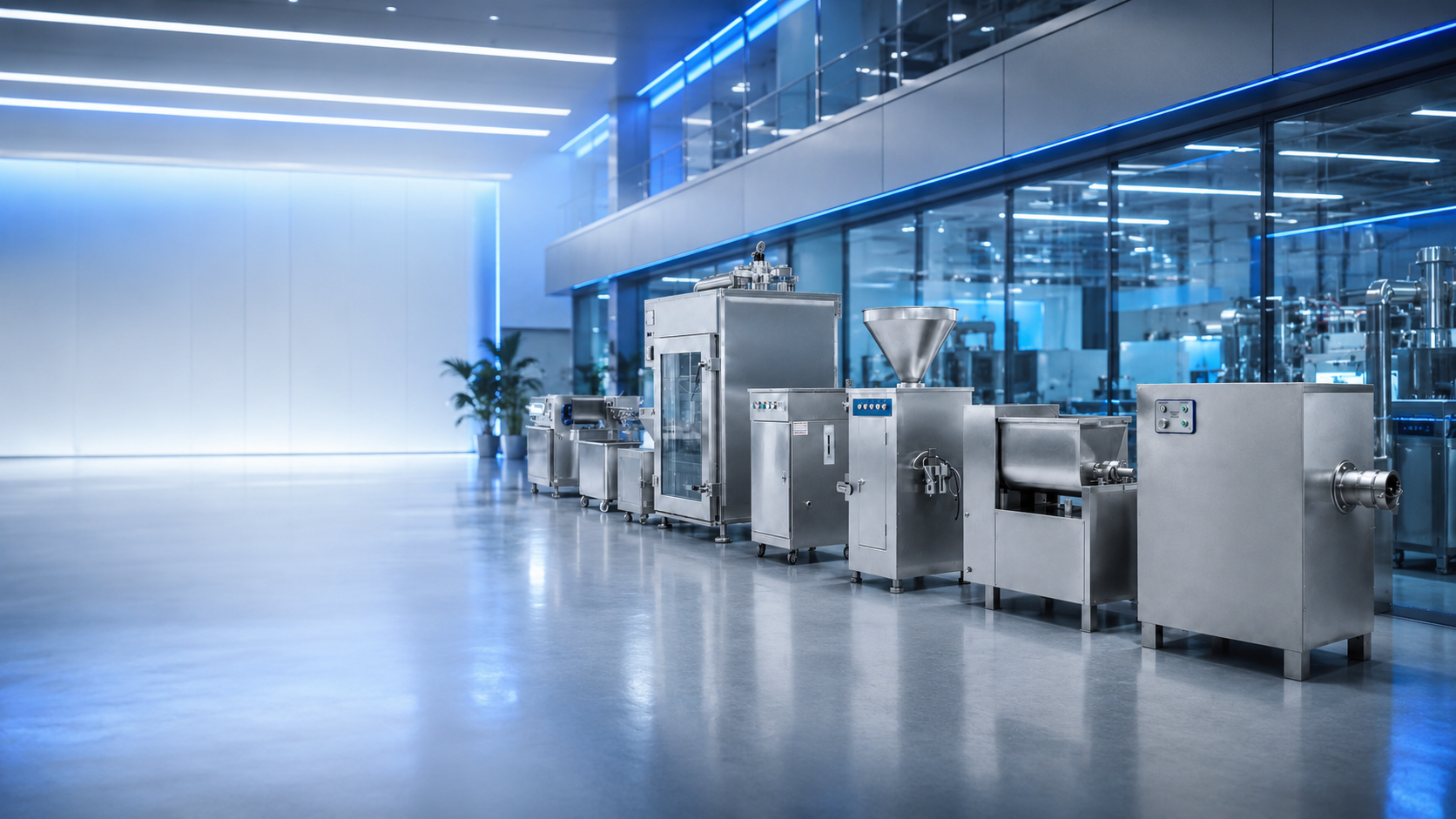
Supplied media depicts seven module categories and the sequence of several sausage-processing operations. It makes the project discussion concrete but does not establish supply scope, model selection, ratings, installation history or performance; those items require separate first-party project documentation.
Configuration illustration showing a possible equipment arrangement, not a fixed bill of materials.
Documented grinder reference for the meat-preparation stage.
ZBJ-80 is visible in the supplied artwork; project ratings are confirmed separately.
Documented vacuum-tumbler reference for applicable product routes.
Documented filling-machine reference; casing and portioning interfaces remain configurable.
Model 100 Smoker is visible in the supplied artwork; thermal validation is product- and project-specific.
Documented chamber packaging reference for a defined package and product presentation.
Documented metal-detector reference; test, reject and disposition logic must be specified.
Unattributed illustrative process footage supplied for this solution: meat preparation, mixing, sausage handling, smoke-rack loading and finished-product output. No visible Shengtu or customer-site identity is present, so this is not presented as a Shengtu installation, factory record or customer result.
Shandong Shengtu Bufan Intelligent Technology Co., Ltd. is a Weifang-based food processing machinery R&D and manufacturing enterprise that also develops whole-plant digital solutions. We supply meat processing machines as single units and as configured lines; the line-level scope shown here is defined project by project.
A complete line is useful when interfaces and responsibility need to be engineered together. A smaller or differently sequenced scope can be the better decision when the product, plant or existing assets point elsewhere.
These trade-offs are not interchangeable machine choices. The cheapest headline price is not necessarily the best comparison; where to look instead is the named scope, interface work and acceptance basis. A retained machine is judged on the same basis as a new one: the ISO 14159 hygienic-design review applies to a reused grinder exactly as it applies to a supplied one, and that review is what decides whether reuse actually saves money.
The downstream boundary is the same kind of decision. Cooked and packed routes end at the packing machine; routes that ship frozen product do not, because freezing, glazing and cold-store handling sit on separate equipment with their own acceptance basis. That scope is described on the IQF quick-frozen food line page rather than absorbed silently into a sausage line quotation.
A fully automatic line and a semi-automatic one are both defensible answers. Automation converts labor costs into capital cost, spare parts and maintenance skill, and it only pays back where the bottleneck, changeover pattern and sanitation cycle have been measured first. The sausage products you intend to sell, and the shift pattern behind them, decide which of the two is the cheaper line over its life.
A thermal module would add irrelevant scope and distort the process flow.
Configure preparation, filling, handling, packaging and cold-chain interfaces only.
OTA or gateway functions can conflict with site security and support policy.
Use a local-control scope or agree a restricted access architecture before quotation.
Grinding and cutter-mixing may not match the product structure.
Start with injection/tumbling, forming or clipping, thermal treatment and slicing/packaging requirements.
Replacing useful assets can waste capital and create unnecessary qualification work.
Run the interface check and replace only the bottleneck or incompatible stage.
Equipment can be selected against assumptions that change before acceptance.
Freeze product trials, casing/portion, thermal route and pack format before final configuration.
More controls and transfer equipment add integration, cleaning and maintenance work.
Map labor, waiting, changeover, reject and handling losses before selecting the automation level.
The supplied Shengtu media documents seven categories: meat grinder, cutter-mixer, vacuum tumbler, sausage stuffer, smoker, chamber packaging machine and metal detector. The proposal adds, removes or reorders stages according to the selected product route.
One project can share selected preparation, thermal, packaging or inspection assets, but it should not assume one fixed route. Start with the product matrix and the 15-input specification schedule to identify common and product-specific modules.
A fresh route may end at filling, portioning and packaging, while a cooked hot-dog route can add thermal processing, cooling, a peeling machine where the product is sold skinless, post-lethality handling and packaging controls. RTE/NRTE classification is one of the first decisions.
Define the product, load method, process program, smoke/cook objective, monitoring, recipe authority, cooling handoff and acceptance method. A visible Model 100 label in the supplied illustration is not a validated thermal-process specification.
The investigation covers mixture condition, vacuum handling, feed consistency, stuffer selection, casing, operator control and the next-machine interface. The final remedy must be confirmed against the actual product; a dedicated filler alone does not prove the result.
Yes, Shengtu can review existing machines as project inputs. Send model/rating data, manuals, product state, elevation, utilities, control signals and current limitations so the interface and responsibility matrix can be built.
No single page value is approved for every configuration. Send the required rate, shift pattern, batch size and product mix; the written proposal confirms the selected line rating and bottleneck assumptions.
Define the product effect, test standard, challenge pieces, check frequency, reject action, fail-safe behavior, rejected-product evaluation and disposition records. FSIS Directive 7310.5 is one useful control reference for U.S. meat and poultry operations.
Include food-contact material requirements, cleaning method and chemistry, access, drainage, allergen or raw/RTE zoning and destination rules. ISO 14159 and 21 CFR 117.40 can inform the review, but they do not certify an unselected line.
No. They are optional project scope. The proposal must identify the function, data and network boundary, accounts, remote-access model, update path, acceptance method and responsible plant owner.
Use the 15-input schedule: product family, classification, recipe/material, texture, output, dimensions, casing, thermal route, cooling/exposure, pack, inspection, utilities, layout, existing equipment and destination/delivery.
Price depends on equipment selection, options, integration, documentation, destination and site/service scope. Incoterms 2020 contains 11 rules for allocating costs, risks and obligations; the requested rule and named place must therefore be stated and confirmed.
Agree the approved process flow, module/interface list, utility assumptions, responsibility matrix, FAT/SAT scope, test prerequisites, acceptance criteria, deviation handling, training and handover records. Product/process validation ownership must also be named.
Complete the product route qualifier and proposal input checklist, then open the Shengtu project inquiry form. Even partial information is useful when unknown fields are clearly marked for engineering review.