Get in touch with Shengtu Bufan Company


Industrial snack food processing
Extruded & Puffed Snack Line Configuration
Shengtu scopes an extruded and puffed snack production line around the product you need to make, the process window it requires, and the plant that must operate it. That review connects raw material handling, twin-screw extrusion, thermal finishing, seasoning, inspection, and food packaging without hiding unknowns inside a generic production capacity.
- Product brief before machine list
- 8 station-level review points
- Safety and line-data boundaries included
- No unsupported output or savings claim
Start with the Snack, Not a Catalog Capacity
Extrusion cooking is a linked process: formulation, feed moisture, barrel temperature, screw speed, die conditions, and downstream treatment can move expansion, density, texture, color, and handling behavior together. A 2024 peer-reviewed review shows why settings taken from one formulation are not a universal recipe for another.1
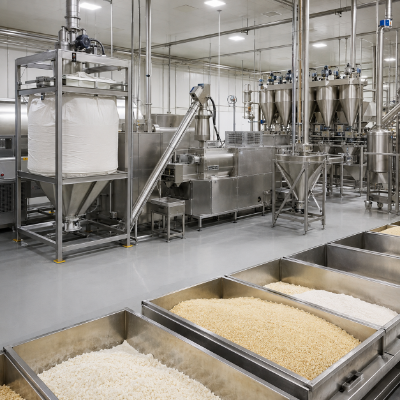
Raw material brief
SPECIFICATIONS
Raw material brief
- Base grain or starch blend
- Particle-size and moisture range
- Oil, sugar, salt, protein, and fiber additions
- Allergen and cross-contact constraints
- Incoming variability the process must tolerate
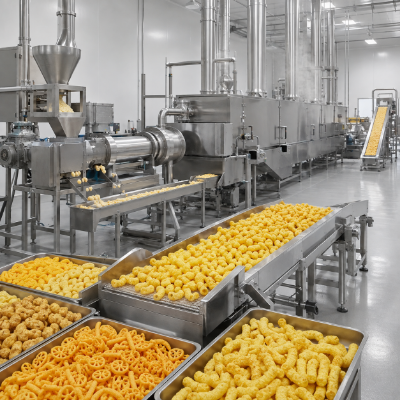
Finished snack brief
APPLICATIONS
Finished snack brief
- Shape and die concept
- Expansion and bulk-density target
- Bite, hardness, and breakage limit
- Color and surface condition
- Fried, dried, baked, or other confirmed finish
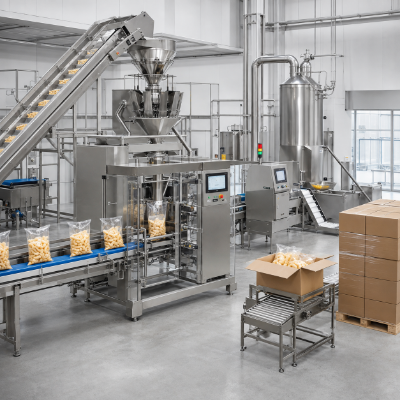
Commercial pack brief
PROCESS
Commercial pack brief
- Target weight and fill behavior
- Bag dimensions and film structure
- Seasoning pickup and loose fines
- Seal, coding, and inspection needs
- Secondary packing and dispatch handoff
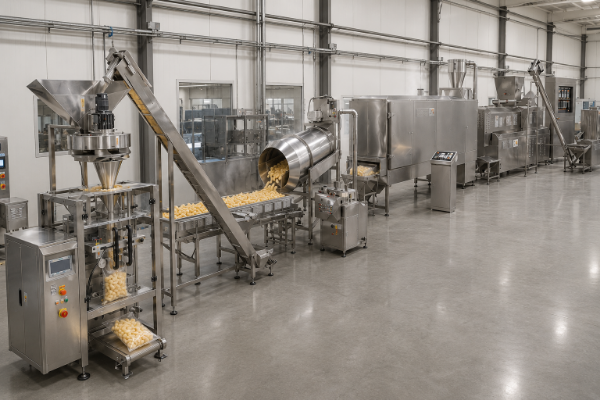
The Snack-to-Station Scoping Map
This map turns the buyer’s product brief into station-level engineering questions. Its station numbers organize review order; they are not performance specifications. The product-variable dependencies behind this review are discussed in the cited extrusion research.
| Stage | Station or interface | Input to freeze | Hidden dependency | Review owner |
|---|---|---|---|---|
| 01 | Ingredient receiving and preparation | Raw material, particle size, moisture, allergen status | Dust behavior, segregation, dosing stability | Buyer food team + line engineer |
| 02 | Mixing, conditioning, and feeding | Formula sequence, added liquid, residence needs | Feed consistency changes extruder load and product quality | Process engineer |
| 03 | Twin-screw extruder | Product window, control points, tool concept | Formulation and settings interact; nameplate output is not accepted output | Process engineer + buyer product team |
| 04 | Cutting and transfer | Shape, length, fragility, line height | Cut stability and transfer damage affect the thermal route | Mechanical engineer |
| 05 | Thermal finishing | Fried, dried, baked, or separately confirmed route | Moisture removal, oil management, exhaust, and utilities | Process + facility teams |
| 06 | Seasoning and product handling | Oil application, powder or slurry, breakage limit | Surface condition drives seasoning pickup and fines | Food team + line engineer |
| 07 | Inspection and packaging | Hazard plan, pack format, target weight, reject logic | Product flow can limit packaging-machine performance | Quality + packaging teams |
| 08 | Controls and handover | Accounts, data tags, remote access, backups, acceptance records | IT/OT rules and ownership must be agreed before commissioning | Controls + buyer IT/OT teams |
Configure the Extrusion Process and the Finishing Route as One System
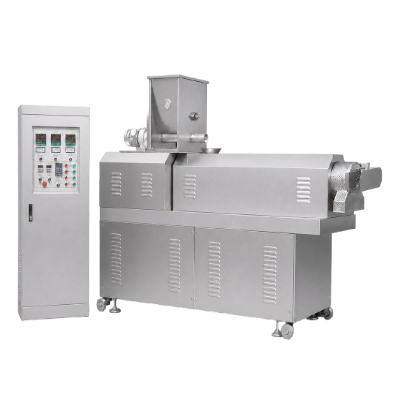
Common front end
Ingredient to shaped extrudate
- Prepare
- Meter
- Mix
- Condition
- Extrude
- Shape
- Cut
- Transfer
Feeding and extrusion must be reviewed together because a variable raw material can create a variable process load. Written quotations should identify the formulation basis and which parameters can be adjusted during product validation.
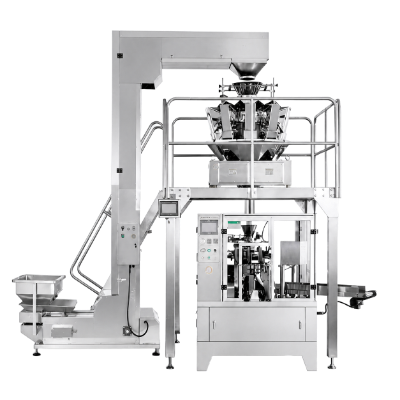
Selectable back end
Finish to packed snack
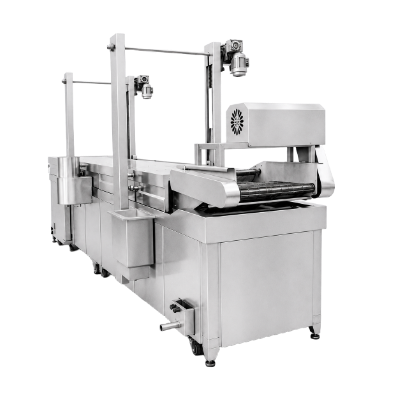
- Fry or dry
- De-oil if fried
- Cool
- Season
- Inspect
- Weigh
- Pack
- Code
Non-fried routes need their own moisture-removal, texture, cooling, and utility review before equipment is selected. Projects centered on sliced potato chips or French fries belong in Shengtu’s Potato Chips & Fries Line route instead.
Hidden bottleneck map
product behavior can move the limiting station.
- Feed consistency
- Extruder process window
- Thermal residence and load
- Seasoning and packaging flow
Capacity basis
Define raw input, accepted finished output, product specification, planned uptime, and packaging basis together. Production capacity for a processing line without those five fields cannot be compared across quotations.
Utility basis
Reconcile power, heating, water, compressed air, ventilation, drainage, and cooling for the selected route. Energy consumption is a project calculation, not a generic benefit label.
Changeover basis
Record the planned product family, allergen sequence, tooling changes, cleaning method, and restart checks. Lines that change products need time and acceptance rules for the change.
The RFQ Input Register: What Determines Scope, Cost, and Schedule
No reliable source supported a transferable payback period or savings percentage for this project. Compare quotations through the mechanisms that create cost and risk, then request a written response against the same input register.
SYS.ON // SCANNING…
Commercial facts that require the written quotation
- Price and included equipment
- Engineering and manufacturing schedule
- Shipping basis and trade terms
- Payment terms
- Trial or sample policy
- Warranty and service response
- Installation and commissioning scope
- Training and spare-parts package
| RFQ field | Buyer input | Why it changes the proposal | Required response |
|---|---|---|---|
| Product family | Formulas, reference samples, shape range, allergen matrix | Moves feeder, screw, die, thermal, and cleaning decisions | Included window, exclusions, and test basis |
| Output basis | Raw input and accepted packed output | Sets line balance and buffer logic | Capacity basis and limiting assumptions |
| Quality criteria | Expansion, density, texture, color, moisture, breakage | Defines the process window and acceptance method | Sample, method, frequency, and record owner |
| Plant interface | Layout, elevation, access, floor loading, zoning | Moves conveyors, platforms, service clearances, and installation work | Layout assumptions and responsibility matrix |
| Utilities | Voltage, heating source, water, air, exhaust, drainage | Changes heating, control, and facility connections | Utility schedule and connection points |
| Food-safety plan | Hazards, allergens, cleaning, inspection, reject handling | Moves equipment access and control interfaces | Supplier contribution and operator-owned controls |
| Packaging | Target weight, bag, film, coding, secondary pack | Changes feeding, weighing, sealing, and line speed | Interface and acceptance basis |
| Digital scope | Data tags, protocols, accounts, remote-support rules | Changes control architecture and cyber review | Network, update, backup, and ownership schedule |
| Handover | Tests, documents, training, spares, local duties | Moves project effort and site readiness | Factory and site acceptance matrix |
Build one comparison pack for three buyer roles
Procurement
Comparable commercial scopeProcurement needs a priced equipment list, exclusions, trade basis, schedule basis, service boundary, and change-control route. Ask every bidder to respond to the same input register so a lower price is not created by a missing station, utility, test, document, or site duty.
- Included and optional items
- Buyer-supplied work
- Commercial assumptions
- Change-order triggers
Process and quality
Accepted product evidenceProcess and quality teams need the formula range, process window, reference product, measurement method, sampling point, and approval owner. Separate machine function from accepted snack food results so a dry mechanical run is not mistaken for product validation.
- Test material and quantity
- Product criteria and method
- Deviation and corrective action
- Approved record format
Facility and controls
Installable, supportable systemFacility and information-technology/operational-technology teams need connection loads, access space, environmental interfaces, network requirements, accounts, backups, and recovery steps. Their review should close before equipment dispatch, not appear as an installation-day surprise.
- Utility connection schedule
- Layout and maintenance access
- Network and remote-support model
- Configuration handover
Control Food Safety, Dust, Machinery, and Line Data by Responsibility
An integrated snack food production line crosses equipment, building, product, and operating responsibilities. Production line quotations should state who designs, supplies, validates, operates, and records each control instead of using one broad compliance claim.
Equipment supplier
Machine and interface scope
- Guards, interlocks, emergency-stop interface, and isolation information
- Product-contact access and cleaning provisions in the quoted design
- Dust-collection connection points where specified
- Inspection and reject interfaces
- Control drawings, account plan, and backup handover
Facility designer / integrator
Plant-level system scope
- Dust-hazard evaluation and building protection
- Ventilation, exhaust, drainage, fire protection, and zoning
- Electrical supply, earthing, and local conformity
- Line access, platforms, egress, and service clearances
- Network zones and external connection controls
Food business operator
Validated operating scope
- Hazard analysis and preventive controls
- Approved formulation and process criteria
- Cleaning, allergen, inspection, and corrective-action records
- Energy-control procedures, training, and authorization
- User accounts, remote-session approval, and change control
Responsibility Boundary Map
The risk is a control gap because dust, food safety, machine safety, and operating decisions cross supplier and site boundaries. The resolution is a responsibility matrix: a US Chemical Safety Board study identified 281 major combustible-dust incidents from 1980 to 2005 as cross-industry context, while Shengtu provides agreed machine and interface evidence. FDA places the written hazard analysis and risk-based preventive controls with covered human-food facilities.
Acceptance questions for safety and inspection
What hazards are product-specific?
Where are isolation boundaries?
How are rejects contained and recorded?
Which checks belong to the buyer?
From Product Brief to Line Handover
STN-01
Freeze the product brief.
Name the raw materials, formula range, product shapes, finished quality criteria, allergens, and package.
STN-02
Review the plant brief.
Provide layout, access, utilities, exhaust, drainage, environmental limits, and destination country.
STN-03
Map the station dependencies.
Connect product variables to feeding, extrusion, thermal finishing, seasoning, inspection, and packaging.
STN-04
Issue the line configuration.
Reconcile the equipment list, optional modules, interfaces, exclusions, and responsibility boundaries.
STN-05
Freeze acceptance evidence.
Define the product sample, measurement method, test duration, record owner, and pass condition for each requirement.
STN-06
Confirm the commercial schedule.
Price, manufacturing sequence, delivery, installation, commissioning, training, and support are confirmed against the stable scope.
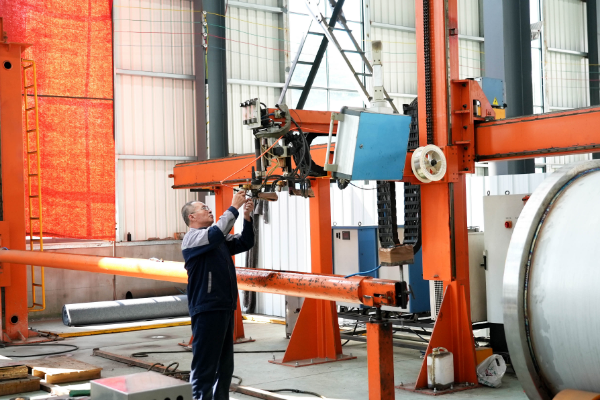
Factory acceptance
- Equipment identity and configuration
- Controls, alarms, interlocks, and direction checks
- Available integrated run using agreed test material
- Open-item list and document register
- Packing and shipment condition
Site acceptance
- Installation and utility verification
- Line communication and safe-start checks
- Product run against agreed criteria
- Training, maintenance, and cleaning handover
- Backup, recovery, and final responsibility sign-off
Evidence to carry from one gate to the next
Product evidence
Keep the approved reference sample, formula revision, raw-material lot information, test settings, and measured result together. If a formula or ingredient source changes, the record shows which part of the accepted process window may need review.1
Integrated-line evidence
Record start, stop, starvation, blockage, reject, and recovery behavior across station interfaces. An individual extruder or packaging machine test does not prove buffer behavior or accepted output for the connected line.
Handover evidence
Close drawings, manuals, spare-parts lists, accounts, programs, recipes, backups, training, and open items against named owners. Final records should state what was demonstrated, what remains a site task, and who accepts each boundary.
Shengtu Engineering and Digital Capability, with the Scope Stated Clearly
Shandong Shengtu Bufan Intelligent Technology Co., Ltd. is a Weifang food-machinery research, manufacturing, and whole-plant digital-solutions company.
“Smart manufacturing of food equipment, empowering industrial upgrades.”
— Shengtu company mission
Project document register
The request for quotation should name the contracting entity, supplied equipment scope, destination market, and documents the buyer expects. Put company qualification, equipment records, and product acceptance criteria on separate review lines.
Engineering platform
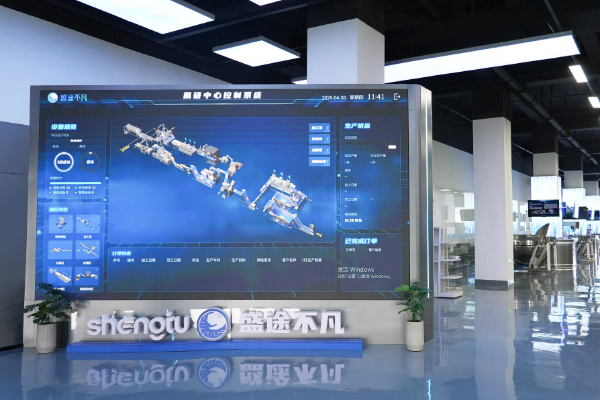
Shengtu describes the STUnit platform, standalone over-the-air upgrades, line integration, smart-factory planning, and information-technology/operational-technology support. Project proposals must identify which functions are included for the quoted line.
Terminals and algorithms
Company-level technologies listed by Shengtu include low-code control boxes, multi-protocol gateways, YOLO vision, and edge algorithms. Availability does not mean every function, camera, model, gateway, or data interface is standard on an extruded snack line.
Operational-technology review before remote support is enabled_
Remote-support scope should be reviewed against performance, reliability, safety, account ownership, network boundaries, update control, and recovery needs. The quotation should answer the questions below for the actual line. As of August 2026, NIST lists Revision 3 as final and Revision 4 as a preliminary draft; the quotation should confirm the current final revision, and this reference does not prove a Shengtu implementation or certification.45
-
Is remote access disabled, temporary, or persistent?
-
Who approves a session and owns each account?
-
Which network zone contains the line?
-
Which protocols, ports, and data directions are required?
-
How are updates tested before production use?
-
Who owns PLC logic, recipes, and configuration backups?
-
How is restoration tested?
-
What happens if communication is lost?
Extended Engineering Review Triggers
Products with unproven expansion behavior, constrained plant interfaces, or destination-specific conformity needs move into an expanded review before the equipment list is frozen. That review combines product trials, site engineering, and the applicable conformity path so the quotation is based on defined inputs. The right call, unlike a catalog selection, turns unknowns into agreed tests, named owners, and acceptance criteria.
What the expanded review buys
The trade-off is additional test and engineering time before quotation freeze in exchange for a configuration and acceptance basis tied to the actual project. Each unresolved condition receives a named next action instead of a guessed catalog value.
Project condition
Why the current scope is incomplete
Next action
Unproven formula or shape
The required process window and die behavior are unknown
Agree a product-development or test protocol in writing
Unknown dust properties
Fine material behavior and site concentration are not established
Commission a material and facility dust-hazard review
Multiple allergen families
Sequence, access, cleaning method, and verification are undefined
Build the allergen changeover matrix before layout approval
Existing packaging line
Product feed, signal, buffer, and reject interfaces may not match
Exchange interface data and run an integration review
Destination rules not stated
Machinery, electrical, electromagnetic, food-contact, and document scope can change
Name the destination and contractually applicable requirements
Always-on vendor connection requested
Account ownership, segmentation, logging, updates, and recovery are unresolved
Hold an information-technology/operational-technology security review
One output number for many products
Accepted output can move with formula, shape, finish, and packaging
Set a separate acceptance basis for each agreed product family
Digital Solutions & Planning Tools
Extruded puffed snack line evaluation, configuration, and structural planning utilities.
Request a Configuration Based on Your Product and Plant
Send the inputs below so Shengtu can separate confirmed scope from open engineering questions. Its response can then align the extruder, downstream route, packaging, controls, utilities, and acceptance plan on one basis.
Engineering Input Parameters
- 01Raw material and formula range
- 02Reference snack and target shapes
- 03Expansion, texture, moisture, and color criteria
- 04Raw input and accepted output basis
- 05Fried or non-fried finishing route
- 06Seasoning and allergen matrix
- 07Bag, film, weight, and coding needs
- 08Plant layout and access route
- 09Power, heating, water, air, exhaust, and drainage
- 10Destination country and required documents
- 11Remote-access and data rules
- 12Factory and site acceptance expectations
Extruded and Puffed Snack Line FAQ
01 What raw materials can an extruded snack line process?
Start with the actual grain or starch blend, additives, particle size, moisture range, and allergen status. Shengtu must review the proposed formula before confirming its process window or equipment configuration.
02 Can one extruder make several snack shapes?
Tooling and parameter adjustment may support more than one shape, but that is not automatic proof of every product. List each target shape and agree the die, cutter, formula range, and acceptance criteria for it.
03 How is an extruded snack food production line scoped?
Connect the formula, finished snack, output basis, plant, finishing route, packaging, controls, and acceptance evidence before freezing equipment. That sequence makes the trade-off between flexibility and a testable project scope visible.
04 Can the snack production line make a corn puff?
Corn puff is one product target that should be declared with its actual formula, shape, finish, and pack. Shengtu must confirm the product window and production line configuration rather than treating the product name as proof of compatibility.
05 Why does feed moisture matter in extrusion?
Feed moisture interacts with temperature, screw conditions, formulation, and die behavior, which can change expansion and texture. It belongs in a controlled product window rather than a copied universal setpoint.
06 Is the post-extrusion route always fried?
No. Client-supplied equipment context includes a fryer and de-oiler, but a project may require a different confirmed thermal route; each route has its own utility, moisture, texture, and cooling questions.
07 How should production capacity be compared?
Use the same raw-input basis, accepted finished-product specification, planned uptime, product loss, and package basis. One catalog number does not reveal the limiting station or accepted packed output.
08 What determines snack food extrusion line price?
Product family, output basis, thermal route, equipment scope, layout, utilities, controls, inspection, packaging, tests, documents, installation, and service boundaries all affect price. Shengtu confirms the commercial terms only in the project quotation.
09 How should buyers compare snack food extrusion line manufacturers?
Give each manufacturer the same product, plant, utility, control, packaging, and acceptance register. Compare written inclusions, exclusions, responsibility boundaries, and evidence instead of catalog adjectives.
10 What affects twin screw food extruder price?
Formula range, process controls, screw and die scope, feeding, support equipment, tests, documents, and service boundaries can change a component quotation. The component price is not a substitute for a balanced-line proposal.
11 Is a corn puff production line a complete buying specification?
No. Corn puff names a product family, while formula, shape, finish, output basis, package, plant, and acceptance criteria define the project that must be quoted.
12 Does automation mean unattended production?
No. Controls can coordinate recipes, stations, alarms, and data, while trained operators still own material checks, sanitation, food-safety verification, changeover, maintenance, and corrective action.
13 How should combustible dust be addressed?
Assess the actual materials and facility, then divide equipment, collection, ventilation, building protection, housekeeping, and operating controls among named owners. Do not treat a machine label as a complete site dust-safety decision.
14 Who owns food-safety validation?
Under applicable law, the food business operator owns its site- and product-specific hazard analysis and validated controls. Equipment suppliers should provide the agreed design information and interfaces that support that plan.
15 What should be agreed for remote access?
State whether access is disabled, temporary, or persistent, then define accounts, approval, authentication, network segmentation, session records, updates, backups, and recovery. Put the agreed model in the control scope and acceptance record.
16 What should the buyer send first?
Send the product brief, target output basis, package, plant layout, utilities, destination country, safety and food-quality requirements, control rules, and acceptance expectations. Mark unknown fields so engineering can resolve them openly.
Applicable certificates and documents are confirmed for the equipment model, configuration and destination country. Company management-system records are reviewed separately from product conformity documents.
![F&V Freeze-Drying Line Process Guide [2026]](https://shengtumachinery.com/wp-content/uploads/2026/09/fv-freeze-drying-line-guide-featured-150x150.png)