Get in touch with Shengtu Bufan Company

Pet Food Processing Lines: Dry Kibble, Freeze-Dried, Wet and Jerky Production Systems
We configure and integrate pet food processing equipment across four routes: dry kibble extrusion, freeze-dried treats, wet canning and jerky drying. Tell us the product format and the output you’re planning for, and we come back with a line configuration rather than a machine list. Control capability is part of the build, not an afterthought bolted on at commissioning.
- Four production routes
- Configuration and quotation in one business day
- Line integration from equipment through to the control layer
Production routes
Dry kibble extrusion, freeze-dried treats, wet canning, jerky drying
Wet line batch window
80–900 kg/Batch
Sterilising equipment
Four retort sizes, built in house
Hardware we make ourselves
Custom retorts and smart packaging equipment
Machines arrive smart
Built on the STUnit platform, so control capability ships with the equipment
Software after handover
Standalone OTA upgrades, without touching the mechanics
Quotation turnaround
Configuration and quotation returned in one business day
Your recipe and output data are used only to configure the line and price the project. If you want to test your own readiness first, our Dry Kibble Scope Readiness Score runs in your browser with nothing to fill in.
Pet Food Processing Capabilities Across Four Production Routes
Pet food processing covers every step between a raw material intake and a sealed pack: dosing, size reduction, thermal treatment, drying or sterilising, inspection and packing. Which of those steps you need depends entirely on the product format, not on the category: dog food and cat food in the same format share a line far more comfortably than two formats for the same animal. Shandong Shengtu Bufan Intelligent Technology Co., Ltd. builds around four published routes, and a project usually starts by choosing one of them.
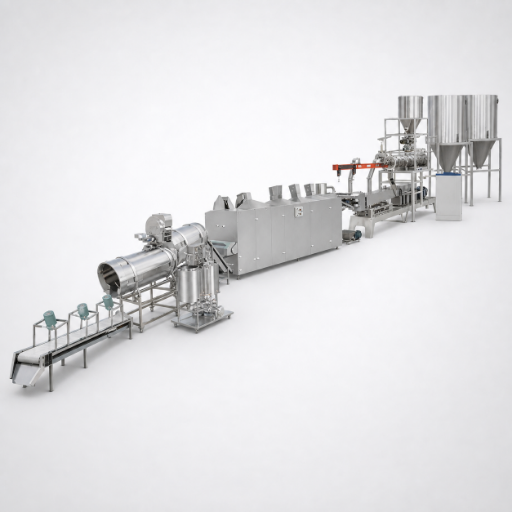
Dry kibble extrusion line
The dry kibble route, the dry pet food line most brands start with, runs batching and dosing, grinding, mixing and conditioning, twin-screw extrusion, shaping and cutting, multi-layer drying, coating or seasoning, conveying and packaging.
- Eight process stages, published on the route page
- Mixer, hammer mill, extruder and dryer configured as one line
- The extrusion process builds texture through shear and a heated barrel jacket, and the die and cutting system decide the different shapes you can sell
- Single- and twin-screw extruders suit different fat and moisture ranges, so the recipe decides which one goes in, a twin-screw machine will extrude a higher-fat dough that a single-screw machine won't
- Coating applied after drying, before the packaging handoff
- If the extruder is the only machine you're replacing, it's also sold on its own; see the twin-screw food extruder
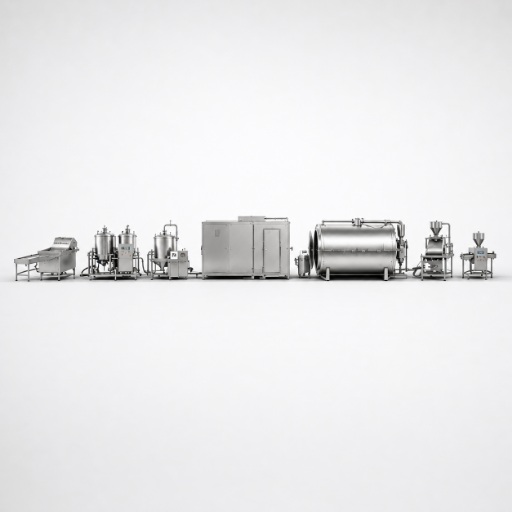
Freeze-dried pet treat line
The freeze-dried route makes pet treats and raw toppers through material preparation, vacuum freeze-drying, metal detection and a packaging handoff. It's the shortest of the four routes and the most sensitive to load planning, because the dryer cycle sets the rhythm of everything upstream.
- Four process stages
- Bubble washing and dicing ahead of the freeze dryer
- Metal detection before the bag is made and filled
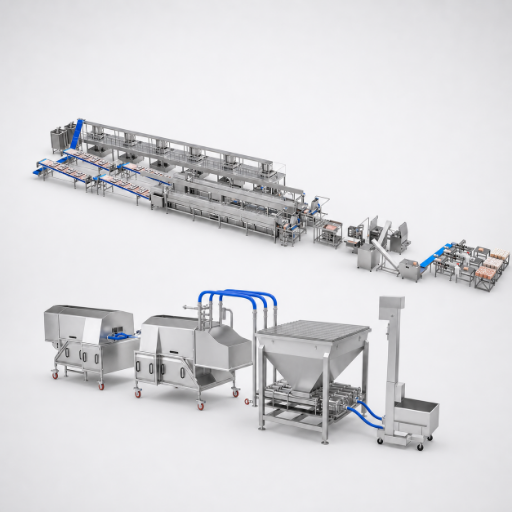
Wet pet food canning line
The wet canning route runs dicing, filling, seaming, retort sterilizing, air drying, labeling. This is the route where the equipment has to prove what it did, because a sealed low-acid pack is only safe if the thermal process behind it's documented.
- Six process stages, ending at the labeller
- Batch window of 80–900 kg/Batch
- Four retort sizes to match batch size to demand
- The vessel is also a product in its own right; see retort and autoclave sterilisers supplied as standalone units for vessel formats and batch sizing
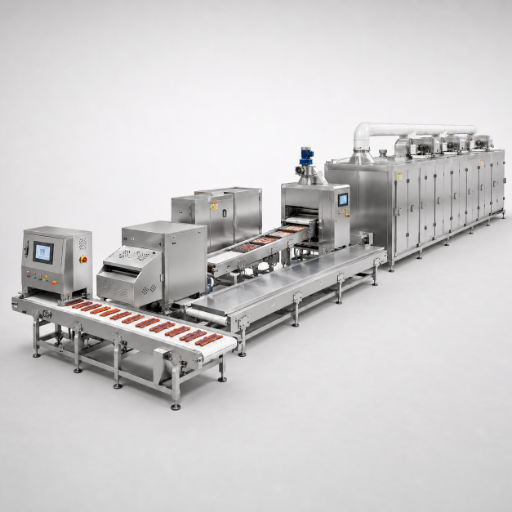
Pet jerky drying line
The jerky route runs strip cutting, marinating, drying, metal detection, premade-bag packing. Marinating is the stage that most often gets under-sized, because it's the only step whose duration is set by the recipe rather than by the machine.
- Five process stages
- Strip cutting sized to the finished chew geometry
- Premade-bag packing at the end of the line
Shengtu is a high-tech enterprise in Weifang working in food machinery R&D, manufacturing, and whole-plant digital solutions. That mix is the reason a project can start as a single machine and grow into a plant without a change of supplier.
The stages after the defining process are where most of a line's cost and most of its failure modes live. Below, each stage is named with what it decides and whether the equipment is ours or specified into the line.
| Stage | What it decides | Position in the line | In-house or integrated |
|---|---|---|---|
| Multi-layer drying | Finished moisture and, more importantly, the spread of moisture across the bed | After extrusion | Integrated |
| Coating and seasoning | Fat and palatant pickup, and the surface the pack has to hold | After drying | Integrated |
| Vacuum cooling | Pack temperature before sealing, which drives condensation risk | Before packing | Integrated |
| Retort sterilizing | Commercial sterility of a sealed low-acid pack | After seaming | In house |
| Air drying | Surface water on cans before the labeller | After the retort | Integrated |
| Vacuum freeze-drying | Structure retention and cycle length | Core of the freeze-dried route | Integrated |
| Moisture equalisation | How wide the finished moisture band actually is | After drying | Integrated |
| Metal detection | Physical hazard control before the pack is closed | Before packing | Integrated |
| Weighing and dosing | Giveaway per pack and fill accuracy | At the packer | Integrated |
| Premade-bag and vacuum packing | Barrier, seal integrity and pack format | End of line | In house |
| Labelling | Pack identity and code legibility | End of line | Integrated |
One stage on that list is not a preference
Retort sterilizing is the only stage above whose performance is set in regulation rather than by choice. For a sealed low-acid pack sold into the United States, 21 CFR Part 113 defines the equipment and the records that stage has to produce, which is why it's specified before the layout is drawn.
Custom retorts and smart packaging equipment are the two families we manufacture ourselves, and they're marked as such above. Everything else on the line is specified, integrated and commissioned by us.
Below is the configuration matrix we work from. It sets out what's fixed by the route, what's chosen at configuration stage, and what has to be decided by your market rather than by the equipment.
| Configuration item | What we configure |
|---|---|
| Dry kibble route | 8 published process stages, from batching and dosing through twin-screw extrusion to conveying and packaging |
| Wet canning route | 6 published process stages, ending in retort sterilizing, air drying and labeling |
| Freeze-dried route | 4 published process stages built around vacuum freeze-drying |
| Jerky route | 5 published process stages, from strip cutting and marinating through drying and metal detection |
| Wet line batch window | 80–900 kg/Batch |
| Retort selection | Four retort sizes, so batch size follows demand instead of the other way round |
| Sterilising instrumentation for United States shipments | A temperature-indicating device accurate to 1 °F (0.5 °C) and a separate temperature-recording device writing to a permanent record, as 21 CFR 113.40 requires |
| Per-batch record set | Initial temperature, actual processing time and both device readings against the container size and code, as set out in 21 CFR 113.100 |
| Dryer and coater sizing rule we apply | Sized against the extruder rating rather than matched 1:1, so the dryer is not the ceiling on the line |
| Control layer | Low-code control boxes and multi-protocol gateways, with standalone OTA upgrades after handover |
| Inline inspection | YOLO vision and edge algorithms, sited at the stages where a defect can still be removed |
| Quotation turnaround | Configuration and quotation returned in one business day |
| Acceptance | Signed off against a written acceptance plan at step 6 of the 6-step project sequence |
The number most quotations are compared on is the wrong one
Extruder throughput is what nearly every quotation leads with, and it's the number least likely to decide what your line actually clears. A high extruder rating in front of an undersized dryer produces a bottleneck, not output, and the dryer is where the money then leaks away every shift.
The extruder sets the ceiling on paper; the dryer sets it in practice.
Average moisture is the number that gets quoted; the spread across the bed is the number that costs you.
A wide spread forces the whole batch to be dried lower than it needs to be. That second number is finished weight you made and then evaporated, and it's invisible without measurement. Which is why the inspection layer is priced into our lines instead of sold as an upgrade.
Request a Line Configuration
Check your own scope before you talk to anyone
The Dry Kibble Scope Readiness Score walks through the decisions a kibble line needs before a quotation means anything: format, output, packaging and control scope. It runs in the browser with no form and no email gate.
There's no price list for a configured line, and any figure quoted before the format and output are fixed is a placeholder. Price follows six variables, and every one of them is something you already know or can decide. Customization depth moves the figure more than any single machine choice does.
| # | Variable | What moves it | Your answer |
|---|---|---|---|
| 1 | Production route | Dry kibble, freeze-dried, wet canning or jerky — the route sets the machine families | |
| 2 | Output band | The output you are building for, not the output you hope for in year three | |
| 3 | Automation level | How much manual handling stays between stages | |
| 4 | Integration scope | Single machine, complete line, or plant-level planning | |
| 5 | Packaging format | Bag, can, pouch or premade bag, and the barrier it needs | |
| 6 | Control and data scope | Whether control terminals, gateways and OTA upgrades are in scope |
Copy those six rows into your enquiry and you'll get a comparable answer from any supplier, not only from us. That's the point of publishing them.
Comparing two quotations that do not cover the same scope
Assume nothing about scope parity between quotations until the boundary map is written down, because a scope mismatch is what turns a cheaper number into a more expensive project. The trade-off is straightforward: a lower equipment figure usually means more integration work left on your side, and that work costs you at commissioning rather than at purchase.
- A bigger extruder buys you nothing if the dryer behind it can't follow.
- Shengtu quotes against the boundary map rather than against a machine list, so the comparison is like for like.
- Ask every supplier which of the six variables their figure assumes, and the mistake most first quotations invite disappears.
How your quotation is produced
- You send the product format and the output you're planning for.
- A process engineer maps it onto one of the four routes and marks where a second route has to join.
- The configuration and quotation come back in one business day, with the scope boundary written out.
Schedule is locked at design confirmation rather than at enquiry, because the long-lead items in a line are decided by the layout, not by the order date. We don't quote a delivery week before the layout is signed, and we would treat any supplier who does with some caution.
Score the six variables before you ask anyone for a figure
The Six-Variable Quotation Score walks through the six variables above and tells you how much of a real quotation you can already support. It also writes the enquiry summary for you, so every supplier you approach is answering the same brief.
Pet Food Formats the Lines Are Configured For
Format decides route. Before capacity, before automation level, before budget, the question that shapes every downstream decision is what the finished piece looks like when it leaves the packer. Eight formats sit below, and each one maps onto a route above.
- A dry pet food production line and a wet pet food production line almost never share a defining stage, whatever the recipe says
- A dog food production line and a cat food production line in the same format usually differ only at the die and the pack size
- Biscuit, kibble and premium pet food inclusions differ in the shaping and drying stages, not in the mixer
- Canned pet food is the only one of the eight whose safety case is written before the layout is
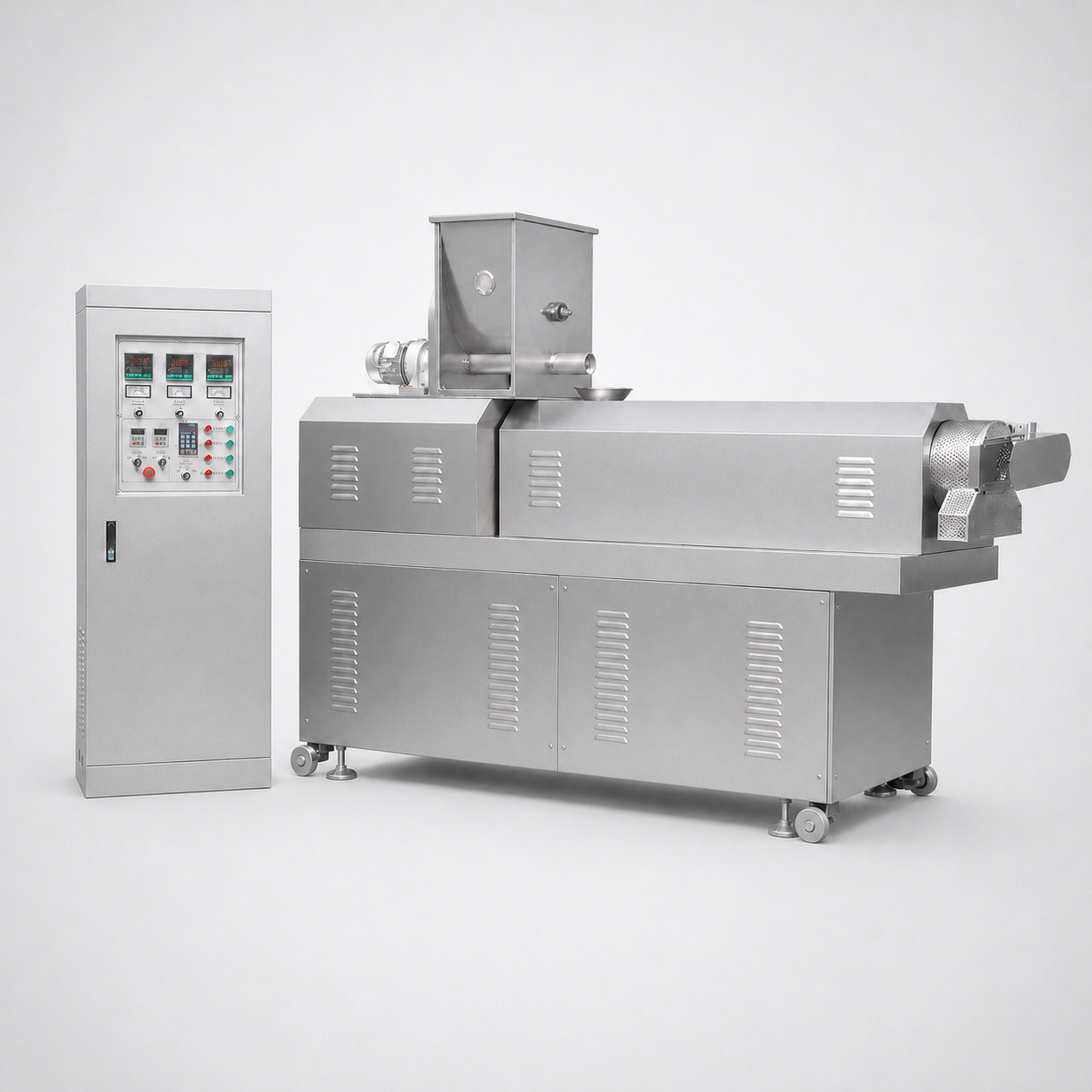
Dry kibble
Process character
Cooked and expanded under heat and pressure, then dried and coated
Defining stage
Twin-screw extrusion
Automation level
Continuous, from dosing through to bagging
Route
Dry kibble extrusion line
Dry Kibble Extrusion Line
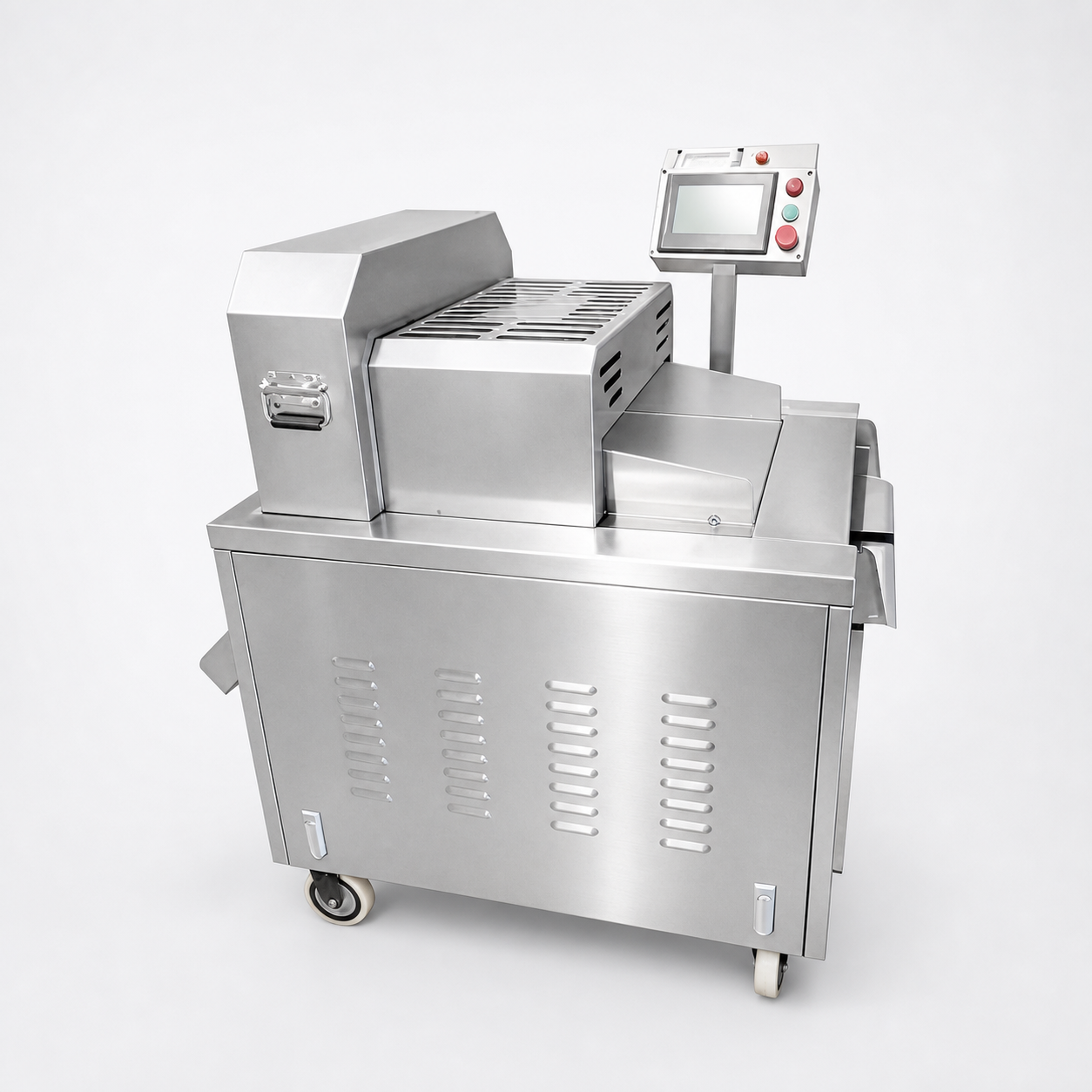
Semi-moist pieces
Process character
Higher finished moisture than kibble, so drying is shortened and packaging does more of the shelf-life work
Defining stage
Controlled drying with a moisture hold
Automation level
Continuous, with tighter dryer control
Route
Dry kibble extrusion line, reconfigured
Dry Kibble Extrusion Line
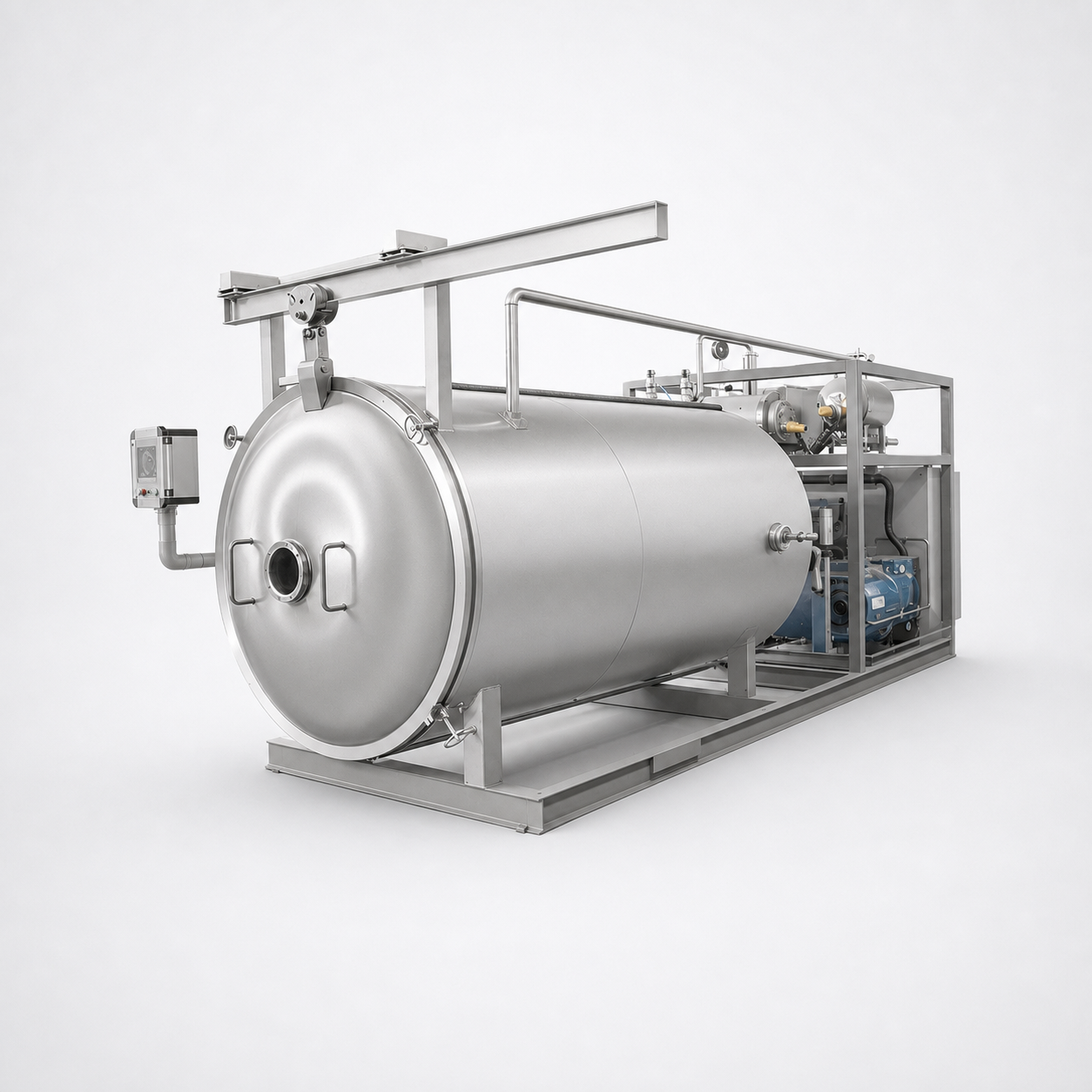
Freeze-dried blocks and nuggets
Process character
Frozen, then dried under vacuum so structure survives instead of collapsing
Defining stage
Vacuum freeze-drying
Automation level
Batch, paced by the dryer cycle
Route
Freeze-dried pet treat line
Freeze-Dried Pet Treat Line
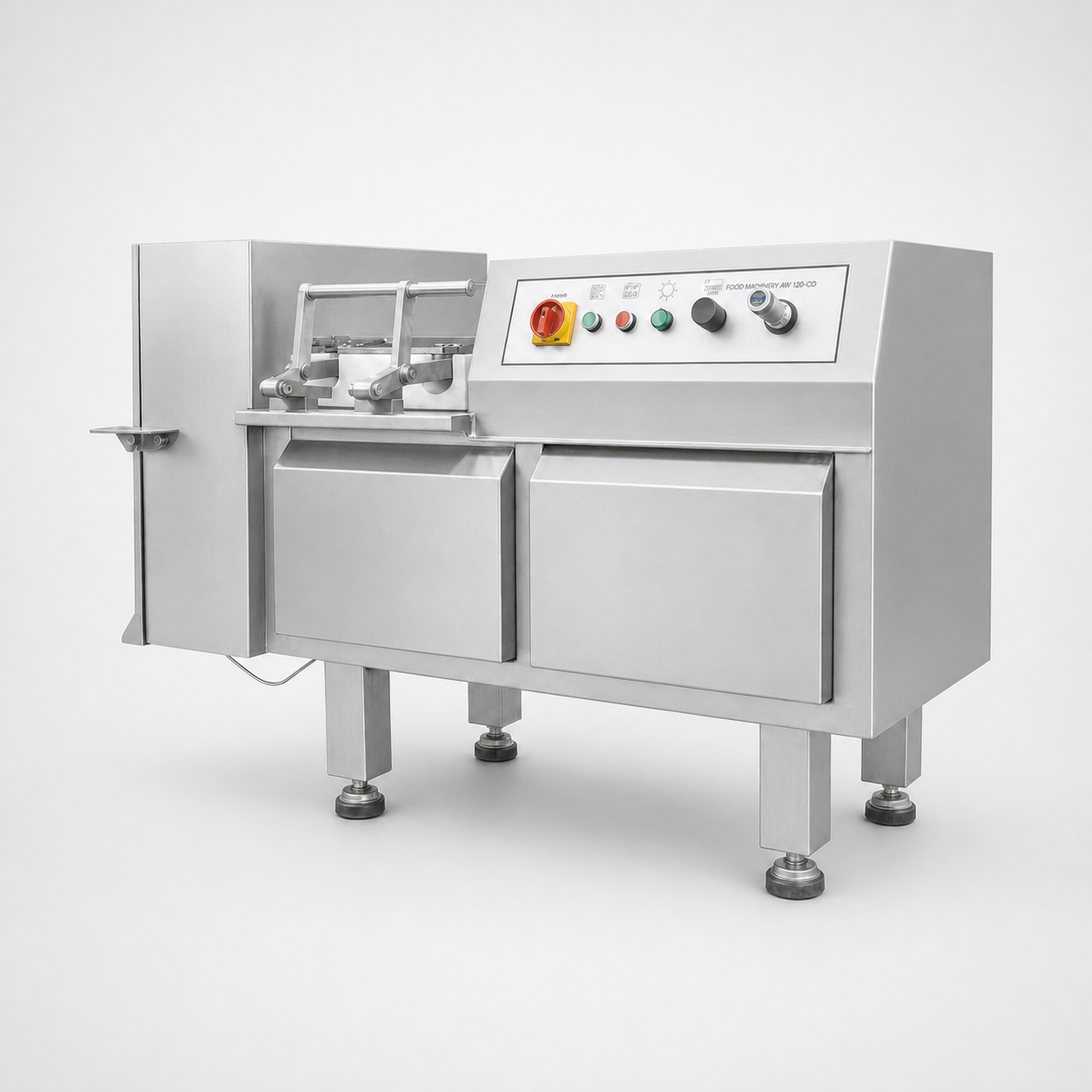
Freeze-dried raw toppers
Process character
Single-ingredient protein pieces, dried without a cooking step
Defining stage
Dicing consistency ahead of the freeze dryer
Automation level
Batch, with metal detection before packing
Route
Freeze-dried pet treat line
Freeze-Dried Pet Treat Line
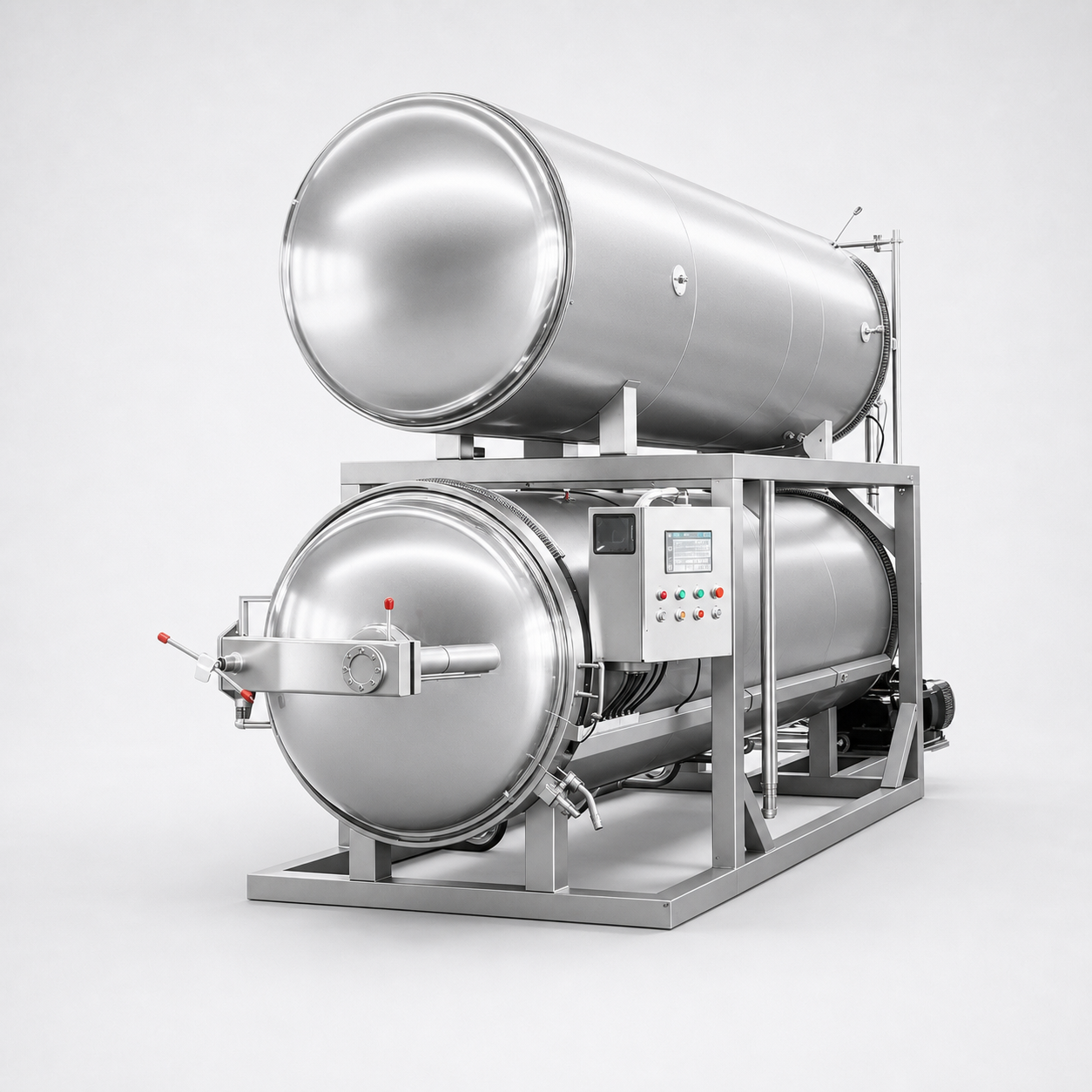
Wet chunk in gravy
Process character
Diced solids and sauce filled together, then sterilised in the sealed pack
Defining stage
Retort sterilizing
Automation level
Batch sterilising between continuous filling and labelling
Route
Wet pet food canning line
Wet Pet Food Canning Line
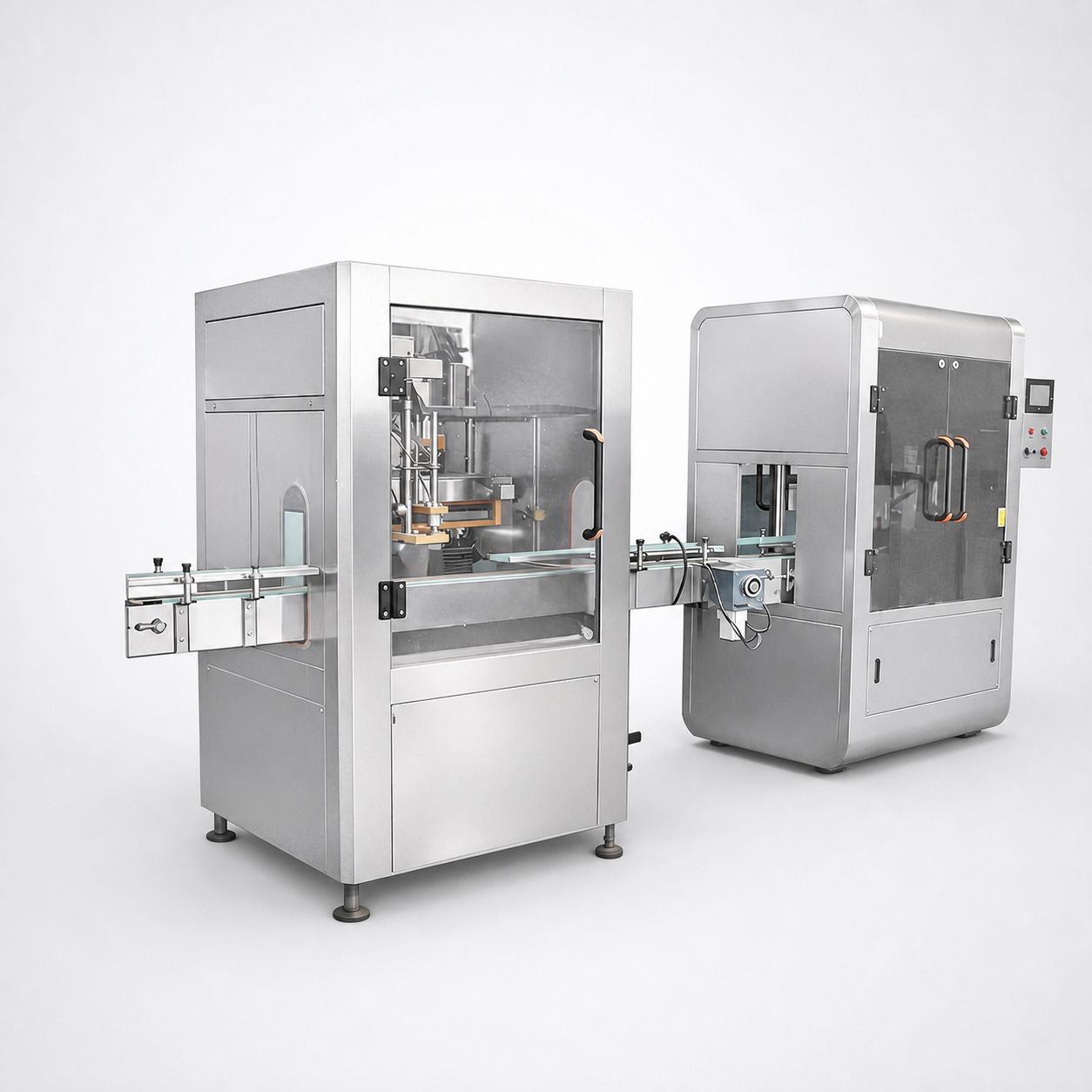
Wet pâté and loaf
Process character
Emulsified before filling, so the filler and the seamer set the pace
Defining stage
Filling and seaming under a controlled headspace
Automation level
Continuous filling into a batch retort
Route
Wet pet food canning line
Wet Pet Food Canning Line
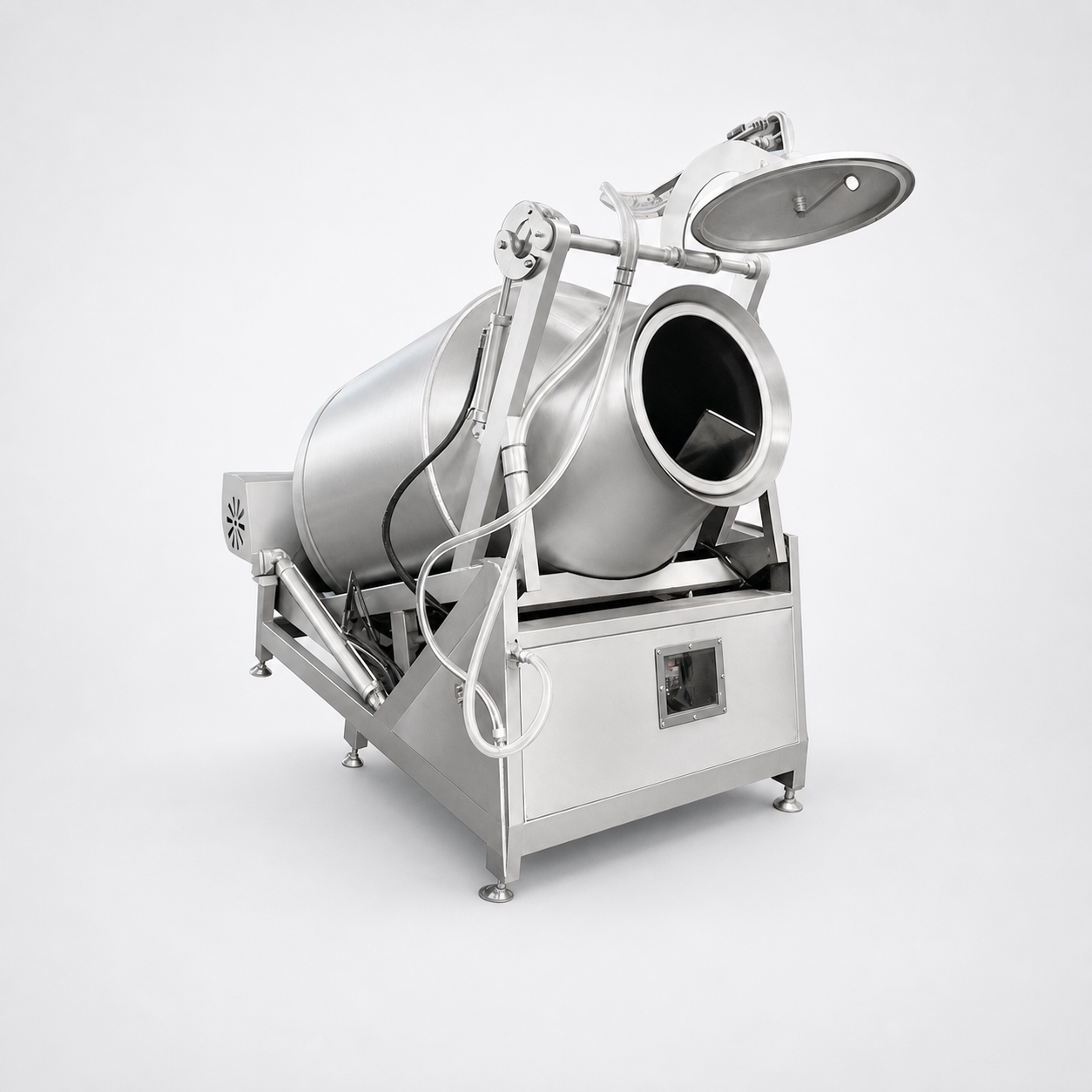
Jerky strips and twists
Process character
Cut, marinated and dried rather than cooked and expanded
Defining stage
Marinating
Automation level
Batch marinating into continuous drying
Route
Pet jerky drying line
Pet Jerky Drying Line
Inline Inspection, Data Capture and Traceability
Food safety on a line is designed in at the stages where a hazard can still be removed, and then proved by what the line recorded. Both halves matter: a control that nobody can evidence is indistinguishable from a control that never ran, and that gap is where a recall risk actually sits.
Shengtu builds the inspection and data layer into the line for a structural reason, not a commercial one. Recording a parameter after the fact costs more than measuring it in place, because the evidence then has to be reconstructed from people rather than read off the machine.
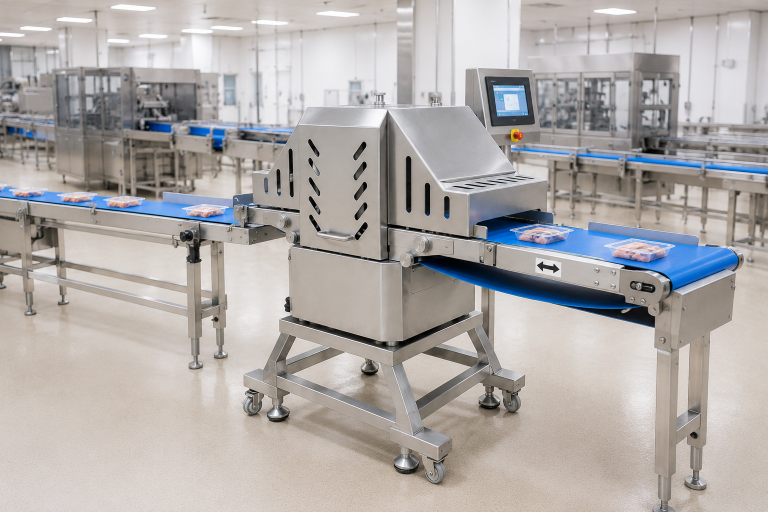
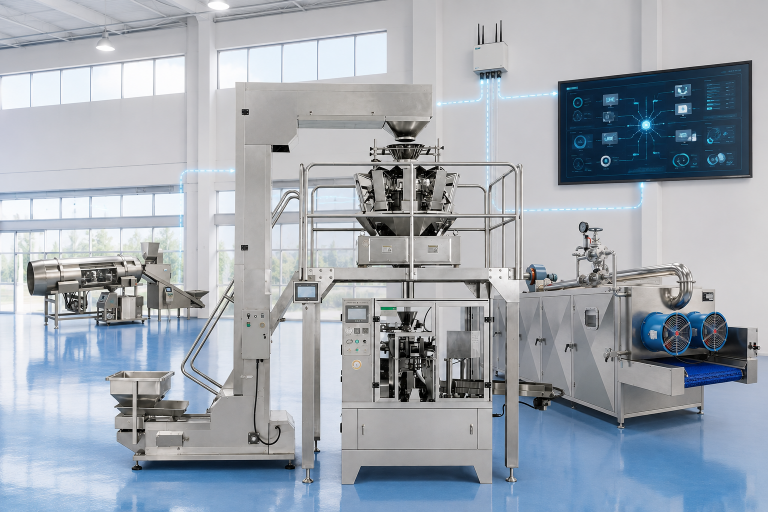
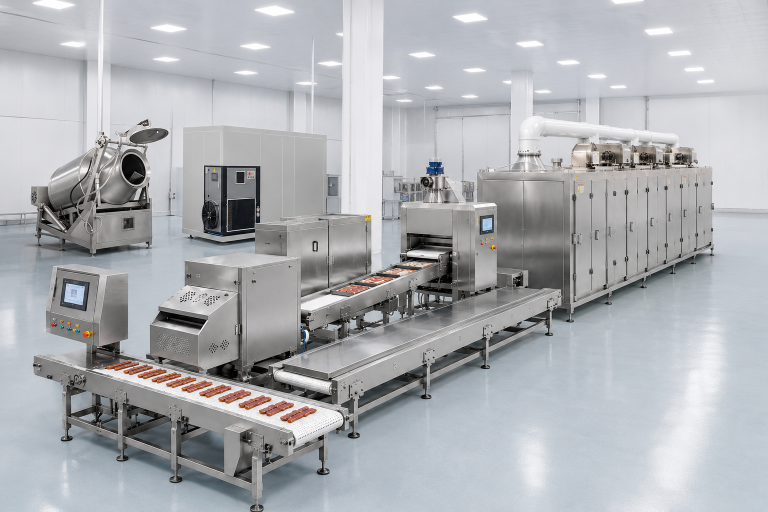
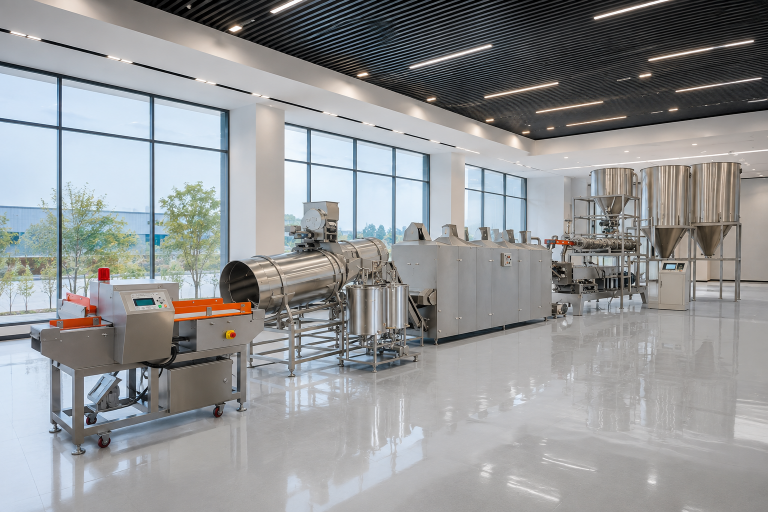
Four technical modules
Regulatory demands the equipment itself has to meet
“Each retort … shall be equipped with at least one temperature-indicating device that indicates the temperature. … Each temperature-indicating device shall be tested for accuracy against a known accurate standard thermometer … and shall be accurate to 1 °F (0.5 °C).”21 CFR 113.40(a)(1)(iv), Thermally Processed Low-Acid Foods Packaged in Hermetically Sealed Containers
That single clause is why a controls-and-records upgrade is so often enough. It asks for an instrument and a traceable calibration, not for a new vessel.
| Requirement | Where it comes from | What it means when you specify a line |
|---|---|---|
| A written hazard analysis for the animal food you make, whatever its outcome | 21 CFR 507.33 | The line has to make the hazards controllable and measurable, not merely present |
| Process controls with a stated maximum or minimum value for the parameter being controlled | 21 CFR 507.34 | Set points have to be settable and readable on the line, not held in someone's notebook |
| A scheduled process established by a qualified person, at least equivalent to one set by a competent processing authority | 21 CFR 113.3 and 113.83 | The retort must be able to run and hold what the filed process says |
| A temperature-indicating device and a separate recording device on each retort | 21 CFR 113.40 | Two instruments, one of which writes a permanent record |
Standalone OTA upgrades mean the software side of this can move after handover without a mechanical shutdown. That matters most in the second and third year, when the requirement changes and the line doesn't.
Build the record set for your own route
The United States Record Set Builder takes your route and destination and lists the instruments, records and documents that belong in the specification, each against the clause it comes from. It also shows which routes the sealed low-acid rules don't touch at all.
The Six Steps From Enquiry to Line Acceptance
The question that costs first-time builders the most money isn't what a machine costs. It's who's responsible for the gap between two machines. This map states it per stage, for every route.
| Stage | Who supplies | Who installs | Who commissions | Who signs at acceptance |
|---|---|---|---|---|
| Intake, dosing and mixing | Shengtu | Shengtu with your site team | Shengtu | Both parties |
| Size reduction and conditioning | Shengtu | Shengtu with your site team | Shengtu | Both parties |
| Defining process stage | Shengtu | Shengtu | Shengtu | Both parties |
| Drying, cooling or sterilising | Shengtu | Shengtu | Shengtu | Both parties |
| Inspection and data capture | Shengtu | Shengtu | Shengtu | Both parties |
| Packaging and labelling | Shengtu | Shengtu | Shengtu | Both parties |
| Utilities to the connection point | Your site | Your site | Joint check | Both parties |
| Building, drainage and hygienic zoning | Your site | Your site | Joint check | Both parties |
| Filed thermal process for a low-acid product | Your processing authority | Not applicable | Verified against the retort | Both parties |
| Decision | What to specify | Why it saves money |
|---|---|---|
| Dryer capacity | Size the dryer and coater against the extruder rating with headroom, not to match it | The dryer, not the extruder, is what caps a kibble line's real output |
| Moisture measurement | Measure the spread across the bed, not just the average | A wide spread forces over-drying, and over-drying is sellable weight evaporated |
| Wet and dry zoning | Separate the steam-heavy side from the labelling and packing side at layout stage | Retrofitting a barrier after the line runs costs more than drawing it in once |
| Retort sizing | Choose the retort size against your smallest realistic batch, not your largest | An oversized retort runs part-loaded, and part-loaded batches are the ones that go wrong |
| Format range | Fix the format range before the layout, and state the second format if there is one | Adding a format after layout usually means moving equipment, not adding it |
| Changeover | Specify the changeover you expect per shift at enquiry | Changeover frequency changes the packer and the conveying design, and it is cheap to design in |
| Control scope | Decide whether gateways and terminals are in scope before the quotation | Adding the data layer later means opening panels that were already signed off |
| Metal detection position | Place detection where a reject can still be removed from the flow | Detection after sealing converts a rework into a write-off |
| Spare parts | Agree the wear-part list at acceptance, not at first failure | The parts that stop a line are cheap; the downtime waiting for them is not |
| Sampling and release | Fix where the final product is sampled and who releases it | Product quality disputes are settled by the sampling point, not by the argument afterwards |
What happens after acceptance
Service continuity is the question buyers ask last and regret asking last. Three things are settled at acceptance rather than at the first stoppage.
Wear-part list:
agreed and handed over at acceptance, split into what's held on your site and what's made to order
Software:
standalone OTA upgrades move the control side forward without a mechanical shutdown, so a requirement change in year two doesn't become a rebuild
Records:
the per-batch record set the line produces stays available to you, which is what an auditor asks for and what a recall enquiry depends on
Scope:
anything outside the boundary map above is named at acceptance, so nobody discovers an unowned gap during a stoppage
Walk the boundary stage by stage
The Stage-by-Stage Scope Split takes the map above one stage at a time: who supplies, who installs, who commissions, who signs, and the single design decision at that stage that moves the figure. Use it to compare two quotations on boundary before you compare them on price.
RESOURCES / ENGINEERING TOOLS
Engineering Tools & Project Planning Resources
Frequently Asked Questions
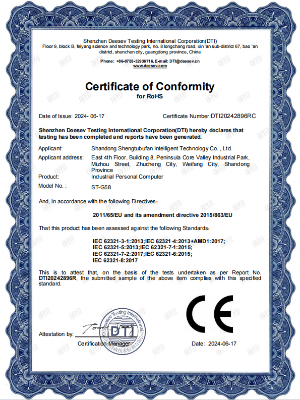
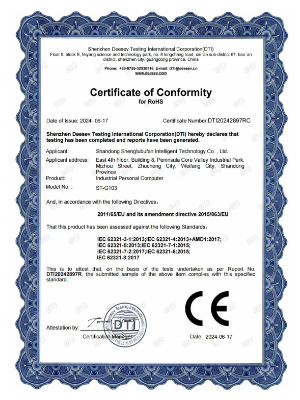
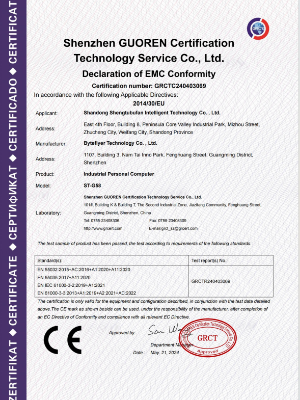
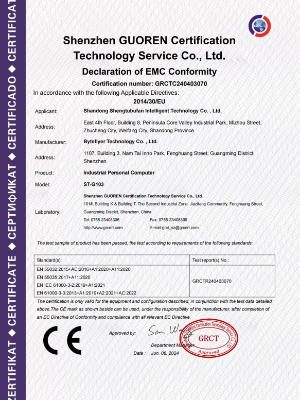
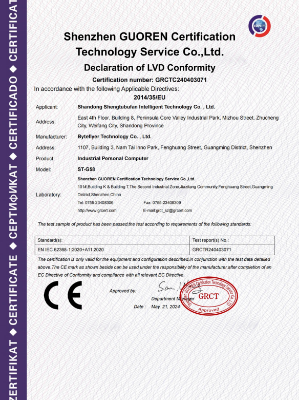
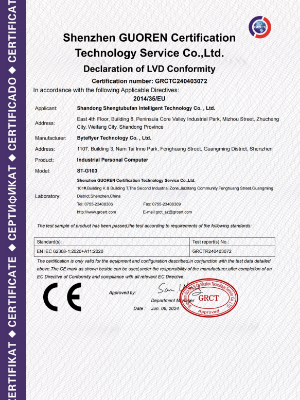
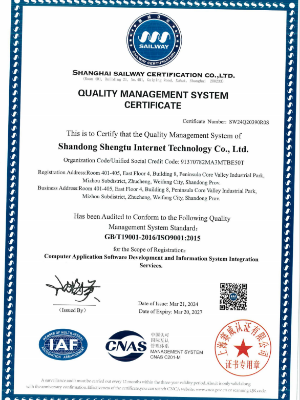
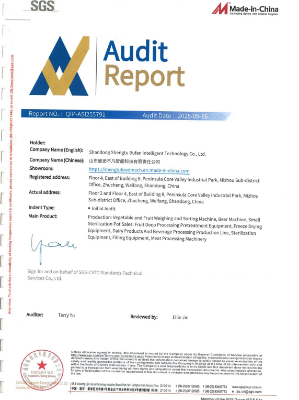
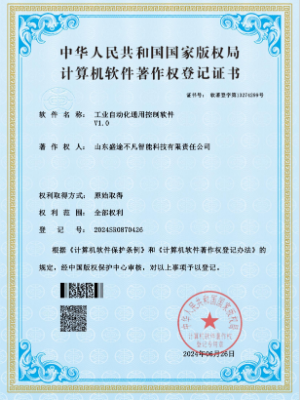
Applicable certificates and documents are confirmed for the equipment model, configuration and destination country. Company management-system records are reviewed separately from product conformity documents.
![F&V Freeze-Drying Line Process Guide [2026]](https://shengtumachinery.com/wp-content/uploads/2026/09/fv-freeze-drying-line-guide-featured-150x150.png)