Get in touch with Shengtu Bufan Company


Industrial fruit & vegetable processing
F&V Freeze-Drying Line Built Around Your Product and Project
Define the product form, pretreatment, vacuum freeze-drying stage, downstream packaging, inspection boundary and control handoffs before equipment is configured. Shengtu turns that brief into a connected line proposal instead of forcing an unknown product into a catalog machine.
- Preparation-to-inspection scope defined as a documented material path
- Buyer inputs separated from supplier design decisions
- Commercial terms and performance values confirmed per
quotation
Product Families and Feedstock Windows
Fruit and vegetable labels are too broad for engineering. A mismatched configuration becomes a risk because composition, maturity, soluble solids, structure, skin, seed, pretreatment and piece geometry change freezing behavior, heat transfer, mass transfer and final texture; that trade-off is product-specific.
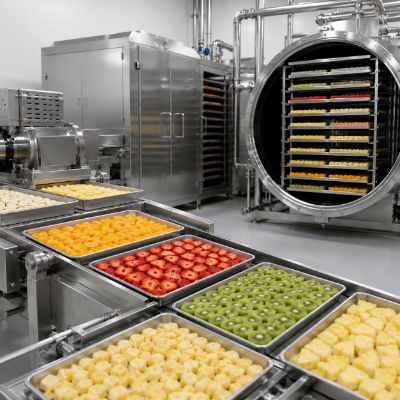
Structured fruit pieces
Structured fruit pieces
Slices, dices, halves and segments need repeatable geometry, loading depth and handling that limits breakage before and after drying.
- Firmness and maturity
- Skin or peel condition
- Juice loss during cutting
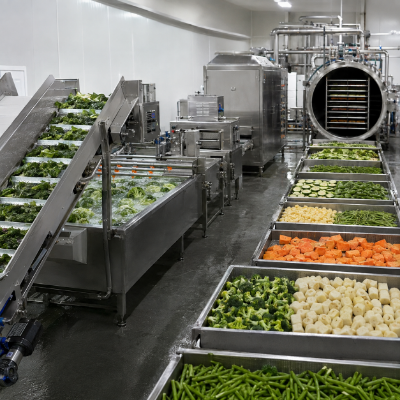
Vegetable pieces
Vegetable pieces
Leaf, stem, root, tuber and high-fiber products create different washing, blanching, draining and tray-loading demands.
- Soil and foreign-material load
- Enzyme-control route
- Bulk density after preparation
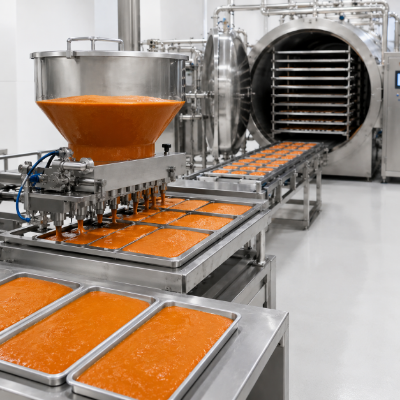
Purees and formed products
Purees and formed products
Viscosity, deposited thickness, carrier geometry and release method replace cut size as the central loading variables.
- Deposit uniformity
- Forming or spreading method
- Post-dry removal plan
Four operating patterns to separate before sizing
Products that look similar in a sales sample can create different factory demands. Group the project by loading, handling and release pattern before choosing chamber count or upstream automation.
Seasonal single-product campaign
A concentrated harvest can require high incoming throughput, cold or frozen buffering and a clear change from field supply to stable dryer loading. The request should state peak weeks, daily receipt window, raw-material hold limit and what happens when dryer availability and harvest flow diverge.
- Peak receipt versus average receipt
- Buffer ownership and temperature
- End-of-campaign cleaning and storage
Multi-product contract processing
Frequent changes raise questions about recipe control, allergen review, product identity, cleaning verification, scheduling and data separation between customers. A flexible line still needs a rule for which products can share preparation equipment, freeze-dryer runs and packaging areas.
- Changeover family
- Recipe and record ownership
- Customer-lot segregation
Ingredient production
Pieces, powders or inclusions sold into another manufacturer’s process need a defined physical form, endpoint method, contamination-control boundary and pack size suited to downstream handling. The line design should also address fines, milling where required, dust control and sample retention without assuming those stations are included.
- Ingredient form and bulk density
- Downstream dosing or blending use
- Pack and sampling route
Retail or foodservice packs
Small finished packs add counting, dosing, checkweighing, gas handling, closure, coding and presentation requirements after drying. Packaging rate must be reconciled with dryer unloading so exposed dry product does not wait while the pack line catches up.
- Pack format and target weight
- Primary and secondary packaging
- Lot-to-code traceability
Variety, maturity and storage history
Incoming temperature and moisture condition
Whole-product dimensions and defect tolerance
Seasonal change that affects pretreatment
Piece integrity and acceptable breakage
Texture and rehydration intent
Endpoint test and sampling location
Pack format, barrier target and exposure time
Pretreatment and Cut Configurations
Preparation is part of the drying process, not a cosmetic front end. Risk begins upstream because wash quality, peel removal, blanching or other pretreatment, cut variation and free-water carryover change the load presented to the freezing and vacuum stages.
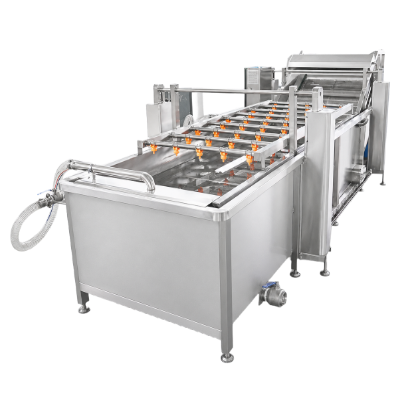
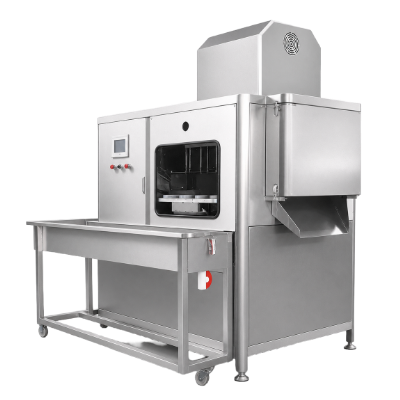
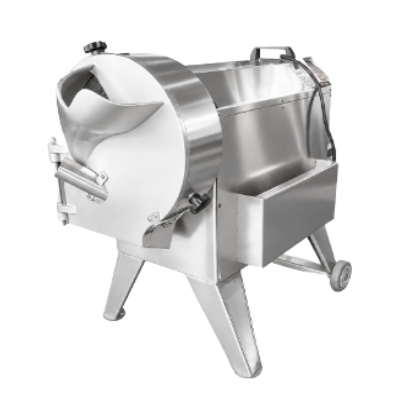
Drain before you load. Surface water and inconsistent piece thickness create a hidden process variable; the request for quotation should name draining, dewatering and hold-time expectations.
-
Wash-water source and discharge boundary
-
Manual versus automatic sorting point
-
Peel, core, seed and trim handling
-
Blanch, dip or color-protection requirement
-
Slice or dice range and changeover plan
-
Fines removal and damaged-piece policy
-
Draining method and transfer time
-
Tray loading method and operator access
The F&V Product State & Endpoint Brief
Freeze-drying configuration starts with the product state entering the dryer and the evidence that will define its endpoint. This brief keeps frozen-state, loading, product-limit and dry-side handoff questions separate from values and architecture choices that the supplier must test, size or confirm.
Eight inputs before line configuration
-
01
Product identity
Species, variety, maturity, origin and incoming condition.
-
02
Final form
Whole, split, slice, dice, puree, formed piece or powder route.
-
03
Pretreatment path
Wash, peel, trim, blanch, dip, drain and pre-freeze decisions.
-
04
Frozen-state handoff
Freezing location, transfer delay, product condition and temperature evidence.
-
05
Loading condition
Piece dimensions, layer depth, product support and loading or feed method.
-
06
Product limit
Known critical constraints, unknowns and the trial basis needed to define them.
-
07
Endpoint evidence
Target condition, test method, sampling plan and release rule.
-
08
Dry-side handoff
Unload condition, exposure limit, protected transfer and pack-start rule.
Freeze-Drying Stage Definition
A freeze dryer removes ice from frozen product through sublimation under reduced pressure, then reduces remaining bound moisture during the later drying stage. Product temperature must stay within the material’s structural limit while heat and vapor removal are coordinated.
Freezing condition
Freezing rate, final frozen condition and ice structure influence the path that vapor must follow. Its freezer boundary, loading delay and product temperature at transfer belong in the line definition.
Primary drying
Pressure, heat input, condenser load and product resistance interact while ice sublimes. Raising heat without respecting the product limit can damage structure rather than shorten the drying stage safely.
Secondary drying
Secondary drying addresses remaining moisture after visible ice is gone. Release depends on the agreed endpoint method and product requirement, not on elapsed cycle time alone.
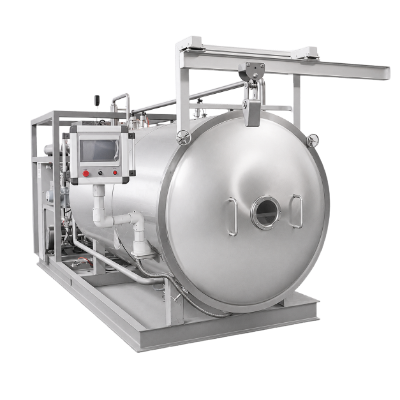
The dryer is a linked thermal and vacuum system. Chamber, product support, condenser, refrigeration, vacuum pump, compressor, controls and defrost route must be evaluated against the same product and run definition.
Design question
Why it changes the configuration
Evidence to request
What is loaded on each tray?
Geometry, layer depth and bulk density change heat and vapor paths.
Product photo, dimensions, loading test and mass record
Where is the material limit?
Critical product temperature constrains shelf heating and cycle progression.
Test basis, product-temperature record and agreed alarm logic
How is endpoint determined?
Time alone can hide load and position variation.
Method, sample plan, sensor basis and release record
What does the condenser receive?
Water-removal load and defrost strategy affect turnaround.
Load basis, condenser record and defrost sequence
How is vacuum maintained?
Leak rate, vapor load, pump condition and service access affect stability.
Leak test, maintenance points and spare-parts list
How is dry product protected?
Exposure after unloading can reverse the work of the drying stage.
Handoff time, room condition and pack-seal evidence
Configuration, Pricing, Schedule and Commercial Scope
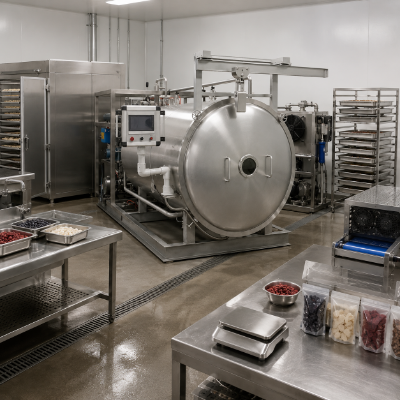
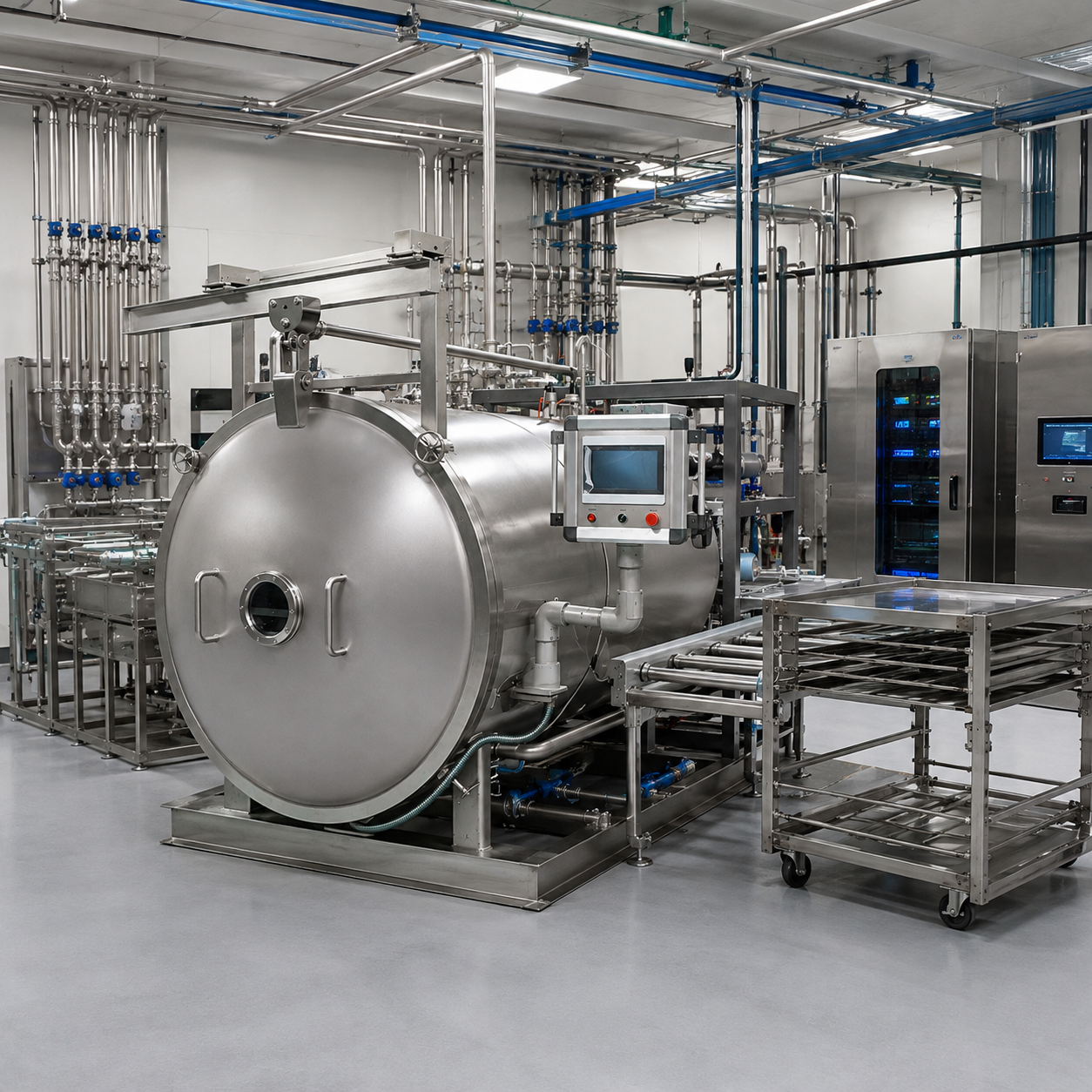
A meaningful price follows a stable product and boundary brief. Comparing totals before included stations, operating basis, utilities, controls, testing, documentation and site work align creates a commercial risk and hides the trade-off between a lower equipment total and a complete project scope.
Equipment scope drivers
- Wet input and water-removal load
- Preparation and pre-freezing boundary
- Tray, shelf, chamber and condenser basis
- Packaging and inspection stages
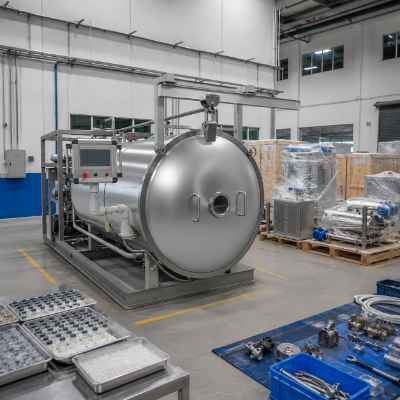
Project scope drivers
- Layout and transfer interfaces
- Utility generation and distribution
- Control and data integration
- Factory and site acceptance work
Schedule drivers
- Product trials and frozen design inputs
- Long-lead components and document review
- Factory readiness and shipping boundary
- Site utilities, installation and training scope
No universal payback is published. Freeze-drying is capital- and energy-intensive, so the economic case must compare product value, accepted yield, equipment utilization, labor, maintenance, packaging and alternative preservation routes.
Included in a comparable request
Ask each supplier to return the same scope sheet, utility basis, control boundary, evidence pack, exclusions and buyer responsibilities.
- Defined battery limits
- Named evidence milestones
- Open-question register
Confirmed in the quotation
Models, capacity basis, commercial price, schedule, payment milestones, shipment, warranty and service terms belong in the project quotation after the line is configured.
- No catalog-value substitution
- No unconfirmed commercial promise
- No return-on-investment percentage
Hygienic, Safety and Evidence Boundaries
Food-contact design, cleaning access, machine safety and inspection must be reviewed because an unassigned risk can survive into site acceptance. The official page for 21 CFR 117.40 addresses cleanability, food-contact materials and maintained instruments for covered U.S. food facilities; it does not certify this line. ISO 14159 is a named machinery-hygiene review reference, not a Shengtu certification claim.
Guarding and hygiene are different design problems. OSHA 1910.212 addresses machine guarding for covered U.S. workplaces, while ISO 14159 addresses machinery hygiene and ISO 14120 addresses guard design; the applicable edition and local rule set must be confirmed for the project.
Hygienic design questions
- Food-contact material and finish schedule
- Access for inspection and cleaning
- Drainability and liquid-retention points
- Zone separation after drying
- Cleaning method and chemical compatibility
Machine safety questions
- Points of operation and nip points
- Rotating and moving components
- Guard type and access frequency
- Isolation and stored-energy boundary
- Interlock and restart behavior
Acceptance evidence questions
- Material and instrument records
- Alarm and interlock checks
- Leak, vacuum and sequence records
- Product trial and endpoint record
- Packaging and inspection challenge plan
01
Before design release
Confirm intended use, product zones, cleaning method, operator tasks, destination rules, access needs and hazard-review ownership.
02
Before factory acceptance
Approve the drawing set, component list, material schedule, control narrative, alarm list, test protocol and open-punch process.
03
Before shipment
Close agreed factory tests, document deviations, preserve settings and records, and identify work that remains for the site.
04
Before production release
Complete site utilities, installation checks, safety review, recipe trial, endpoint method, pack handoff and operator training within the agreed responsibility map.
Quality assurance through serviceable line design
Maintenance access belongs in the design review because hard-to-reach pumps, condensers, sensors, seals and guards turn routine service into downtime or unsafe work. Acceptance planning should prove access and records, not just machine operation on a clean factory floor.
Vacuum-system care
Record the vacuum pump type, service points, oil or dry-pump requirements, inlet protection, isolation, leak-test method and signs of declining performance. The buyer should also know which tasks need production shutdown and which readings belong in preventive maintenance.
- Access and lifting route
- Consumables and service tools
- Trend and alarm records
Refrigeration and condenser care
Define access to compressor, condenser, valves, sensors and defrost components without creating a contamination or safety risk. Ask how frost, defrost water, cool-down state and restart conditions are checked between operating runs.
- Inspection points
- Defrost verification
- Recovery after a trip
Critical spares
A spare-parts list is useful only when it reflects failure consequence, procurement time, storage life and replacement skill. Separate commissioning spares, routine consumables, recommended operating stock and long-lead components in the quotation response.
- Part identity and quantity
- Storage and shelf condition
- Replacement instruction
Dry-product protection at packaging handoff
Drying does not finish the commercial product if unloading and packaging allow moisture pickup, breakage, mix-up or an unverified seal. Packaging decisions need the same product, environment and acceptance discipline as the chamber program.
Environmental handoff
Set the room and transfer condition from chamber opening to final closure. Record maximum exposure, product temperature, operator handling and the response when the pack line stops while dry trays are waiting.
- Exposure clock
- Hold or rework route
- Line-stop response
Pack and seal basis
Confirm the intended pack format, barrier requirement, gas option, headspace, closure and seal-check method. Material selection must match the product target and distribution route rather than a generic long shelf life statement.
- Pack material specification
- Closure parameters
- Seal evidence and sampling
Inspection and release
Define coding, checkweighing, metal detection, reject confirmation, label control and finished-pack sampling as separate tasks. Metal detection alone does not prove the pack is dry, sealed, correctly labeled or released.
- Challenge and reject record
- Finished-pack sample
- Lot release owner
Digital Integration Without an Undefined OT Boundary
A connected line needs more than a gateway and a remote-login option. NIST SP 800-82 Rev. 3 frames operational-technology security around performance, reliability and safety, so access, protocols, accounts, recovery and data ownership must be project inputs.
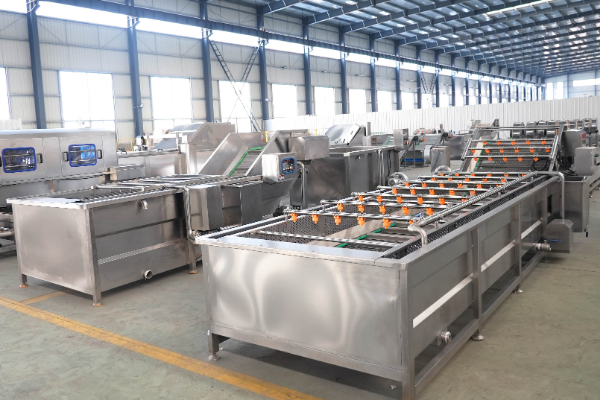
Company capabilities
- Our STUnit platform supports equipment-level digital design.
- We support standalone OTA upgrade planning.
- We support production-line integration planning.
- We provide smart-factory planning for food-processing projects.
- We provide whole-plant digital solution planning for food manufacturers.
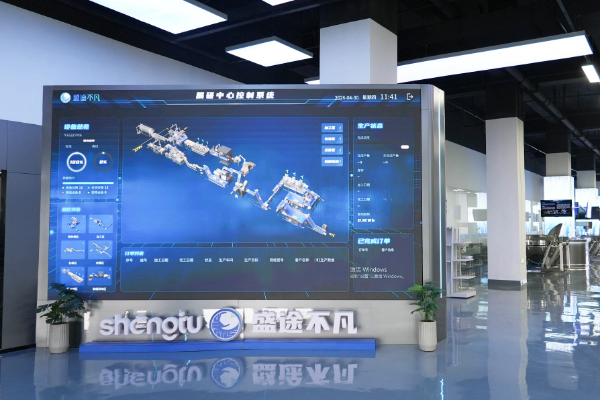
Technology building blocks
- We produce core hardware for deeper equipment and control integration.
- We plan IT/OT data and control interfaces as explicit project boundaries.
- We develop low-code control boxes for equipment integration.
- We develop multi-protocol gateways for project-defined interfaces.
- Our technology stack includes YOLO vision and edge algorithms.
Capability does not mean default inclusion. A final proposal should state which controls, vision functions, gateways, remote services, data points and acceptance tests are included on this exact line.
| Interface decision | Buyer question | Acceptance evidence |
|---|---|---|
| Protocol | Which machine and plant systems exchange which tags? | Approved tag list and communication test |
| Remote access | Who authorizes access, for what window and through which route? | Account matrix, access test and revocation step |
| Data ownership | Who owns recipes, trends, images, event logs and backups? | Data register, export test and retention rule |
| Upgrade control | Who approves OTA changes and how is production restored? | Change record, rollback plan and recovery test |
| Vision or edge function | What decision is automated and what remains operator-owned? | Defined dataset, challenge set and exception route |
| Plant integration | Where does equipment control end and plant control begin? | Network drawing, responsibility matrix and handover record |
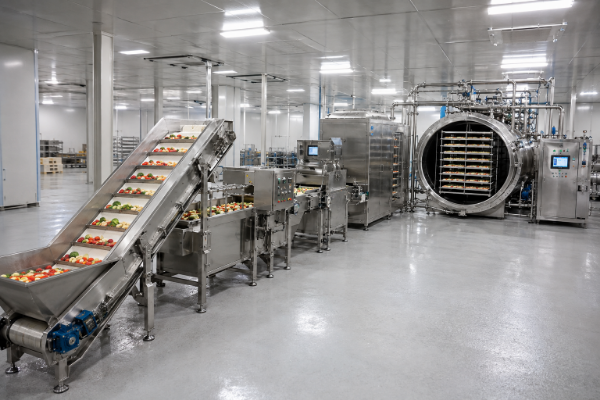
How We Work: From Product Brief to Line Handover
Project development follows a set of decision locks, not a promise that every scope follows the same calendar. Each stage closes a different risk before equipment, controls or site work move forward.
PROCESS CONSTRAINT
Decision locks prevent silent scope drift. A missing product-state or handoff decision creates risk because the evidence and schedule processes stall. Request a specific engineering project review after the Product State & Endpoint Brief and dry-side annex are ready.
01
Define the product state
Complete the Product State & Endpoint Brief with frozen-state evidence, fixed targets, available samples and unknowns that need a test.
02
Draw the process boundary
Map preparation, freezing, drying, unloading, packaging, inspection, utilities, controls, data and buyer-owned services.
03
Review the configuration basis
Check the proposed equipment, operating basis, loading method, layout, interfaces, exclusions and design assumptions.
04
Freeze the evidence plan
Agree what the factory test proves, what remains for the site, who witnesses each item and how deviations close.
05
Build and verify
Track drawings, components, control narrative, inspections, tests and change decisions against the approved project baseline.
06
Handover the line
Transfer the agreed records, settings, training scope, spares, maintenance points and open site actions before production release.
Project Fit and Alternative Preservation Routes
Freeze-drying is not always the cheapest, fastest or best preservation route. A wrong selection creates quality or investment risk, so selection depends on the product value, target quality, dry-product format, operating pattern, energy boundary and the alternatives available to the buyer. The trade-off must be tested against the finished product and full operating boundary.
ROUTE 01
Strong fit to investigate
Products with enough value to justify carefully controlled freeze-drying, a clear texture or rehydration target, and packaging that protects the dry structure warrant product trials.
- Defined premium or ingredient use
- Controlled piece form
- Clear endpoint and pack plan
ROUTE 02
Fit needs more evidence
High seasonal variability, unclear raw-material quality, unknown loading behavior or a missing sales format can make equipment selection premature.
- Run preparation trials
- Define acceptable variation
- Test the intended package
ROUTE 03
Alternative route can be preferable
When the product target accepts a different texture or quality profile, hot-air, vacuum, spray, vacuum-microwave or another preservation method can reduce time or cost.
- Compare finished-product value
- Compare accepted yield
- Compare full operating boundary
The honest comparison starts with the finished product. A faster dryer can still be the wrong choice if it misses the product target; a premium drying route can still be the wrong investment if the market does not reward the difference.
Adjacent Fruit and Vegetable Processing Lines
Root Vegetable Washing & Peeling Line
Review this adjacent preparation route when the project centers on washing and peel removal for root vegetables rather than freeze-drying as the preservation step.
Leafy Fresh-Cut Line
Use this sibling line when washing, cutting and fresh-product handling define the project and a dry-product route is not required.
F&V Freeze-Drying Line Technical Tools
Access the technical documentation for the F&V freeze-drying line, including the Product State & Endpoint Brief, Dry-Side Exposure & Handoff Annex, and Acceptance Evidence Planner.
FAQ: F&V Freeze-Drying Line
These answers identify what can be decided from the current evidence and what must wait for a product brief, test or quotation.
Q-01
What products can the line process?
Fruit and vegetable routes can cover whole, split, sliced, diced, puree or formed products. Suitability depends on raw-material condition, preparation, loading behavior, target endpoint, pack format and available plant resources, so a Product State & Endpoint Brief and product trial can be needed before configuration.
Q-02
What capacity is available?
No universal capacity is stated. Define wet input, water-removal load, geometry, loading, endpoint and operating schedule first.
Q-03
Is this a batch or continuous freeze-drying line?
This planning framework does not assume a fixed architecture. Confirm the batch or continuous core-stage design, loading and transfer method, and acceptance implications in the project quotation.
Q-04
Does the line include pre-freezing?
Not by assumption. A proposal must identify where freezing occurs and who owns transfer, frozen storage, loading delay and product-temperature evidence.
Q-05
How long does one drying cycle or run take?
No fixed duration is published. Material, geometry, loading, critical temperature, architecture and endpoint must be tested or confirmed.
Q-06
What utilities should we prepare?
Ask for both connected load and expected operating demand across the full configured scope. Review power, cooling or refrigeration interfaces, water, drainage, compressed air, defrost, ventilation, network and room conditions, then assign who supplies, distributes, verifies and records each utility before site acceptance.
Q-07
Is packaging part of the production line?
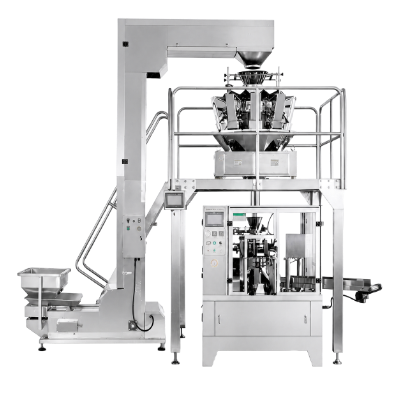
Packaging is represented downstream, but pack material, gas, closure, coding and inspection remain project decisions.
Q-08
Is metal detection included?
Metal detection is represented as a downstream inspection stage. Product effect, aperture, challenge pieces, sensitivity, reject confirmation and record format require product-specific agreement; the visual alone proves none of those values.
Q-09
What should a factory acceptance test cover?
Start with approved drawings, critical components, material records, alarms, interlocks, sequence and vacuum behavior. Add control and data-interface tests, a defined product or simulation run, deviation handling, witnesses and records. Keep site utilities, final safety review, installed interfaces and production release in the site plan when factory conditions cannot prove them.
Q-10
Can Shengtu connect the line to our plant system?
We support production-line integration planning. Protocols, tags, accounts, remote access, backup, rollback and data ownership still require a signed project boundary.
Q-11
What determines the price and schedule?
Product tests, equipment scope, utilities, controls, documents and site responsibilities drive both. Final terms belong in the quotation.
Q-12
What should we send first?
Send product identity, photos, dimensions, incoming condition, pretreatment, wet-input plan, desired endpoint, packaging format, operating schedule, plant layout, utilities and destination market. Mark every unknown so it becomes a named trial, engineering decision or commercial confirmation instead of a silent assumption.
Applicable certificates and documents are confirmed for the equipment model, configuration and destination country. Company management-system records are reviewed separately from product conformity documents.
![F&V Freeze-Drying Line Process Guide [2026]](https://shengtumachinery.com/wp-content/uploads/2026/09/fv-freeze-drying-line-guide-featured-150x150.png)