Get in touch with Shengtu Bufan Company

SHENGTU / Project delivery
A food production project starts with a clear scope.
From a single machine to a whole-plant project, define the product route, equipment interfaces and site responsibilities before settling the supply package.
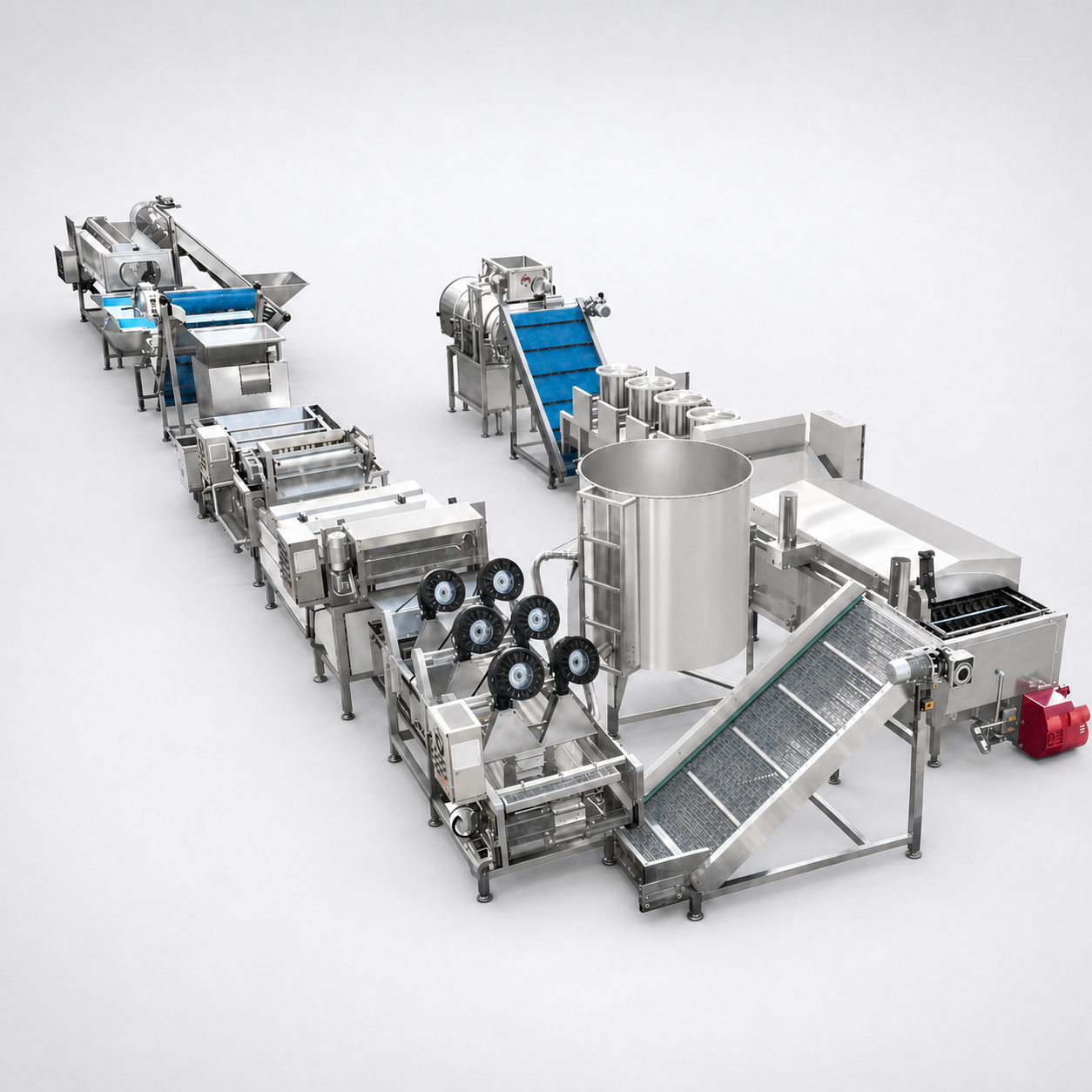
Choose your delivery scopeStandalone Process section Complete line Whole-plant project
Buy the engineering support your project requires.
The number of machines alone does not define a project. The important difference is who designs the process, connects the stations and prepares the factory to operate them.
One machine
Address a specific process need within an existing operation. Confirm equipment configuration, testing and machine documents alongside your site connections.
A linked station group
Expand a washing, cooking, forming or other process section. Review capacity matching, transfers and the connection to the rest of your line.
One product route
Coordinate equipment selection, process design and layout across the route, from raw-material handling to the agreed finishing stage.
Turnkey coordination
Bring several project stages and equipment packages into one coordinated scope. Building work, permits and operating resources need explicit ownership.
Project workflow
Eight stages, with defined handovers.
These are the work areas in our published project workflow. Their timing can overlap; installation services are planned before shipment and performed as the site and equipment become ready.
Requirement study
Review the raw material, finished product, output target, site conditions, budget and destination market.
Process design
Define the required preparation, thermal processing, drying, freezing and packaging steps.
Mechanical design
Match equipment and layout to product characteristics, capacity, available space and operating needs.
Equipment manufacturing
Coordinate production through our manufacturing bases and selected partners against the confirmed scope.
Automation configuration
Agree PLC and HMI functions, machine linkage, alarms, recipes and data requirements where included.
Installation planning & support
Define site readiness, installation guidance and whether remote or on-site assistance is required.
Export delivery
Coordinate packing, container loading, shipment documents and delivery arrangements within the order scope.
After-sales support
Provide the agreed operator guidance, technical communication, spare-parts support and service assistance.
Responsibility matrix
Agree both sides of the handover.
Use this discussion framework to prepare the scope of work. The signed quotation and order define the final allocation for your project.
| Work area | SHENGTU scope to confirm | Buyer input or responsibility |
|---|---|---|
| Product & process | Equipment selection and agreed process engineering. | Product specification, raw materials, capacity and acceptance targets. |
| Site & utilities | Equipment layout and connection requirements. | Building, access, utilities availability and local permits. |
| Controls & data | Included controls, machine linkage and interface engineering. | Site network, existing system details and access permissions. |
| Testing & documents | Agreed factory tests and specified equipment documents. | Test materials, acceptance criteria and destination requirements. |
| Installation & operation | Selected installation support and operator guidance. | Site readiness, lifting arrangements, operators and production materials. |
Prepare your inquiry
Give the engineering team a usable starting point.
A clear brief helps identify the process route and the gaps that affect pricing. Include current requirements and planned product changes, especially where formats or recipes share equipment.
Use the Line Brief Builder to organize your requirement before contacting us.
Send these project inputs
- Raw material, finished product and packaging format.
- Required throughput and operating pattern.
- Available floor plan, access and utility supply.
- Existing equipment and interfaces to retain.
- Destination country, document needs and installation expectations.
- Budget range and desired project schedule.
Your next production line
Start with the product. Define the delivery together.
Tell us what you want to produce and which parts of the project your own team will manage. We can then discuss the equipment and engineering scope to put into a proposal.
![F&V Freeze-Drying Line Process Guide [2026]](https://shengtumachinery.com/wp-content/uploads/2026/09/fv-freeze-drying-line-guide-featured-150x150.png)