Get in touch with Shengtu Bufan Company

Food Machinery Automation & IoT
Food Machinery Automation and IoT Upgrades for Food Processing Lines
We fit PLC control, touchscreen operation, device interlocking, data logging, alarms, recipe management, remote view and system-integration assessment to food and beverage processing equipment. Food machinery automation and IoT are not default fitments here: the configuration is fixed at proposal stage against your equipment type, process requirement, on-site network conditions, interface requirements and budget. Send an equipment list and a process description, and an engineer comes back with a scoped proposal.
Engineer-reviewed line proposal within one business day
Eight automation functions, selected per project
Four upgrade levels, from one machine to the whole plant
Control box, gateway and platform built in-house
[!] Notice: No drawing is needed as a starting point — the proposal stage starts with your equipment list, process requirement and on-site network conditions.
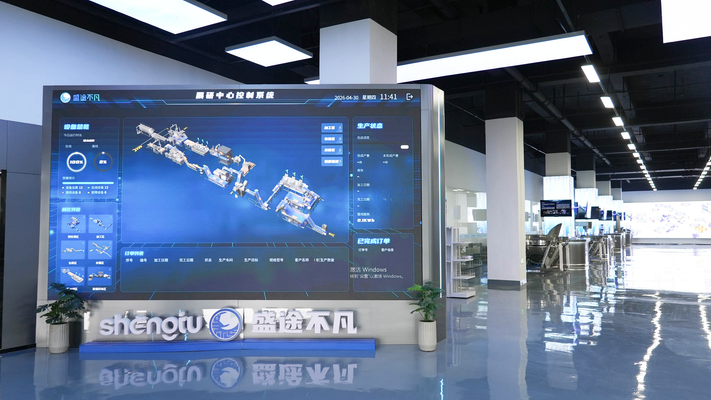
- Proposal turnaround Within one business day, reviewed by an engineer
- Automation functions PLC control, touchscreen, interlocking, data logging, alarms, recipe management, remote view, integration assessment
- Upgrade levels Level 1 machine · Level 2 line · Level 3 workshop · Level 4 enterprise
- Built in-house STUnit industrial internet platform, low-code control box, multi-protocol gateway
- Vision and edge YOLO-based vision counting with edge algorithms
- Standalone service OTA upgrades, remote monitoring, early warning, remote commissioning
- Management systems Project-relevant management-system and assessment records: request current documents and confirm their holder, scope and validity
- Documents at quote Confirmed item by item against your equipment list and destination country
Eight Automation Functions We Fit to Food Processing Equipment
Each of the eight functions below is selected during the proposal stage, not bundled by default. What you buy is the configuration written into the proposal, and every line of that configuration names the machine it applies to.
| Automation function | Operational change | Data or control it carries |
|---|---|---|
| PLC control | The food production process runs to a program instead of to operator timing | Sequence steps, setpoints and interlock conditions for each machine |
| Touchscreen operation | Parameter setting no longer depends on who is on shift | Recipe selection, setpoint entry and alarm acknowledgement at the machine |
| Device interlocking | Upstream and downstream stop together instead of one machine feeding a stopped one | Start and stop permissives between machines, including the conveyor and belt sections that back up first |
| Data logging | Process history exists after the batch, not only during it | Temperature, pressure, time and belt speed readings held against batch and shift |
| Alarms | Faults are announced rather than discovered | Threshold and deviation alarms with the time each one occurred |
| Recipe management | Multi-product running stops being manual re-entry | Named parameter sets per product, with a change history |
| Remote view | After-sales diagnosis starts before anyone travels | Read-only process view and event history for named users |
| System-integration assessment | Connection to your business systems becomes a checked question rather than an assumption | Interface inventory, protocol list and data-point mapping produced at proposal stage |
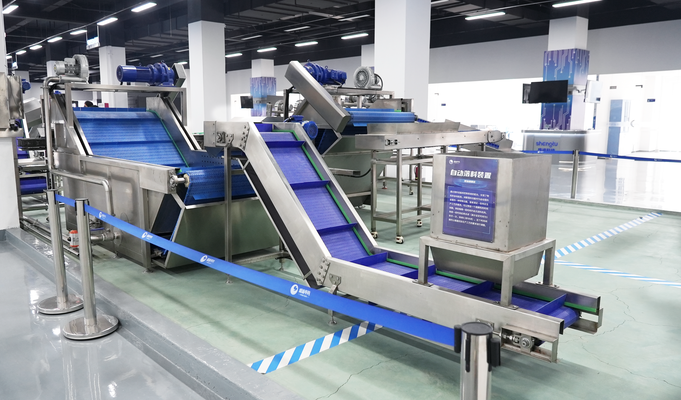
Where These Functions Raise Productivity
-
Fewer manual interventions per batch
PLC control and recipe management remove the repetitive tasks of re-entering parameters at every product changeover.
-
Shorter time between fault and response
Alarms raise the event and remote view lets an engineer look at it without travelling to site, so diagnosis stops adding travel days to downtime.
-
Fewer arguments about what happened in a batch
Data logging gives traceability from the finished pallet back to the raw material batch and the readings that produced it.
-
Less product lost at a line stop
Device interlocking stops the feeding machine rather than letting it run into a stopped one, and that is the first place an upgrade reduces waste.
SYS_CORE // ACTIVE
Automation solutions on our own equipment go deeper than on equipment we did not build, because the control hardware and the machine are designed together. On a retort canned and pouch line that means recipe management and interlocking reach the process steps directly, instead of reading whatever a third-party controller chooses to publish.
Get a Line Proposal →Automation Technologies We Produce In-House
Four of the components in a food manufacturing automation and IoT upgrade are our own products rather than bought-in parts. That matters at two points: when a protocol has to be added for a machine that was never meant to be read, and when a fault has to be fixed after the line is running.
STUnit Industrial Internet Platform
- Component Our own industrial internet platform
- Role on the line Holds machine states, alarms and logged parameters, and serves the remote view
- When you need it From Level 1 upward, wherever data has to outlive the shift that produced it
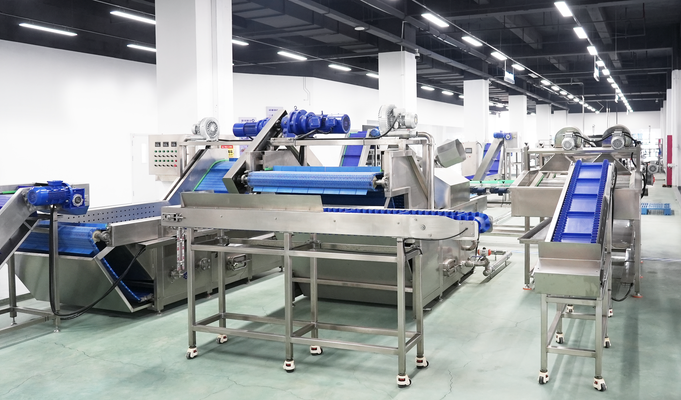
Low-Code Industrial Control Box
- Component Self-produced control box with low-code configuration
- Role on the line Carries the control logic for a machine or cell without a bespoke software build for each project
- When you need it Where a machine needs automated control and the existing panel cannot host it
Multi-Protocol Smart Gateway
- Component Self-produced gateway speaking several industrial protocols
- Role on the line Reads existing controllers and normalises their data before it reaches the platform
- When you need it On any line where the machines came from more than one supplier
YOLO Vision Counting and Edge Algorithms
- Component Vision counting built on YOLO AI models with edge algorithms
- Role on the line Counts at the point of production and runs the model on the line rather than after the fact
- When you need it Where a count is currently manual on a high-speed line, or where the automated systems downstream need a verified figure
An autoclave sterilizer we build is instrumented at the point of manufacture, so the readings that matter to the process are already available. Equipment already on your floor is assessed for interface compatibility instead of being assumed connectable.
Four Upgrade Levels, From a Single Machine to a Smart Factory
The four levels below are scope boundaries, not product tiers you buy up through.
Level 1 — Machine
What it covers
Remote monitoring, early warning, remote commissioning and OTA upgrades on a standalone machine
Where it stops
The individual machine; no coordination with the machines around it
Level 2 — Line
What it covers
Device coordination, scheduling, energy optimisation and visual monitoring across a part-line or a whole production line, including the conveyor, palletizing and food packaging machines already on your floor
Where it stops
The production line boundary; plant-level planning is not included
Level 3 — Workshop
What it covers
Layout optimisation, process digitalisation, human-machine collaboration and real-time health monitoring across the workshop
Where it stops
The workshop; your business systems are not in scope
Level 4 — Enterprise
What it covers
IT and OT convergence, big-data analytics and digital twin work across the plant
Where it stops
Scope is fixed per project after the integration assessment
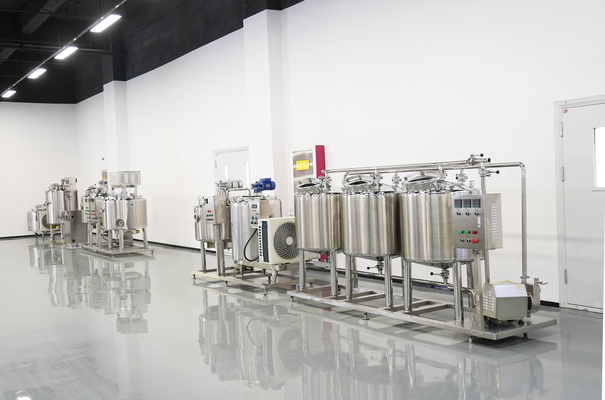
- Most first projects we scope in modern food plants start at Level 1 on the machines that carry the parameters you already argue about.
- Level 2 is the point at which a stoppage on one machine has to be visible to its neighbours.
- Level 3 and Level 4 are scoped after an assessment, because both depend on systems we do not supply.
- Real-time health monitoring at Level 3 produces the run-hours and deviation history that predictive maintenance needs; the maintenance rules themselves are fixed per project after that assessment.
- Energy optimisation and product saved at a line stop are the two figures a sustainability report can take from an upgrade, and both are measured per line rather than per machine.
- Cleaning is a common Level 2 candidate, because the sequence has to hold across several vessels at once. A CIP cleaning system with logged temperature, time and conductivity gives the cleaning records that food safety standards expect, and turns a contamination investigation into a query rather than a reconstruction.
Function-to-Level Configuration Envelope
This is the table to bring to an internal budget discussion. It states the minimum level each function needs, whether it works on a single machine or only across a connected line, and what we need from you before the figure can be fixed. No payback figure travels with it: how far an upgrade increases efficiency, and therefore its ROI, depends on your product mix, labour cost and current loss rate, none of which we measure for you.
| Automation function | Minimum upgrade level | On a standalone machine | Across a connected line | What we need from you at proposal stage |
|---|---|---|---|---|
| PLC control | Level 1 | Yes | Yes | Equipment type and the process requirement it has to run |
| Touchscreen operation | Level 1 | Yes | Yes | Equipment type and the operator language |
| Data logging | Level 1 | Yes | Yes | Which parameters must be retained, and for how long |
| Alarms | Level 1 | Yes | Yes | Which deviations must raise an alarm, and who receives it |
| Recipe management | Level 1 | Yes | Yes | Your product list and the parameters that differ between products |
| Remote view | Level 1 | Yes | Yes | On-site network conditions and who is permitted to hold access |
| OTA software updates | Level 1 | Yes | Assessed | Your change control process for the affected equipment; we supply a change record and a roll-back version with every update |
| Device interlocking | Level 2 | Assessed | Yes | Interface requirements of the adjacent machines, including conveyor and automated packaging equipment |
| Real-time health monitoring | Level 3 | Assessed | Assessed | Workshop layout and the list of machines to be covered |
| System-integration assessment | Level 4 | Assessment only | Assessed | System names, versions and the interface documentation your IT team can release |
Specification Notes
Assessed in this table has one meaning: the function is technically in range, but the survey has to establish what the existing equipment will release before it can be committed. Nothing marked assessed is priced until that survey is done.
How We Price an Automation Scope
There is no package price for an automation and IoT upgrade. The same function does not cost the same on a machine we built as on a machine that has to be surveyed first, so the figure follows the function list, the level those functions sit at, the number of machines in scope and the interface work each machine needs. The budget risk sits in that interface work rather than in the hardware, because a controller that will not release a parameter turns a one-sensor job into a gateway, a poll rate and a data-point mapping.
Send the equipment list, process requirement and on-site network conditions, and an engineer returns a scoped line proposal within one business day. That proposal states which functions are committed at which level and which items are assessed rather than committed. Ask for the same engineering assumptions from any competing quote you compare it with, or the two figures are not measuring the same scope.
Management systems, certificate scope and shipping documents
Applicable certificates and documents are confirmed for the equipment model, configuration and destination country. Company management-system records are reviewed separately from product conformity documents.
Two separate questions live here: which company records apply to your project, and what the delivered system does on your site.
01
Management-System Records to Request
Management-System Records to Request
- ISO 9001 — quality management system
- ISO 27001 — information security management system
- DCMM Level 2 assessment — a data management capability assessment result, and therefore not a management-system certificate
Request project-relevant documents and check certificate numbers, holders, issuing bodies, scope and validity dates. Availability and applicability must be confirmed before an order is agreed.
02
How to Verify a Certificate
How to Verify a Certificate
An accredited management-system certificate can be checked with the body that issued it, or through the IAF CertSearch database of accredited certifications. The International Organization for Standardization writes the standards and does not issue certificates against them. Ask any supplier, including us, for the certificate scope rather than the certificate name.
03
Certificate Scope Versus Delivered-System Security
Certificate Scope Versus Delivered-System Security
An ISO/IEC 27001 certificate applies to the information security management system of its named holder within the stated scope. Request current project-relevant records before relying on a certification claim. It does not describe the access control, update signing, network segmentation or incident recovery of the automation systems delivered to your site.
- Named users hold remote access, agreed with your IT and OT owner before commissioning.
- Remote access stays read-only on the process view unless a control right is written into the scope.
- Segmentation between the production network and any outside connection is fixed against your own policy.
- Recovery after an incident runs from the roll-back version and change record that ship with each update.
Those four items are written into the proposal scope, not inferred from a certificate. If your security team has a questionnaire, send it at proposal stage.
04
Documents That Travel With the Equipment
Documents That Travel With the Equipment
Which marks and documents apply depends on where the equipment is going. New machinery placed on the Great Britain market, for example, has to carry UKCA or CE marking, a declaration of conformity and instructions in English, and other destinations set their own list.
CE, SGS, ISO 9001, ISO 27001, product test reports, factory inspection reports, user manuals, electrical drawings, conformity certificates, patent and software-copyright certificates, trademark registration and business licence — each confirmed item by item against your equipment list and destination country at quotation, contract or pre-shipment stage.
If something in that list does not apply to your equipment or your destination, we say so at quotation rather than at pre-shipment. Our supplier verification checklist sets out what to ask any equipment supplier for, in the order that makes the answers comparable.
From Enquiry to Commissioned Upgrade
Automation projects in the food industry go wrong at the survey, not at the installation. These six steps are ordered so that the expensive unknowns surface before anyone commits a budget.
-
01
You send the inputs — equipment list with controller makes and models, process requirement, on-site network conditions and the budget band.
-
02
We return a line proposal within one business day — function list, level per function, and an explicit split between committed and assessed items.
-
03
Interface survey — we establish what each existing controller will release, and price the gateway, sensor or controller work that follows from it.
-
04
Scope freeze — the assessed items become committed or drop out, and the data-point mapping is signed off with your process and IT owners.
-
05
Build and factory test — control boxes, gateways and platform configuration are built and tested against your recipe and alarm list before shipment.
-
06
Commissioning and handover — on-site integration, operator training on the touchscreen and recipes, then remote commissioning support.
What Stays on Your Side After Handover
Where the Technical Answers Actually Come From
Those figures come from our own project, export and intellectual-property records, and the documents behind them travel in the certificate pack; they describe a company, not your line. They do not tell you whether your controller will release the parameter you need, or whether a remote session satisfies your IT policy. A patent count is not a substitute for an interface list.
- Whether your controller will release a given parameter — answered by the interface inventory and protocol list produced at the survey.
- How well a panel is actually built — answered by the electrical drawings, test reports and factory inspection reports that travel with the order.
- Which company records apply — request the current documents and verify the holder, scope and validity through the issuing body or appropriate registry.
Company Scale Behind Our Food Machinery Automation Work
Scale // Capacity
Manufacturing base
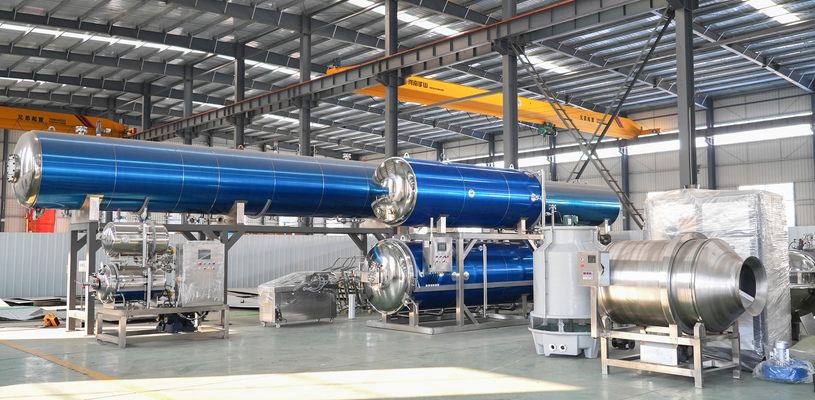
Four owned and self-built manufacturing bases cover approximately 80% of our main equipment categories; specialised or supplementary equipment is produced by long-term partner factories.
Track // Deployment
Installed base
2,000+ units running worldwide across 52 countries, with 10+ years of export project experience.
IPR // Innovation
Development record
100+ R&D projects, 100+ software copyrights and 7 invention patents behind the platform, control box and gateway.
Where Automation and IoT Do Not Apply
Five situations where the honest answer is to buy less, buy elsewhere, or wait. Each one has cost someone a project.
Why it works against you
Instrumentation and logging add cost, and on a fixed single-product run it buys you a data feed nobody reads
What to do instead
Stay manual and revisit when consumer demand widens the range of food products you run
Why it works against you
No configuration we scope is autonomous; operators are still required, and automation here changes what they do, not whether they are there
What to do instead
Automate the parameter-critical steps and keep the line staffed
Why it works against you
The robot, its gripper and the safety cell are supplied by you or your robot integrator; we work at the control and data layer
What to do instead
Buy the robotic cell from a robotics supplier and ask us for the interface and data-mapping assessment
Why it works against you
Without a released protocol there is nothing to read, and adding sensors changes the machine you already accepted
What to do instead
Send controller makes and models first, so the survey prices a controller change honestly
Why it works against you
A software change to sterilisation time and temperature, metal-detector rejection or recipe dosing sits inside your food safety management system, not ours
What to do instead
Plan the update into your own change control; we supply the change record and roll-back version, and do not release validation on your behalf
SYS_INFO // 0048
If a controller will not release the parameter, we say so in the survey instead of quoting a sensor to work around it. A reading you cannot trace back to the machine that produced it costs you more than having no reading at all.
— Our standing rule for interface surveys
The last row is a legal boundary, not a commercial one. Regulation (EC) No 852/2004 places the duty on the food business operator: when any modification is made in the product, the process or any step, the operator reviews the procedure and makes the necessary changes. Our delivery scope selector sets out which side of that line each deliverable falls on.
Food Machinery Automation & IoT Engineering Tools
-
automation level selector
Evaluate your current production lines and identify the optimal automation tiers for your facility's operational goals.
Launch Tool -
integration scope worksheet
Define precise system boundaries and accurately map equipment data flows prior to your IoT deployment.
Launch Tool -
retrofit readiness check
Assess your legacy equipment compatibility with modern smart sensors and digital control frameworks.
Launch Tool
Automation and IoT Questions Buyers Ask Before Ordering
Request Assessment01
Standard industrial robots are built for dry, non-washdown duty, while food-contact and washdown zones need food-grade lubricants, sealed joints and an ingress rating matched to the cleaning regime. We do not supply robots or robotic cells. What we assess is the control and data interface between your robot cell and the rest of the production line.
02
Level 1 covers a single machine — PLC control, touchscreen operation, data logging, alarms, recipe management and remote view — with no line-wide project attached. It is the entry point that changes nothing on the machines around it, because Level 1 opens no interface between machines. It also produces the logged data you need before anyone can argue sensibly about a Level 2 scope.
03
Recipe management replaces manual re-entry with named parameter sets per product, and PLC control runs each step to the same sequence and setpoints regardless of shift. Data logging then records what actually ran at every stage of the batch. A batch that drifts can be traced to the step, the reading and the raw materials it ran on rather than to somebody's memory.
04
Sensor readings, alarms and machine states are collected in real time by the gateway and held against batch and shift, which turns quality control analytics into a query instead of a paper search. YOLO-based vision counting adds an automated count at the point it matters, and edge algorithms run that artificial intelligence model on the line rather than after the fact. The yield question then becomes answerable: where product is lost, and at which parameter.
05
Buying a level instead of an objective. Teams specify a workshop or enterprise project when the parameters they actually argue about live on three machines, and those three machines at Level 1 answer the question sooner and cost less. Write the objective first, then let the level follow from it.
06
Retrofit depends on what the existing controller will release. Where a protocol is available, the multi-protocol gateway reads it and no machine is replaced. Where the controller is closed, the survey prices a controller change or added instrumentation instead of assuming the problem away.
07
This is assessed, never assumed. The integration assessment produces an interface inventory, a protocol list and a data-point mapping against the system names, versions and interface documentation your IT team can release. The proposal then states what is committed and what remains assessed.
08
An equipment list with controller makes and models, the process requirement, on-site network conditions, interface requirements and a budget band. An engineer returns a scoped line proposal within one business day of receiving them. Photographs of the control panels shorten the survey more than any document.
09
CE, SGS, ISO 9001, ISO 27001, product test reports, factory inspection reports, user manuals, electrical drawings, conformity certificates, patent and software-copyright certificates, trademark registration and business licence — each confirmed item by item against your equipment list and destination country at quotation, contract or pre-shipment stage.
10
An ISO/IEC 27001 certificate covers the information security management system of its named holder within the stated scope. Request current project-relevant records before relying on a certification claim. It does not describe the access control, update signing, network segmentation or incident recovery of the system delivered to your site; those four are fixed with your IT and OT owner at proposal stage and written into the scope. You can verify the certificate itself through the body that issued it or through the IAF CertSearch database, since the International Organization for Standardization does not issue certificates.
11
Where the equipment carries a critical control function, a change to the control software sits inside your food safety management system. Regulation (EC) No 852/2004 requires the food business operator to review the procedure and make the necessary changes when any modification is made in the product, the process or any step. We supply a change record and a roll-back version with every update, and we do not release validation on your behalf.
![F&V Freeze-Drying Line Process Guide [2026]](https://shengtumachinery.com/wp-content/uploads/2026/09/fv-freeze-drying-line-guide-featured-150x150.png)