Get in touch with Shengtu Bufan Company

Chicken Nugget Coating & Frying Line
A chicken nugget processing line works only when its coating, thermal, freezing and packaging interfaces are defined as one system.
Shengtu configures the supplied coating-to-end-of-line sequence around your incoming product, recipe, endpoint and pack format.
SPECIFICATIONS
- Nuggets
- Cutlets
- Popcorn chicken
- Coating to end of line
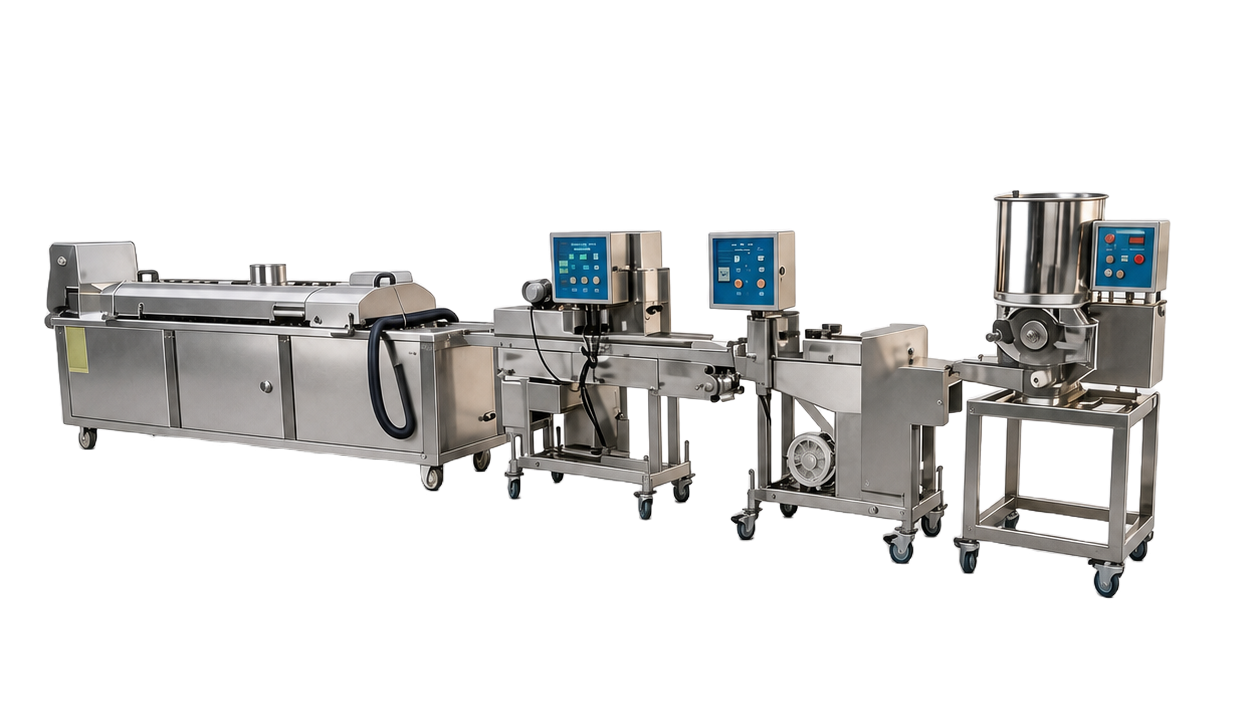
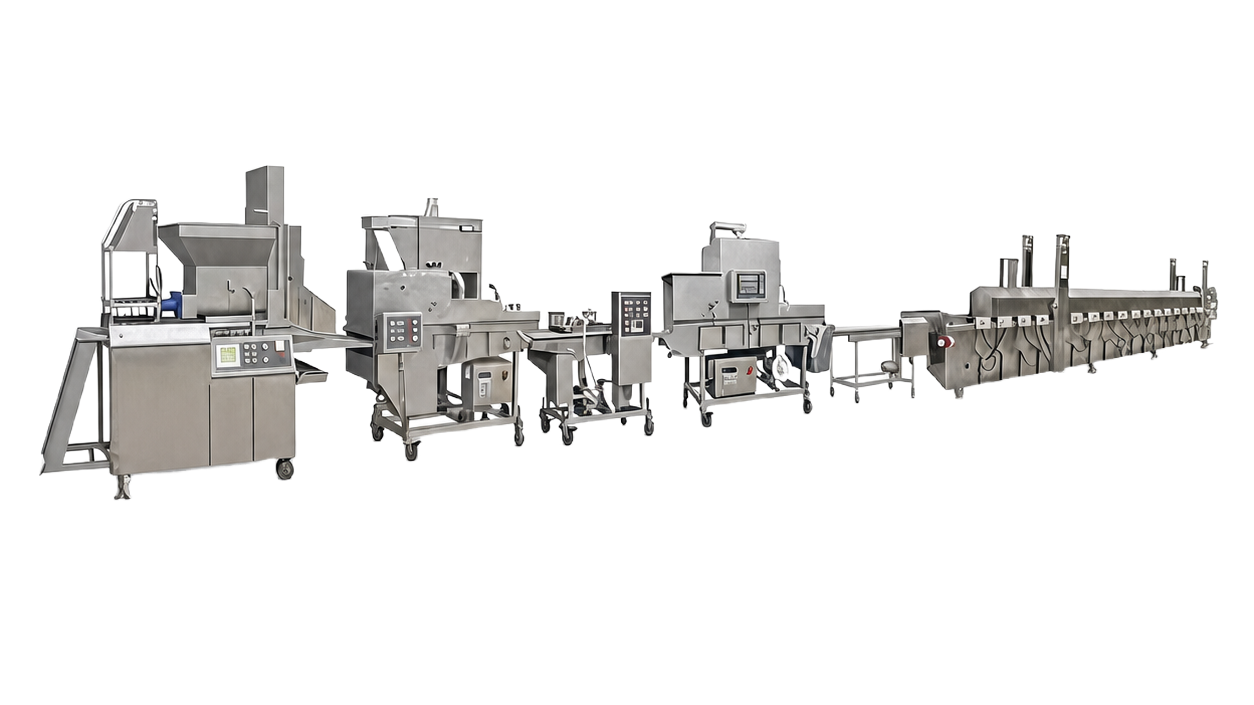
Supplied equipment overview. Final arrangement depends on product and project interfaces.
Coating-to-End-of-Line Scope
For a buyer, a 100% complete equipment list can still hide a scope gap and mismatch. Unlike a generic line list, Shengtu maps the trade-off between supplied equipment and buyer-owned interfaces.
Product architecture and coating sequence are also central to industrial breading system selection. OSHA’s meatpacking standards overview separately identifies machine guarding, materials handling and electrical requirements that belong in the plant-interface review.
SYS_ON
Z-AXIS
BOUNDARY
Configuration shown
Supplied materials show a seven-stage coating-to-end-of-line sequence covering marination, coating, frying, freezing, packing and metal detection.
Upstream handoff
Grinding, mixing and forming sit before this scope. Define whether product arrives whole-muscle, cut, restructured or already formed.
Project engineering
Line balance, utilities, controls, food-safety responsibilities and acceptance criteria are set against the actual product and plant.
Critical boundary
“Chicken nugget line” can describe different systems. This page does not treat the supplied coating and frying equipment as an unqualified raw-meat-to-nugget factory.
Seven Connected Stages
When one stage lacks a named handoff, the buyer risks delay; Shengtu uses the line map to assign incoming condition, outgoing condition and acceptance ownership.
Thermal ownership within the sequence should be checked against the applicable process guidance, including the USDA FSIS Revised Appendix A for relevant U.S. RTE poultry programs.
Interface ownership
Each food processing stage needs a named incoming condition, outgoing condition and acceptance check so gaps do not appear during installation.
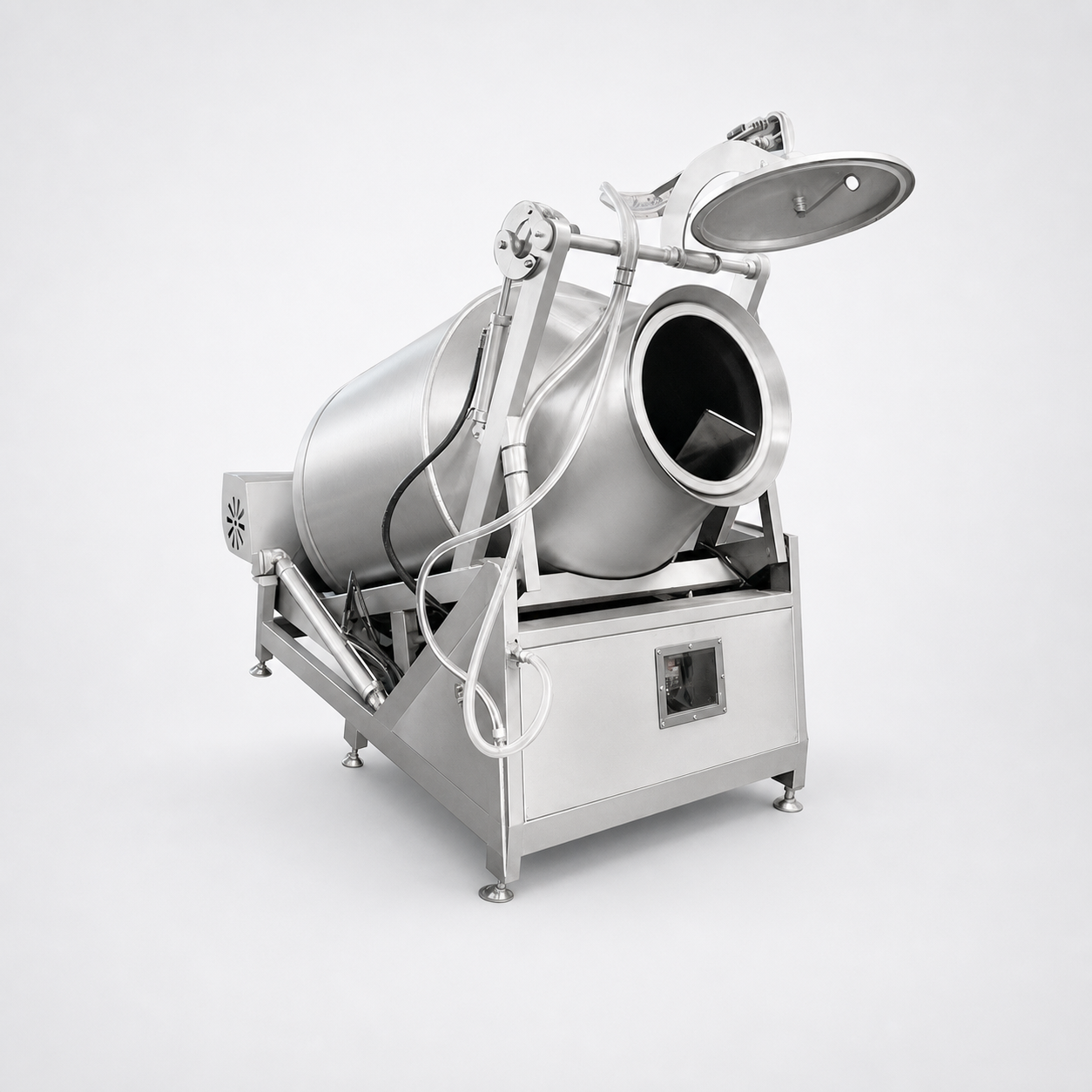
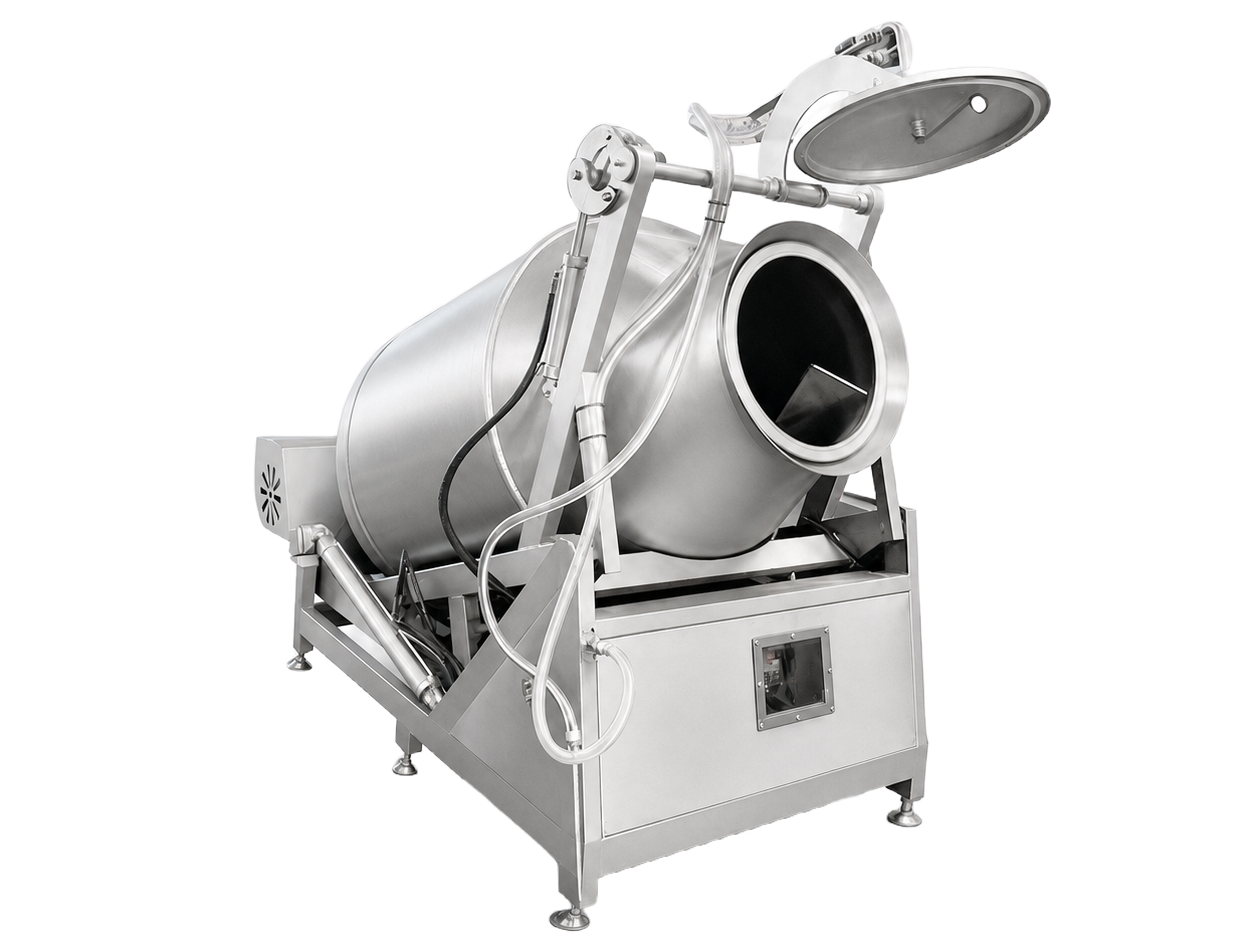
Marination and tumbling stage
Marination tumbler for prepared poultry products
Receives the defined product and formula before coating. That handoff condition affects surface moisture and downstream adhesion.
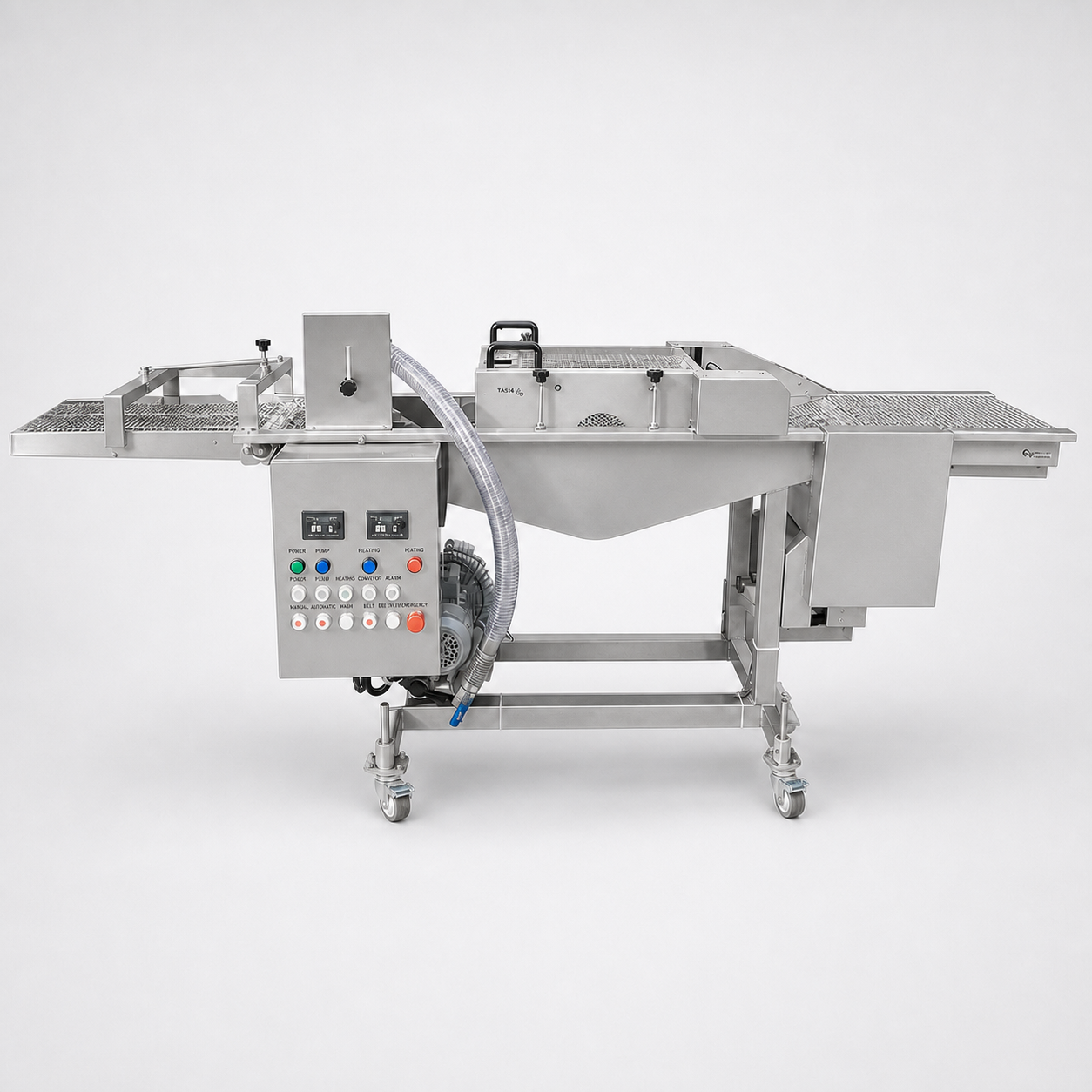
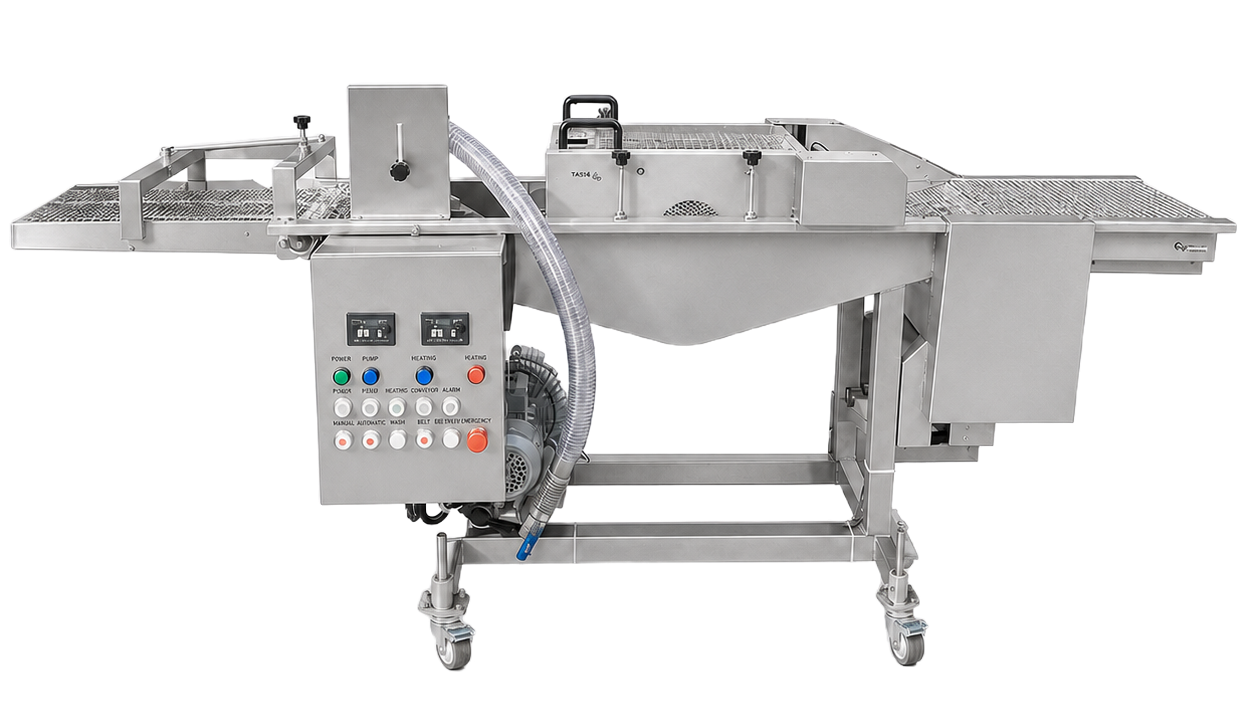
Batter application stage
Batter application machine for chicken nuggets
A battering machine applies the wet layer that connects the product surface to the selected crumb or flour system.
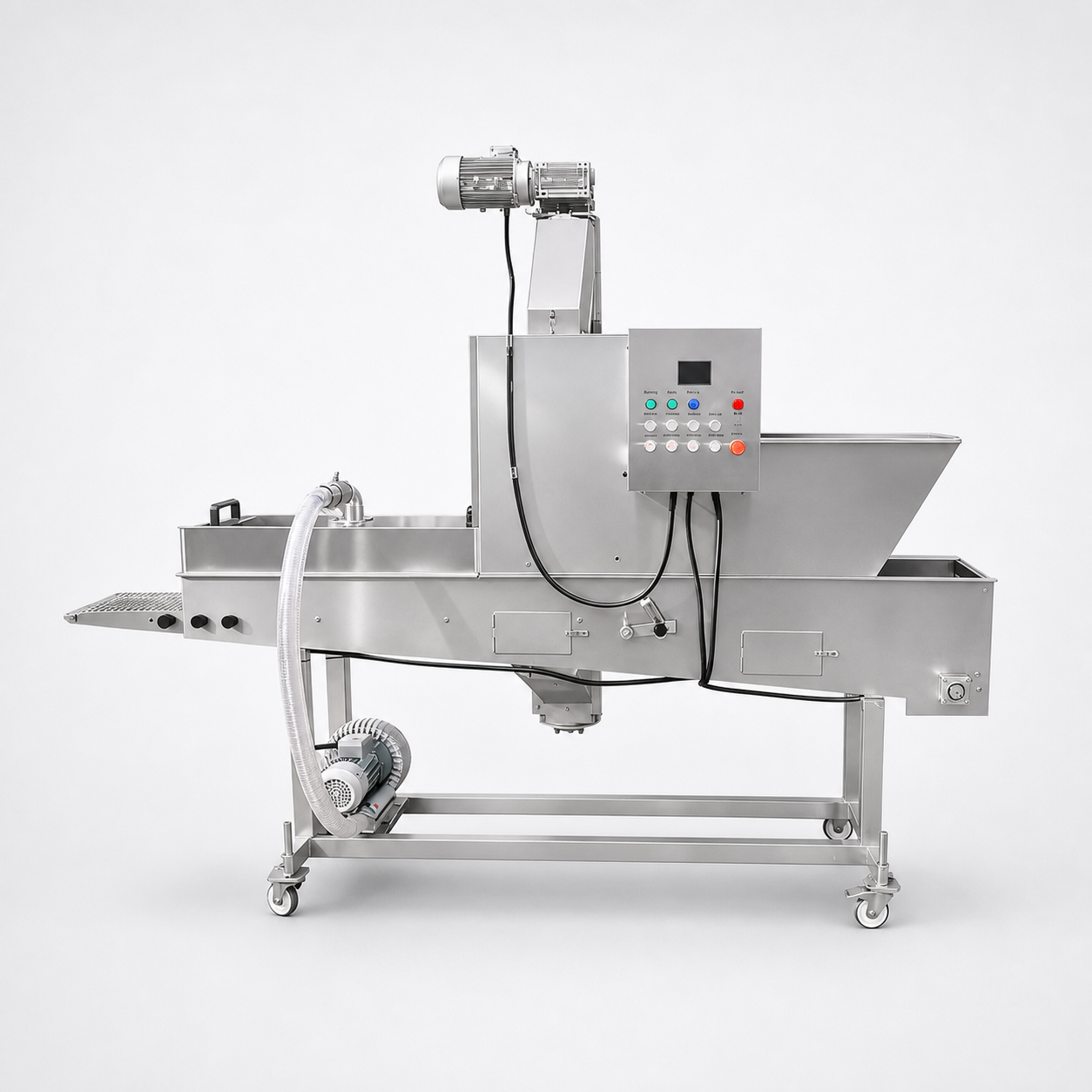
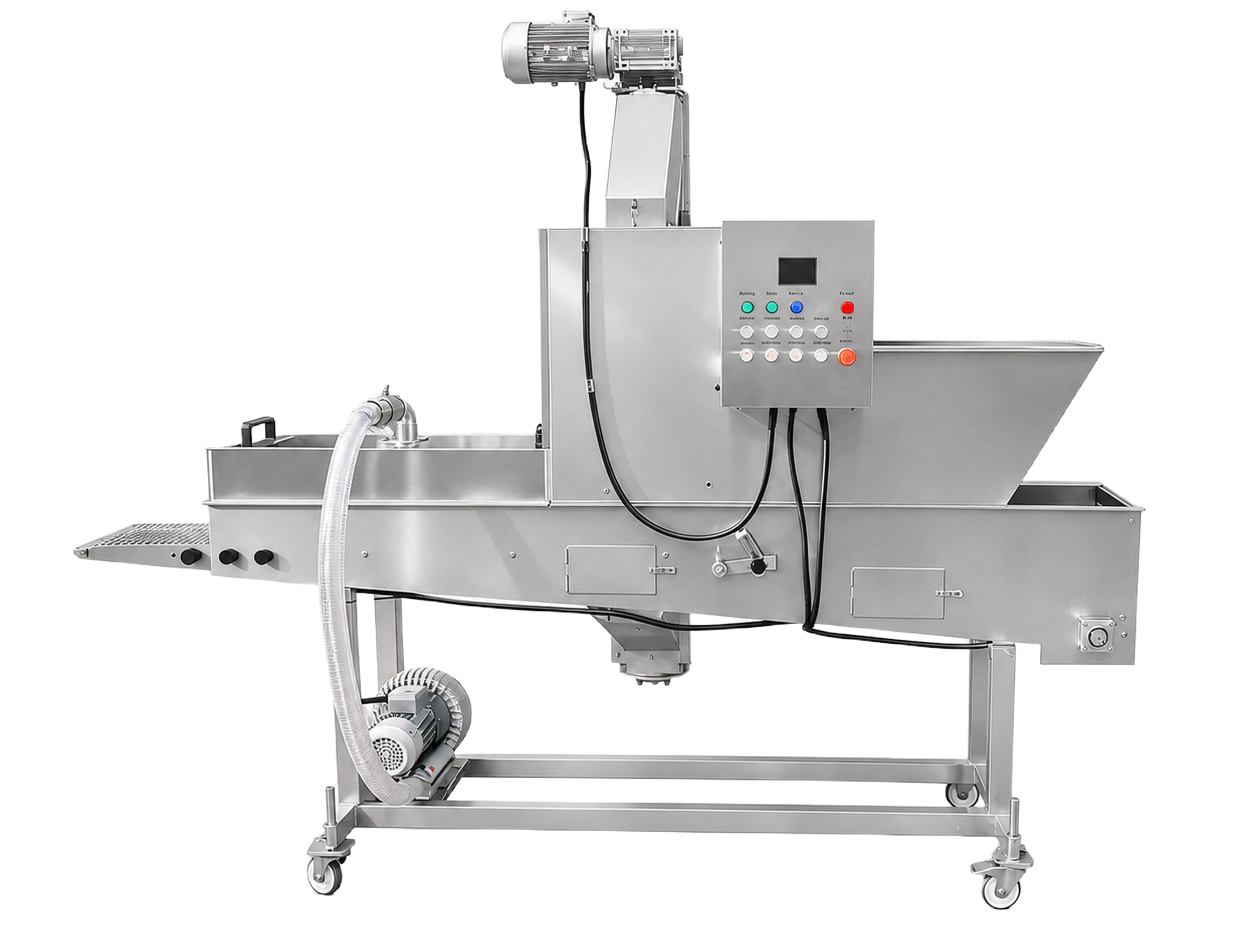
Breading application stage
Breading application equipment for poultry pieces
Builds the specified outer coating while product handling and recirculation influence coverage and breakage.
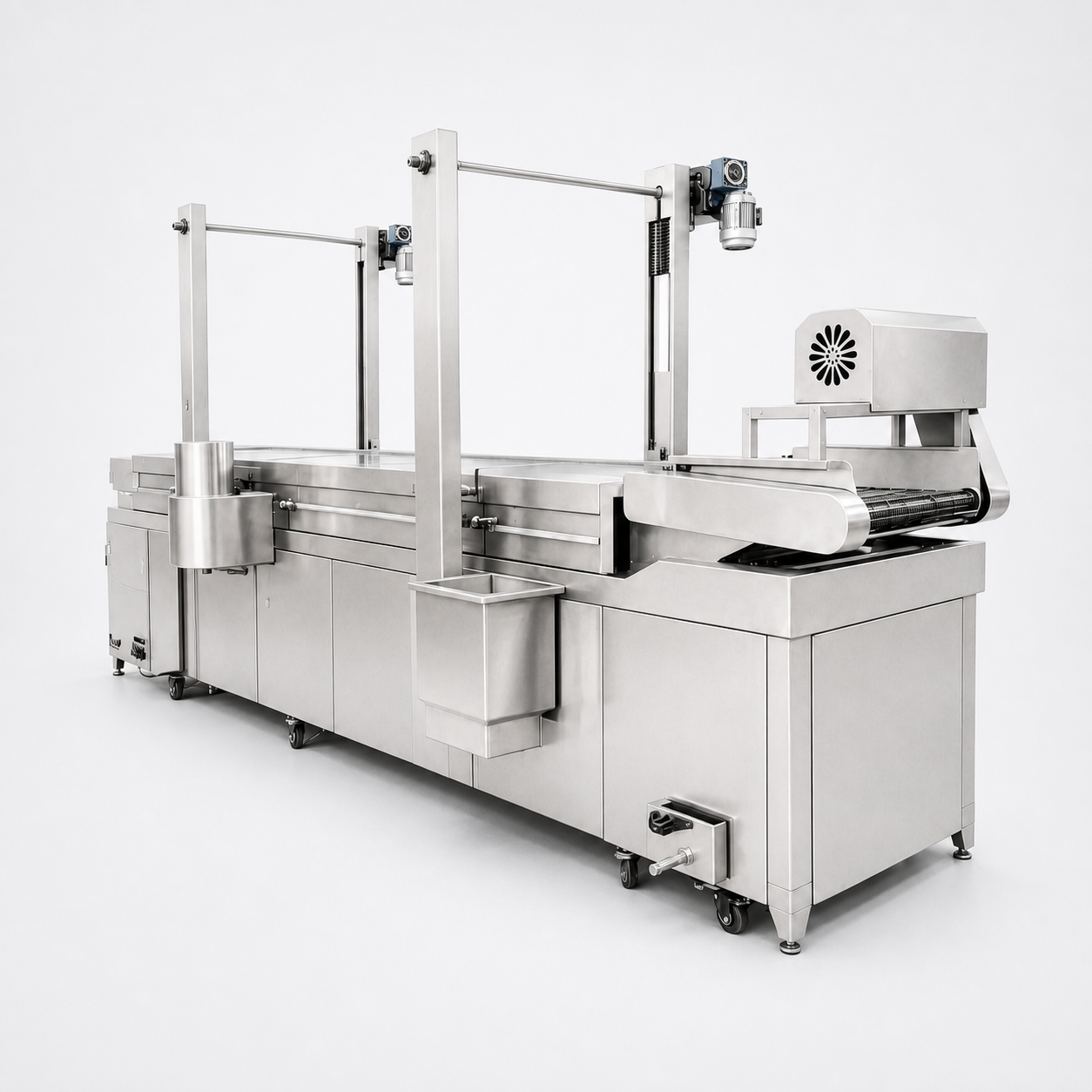
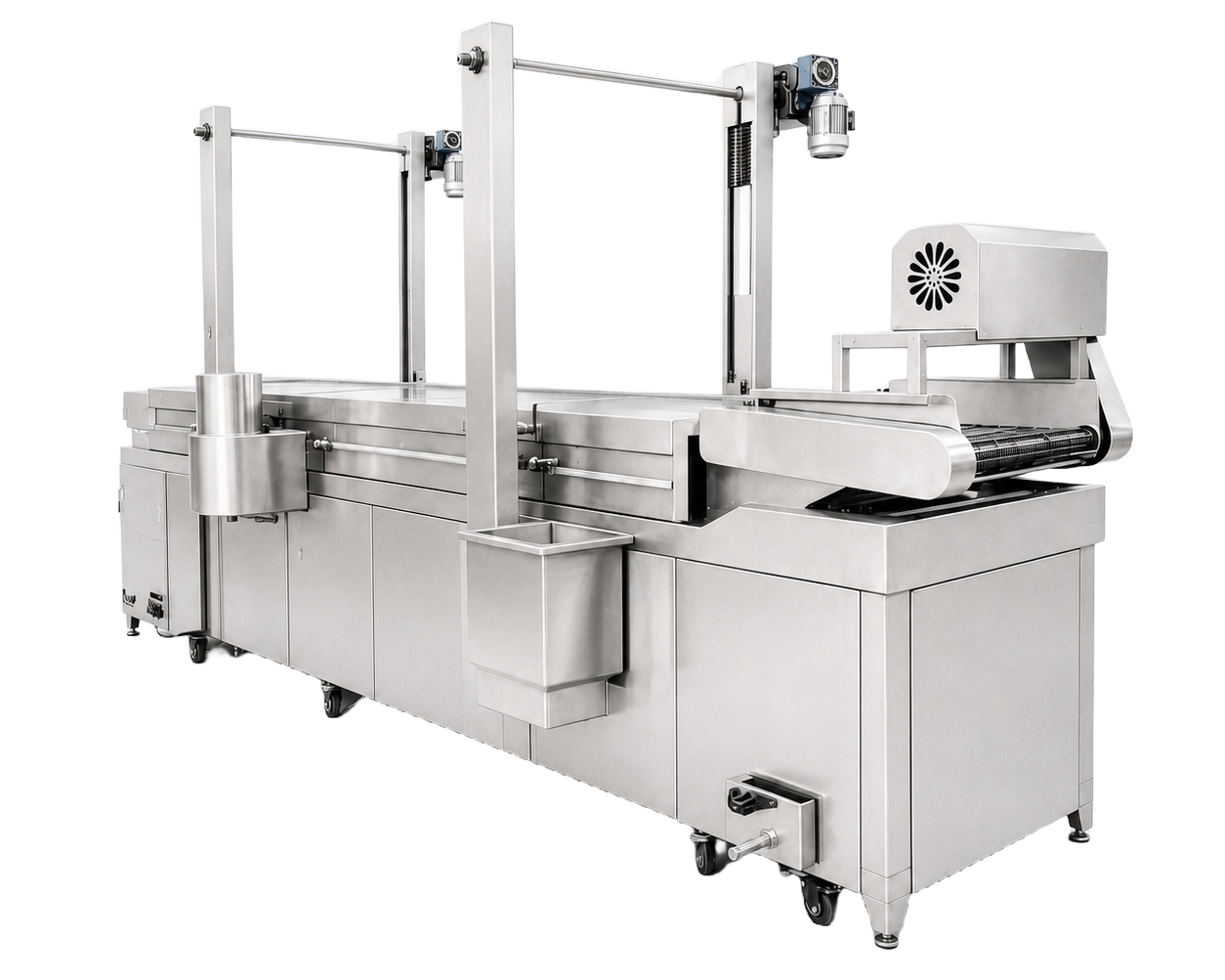
Continuous frying stage
Continuous fryer in a chicken nugget coating line
Sets color and coating structure. Buyer-defined thermal intent determines whether this stage is par-frying or part of a validated cook process.
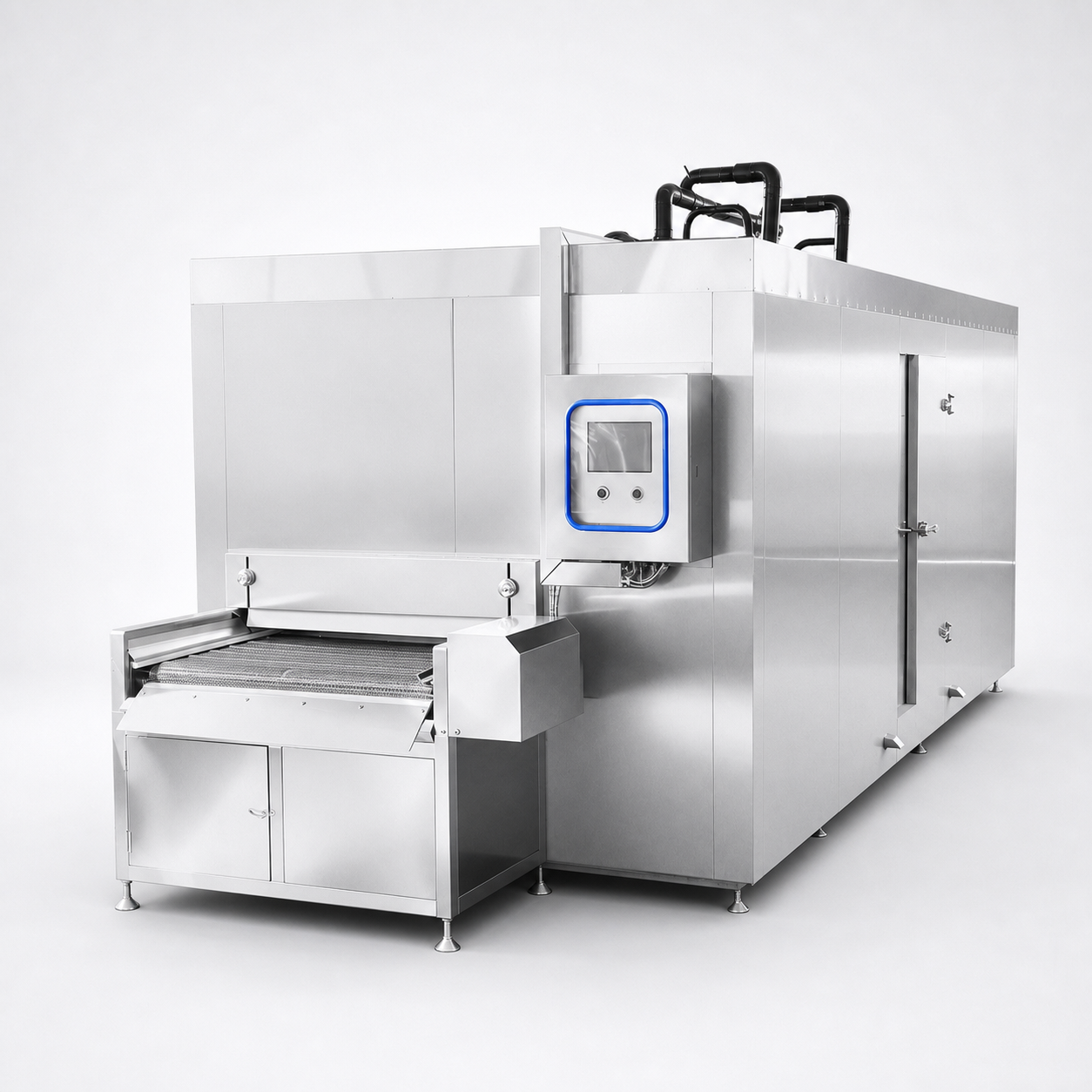
Freezing stage
Freezing equipment after chicken nugget frying
Connects product exit condition to the required frozen state, refrigeration system and available plant space.
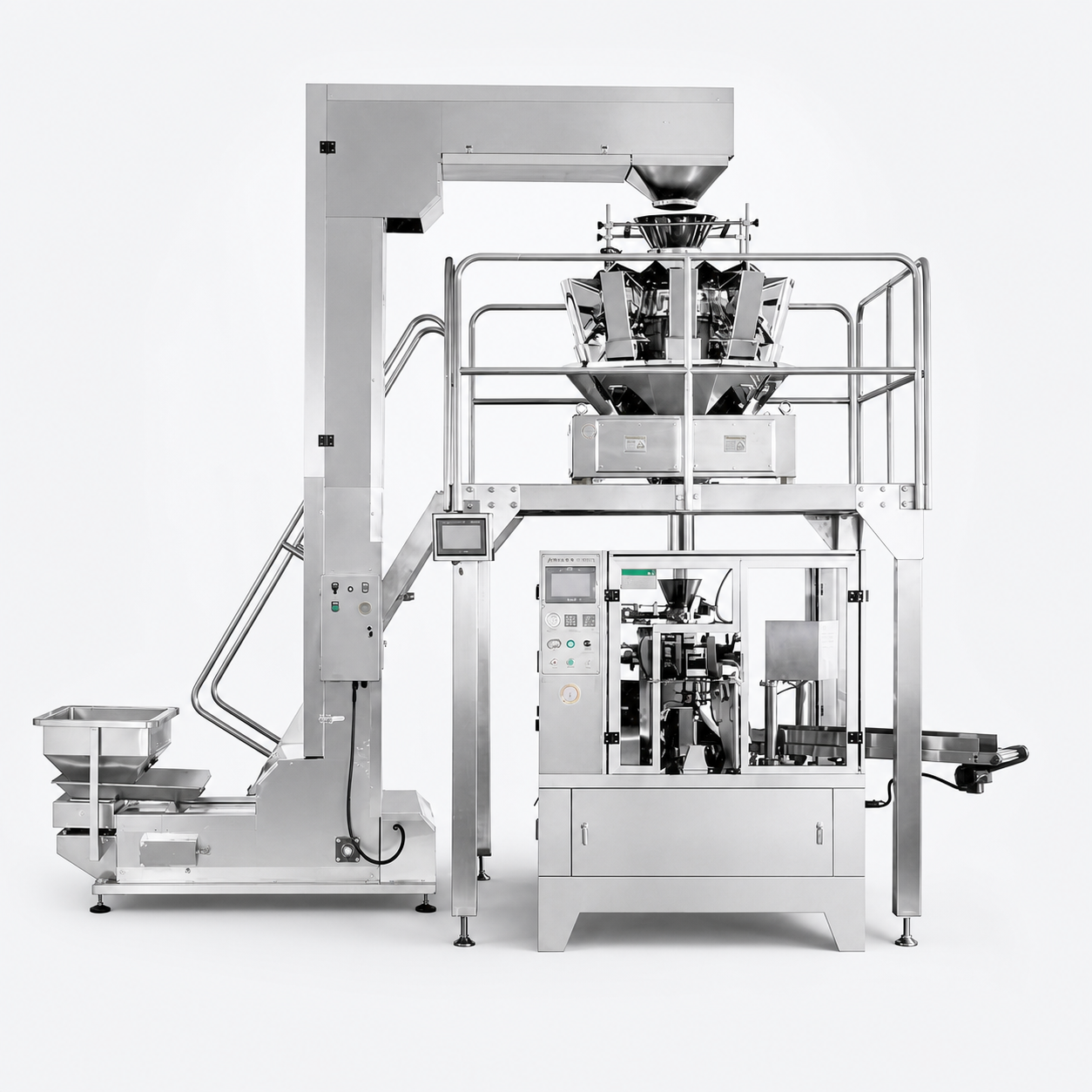
Packaging stage
Packaging machine for frozen coated poultry products
Matches pack style, unit weight, film or bag, coding and upstream product presentation.
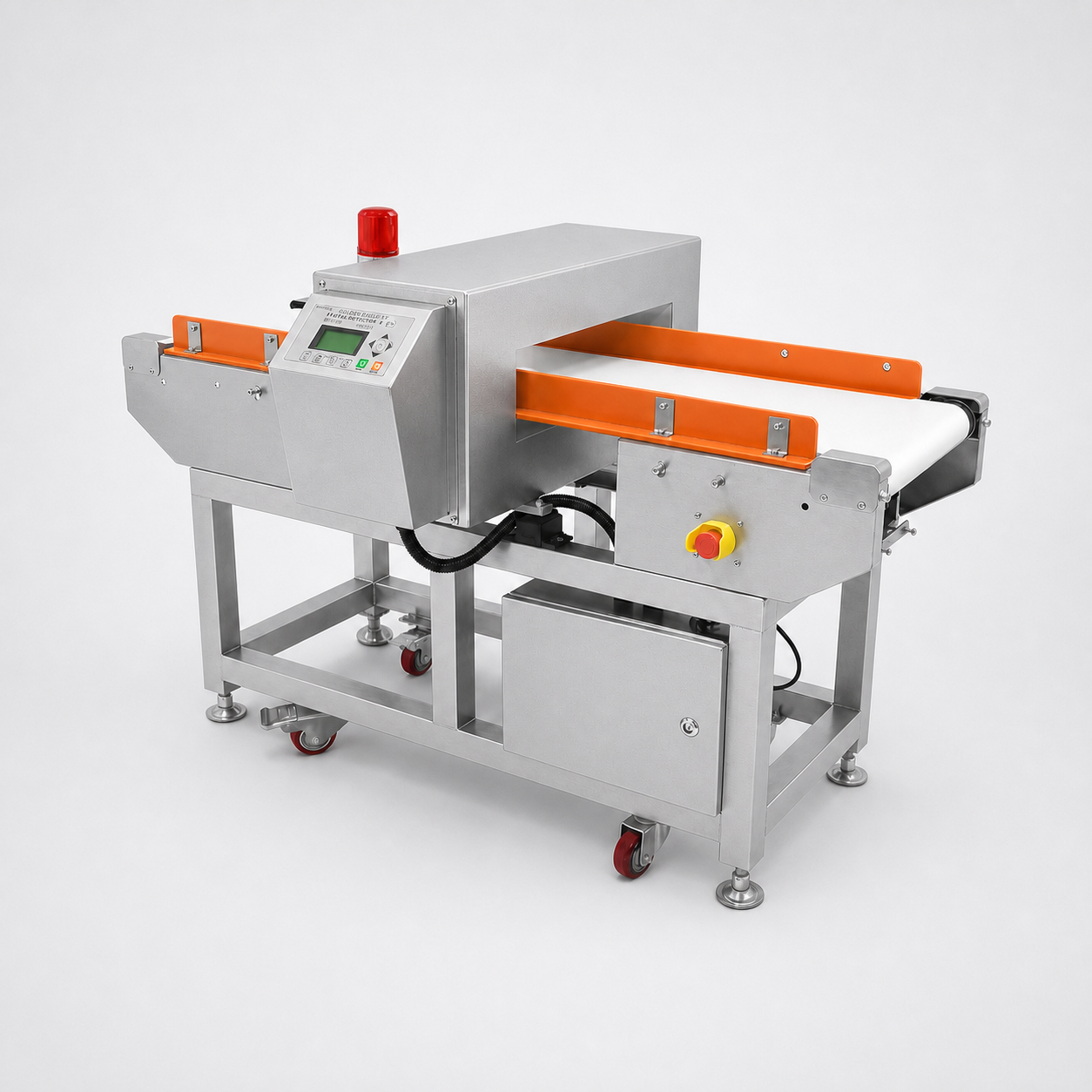
Metal detection stage
End-of-line metal detector for packaged chicken products
Supports an end-of-line control point defined by the buyer’s hazard analysis, test method and reject protocol.
Product Architecture Before Equipment Selection
SYS.ANALYSIS // 01
We use the incoming product state to anchor the layout. Nuggets, cutlets and popcorn chicken can require different handling even when the broad process names look similar.
Decision rule: define geometry, surface condition, fragility and loading pattern before selecting a coating path. A formed product and a whole-muscle piece should not be assumed to behave the same way.
Heat and Control likewise treats formed versus whole-muscle product as an input to coating-equipment selection. For mechanism background, the public record for US20100047411A1 describes breading-machine operation without establishing a Shengtu design claim.
Incoming Architecture // Parameter
Engineering focus
Shape retention and transfer
Interface to confirm
Forming machine discharge
Engineering focus
Orientation and surface variation
Interface to confirm
Cutting and loading method
Engineering focus
Temperature and handling strength
Interface to confirm
Mixing/forming condition
Engineering focus
Change parts and cleaning sequence
Interface to confirm
Campaign plan and formula family
A buyer risks a handling mismatch when the product is described only as a nugget. Shengtu uses product data to configure the proposal, while factory layout and inspection responsibilities stay visible as project interfaces.
ADHESION
Adhesion as a Line-Wide Result
When coating failure begins upstream, the buyer needs more than a fryer setting; Shengtu frames the formula, product and handling trade-off together.
AXIS-Z: ALIGNED
Surface condition
Incoming temperature, free moisture and predust strategy influence the first bond before batter reaches the product on the conveyor.
Formula condition
Batter age, viscosity and pickup interact with crumb, flour or tempura systems. Your specification must define the desired crispy texture, not just an ingredient list.
For related planning details, see the battering and breading machine buyer guide.
Downstream handling
Conveyor belt transfers, frying, cooling and freezing can reveal weak adhesion created earlier. More coating in one pass is not automatically a better answer.
Thermal Endpoint and Validation Responsibility
When the endpoint is undefined, the buyer carries a validation gap and food-safety risk; Shengtu records the process intent and supplied-control boundary.
REFERENCE
The USDA FSIS Revised Appendix A cooking guideline is one relevant U.S. reference for RTE meat and poultry processes. It is a process reference, not a machine certificate.
Process intent and equipment scope remain separate, written responsibilities.
Endpoint Definition
Par-fried or NRTE
Define the intended partial process and the downstream validated cook. Labels, handling and customer controls must match that endpoint.
Endpoint Definition
Fully cooked or RTE
Define the lethality target, product cold spot, monitoring method and stabilization plan under the rules for the destination market.
Ownership Boundary
Project responsibility
An equipment proposal states supplied controls and interfaces. Food-business ownership covers the product hazard analysis and validation unless a written project scope assigns specific work elsewhere.
Quote Inputs and Ten-Point Engineering Brief
Price and capacity depend on a defined product and plant interface. Use this matrix to turn a broad request into a configuration brief.
01
Product architecture
What it changes
Upstream handoff and transfer method
Attachment
Product photos or drawing
02
Incoming condition
What it changes
Handling, adhesion and sanitation approach
Attachment
Temperature and surface description
03
Piece geometry
What it changes
Belt loading, clearances and contact pattern
Attachment
Length, width, thickness and weight range
04
Target output
What it changes
Line balance and buffer strategy
Attachment
Normal and peak production target
05
Coating system
What it changes
Applicator sequence and recirculation
Attachment
Formula family and desired pickup
06
Thermal endpoint
What it changes
Frying, cooking and validation boundary
Attachment
NRTE or RTE process target
07
Freezing target
What it changes
Freezer interface and refrigeration load
Attachment
Infeed and discharge product state
08
Pack format
What it changes
Weighing, bagging, coding and inspection
Attachment
Pack samples or drawings
09
Plant envelope
What it changes
Layout, access, utilities and safety zones
Attachment
Floor plan and utility schedule
10
Delivery and acceptance
What it changes
Documentation, installation and test scope
Attachment
Destination and acceptance plan
SYS.DOC // OVERVIEW
Bottlenecks Beyond the Fryer
Decision rule: define geometry, surface condition, fragility and loading pattern before selecting a coating path. A formed product and a whole-muscle piece should not be assumed to behave the same way.
A coating line can be constrained by preparation, transfer, freezer dwell, packaging presentation, inspection or cleaning access. A useful proposal identifies the governing constraint instead of assigning every machine the same headline output.
Heat and Control likewise treats formed versus whole-muscle product as an input to coating-equipment selection. For mechanism background, the public record for US20100047411A1 describes breading-machine operation without establishing a Shengtu design claim.
A broader food-machinery TCO review should include maintenance, cleaning and downtime; see this food-processing machinery TCO overview. NIST research on flexible manufacturing lines with setups separately examines setup bottlenecks and their effect on production rate.
Run the Bottleneck Screen
01
Product flow
Check Point
Check accumulation, orientation, transfer drops and recovery after a stop.
02
Changeover flow
Check Point
Check allergen sequencing, crumb and batter recovery, access, cleaning verification and restart.
03
Information flow
Check Point
Check recipes, alarms, batch identity, inspection records and ownership at each interface.
Formula Changeover as a Production Constraint
When an allergen sequence is undefined, the buyer faces contamination risk and lost production time; Shengtu records the cleaning and release trade-off into the brief.
LINE_STATE: ACTIVE
ALLERGEN_RISK: MAPPED
CLEANING_VAL: PENDING
CHANGE_EST: 45 MIN
Formula family
List batter, breading and seasoning allergens by SKU before defining campaign order.
Cleaning method
Map removable parts, dry pickup, wet-clean boundaries, inspection access and verification responsibility.
Release control
Connect cleaning verification to label, packaging and first-product release so a mechanical restart is not mistaken for a food-safety release.
PLANNING
How We Work with Three Practical Planning Tools
When decisions sit in separate files, the buyer risks a coordination gap; Shengtu links the RFQ brief, scope map and bottleneck screen here.
TOOL.01
RFQ Brief Builder
Capture the product, output, endpoint, pack and plant inputs that shape the proposal.
TOOL.02
Seven-Stage Line Map
Mark each stage as supplied, buyer-interface or project option and generate a scope summary.
TOOL.03
Bottleneck Risk Screen
Review open decisions across product flow, coating, thermal, freezing, packaging and changeover.
![F&V Freeze-Drying Line Process Guide [2026]](https://shengtumachinery.com/wp-content/uploads/2026/09/fv-freeze-drying-line-guide-featured-150x150.png)