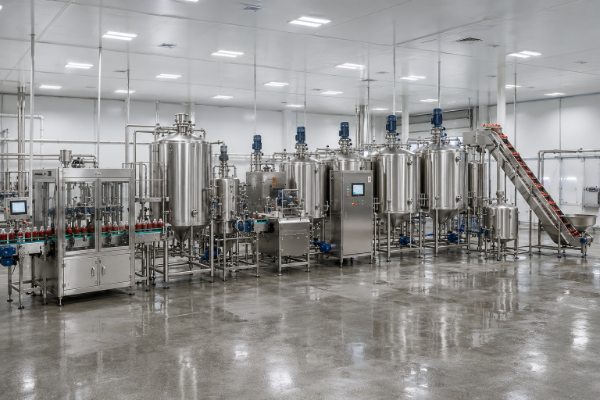
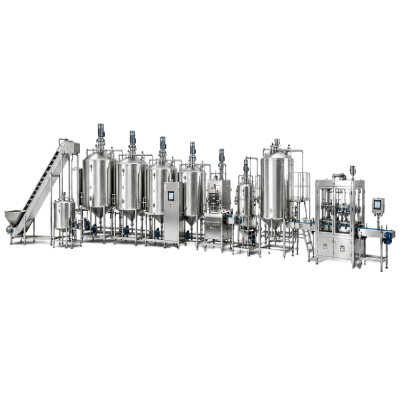
Tomato Sauce, Tomato Paste and Chili Sauce Production Line — Full view

Tomato Sauce, Tomato Paste and Chili Sauce Production Line — One Compound Line, Three Product Routes

We build compound sauce lines that carry tomato paste, tomato sauce and chili sauce along one shared main line, and the stations that cannot be shared are identified before you place an order. Every station that changes between a tomato run and a chili run is listed individually rather than summarised as “fully automatic changeover”. Send the target output for each of your product families and we will tell you which route structure the tomato sauce processing line should be built around.

Your recipes, target specifications and drawings are handled as confidential material, and we will sign a non-disclosure agreement on request before you send them across.

Lead time

Production runs are scheduled at 45–100 working days, confirmed with your quotation.

Minimum order

1 configured line set — single pieces are accepted.

Payment terms

40% deposit, 60% balance before shipment, by wire transfer.

Hardware

We work from self-produced hardware, which is why the control layer is integrated rather than bolted on.

Control platform

We build our control layer on the STUnit platform, and this line can be specified on it.

Remote upgrades

Standalone OTA upgrades, that is over-the-air updates to the control layer, can be specified into scope on request.

Tomato, Paste and Chili Sauce Processing Capabilities

A tomato paste production line and a chilli sauce line can share one main line, provided the stations that behave differently for the two products are named in the specification rather than discovered in the operating manual. Washing, de-stemming, size reduction, preheating, sterilization and filling are shared. Concentration, blending and fermentation are not, and those three decide whether a compound line works.

Tomato and Chili Sauce Processing Line Layout

What Stays Common Across the Three Routes

  • Bubble washing and roller sorting, where the operator changes a setting rather than the machine — how those mechanisms are matched to a feed is set out in our washing mechanism selector for root vegetable lines
  • De-stemming, with a changed part for chili peppers
  • Preheating and enzyme deactivation in a tubular preheater
  • Sterilization before or after filling, depending on which end architecture you order — one station type sterilizes both bulk paste and bottled chilli sauce
  • Labelling and case packing

Where the Three Routes Separate

Route A produces tomato paste and tomato puree from concentrated tomato, and it is the only route that uses an evaporator — where a product stops being a puree and starts being a concentrate is set by Codex Alimentarius CXS 57-1981, not by the machine you buy. Route B produces tomato ketchup and compound sauce, blending them in a jacketed kettle after partial concentration — a tomato ketchup production line is Route B with the capper and post-fill sterilizer fitted. Route C produces chilli sauce and hot sauce and never touches evaporation at all; a chili sauce processing line is Route C standing on its own, and hot sauce manufacturing differs from it only at the filler and the capper.

Three-Route Station Ledger

This is the sheet the cost build is worked from. Read it as a selection document rather than a process diagram: every “changed” entry is a spare part, and every “not on this route” entry is capital you are not being asked to spend.

Station Route A — tomato paste, tomato puree Route B — tomato ketchup, compound sauce Route C — chili sauce, hot sauce
Bubble washing machine and sortSharedSharedShared — changed screen and water temperature
De-stemmingSharedSharedChanged part for pepper stalks
Size reductionTomato crusher — crushing the tomato ahead of preheatingTomato crusherColloid mill — a different machine, not a setting
Tubular preheating and enzyme deactivationBreak regime selectedBreak regime selectedColour and enzyme hold only, no break regime
Pulping and refiningTwo-stageTwo-stageBypassed when seeds and skin are retained
Fermentation tankNot on this routeNot on this routeOptional module for fermented chili sauce and chili mash
Vacuum concentrationCore stationPartial concentrationNot on this route
Jacketed kettle blendingNot on this routeSeasoning and acidificationCore station — salt, vinegar, thickening, cooking
FillingAseptic filling into aseptic bags and drumsHot filling into bottles and jarsHot filling into bottles and jars
CappingNot on this routeSharedShared
Post-fill sterilization and air dryingNot on this routeSharedShared
Labelling and case packingSharedSharedShared

The last four rows carry the constraint most compound-line enquiries miss. Aseptic filling and hot filling followed by capping and post-fill sterilization are two different end architectures, not interchangeable settings on one machine. Only the fermentation tank is genuinely modular here, fitted ahead of the kettle when you want fermented chili sauce.

We will tell a buyer that a compound line is the wrong purchase when the two product families do not genuinely share a main line. A shared structure that has to be forced costs you more in idle capital than two smaller, purpose-built lines would.

— how we assess a compound sauce line enquiry before we quote it

If you need bulk aseptic paste and retail bottles at full volume at the same time, that is a two-end-station conversation, and we should have it before the layout is fixed.

Two Stations Priced Wrongly More Often Than Any Others

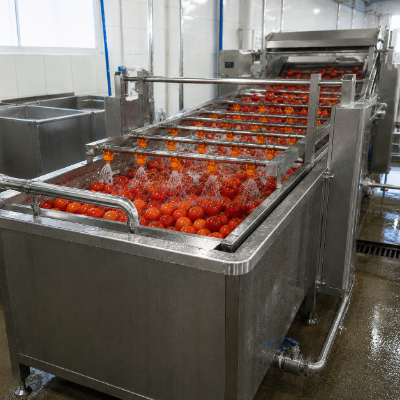
The pulping machine and refiner separate tomato skin and seeds from the pulp in two stages, and how much skin and seeds you take out sets both the finished texture and the yield you give up. Ahead of them, the washing and sorting system decides how much soil, stalk and foreign materials ever reach the pulper: the cleaning machine, the roller sorting machine and the conveyor between them do that work, and tomato washing temperature is set there. On the chili route the same size-reduction duty falls to the grinder, which is the reason those two routes cannot share one machine at that point in the production process.

What the Chili Route Covers

Chili sauce production is a family of finished products rather than one recipe: hot chili sauce, sweet chili sauce, chili paste and chili pepper sauce all sit on Route C with different kettle recipes, at small, medium and large scale production. Which types of chili you run matters more than the label on the bottle — fresh red chili, whole chili and ground chili implementation presents a different feed to the grinder, and dried chili has to be rehydrated before it reaches one. Chili processing decides more than throughput, because milling temperature and hold time carry through to the color and flavor of the finished sauce, so send the finished product list together with the incoming chili form and the grinding machine, kettle and filling section are sized around that pair.

Raw Material Routes and End Products

The raw material you actually receive decides more of the line than the product you intend to sell. Fresh fruit arriving at a low soluble-solids reading carries more water content to the evaporator than the same tonnage arriving at high solid content. Two plants with identical evaporators can therefore carry very different steam bills.

Raw Materials We Take In

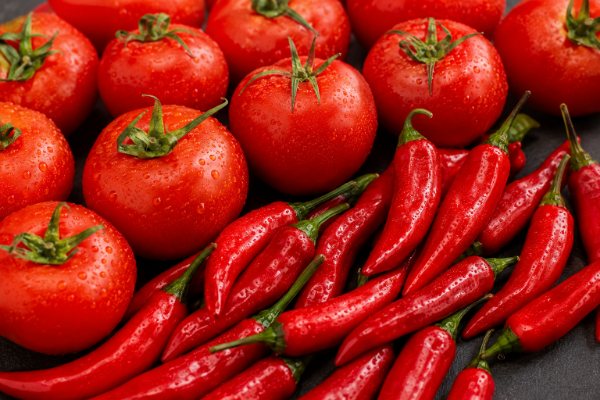
  • Whole fresh tomato, washed and sorted on the line
  • Chilled tomato pulp, buffered, entering after the pulping station
  • Aseptic semi-finished paste, re-processed into retail formats without the front end
  • Whole fresh chili peppers, de-stemmed and milled on the line
  • Salted and fermented chili mash, entering at the blending station
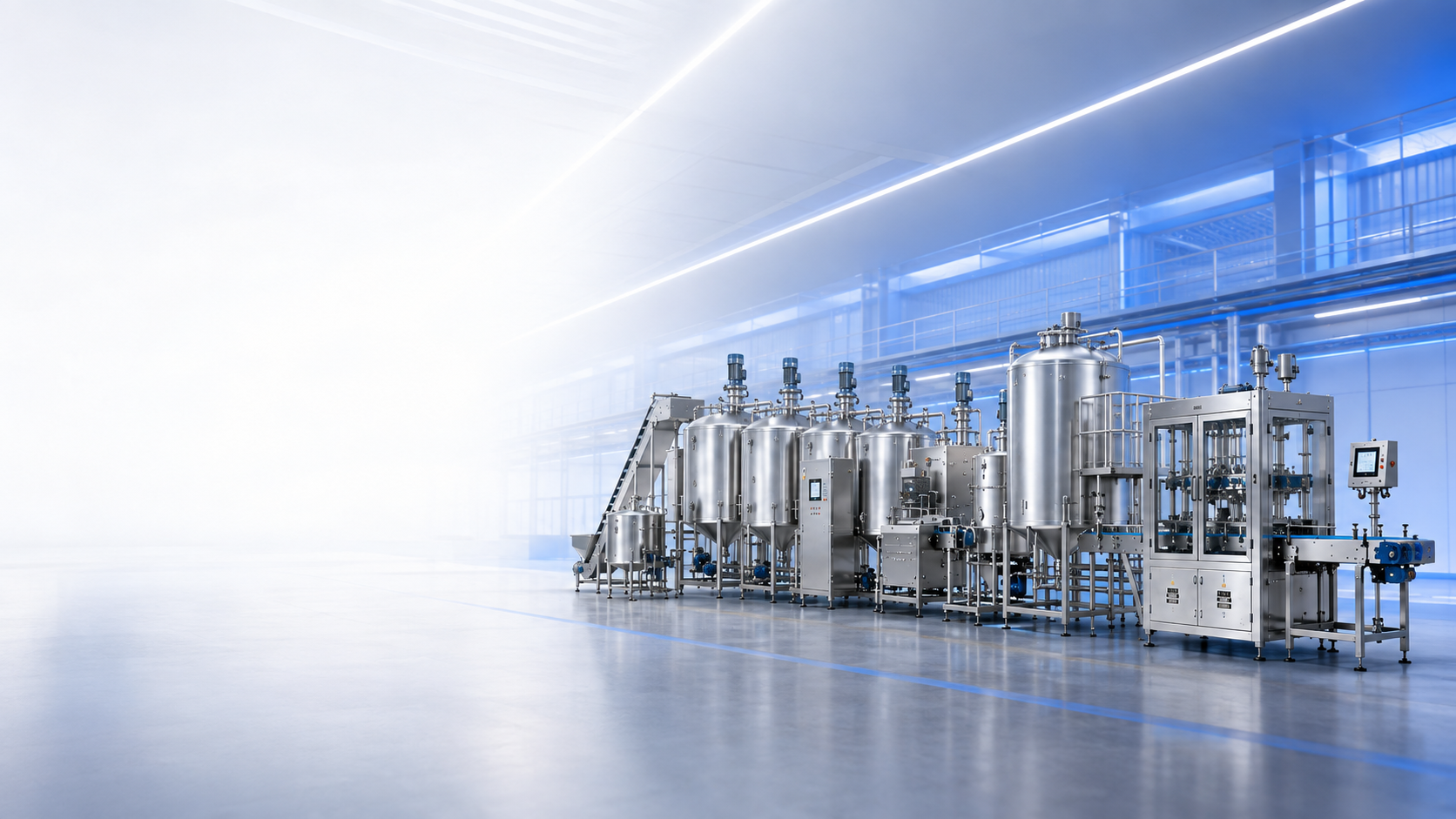
Industrial Processing Line Visual

Final Products the Line Is Built to Produce

Tomato paste

Concentrated tomato paste in aseptic bags or drums, at the Brix grade written into your order.

Tomato puree and tomato juice

Lower-concentration tomato products taken off before the final evaporation stage.

Tomato ketchup

Blended, acidified and hot filled into bottles or jars.

Chili sauce

Milled chilli sauce, blended in the jacketed kettle and hot filled, with or without a fermentation step.

Hot sauce

Higher-acid, lower-viscosity formats from the same blending and filling section — a hot sauce production line is Route C with the filler and capper set for that viscosity.

Compound sauce

Tomato base with chili, garlic, onion or vinegar added at the kettle rather than at the front end.

Brix-to-Route Decision Table

Work this table starting from the right-hand column. The format your customer expects on the outside usually dictates the routing before any thought about equipment begins.

What you are selling Concentration target Route Stations this commits you to
Tomato juice, tomato puree Below the concentrate floor of 7% natural total soluble solids set by Codex Alimentarius CXS 57-1981 A, stopped early No evaporator pass, or a single partial pass
Bulk tomato paste for re-processors 28–30% or 30–32% natural total soluble solids A Evaporator plus aseptic filling, no capper, no post-fill sterilization
High-density paste for long-haul bulk 36–38% natural total soluble solids A Longer evaporation duty and a higher steam load per tonne
Tomato ketchup in retail bottles Blend target, set by recipe rather than by evaporation alone B Partial concentration, jacketed kettle, capper, post-fill sterilization
Chili sauce or hot sauce in retail bottles Set by recipe and cooking, not by an evaporator C Colloid mill and jacketed kettle, no evaporator at all
Fermented chili sauce Set by recipe after fermentation C plus module Fermentation tank added ahead of the kettle

Contact Materials and Cleaning Between Product Families

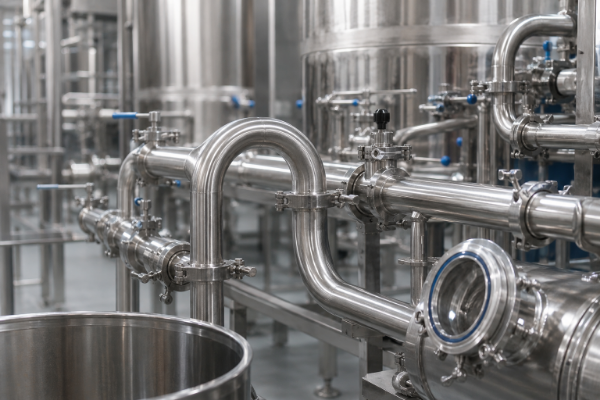
Chilli sauce and chilli mash are salt-bearing systems, and salt behaves differently against stainless steel than tomato does. Molybdenum-bearing grades such as 316 and 316L resist chloride-driven pitting and crevice corrosion better than 304 does, which is why we grade contact material by position instead of printing one grade across the whole line. Specifying the wrong grade for a salt-bearing position is a corrosion problem you discover in year three, not at commissioning.

Contact Materials and Cleaning Specifications

How Contact Material Is Graded

  • Non-salt-bearing sections of line may be specified in 304, written SUS304 on Asian mill certificates
  • Salt-bearing, high-acid and aggressive-clean contact sections are selected per project duty, which is where the molybdenum-bearing grades belong
  • Seals, gaskets and dead-leg geometry are reviewed against the same duty and against 3-A Sanitary Standards hygienic-design practice, because grade alone does not decide the outcome
  • The specified grade for each section is documented on your quotation, not left for discussion at build stage.

Changeover from a Tomato Run to a Chili Run

The verification architecture we use is the one written for allergen changeovers on shared food processing equipment in the US Food and Drug Administration Food Allergen Program guidance, Chapter 11, because that is the validated method for proving a shared line clean. Capsaicin is not a regulated allergen, so the acceptance criterion comes from your product specification rather than from law. The four steps below are executed and recorded identically either way.

  • Issue a documented changeover procedure — the sequence, chemistry, temperature and contact time for this specific product pair, held as a controlled document
  • Run a visual inspection — every dismantled contact surface checked and signed off before reassembly
  • Complete swab verification — adenosine triphosphate bioluminescence or protein swab testing against your written pass criterion
  • File the retained records — the checklist filed with the batch record, so the changeover can be reconstructed months later
Process Insight

The same reasoning applies in the reverse direction, which is the changeover most buyers ask about second. Colour carryover from a chili run into a light tomato puree is a product quality question rather than a food safety one, and it is answered with the same swab record.

Line Specifications and Capacity Bands

Capacity for a tomato paste processing line is published on at least four incompatible bases in this market: tonnes per day of fresh fruit, tonnes per hour of fresh fruit (written tons per hour in quotations using US units), kilograms per hour of finished product, and bottles per hour. We state the basis on every number we give you, so our figure can be compared with somebody else’s.

Specification What we hold

Capacity basis

Quoted in tonnes per hour and tonnes per day of fresh fruit in, with finished output stated separately at your ordered concentration. We do not quote a single figure that mixes the two bases.

Seasonal campaign window

Sizing is calculated against a processing campaign of 60–90 days per harvest season, not against 365-day running.

Paste concentration grades

The concentration section is configured to the grade you order: 28–30%, 30–32% or 36–38% natural total soluble solids.

Concentrate definition

Codex Alimentarius CXS 57-1981 sets the floor for a processed tomato concentrate at 7% natural total soluble solids.

Buyer acceptance specification

The tomato route is engineered to reach a procurement specification of 28 degrees Brix or above, pH 4.5 or below, and Bostwick consistency of 4–11 cm per 30 s. A high-quality paste is defined by that written specification, not by an adjective.

Break regime

Cold break below 70 °C (158 °F) or hot break at 85–102 °C (185–216 °F), the published band. Where the setpoint sits inside that band is a recipe and enzyme-target decision, so we write your number into the quotation instead of printing one universal setpoint.

Evaporation options

Multi-effect vacuum concentration, with mechanical vapour recompression available as a specified option. Applied to a triple-effect evaporator, recompression has been measured to cut steam use by about 81% against the same evaporator without it.

Standard lead time

Production runs are scheduled at 45–100 working days, confirmed with your quotation.

Filling section sizing

Container format decides this section: glass bottles, jars, sachet and pouch formats each change the filling heads, the filling volume per container, the capping machine and the post-fill sterilizer and drying machine behind them. High-viscosity sauces fill through a different head arrangement than thin ones, and a stable filling volume across a batch is a head-and-viscosity question rather than a nameplate one, so this section is sized from your format list rather than from a nominal bottles-per-hour production capacity figure.

Energy and utilities

Steam, chilled water, compressed air and connected electrical load are quoted per configuration, because energy consumption on a paste line is dominated by evaporation duty rather than by installed motor power. The high temperature holds at preheating and sterilization are the second load, and both are stated against the utilities available on your site.

Minimum order

1 configured line set — single pieces are accepted.

Investment Drivers, Quotation Inputs and Lead Time

There is no price list for a compound sauce line, because the same nominal capacity can differ by a factor that has nothing to do with the badge on the machine. Price follows the route structure, the end architecture, the concentration duty, the degree of automation and the control tier you select. Your figure comes back as a written quotation against those five decisions.

Where the Investment Actually Goes

Driver
Effect on the investment
How to reduce it
Number of product routes
Every route that needs a station the others do not adds capital that idles when the other product runs
Confirm which products are genuinely in year one and which are aspirations
End architecture
Aseptic bulk filling and retail capping with post-fill sterilization are two separate end sections, not two settings
Start with the format that carries your volume and leave floor space for the second
Concentration duty
Tomato paste processing at a higher ordered concentration removes more water per tonne, which sizes the evaporator and the steam plant
Check the concentration your customer actually accepts before specifying the highest grade
Energy architecture
Recompression on the evaporator raises capital cost and lowers steam consumption, and the balance depends on your steam cost and layout
Give us your steam source and tariff with the enquiry so the comparison is run on your numbers
Incoming raw material quality
Fresh fruit arriving at a lower soluble-solids reading carries more water into the evaporator for the same tonnage
Specify the raw material grade you can actually secure, not the best case
Control tier
Manual, supervised, connected and edge-analytic control layers are four different scopes of work
Select the tier against your changeover frequency, using the ladder in the quality section
Compound Sauce Processing Line Architecture

Publishing this list is deliberate: it is the same list we would ask for on a call, and having it in advance is usually the difference between a quotation in one round and a quotation in four. Figures published online under tomato processing plant cost are rarely comparable, because each one is quoted against a different route structure and a different capacity basis. Cost driver detail for a comparable line is set out in our line cost driver worksheet.

The Six Inputs We Need Before We Can Quote

  • Target output per product family, with the basis you are using
  • The raw material you will receive, and whether it arrives fresh, as chilled pulp or as semi-finished paste
  • Finished specification for each product, including concentration and pH targets
  • Packaging formats and container sizes
  • Site utilities: steam source, power supply, water quality and effluent route
  • Expected changeover frequency between product families

Lead Time and Payment

  • Production runs are scheduled at 45–100 working days, confirmed with your quotation
  • 40% deposit, 60% balance before shipment, by wire transfer
  • 1 configured line set — single pieces are accepted
  • Lead time starts when the final specification is approved, and excludes shipping transit

Quality Control, Inspection and Handover Documents

Two questions decide whether a line from an unfamiliar supplier is a risk worth taking: whether the installation will pass the electrical and food safety standards inspection where it lands, and whether anyone can trace which part came from where. Both are answered with records rather than reassurance. Our control layer is built from self-produced hardware, and its traceability chain is short because those parts are ours to account for.

How Every Line Is Checked Before It Ships

  • Check incoming materials — contact-material grades verified against the position schedule written into your quotation
  • Run a station-level function test — each machine run and recorded individually before assembly into the line
  • Execute a dry run of the assembled line — sequencing, interlocks and the control system exercised without product
  • Complete a water run and wet commissioning — flow, temperature, hold time, the sterilization process and the cleaning circuits verified with water
  • Close with pre-shipment inspection — the record set reviewed and signed before crating, and available to you or your agent

Documents That Ship With the Line

  • Station-level test records from the checks above
  • Electrical and pneumatic schematics for the delivered configuration
  • Operation and maintenance manuals in English, per station
  • Spare-parts list with the wear items identified by station

What a comparable acceptance record set covers is summarised in our acceptance register coverage note. If a station falls outside the contracted specification at commissioning, we rework or replace it against the same written acceptance criteria used at the pre-shipment inspection.

Control Tier Selection Ladder

Automation is sold as a single axis, from manual to fully automatic, but that axis does not tell you what to buy. Each tier trades capital against labor costs and production efficiency, and an intelligent control system is a scope decision rather than a fitting that arrives by default. What each tier actually buys you is the better question, and your changeover frequency answers it.

Tier
What it is
When this tier is the right one
1 — Manual with instrumentation
Local control, operator-set parameters, recorded by hand
One product family, changeovers measured in weeks, an experienced crew already in place
2 — Supervised control system
Programmable control with a human-machine interface, recipes stored and recalled per product
Two or more product routes with changeovers measured in days, where recipe errors are the main risk
3 — Connected and integrated
Line integration and multi-protocol gateways so the line reports to your plant systems
A processing plant where this line has to reconcile with existing production lines and reporting
4 — Remote and edge-analytic
Standalone OTA upgrades, edge algorithms and YOLO vision inspection, specified into scope
Frequent changeovers, several food processing plants under one group, or a plan for smart factory planning across the whole plant

Tiers 3 and 4 are capabilities we can specify into this line rather than fittings it carries by default. We build our control layer on the STUnit platform, with low-code control boxes and IT/OT digital empowerment — joining the plant’s information systems to its operating equipment — available on request. Whichever tier you select is written into the quotation.

Project Workflow from Enquiry to Commissioning

01 Enquiry

with the six inputs — you send targets, raw material, specifications, packaging, utilities and changeover frequency

02 Route structure proposal

— we customize the station ledger to your product set, showing shared, changed and excluded stations

03 Written quotation

— scope, contact-material position schedule, control tier, lead time and payment terms in one document, whether you are ordering single stations or a turnkey line

04 Design freeze and manufacturing

— layout, utilities and interfaces confirmed, after which the lead-time clock starts

05 Testing and pre-shipment inspection

— if a station misses the agreed acceptance criteria we rework or replace it at our cost, before the line leaves our floor

06 Installation and commissioning

— supervision, water run, product run and operator training on your site

Installation and commissioning workflow

Most delays we see are scope questions that were left open at step 3 and surfaced at step 4, because a design freeze cannot absorb a change that arrives after it.

Line and Station Gallery

These are stations from a compound sauce line we built. Each caption names the variable that station settles and what it is set to on the tomato route and on the chili route, because that is the comparison a buyer is actually making.

Assembled line
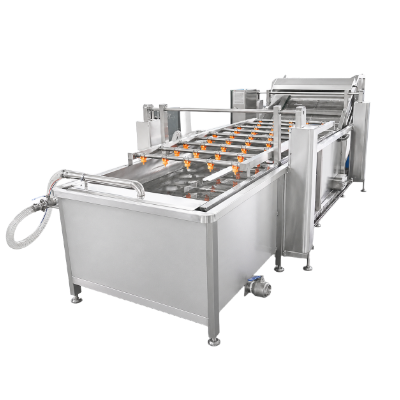
Bubble washing machine
Crusher
Tubular preheater and enzyme deactivator
Vacuum concentration
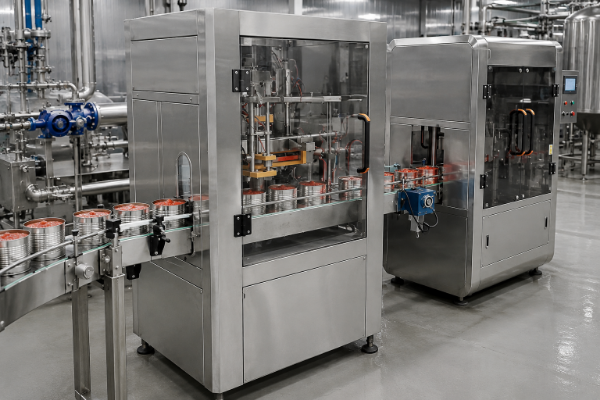
Filling machine
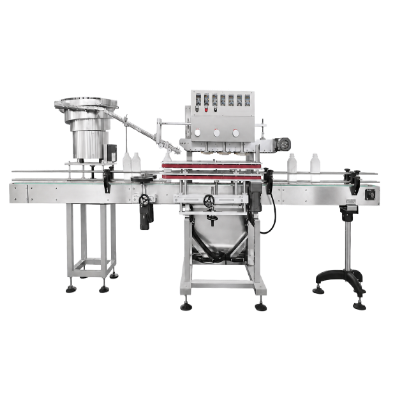
Capper
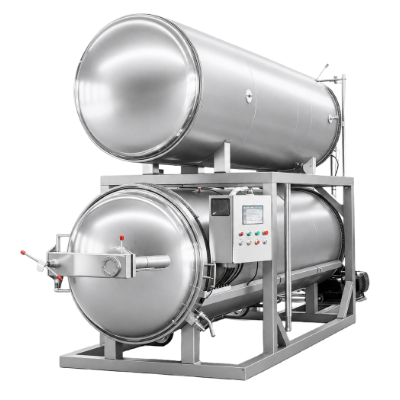
Sterilization station
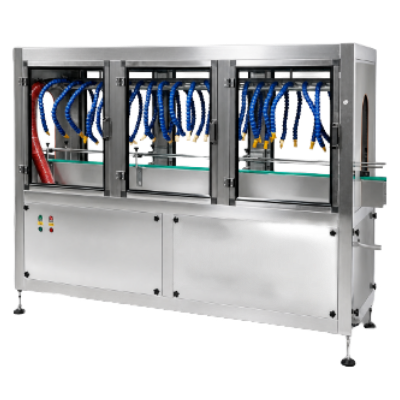
Air dryer
Labeller
[ STATION 01 ]

Assembled line

How many stations sit between raw material and finished container is set by the route — longest on the tomato paste route, shortest on the chili sauce route.

[ STATION 02 ]

Bubble washing machine

Water temperature and screen aperture are set here — ambient with a coarse screen for fresh tomato, warmer with a finer screen for fresh chili.

[ STATION 03 ]

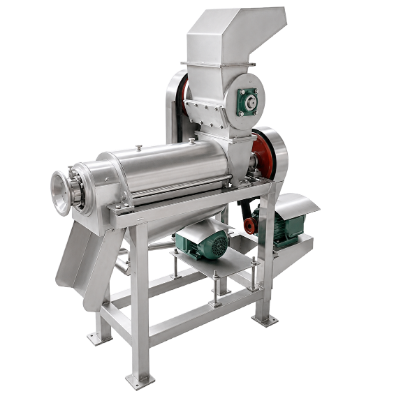
Crusher

Decides particle size entering the preheater — a tomato crusher on Routes A and B, replaced by a colloid mill to grind peppers on Route C.

[ STATION 04 ]

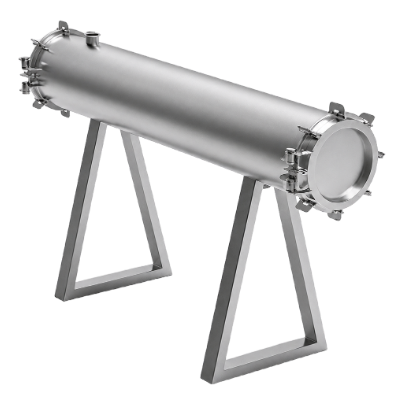
Tubular preheater & enzyme deactivator

Break regime is chosen at this station — cold break or hot break on the tomato routes, colour and enzyme hold only on the chili route.

[ STATION 05 ]

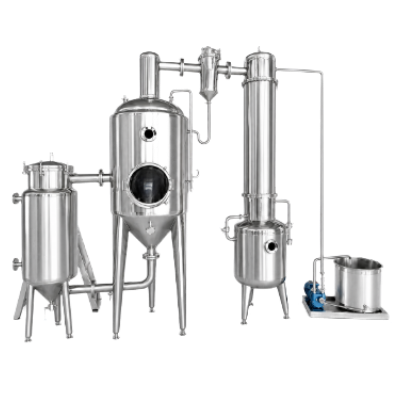
Vacuum concentration

Decides finished concentration and steam load — the core station for concentrated tomato on Route A, and absent from Route C entirely.

[ STATION 06 ]

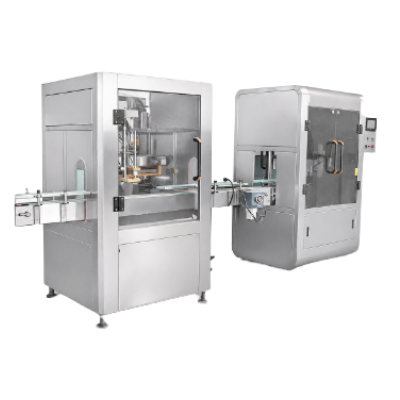
Filling machine

Container format and fill accuracy are fixed here — aseptic bags and drums on Route A, bottles and jars on Routes B and C.

[ STATION 07 ]

Capper

Decides closure integrity before sterilization — present on the bottled ketchup and chilli sauce routes, absent from the aseptic bulk route.

[ STATION 08 ]

Sterilization station

Decides where lethality is delivered — before aseptic filling on Route A, after capping on Routes B and C.

[ STATION 09 ]

Air dryer

How dry a container is before labelling is settled here — used after post-fill sterilization on Routes B and C, not required on the aseptic route.

[ STATION 10 ]

Labeller

Decides changeover time between retail formats — the same station serves tomato ketchup and chilli sauce, with the label reel and program changed.

When a Compound Line Is Not the Right Choice

A compound line earns its keep when two product families share most of a main line and compete for the same weeks of the year without colliding. When either of those conditions fails, the shared structure costs you more than it saves. The trade-off is capital you spend once against flexibility you use every season, and it only pays when both conditions hold.

Whether a batch or a continuous route suits a given product mix is worked through in our batch and continuous route review. Surplus that cannot be run inside the campaign window is often better dried than buffered, and that belongs on a fruit and vegetable dehydration line rather than on this one.

Send the two target volumes and we will tell you which of the three situations above you are in, including when the honest answer is that you should not buy a compound line.

Situation
Why it works against you
What to do instead

Severe scale asymmetry between the two products

The line has to be sized for the larger product, so the smaller one runs a machine built for volumes it will never see, and the capital sits idle

Build the large line properly and run the small product on a small scale tomato processing plant of its own, or on a contract packer until it grows

Overlapping harvest seasons

Tomato and chili peaks that land in the same weeks turn a shared line into a scheduling conflict inside a campaign window of 60–90 days

Buffer one raw material as chilled pulp or salted mash and run it outside the peak, or separate the two end sections

Both bulk aseptic and retail formats at full volume

Aseptic filling and capping with post-fill sterilization are two end architectures, and forcing both onto one line makes each of them the constraint on the other

Commit the line to one end architecture and add the second as a parallel end section when volume justifies it

Production Line Engineering Tools

Access the digital engineering tools to configure station changeovers, verify capacity ratios, and determine brix-routing parameters for the tomato and chili sauce line.

Compound Sauce Line Questions

Can one production line make both tomato paste and chili sauce?

Yes, and the qualification matters more than the answer. Buyers often shop for a tomato paste making machine and receive a quotation for one station rather than a line, which is where the risk of a mismatched purchase sits. Washing, sorting, de-stemming, preheating, sterilization, filling and labelling are genuinely shared; size reduction needs a different machine for peppers; and concentration and blending sit on different routes entirely, which our station ledger sets out for your specific product set.

What changes on the line when you switch from tomato to chili?

Three categories of change, and they cost very different amounts. A changed part at de-stemming and size reduction, a recipe and a clean at washing and filling, and two stations that simply do not participate — the evaporator on the chili route and the fermentation tank on the tomato route.

What Brix value should I specify, 28 to 30 or 36 to 38?

Specify what your customer accepts, because every point of concentration above that is water you are paying to remove. Grades of 28–30% and 30–32% natural total soluble solids are ordered for general bulk paste, while 36–38% is ordered where freight distance justifies the extra evaporation duty. Codex Alimentarius CXS 57-1981 sets the floor for a processed tomato concentrate at 7%.

Can the line process other fruits besides tomatoes?

A tomato processing line built around pulping, kettle blending and filling also handles other pulped fruit and vegetable products, and the jacketed kettle line is used for jam and condiment production. Viscosity, particle size and acidity decide it, not the name of the fruit. Send your finished specification and we will confirm it in the quotation.

Are the contact parts food-safe?

Wetted parts are food-grade stainless steel, graded by position rather than by one blanket specification. Sections that never see the salted product can be specified in 304, while salt-bearing, high-acid and aggressive-clean positions and their seals are selected per project duty, because molybdenum-bearing grades stand up to chloride attack better. The grade for each position is written into your quotation.

What documents ship with the line, and can I trace which factory made each part?

Four document sets travel with every line: station-level test records, electrical and pneumatic schematics for your delivered configuration, English operation and maintenance manuals per station, and a spare-parts list with the wear items identified by station. Traceability is shorter here than it usually is on a re-badged line, because our control layer is built from self-produced hardware. Local electrical acceptance is decided by your own inspector, so tell us which standard your site is inspected against before design freeze and it goes into the scope we quote against.

What information do you need to prepare a quotation?

Six inputs: target output per product family with its basis, the raw material you will receive, the finished specification for each product, packaging formats, site utilities, and expected changeover frequency. That list is published in the investment section above so you can prepare it before contacting anyone.

What drives the investment cost of a compound sauce line?

Route count, end architecture, concentration duty, energy architecture, incoming raw material quality and control tier. Published capacity figures for tomato paste production lines are typically stated on four incompatible bases, so an investment comparison is only meaningful once every figure has been converted to the same basis. Ours is always stated as fresh fruit in.

What packaging formats can the filling section handle?

Two end architectures, and a line is built around one of them, because they are not interchangeable. Aseptic filling into aseptic bags and drums serves bulk paste; a commercial sauce filling machine with capping, post-fill sterilization and air drying serves retail tomato ketchup and chilli sauce. Hot sauce bottling equipment sits on that same retail end, with the filler and capper set for a lower-viscosity product.

How long is the lead time and what are the payment terms?

Production runs are scheduled at 45–100 working days, with 40% deposit and the 60% balance before shipment by wire transfer. Minimum order is 1 configured line set.