Get in touch with Shengtu Bufan Company

Wet Pet Food Canning Line
We build the complete wet pet food canning line: dicing, dosing and mixing, filling, seaming, static retort sterilization, cooling, air drying, labelling and packing. One supplier owns the whole run from raw material handling to the sealed, labelled case. You send us your container format and your target output, and we configure the line around them.
- Cans, trays and retort pouches on one line
- Filling to 2,800 cans per hour
- Retort loads from about 80 kg to 900 kg per batch
- Quotation within one business day
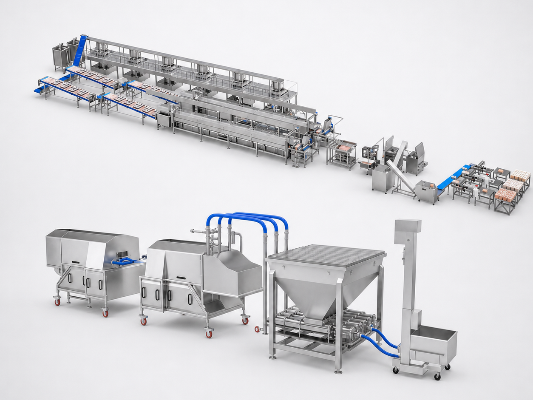
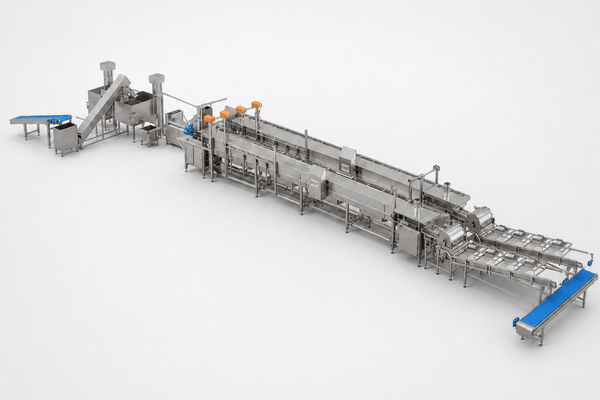
Line Stations and What Each One Does
A wet pet food production line is nine stations working to one rhythm, and the slowest station sets the pace of the whole plant. We build or integrate every station ourselves, which is why we can move the bottleneck instead of arguing about whose machine caused it. Below is the sequence we quote against.
-
1.Raw material handling — frozen or chilled meat blocks and offal are received, thawed and moved to the cutting station.
-
Grinding and dicing — a dicer with a 240 mm belt and a 1.5 kW drive reduces meat to the chunk size your recipe calls for.
-
Dosing and mixing — meat, gravy or jelly, vitamins and gums are proportioned and blended to a stable, pumpable mix.
-
Automatic filling — a 6.5 kW filler doses the mix into cans, trays or pouches at up to 2,800 cans per hour.
-
Seaming and sealing — the seamer closes cans from 50 mm to 127 mm in diameter at 15 to 50 cans per minute.
-
Sterilization — sealed containers are loaded into baskets and processed in a static retort.
-
Cooling — the load is brought down in the same vessel under controlled conditions before the door is opened.
-
Air drying — an air knife fed at 0.8 MPa strips surface water so labels and cases stay dry.
-
9.Labelling and packing — containers are labelled to within 1 mm and collated into cases.
What we manufacture rather than buy in
We operate four owned and self-built manufacturing bases covering about 80 percent of our main equipment categories. Retort vessels, filling machines, seamers and the conveyor sections between them are made in house. Control cabinets and the line software come from our own STUnit platform team.
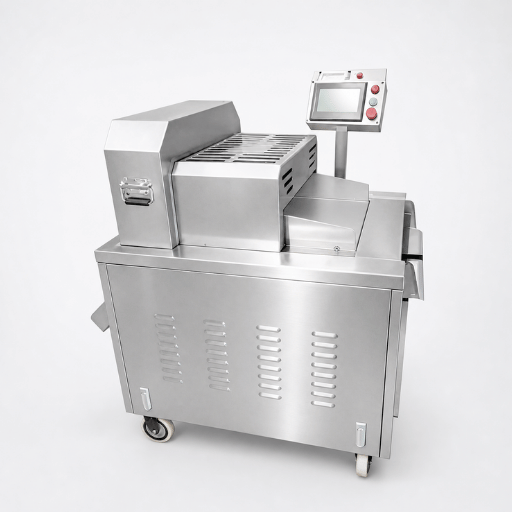
Dicing station, 240 mm belt width, 1.5 kW.
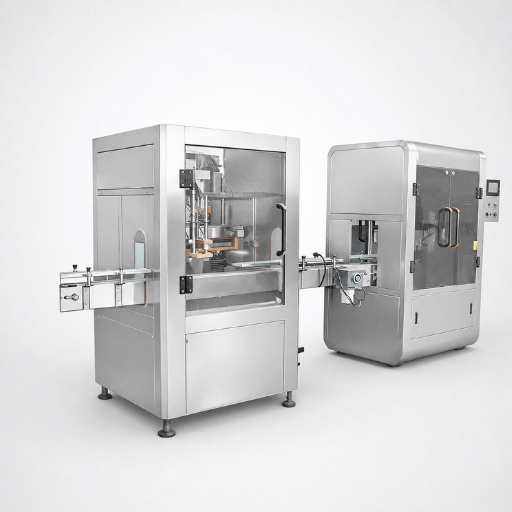
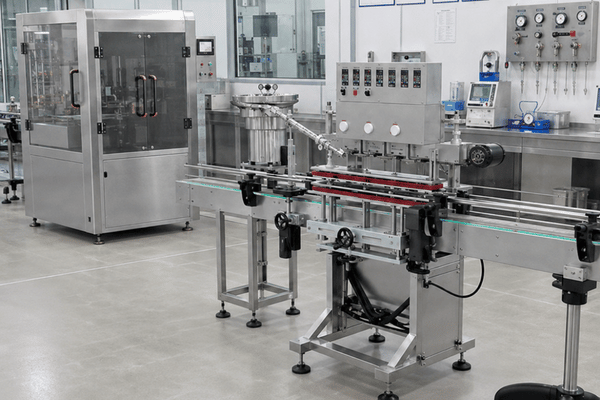
Filling station, 6.5 kW, up to 2,800 cans per hour.
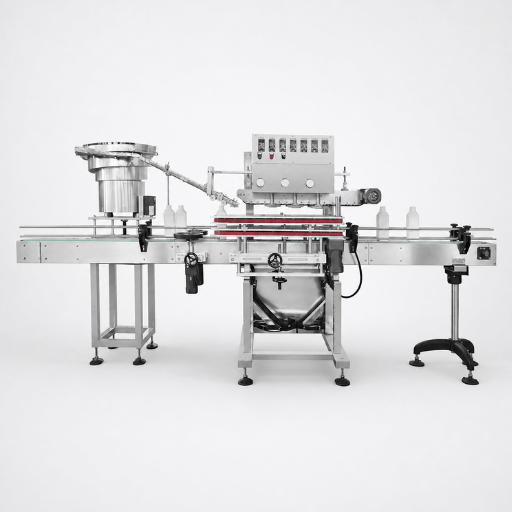
Seaming station, 15 to 50 cans per minute.
Where the line is usually integrated
The vast majority of our pet food packaging machine work falls into one of three plant situations. Knowing which of these you are in has a greater bearing on the line layout than your recipes do.
Greenfield plant
Nothing exists yet. We plan the flow, the utility loads and the basket logistics before any steel is cut.
Format extension
You already run one container and want a second. The retort stays; the filling and closing end changes.
Capacity step
Filling is fine but sterilization limits you. A second or larger vessel is added and the basket handling is rebalanced.
SPECIFICATIONS
Container Formats and Product Types
The container decides more of the line than the recipe does. It sets the closing technology, the basket design, the heat transfer behaviour and the label applicator. Three families of food canning machine output are built here.
| Format | Closing method | Envelope we build to | What it changes downstream |
|---|---|---|---|
| Metal can | Double seam, static seamer head | 50-127 mm diameter, 50-200 mm height | Rigid basket stacking; label wrapping around the body |
| Plastic or aluminium tray | Heat-sealed film lid | Configured to your tray tooling | Flat basket layers; lidding film handling instead of a seamer |
| Retort pouch | Heat-sealed three or four side seal | Configured to your pouch size | Racked carriers so pouches stay flat and heat evenly |
Recipe styles the filling station handles
-
Chunk in gravy
Diced meat dosed first, then gravy topped up to weight.
-
Chunk in jelly
Same two-stage dose, with a gelling stage that sets after the retort.
-
Loaf and pate
A single homogeneous dose, which is the most forgiving mix for filling accuracy.
-
Mousse and fine texture
A smooth wet food mix that needs gentle pumping to avoid shear damage.
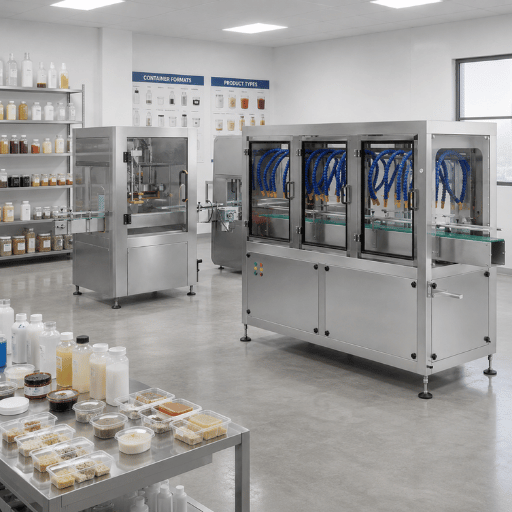
We hold filling accuracy to 3 percent or better across these styles. Two-stage recipes are dosed as two separate operations rather than as one blended shot, because a chunk and a gravy will never settle to the same weight from a single valve. That choice costs a little floor space and buys back give-away on every can.
SYSTEM_SYNC: ACTIVE
THROUGHPUT_ANALYSIS_ON
THROUGHPUT_ANALYSIS_ON
Sterilization and Post-Retort Processing
Canned wet food is a low-acid product in a hermetically sealed container, so the retort machine is the safety-critical asset on the line. We build static retort vessels in horizontal form, loaded by basket, with either a water immersion retort circuit or a water spray retort circuit depending on your container. A steam retort machine configuration is available where the site has reliable plant steam.
Water spray circuit
Process water is heated and sprayed over the load through a distribution manifold. It uses less water than immersion and suits rigid cans.
Water immersion circuit
The load sits in circulated hot water. Heat transfer is even around soft packs, which is why we favour it for pouches and trays.
Retort models we build
Model
Chamber inner diameter
Chamber length
Batch load
Main drive power
Heat source
Model:STSJ-0.7-1.2
Inner Dia:700 mm
Length:1,200 mm
Load:about 80 kg
Power:2.2 kW
Source:Electric or steam
Model:STSJ-0.9-1.8
Inner Dia:900 mm
Length:1,800 mm
Load:about 300 kg
Power:2.2 kW
Source:Electric or steam
Model:STSJ-1-2.4
Inner Dia:1,000 mm
Length:2,400 mm
Load:about 500 kg
Power:4 kW
Source:Electric or steam
Model:STSJ-1.2-3.6
Inner Dia:1,200 mm
Length:3,600 mm
Load:about 900 kg
Power:7.5 kW
Source:Electric or steam
Every vessel is built in 304 stainless steel, and the flagship shell is SUS30408 plate at 1,200 mm inner diameter by 3,600 mm long, giving a 2 cubic metre chamber. Baskets measure 900 by 800 by 130 mm and we load 24 of them. Circulation runs on alternating 7.5 kW and 5.5 kW pumps so a single pump failure does not end the shift.
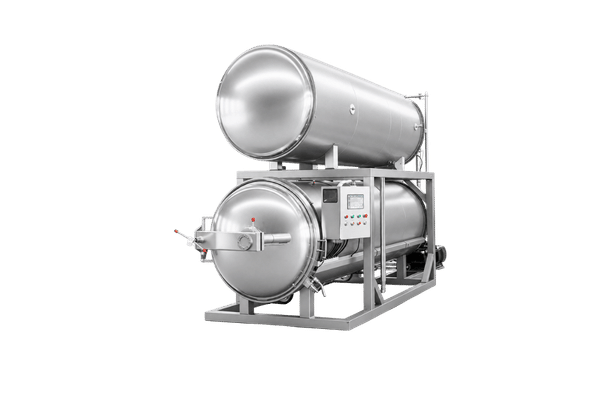
Horizontal static retort, SUS30408 shell, basket loaded.
After the vessel door opens
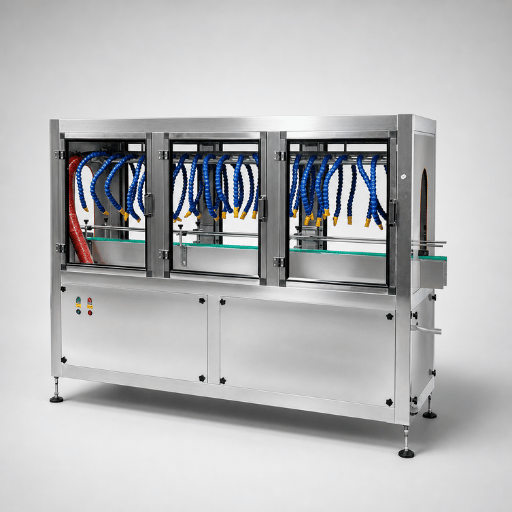
Air knife drying, fed at 0.8 MPa, about 2.5 kW.
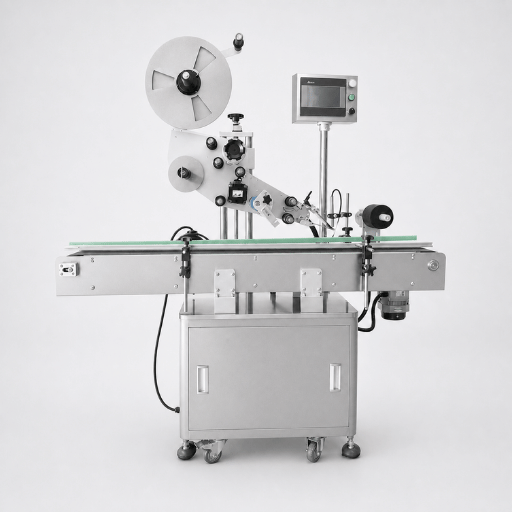
Labelling, accuracy within 1 mm.
Wet containers rust, smear glue and jam case packers, so we treat drying as a process step rather than an accessory. The air knife runs at 0.8 MPa and draws about 2.5 kW. Labelling then handles label bodies from 6 mm to 250 mm long and 6 mm to 130 mm tall, at 40 to 150 pieces per minute on the stepper drive or 50 to 200 on the servo drive.
Line Specifications and Container Limits
These are manufacturing capability ranges from our own equipment records, not performance guarantees for your recipe. Where a figure is a design value rather than an operating value, the table says so. Anything we cannot evidence from our own build records is absent from this table rather than softened.
Parameter
Value we build to
Station
Parameter:Can diameter
Value:50-127 mm
Station:Seaming
Parameter:Can height
Value:50-200 mm
Station:Seaming
Parameter:Seaming speed
Value:15-50 cans per minute, steplessly adjustable
Station:Seaming
Parameter:Seamer compressed air supply
Value:0.4-0.5 MPa
Station:Seaming
Parameter:Filling throughput
Value:up to 2,800 cans per hour
Station:Filling
Parameter:Filling accuracy
Value:3 percent or better
Station:Filling
Parameter:Filler drive power
Value:6.5 kW
Station:Filling
Parameter:Dicer belt width
Value:240 mm
Station:Dicing
Parameter:Retort chamber inner diameter
Value:700 / 900 / 1,000 / 1,200 mm
Station:Sterilization
Parameter:Batch load per retort
Value:about 80 kg to 900 kg
Station:Sterilization
Parameter:Retort design pressure
Value:0.35 MPa (design value)
Station:Sterilization
Parameter:Maximum working pressure
Value:0.3 MPa
Station:Sterilization
Parameter:Hydrostatic test pressure
Value:0.44 MPa
Station:Sterilization
Parameter:Maximum working temperature
Value:143 degrees Celsius
Station:Sterilization
Parameter:Basket dimensions and count
Value:900 x 800 x 130 mm, 24 baskets per load
Station:Sterilization
Parameter:Circulation pumps
Value:7.5 kW and 5.5 kW, alternating duty
Station:Sterilization
Parameter:Air knife supply pressure
Value:0.8 MPa
Station:Drying
Parameter:Labelling accuracy
Value:1 mm
Station:Labelling
Parameter:Labelling speed
Value:40-150 pieces per minute stepper, 50-200 servo
Station:Labelling
Parameter:Vessel material
Value:304 stainless steel, SUS30408 shell plate
Station:Sterilization
How to read the pressure and temperature figures
- 0.35 MPa design pressure is what the vessel is engineered and built to withstand.
- 0.3 MPa maximum working pressure is the ceiling for normal production.
- 0.44 MPa hydrostatic test is the proof pressure applied with water before the vessel leaves us.
- 143 degrees Celsius is a vessel ceiling, not a process setting. What your product actually runs at is fixed by your scheduled process, not by the highest number in this table.
Buyers sometimes read the highest number on a datasheet as the operating figure. On a retort canning machine that reading is dangerous, so we print all three and label them. If a supplier quotes you only one pressure figure, ask which of the three it is.
RESOURCES
Cost Drivers, Lead Time and Commercial Terms
A new canning line can absorb most of a small plant’s capital budget in one purchase, which is the structural reason used equipment and contract packing keep getting recommended in buyer forums. We do not publish a retort machine price, because any figure without your container and output attached to it is decoration. What we do publish is the list of variables that move the number, and how fast a specification becomes a quotation.
Six variables that move the number
01
Container format and count
One format on one line is the cheapest case. Two formats sharing a retort adds changeover tooling and basket variants.
02
Throughput class
The gap between 15 and 50 cans per minute is not linear in cost, because the closing station and the basket logistics both step up.
03
Retort count and load handling
Vessel count, basket loaders and transfer carts drive both the capital figure and the floor area you need.
04
Degree of automation
Manual basket loading against automatic loading changes headcount, cost and floor layout together.
05
Utility supply
Electric heating against plant steam changes the vessel, the pipework and your running cost per batch.
06
Destination requirements
Voltage, frequency, language of the control interface and local pressure vessel paperwork all sit in the quotation.
Commercial terms we publish
| Term | What we commit to |
|---|---|
| Quotation response | within one business day of receiving your container and output data |
| Production lead time | 45-60 working days after the drawing freeze |
| Minimum order | one complete line, or one machine |
| Payment | wire transfer or letter of credit at sight |
| What we quote from | product photos, site and layout drawings, and written process requirements |
| Export scope we handle | export packing, crating, export documentation and shipping coordination |
| Certificate and document set | confirmed item by item against your equipment list and destination country |
Quality Control and Acceptance Testing
A retort sterilizer is only as good as the evidence that it behaves the way the drawing says. Buyers ask for a functional acceptance test before shipment because a fault found in our workshop costs days, while the same fault found after installation costs weeks and a failed production week. So the six-step regime below runs on every line before it is packed, and you are welcome in the workshop for any of it.
- Material and weld inspection Plate certificates and weld records for the vessel are checked against the build file.
- Hydrostatic pressure test The vessel is proof tested with water at 0.44 MPa.
- Instrument calibration Temperature and pressure instruments are calibrated and the calibration is recorded.
- Dry run of the full line Every station is run empty, interlocks and stops included.
- Wet run with your container Your actual empty containers go through filling, seaming and the retort cycle.
- Temperature distribution recording The behaviour of the vessel as configured is recorded and the record is handed over.
“The acceptance test is not a demonstration, it is a rehearsal. If a basket does not slide, if a seam runs thin on the third head, if the circulation pump cavitates on the cold fill, we would rather find it here with our own spanners in reach.”
Three words buyers use interchangeably and should not
A food safety review of thermal processing sets these apart precisely, and the distinction decides who owns which document.
Validation
Evidence that the process, when correctly run, is capable of delivering the required result. It is done once, with science behind it.
Verification
Evidence that the process was in fact run correctly on a given day. It is done repeatedly, from records.
Monitoring
The observation carried out during the process itself so that a deviation is caught while the batch is still in the vessel.
Equipment obligations under the animal food rule
The animal food rule places equipment obligations on the covered facility: equipment must be adequately cleanable, properly maintained, and installed so that adjacent spaces can be cleaned. We design and build so a covered facility can meet those obligations, and meeting them stays the facility's job.
- The closure examination routine for double seams is an operating duty of the packer, carried out by a qualified person at a defined frequency and recorded. Our seamer is built so that routine is practical, and it does not perform the routine for you.
- Inspection guidance for low-acid canned food plants describes what investigators expect to see documented about temperature distribution behaviour for the system in use. The 1 degree Fahrenheit expectation cited there is stated for still steam retorts and should not be generalised to every vessel type.
- Records of the scheduled process, deviations and corrective actions are held by your facility.
Company and Equipment Documents
Applicable certificates and documents are confirmed for the equipment model, configuration and destination country. Company management-system records are reviewed separately from product conformity documents. Request current management-system, assessment and intellectual-property records relevant to the proposed supply.
How We Work With You From Enquiry to Handover
Buying pet food processing equipment from another country fails on communication far more often than on steel. So the sequence below is written as a set of checkpoints with owners, and every one of them produces a document. If a step has no document, it has not happened.
Stage
What you send
What we return
Stage:1. Enquiry
You send:Container dimensions, recipe style, target output
We return:Configuration outline and quotation within one business day
Stage:2. Technical alignment
You send:Physical container samples, site utility data
We return:Layout drawing, utility schedule, station list
Stage:3. Contract
You send:Signed order and terms
We return:Confirmed delivery milestones
Stage:4. Drawing freeze
You send:Written approval of the layout
We return:Lead time clock starts, build file opened
Stage:5. Manufacturing
You send:Nothing; progress is ours to report
We return:Progress photographs at agreed intervals
Stage:6. Acceptance test
You send:Your empty containers, and your attendance if you wish
We return:Six-step test results and the temperature distribution record
Stage:7. Shipment
You send:Destination and document instructions
We return:Export packing and crating, export documentation, shipping coordination
Stage:8. Installation and training
You send:Site readiness confirmation
We return:Commissioning, operator training, parts list
What you can inspect before money moves
- Live video factory tour. A scheduled call from the workshop floor, on your machine, with your questions answered on camera.
- Remote audit. A structured walkthrough of the build file, weld records and calibration certificates.
- On-site visit. You come to Weifang and stand in front of the line during the wet run.
Component choices you get to make
Spare parts commonality is a specification, not an afterthought, and buyers who name their preferred component brands cut both inventory and retraining. Tell us which pneumatics, drives, sensors and control platform your maintenance team already stocks. We will build to that list where it is technically sound and tell you where it is not.
Engineering Tools & Calculators
Access our suite of technical tools to evaluate container formats, calculate line throughput, and shortlist retort vessels for your project planning.
SYS.01
ONLINE
Container Format Checker
Verify your container dimensions against our machine envelope capabilities.
LAUNCH TOOL
SYS.02
ONLINE
Line Throughput Readout
Calculate production line speeds based on your target output and recipe style.
LAUNCH TOOL
SYS.03
ONLINE
Retort Vessel Shortlist
Filter and select the optimal sterilization chamber size for your batch load.
LAUNCH TOOL
Ready to Configure Your Line
Send your container dimensions, recipe style and target output. You get a configuration outline and a quotation within one business day, and a named engineer who stays with the project from enquiry to handover.
INITIALIZE SEQUENCE
Questions Buyers Ask Before Ordering
Technical parameters, pricing methodology and compliance clarifications compiled from direct engineering communications.
A retort is a pressure vessel that heats sealed containers of food above the boiling point of water so that the contents become commercially sterile. Pressure is applied so the container does not burst while its contents are above 100 degrees Celsius. Our vessels run to a maximum working temperature of 143 degrees Celsius and a maximum working pressure of 0.3 MPa.
Filled containers are sealed, loaded into baskets and placed in the vessel, which is then closed and vented. Process timing does not begin until venting is complete and the vessel is at temperature. After the hold, the load is cooled under control before the door opens.
They are the same class of machine: a sealed vessel using heat under pressure. The word autoclave is used more in laboratory and medical settings, while food plants say retort. When a food equipment supplier writes autoclave, read it as a retort unless the datasheet says otherwise.
We do not publish a price, because the same nominal vessel varies with chamber size, heat source, circulation design, automation level and destination paperwork. Published pricing for capital food equipment is rarely comparable across suppliers, and industry-wide list prices do not exist in any usable form. Send your container format and target output and you have a quotation within one business day.
The retort can process both, using racked carriers for pouches and rigid baskets for cans. The closing end cannot: a double seamer and a pouch sealer are different machines. We quote a shared retort with two closing stations when both formats matter to you.
Container type and dimensions, recipe style, target output per hour or per shift, and your site voltage and available utilities. That is enough for a configuration outline and a quotation. Physical container samples come later, before tooling is finalised.
No, and no equipment supplier honestly can. A scheduled process is established by a person with expert knowledge of thermal processing for your specific product in your specific container. We supply the vessel and its recorded behaviour; you or your processing authority supply the schedule.
Label bodies from 6 mm to 250 mm long and 6 mm to 130 mm tall, applied to within 1 mm. Speed is 40 to 150 pieces per minute on the stepper drive and 50 to 200 on the servo drive. Shrink sleeves and pressure-sensitive wrap labels are configured as separate tooling.
Two ways. Use the container format checker for a first pass against our envelope, then send three empty containers and one filled product sample for a physical check that takes one business day.
Batch load runs from about 80 kg on the 700 mm chamber to about 900 kg on the 1,200 mm chamber. Basket count and container geometry shift the real figure, so treat the table as a starting point. The retort model selector narrows it to one or two models before you contact us.
![F&V Freeze-Drying Line Process Guide [2026]](https://shengtumachinery.com/wp-content/uploads/2026/09/fv-freeze-drying-line-guide-featured-150x150.png)