Get in touch with Shengtu Bufan Company

Food Processing Equipment Manufacturer
Plate Pasteurizer
Industrial Plate Pasteurizer for Continuous HTST Processing
Milk, juice and pumpable liquid foods
- Plate-path fit checked first
- Heating, holding and cooling scoped together
- CIP and line interfaces included in review
For a workable production system, the product, target process, flow, utilities and filling conditions have to be fixed together. Shengtu Machinery configures plate pasteurization systems around the product, duty point, utilities and line interfaces.
Configure Your Plate Pasteurizer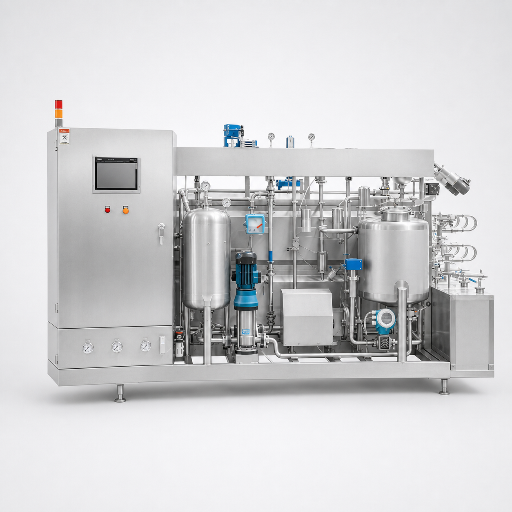
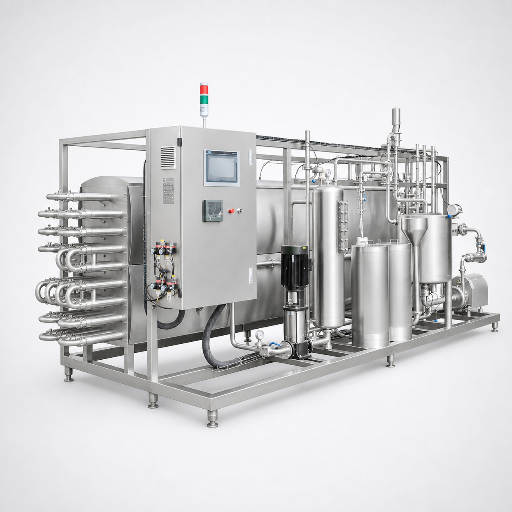
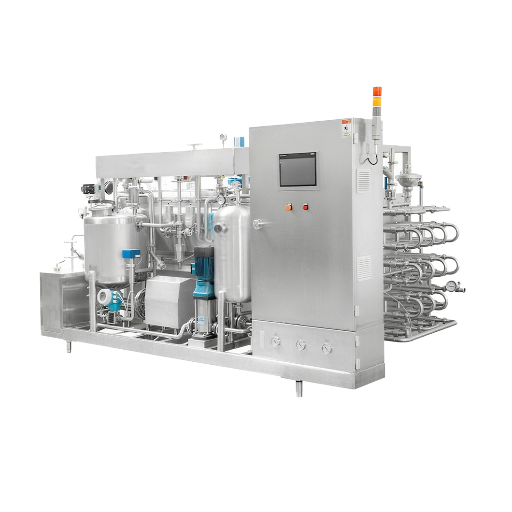
Plate heat exchanger
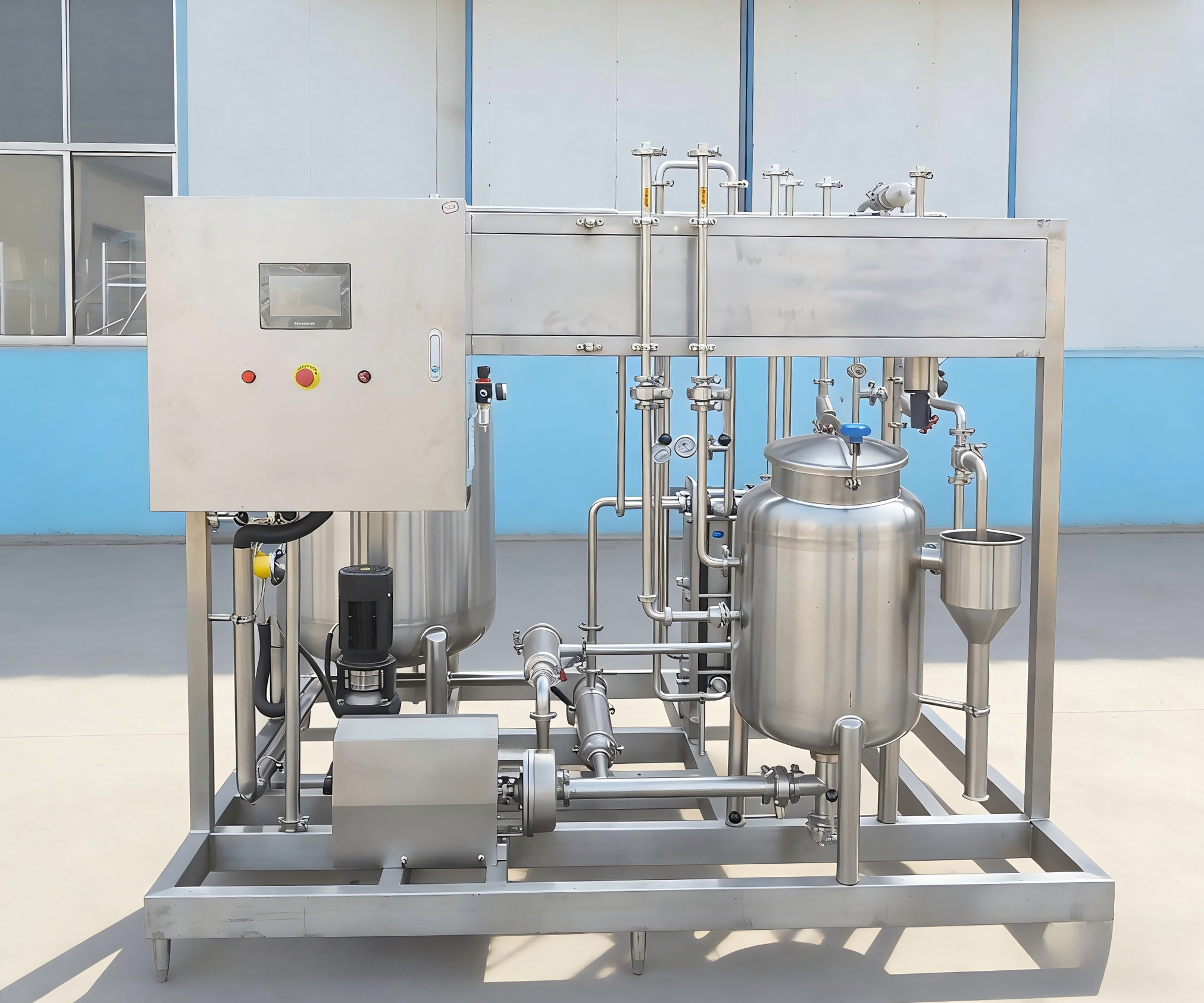
Our plate pasteurizer photographs show a frame-mounted plate heat exchanger.
Sanitary process path
Our photographed equipment includes sanitary process piping.
Process hardware
Our photographed equipment includes process vessels. Our photographed equipment includes product pumps.
Operator interface
Our photographed equipment includes a control cabinet with HMI.
Plate Pasteurizer Applications and Process Fit
A standard plate path can look efficient until pulp, fibre, or protein fouling raises pressure drop. That operating limit often stays hidden until product data is applied, so the fit review comes before heat-transfer area or control hardware is selected.[3]
| Process input | Initial plate-path signal | Engineering-review trigger |
|---|---|---|
| Viscosity and flow behaviour | Pumpable product with a predictable flow response | Sharp viscosity change, unstable flow or a narrow residence-time window |
| Pulp, fibre and particles | Low solids load that can pass through the selected channel | Long fibre, hard particles, clogging history or uneven distribution |
| Fouling tendency | Cleaning history supports a stable production run | Rapid burn-on, rising pressure drop or frequent unplanned cleaning |
| Heat sensitivity | A controlled short exposure can meet the product objective | Very narrow quality window or a special thermal history |
| Filling interface | Outlet condition and downstream demand are already defined | Aseptic, pressurised or unusual back-pressure interface |
Dairy and plant-based drinks
For dairy products and plant-based drinks, use the formulation, fat, protein, solids and fouling history to set the thermal and cleaning review. Every milk pasteurizer machine specification still needs a product-specific duty point.
For related planning details, see the plate pasteurizer operation and validation guide.
Juice and fruit beverages
An industrial pasteurizer for fruit juice follows the relevant product, hazard and market validation path. Dairy HTST numbers do not transfer into a juice pasteurizer machine specification.[2]
Other pumpable liquid foods
Sauces, extracts and formulated drinks are screened for particles, viscosity, fouling and filling conditions. Engineering opens a tubular or scraped-surface review when the plate path creates avoidable operating risk.
A selector that leaves room to say no
Unlike a catalogue selector, this matrix does not force every pumpable food into a plate layout. Keeping the trade-off visible lets engineering open a tubular or scraped-surface route before the quotation is frozen.
For food and beverage projects, the pasteurization system must protect product safety without assuming that pasteurizing conditions transfer unchanged between dairy products, orange juice and other formulations.
Continuous HTST Process Sections
A process temperature alone does not prove that the required lethality was delivered. Flow path, holding condition, diversion response and records have to work as one control case; exact critical limits remain product- and jurisdiction-specific.[1][2]
The preheating section, heating stage, cooling section, and any heat recovery section are sized around the same pasteurization process and utility balance. Cooling water temperature and availability belong in the utility brief because the cooling section cannot be sized from the target outlet temperature alone.
Balance / Feed
Confirm inlet condition, supply stability and low-level response.
Regeneration / Preheat
Define heat exchange and raw-to-pasteurised pressure intent.
Heating
Fix heating medium, approach temperatures and control response.
Holding
Size from validated flow and holding requirements, not a copied schedule.
Divert / Return
Specify fail-safe state, trigger, destination and recorded evidence.
Cooling
Confirm outlet target, cooling source and available utility temperature.
Filling Interface
Define back pressure, buffer demand and contamination boundary.
Plate Heat Exchanger, Piping and Control Configuration
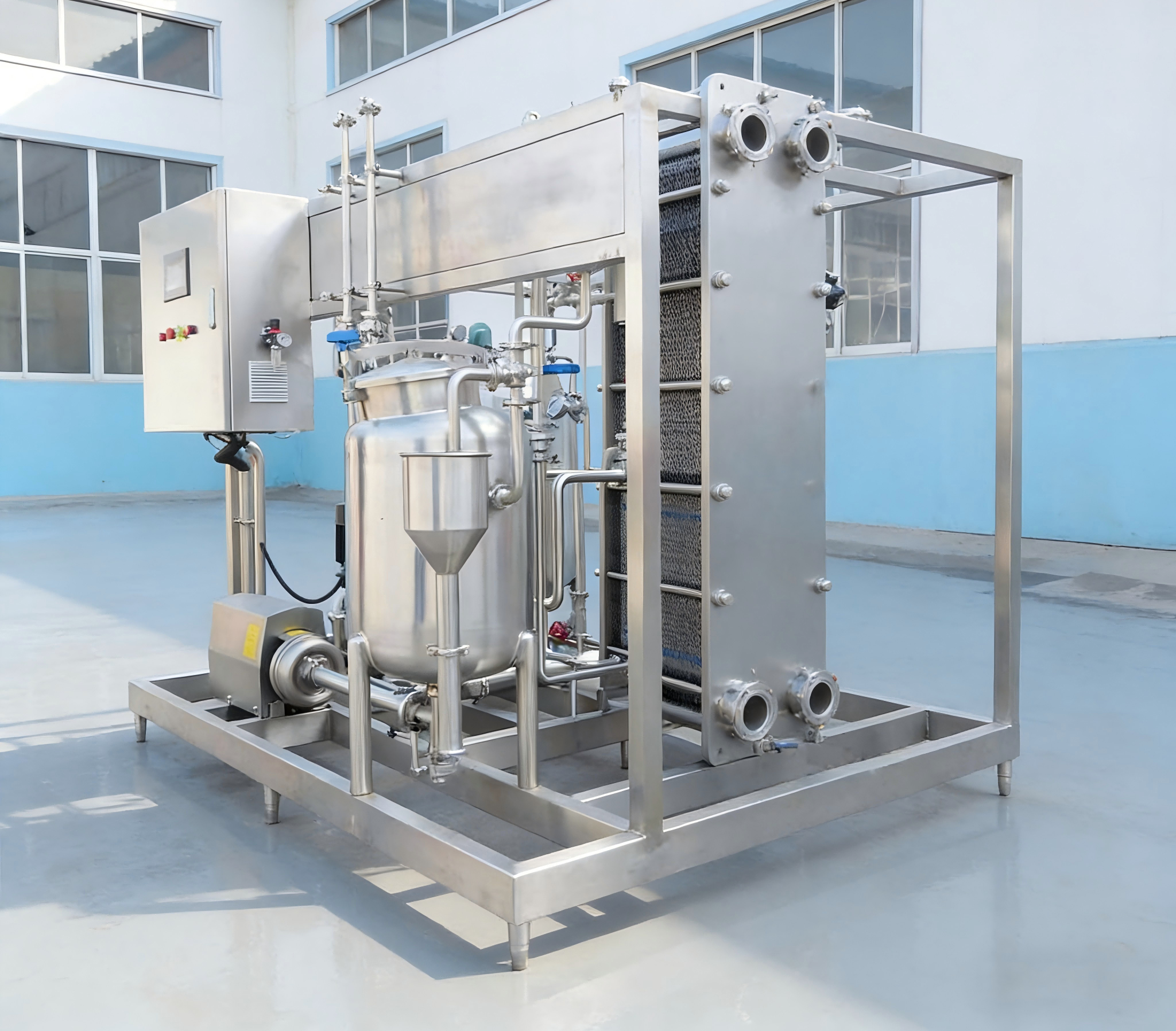
The photographed skid brings the heat-transfer core, piping, vessels, pumps, valves, instruments and control cabinet onto one frame. The quotation fixes plate materials and pattern, gasket compatibility, instrument ranges and control brands only after the process inputs and operating window are reviewed.[3]
Configuration points to freeze
- Product-contact material and gasket compatibility
- Plate duty, pressure-drop allowance and access for inspection
- Heating, cooling, air, electrical and drain interfaces
- CIP supply, return, chemistry and circuit boundary
- Instrument list, alarms, data records and control ownership
Plate Pasteurizer Specification Inputs
Use this table as the design brief, not as a catalogue of borrowed values. Complete the inputs before requesting a fixed plate pasteurizer layout, capacity statement or commercial quotation.[1][2][3]
| Input ID | Buyer input required | What the input changes |
|---|---|---|
| RFQ-01 | Product name and full formulation | Thermal properties, compatibility and validation boundary |
| RFQ-02 | Density, viscosity and temperature dependence | Pump duty, flow distribution and pressure drop |
| RFQ-03 | Pulp, fibre, particle size and solids load | Plate channel fit and alternative exchanger review |
| RFQ-04 | Required flow rate in L/h or kg/h | Heat balance, holding design and equipment scale |
| RFQ-05 | Inlet product temperature | Preheating and regeneration duty |
| RFQ-06 | Target process and applicable requirement | Validation path, critical limits and evidence scope |
| Input ID | Buyer input required | What the input changes |
|---|---|---|
| RFQ-07 | Holding condition from the process authority | Holding section, flow control and diversion logic |
| RFQ-08 | Outlet and filling temperature | Cooling duty and downstream interface |
| RFQ-09 | Product-contact and gasket requirements | Material selection and maintenance plan |
| RFQ-10 | Heating, cooling, air and electrical utilities | Utility equipment, valves and control response |
| RFQ-11 | CIP source, return, chemistry and limits | Circuit design, cleanability and changeover plan |
| RFQ-12 | Upstream, downstream, data and footprint interfaces | P&ID boundary, line controls and skid layout |
PASTEURIZER
Controls, Process Records and Verification Scope
A hygienic-looking skid does not prove raw-to-pasteurized separation or record integrity. Each quotation must name the control functions, signals, fail-safe states and evidence objects that support the selected process.[1]
Why the safeguard chain is linked
Cross-contamination is the risk because a plate or gasket failure can connect the raw and pasteurised paths. The control system and temperature control logic should connect each critical signal to its alarm, fail-safe response and retained record. Shengtu Machinery engineers use the approved safeguard map to define sensors, valve states, interlocks and records against the selected FDA or CFIA process boundary.
Company records: Request the current holder, scope and validity details.
Equipment conformity: Confirm the documents for the model, configuration and destination country.
Order documents: Agree inspection records, manuals, drawings and shipment paperwork in the contract.
| Company-level engineering capability | Project-specific scope to confirm |
|---|---|
| We integrate food production lines. We plan smart factory projects. | Homogeniser, buffer, CIP, chiller, filler, conveyor and upstream/downstream handshakes |
| We provide IT/OT digitalization. | PLC control and HMI brand, tag list, historian or SCADA interface, recipes and data ownership |
| We can discuss the STUnit platform for project-specific control scope. | Selected platform, functions, alarms, records and qualification boundary |
| We can discuss standalone equipment OTA upgrades for project-specific control scope. | Remote access, authentication, change control, recovery and owner approval |
| We can discuss low-code control boxes for project-specific control scope. | Hardware, I/O, software lifecycle and test evidence |
| We can discuss multi-protocol gateways for project-specific control scope. | Required protocols, mappings, network zones and cyber controls |
| We can discuss vision and edge algorithms for project-specific line scope. | Inspection objective, training data, acceptance rules and line response |
HTST safeguard and evidence map
| Safeguard | Design question | Evidence to request |
|---|---|---|
| Raw / pasteurised boundary | How is cross-connection prevented through each operating state? | Marked P&ID, valve-state table and start-up/shutdown sequence |
| Differential-pressure intent | Which side must remain at the protective pressure relationship? | Instrument ranges, alarm/interlock test and trend record |
| Plate integrity | How are plates and gaskets inspected and leakage found? | Inspection method, acceptance rule and maintenance record |
| Holding and flow | How is required residence time tied to validated flow? | Holding calculation, flow-device record and process-authority input |
| Divert / return | What condition sends product out of forward flow? | Cause-and-effect matrix and witnessed challenge test |
| Recorder-controller | Which values are recorded, protected and retained? | Tag list, audit trail, alarm log and sample production report |
| Cleaning verification | How is the whole product circuit cleaned and released? | CIP sequence, monitored variables and release record |
| Filling environment | How is recontamination controlled after heating? | Interface boundary, buffer/filler state logic and sanitation responsibility |
×
![Enlarged view]()
Plate Pasteurizer Engineering & Design Tools
01
02
03
Plate Pasteurizer RFQ Design Card
Build one input pack for product, process, utilities, cleaning, controls and line interfaces. The completion score measures input readiness; it does not predict equipment performance.
Plate-Path Fit Pre-Screen
Flag product conditions that deserve a plate, tubular or scraped-surface engineering review. This is a decision screen, not a process-validation tool or equipment selector.
HTST FAT and Evidence Checklist
Prepare the witness list for equipment, controls, records and plant interfaces. FAT and SAT evidence support equipment acceptance; they do not replace product-specific thermal-process validation.
Plate Pasteurizer FAQs
What is a plate pasteurizer?
This continuous heat exchange system moves a pumpable liquid through plate-based preheating, heating and cooling duties, with a holding and control path set by the approved process.
What is the plate pasteurizer temperature and time?
There is no single safe value for every product. Temperature and time come from the product, target hazard, formulation, flow behaviour, packaging route and applicable market requirement; the resulting limits must be tied to a validated holding and control case.
What are the main plate pasteurizer disadvantages?
Narrow passages can be a poor match for large particles, long fibres, high viscosity or rapid fouling. Operating penalty shows up as rising pressure drop, shorter runs, heavier CIP demand or unstable flow distribution.
What is the difference between pasteurization and sterilization?
Pasteurization applies a controlled treatment for a defined safety or spoilage objective. Pasteurized milk is not commercially sterile; UHT processing targets commercial sterility through a separately designed product, process and packaging route.
How does a plate vs tubular pasteurizer decision change?
A plate type pasteurizer favours compact heat exchange and regeneration. Tubular equipment becomes worth reviewing when particles, viscosity, fouling behaviour, shear needs or cleaning history make the plate path an operating liability.
Can one plate pasteurizer handle milk and juice?
Different liquid foods can use the same equipment category, but their thermal process and safeguards cannot be copied between them. Juice and dairy require separate product and regulatory review.[1][2]
Will a plate pasteurizer extend shelf life?
Shelf life depends on the validated thermal treatment plus incoming load, sanitation, filling, packaging, storage temperature and distribution. Pasteurization equipment is one control step, not a shelf-life guarantee.
How is CIP cleaning scoped?
Define the soil, circuit, supply and return boundary, chemicals, monitored variables, release rule and changeover need. Cleaning time and chemistry are not fixed until the product and full circuit are known.
Does FAT prove the food process is validated?
No. FAT proves the agreed equipment and control checks; a qualified process authority uses product-specific evidence to establish the thermal process and critical limits.
What should I send for a plate pasteurizer quotation?
Send the product formulation, viscosity and solids information, required flow, inlet and outlet conditions, process-authority inputs, utilities, CIP boundary, control records, line interfaces and available footprint. The RFQ Design Card keeps the input set together.
Applicable certificates and documents are confirmed for the equipment model, configuration and destination country. Company management-system records are reviewed separately from product conformity documents.

![F&V Freeze-Drying Line Process Guide [2026]](https://shengtumachinery.com/wp-content/uploads/2026/09/fv-freeze-drying-line-guide-featured-150x150.png)