Get in touch with Shengtu Bufan Company

Model-Specific Documentation
UHT Sterilizer
UHT Sterilizer for Liquid Food Processing
A UHT sterilizer should be selected around your product, production target, cleaning plan, utilities, and downstream filling interface—not a single temperature or catalog capacity. Shengtu Machinery reviews those boundaries before fixing the equipment configuration.
Dairy
Plant-based drinks
Juice and beverages
Liquid food
Request an engineering configuration
Share the product and process information you already have. Mark any unknown items for engineering review.
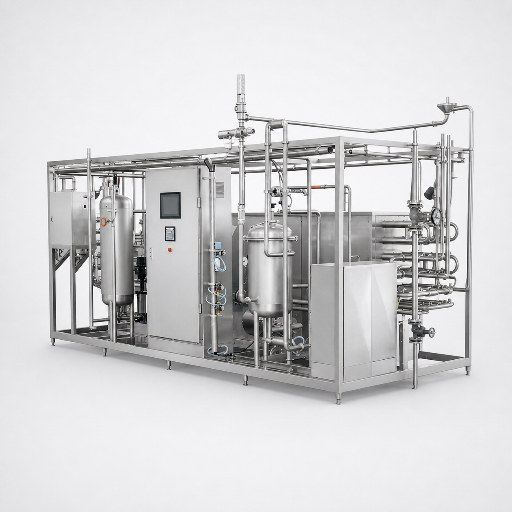
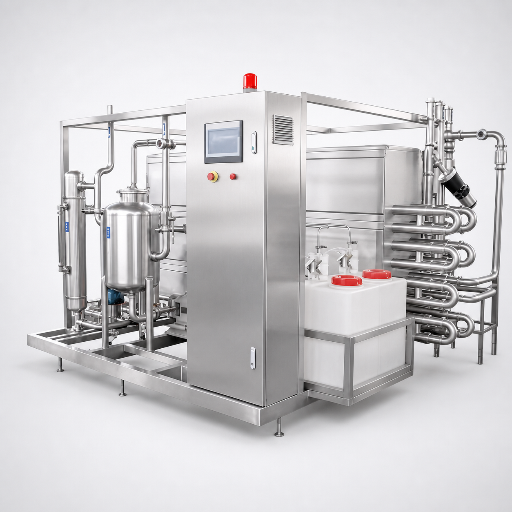
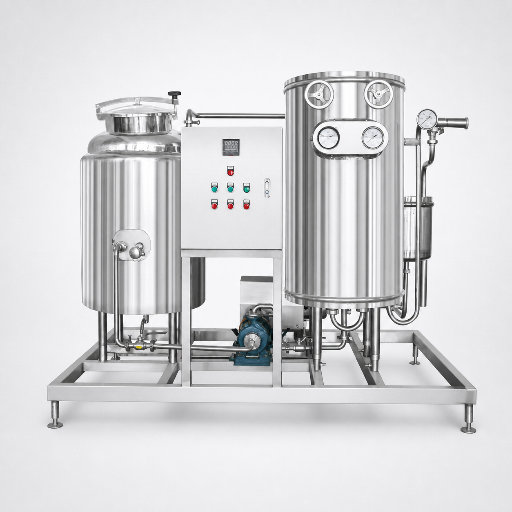
A configuration review built around the real process
A wrong starting assumption creates a scope mismatch. Use the review to connect product behavior, capacity, cleaning, and validation ownership.1
Product basis
Formulation, viscosity, particles, acidity, heat sensitivity, and fouling tendency.
Thermal route
Exchanger and holding arrangement selected only after the product window is understood.
Line interface
Transfer, buffer, filler, package, and capacity balance reviewed as connected decisions.
Cleaning scope
CIP or SIP requirements, changeovers, run length, and inspection access confirmed per project.
Validation path
Supplier tests, processor controls, and process-authority responsibilities separated in writing.
Quotation output
A defined configuration and interface list, with open assumptions visible before ordering.
UHT treatment is a process window, not one universal recipe
Published UHT conditions cover high-temperature, short-time treatment, but the actual combination depends on formulation, flow behavior, equipment design, and the target scheduled process. A 2025 peer-reviewed dairy-fouling review reports 137°C for 8 seconds as one representative condition; it is not a default setpoint for every product or machine.2
A common assumption is that headline temperature settles the choice. Fresh milk, skim milk, condensed milk, soy milk, and other milk and dairy products can require different UHT milk processing conditions. Heat-resistant spores, formulation, flow behavior, and quality limits all shape the treatment of milk. The real trade-off is whether heating, holding, flow control, cooling, and diversion can support the validated process without excessive quality or cleaning burden.
Decision Rule:
final temperature, holding time, flow rate, and acceptance limits belong to the project’s qualified process authority and processor. Shengtu’s role is to configure and document the equipment boundary that supports that process.
The aseptic outcome extends beyond the UHT skid
FDA inspection guidance separates four areas that must remain commercially sterile: the product, equipment downstream from the holding tube including the filler, packaging equipment, and packaging material.1 This is why heating performance alone cannot justify a shelf-life promise.
Thermal treatment and a shelf-stable outcome are not interchangeable; that is what buyers get wrong. The downstream processing line may include sterile transfer, an aseptic filling machine, package treatment, and sealing controls. Unlike a machine-only checklist, this map assigns each stage an owner and acceptance question.
Product and recipe
Define formulation, microbial target, quality limits, and the scheduled-process owner.
Thermal treatment
Control heating, holding, flow, diversion, regeneration, and cooling within the validated window.
Sterile transfer
Confirm the boundary after the hold tube, including piping, valves, buffer strategy, and pressure control.
Filling and package
Assign responsibility for filler sterilization, package or closure treatment, and hermetic sealing.
Validation evidence
Agree on commissioning studies, records, deviations, sampling, and finished-product acceptance.
Hidden bottleneck: an unowned connection between treatment and filling can invalidate the intended outcome even when both machines operate individually.
Screen the Heat-Transfer Route Against the Product
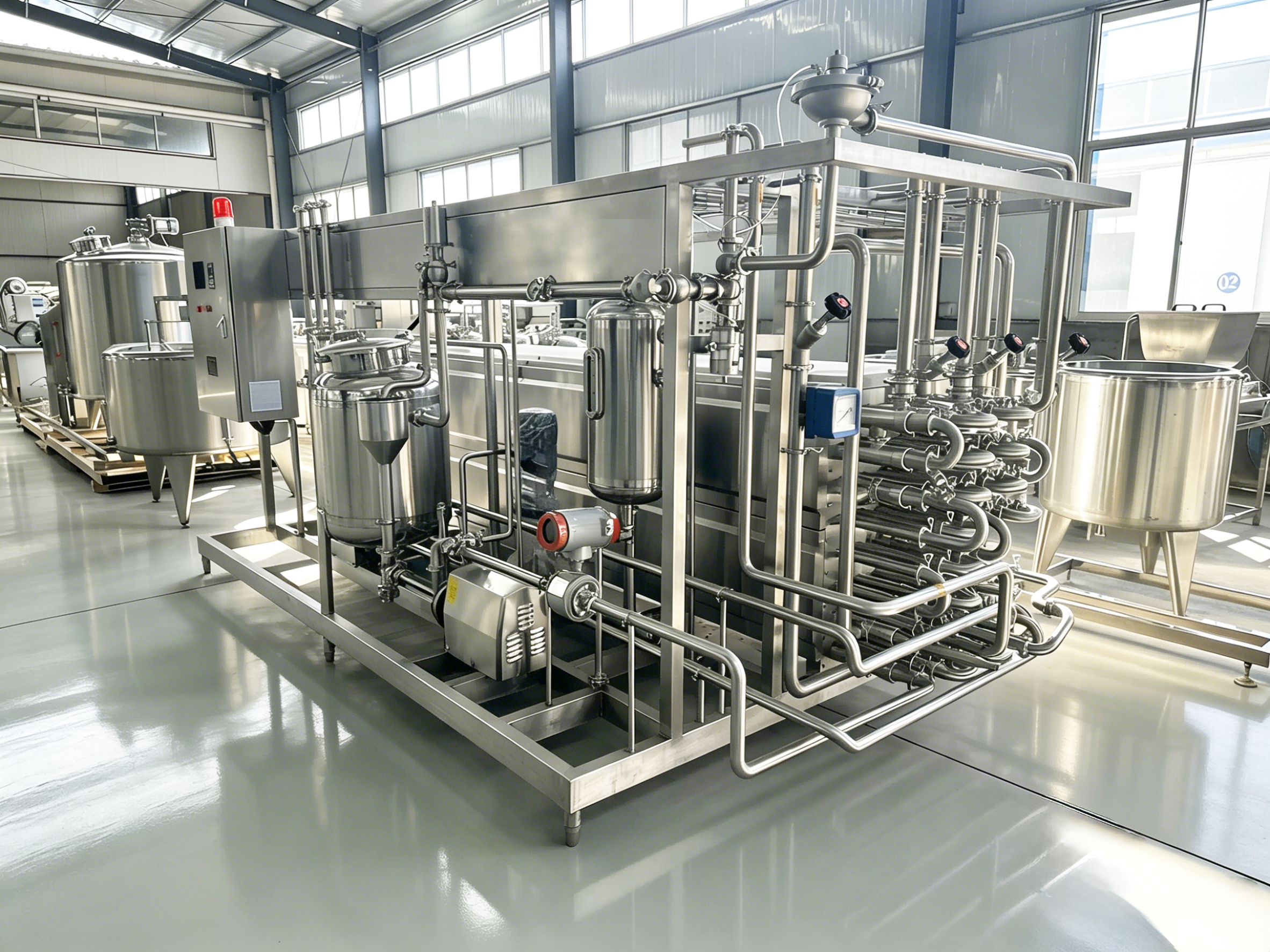
Cornell Dairy Foods Extension distinguishes plate, tubular, scraped-surface, steam-injection, and steam-infusion routes and connects selection to the product and processing objective.4 The table below is a screening tool, not a statement that every route is available from Shengtu.
Heat-transfer efficiency is rarely the only trade-off. In indirect heating, plate heat exchangers or tubular heat exchangers keep the heating medium separate from the product; direct heating brings qualified steam into contact with the product. Comparing direct and indirect UHT methods therefore requires product-specific process conditions. The plate UHT sterilizer is one type of UHT equipment and sterilization equipment, not a synonym for every sterilization machine. Passage size, shear, pressure drop, burn-on behavior, cleanability, and the required production run may point a project toward a different direct or indirect treatment route.
| Route to Screen | Often Considered When | Main Engineering Checks | Shengtu Offer Status |
|---|---|---|---|
| Plate | Low-viscosity, particle-free products where compact heat transfer is attractive | Channel clearance, gasket and plate integrity, fouling behavior, pressure drop, cleaning access | Confirm during review |
| Tubular | Products needing larger flow passages or a different fouling and pressure profile | Tube diameter, velocity, pressure, particle or fiber size, hold geometry, cleanability | Confirm during review |
| Scraped surface | Very viscous, sticky, or severe-fouling products that need continuous wall scraping | Shear, scraper wear, product damage, maintenance, hygienic design | Technology referral or engineering escalation |
| Direct steam | Heat-sensitive products where extremely rapid heating and cooling may be important | Steam quality, dilution/removal, vacuum cooling, product chemistry, utility control | Technology referral or engineering escalation |
Fouling, cleaning, and run length belong in the same discussion
Thermal fouling changes heat-transfer performance, pressure behavior, energy use, and cleaning demand. This peer-reviewed review treats fouling as both an efficiency and operating-cost problem, rather than a cosmetic maintenance issue.2
A defensible proposal should explain how product velocity, temperature difference, surfaces, holding geometry, and the cleaning sequence affect the intended run. It should also define how the operator will recognize a deteriorating condition and what happens before production resumes after a deviation.
- Product-side pressure drop and flow stability
- Heating-medium and product temperature approach
- CIP circuit boundary, recipe, verification, and drainability
- Inspection points for tubes, plates, gaskets, valves, and instruments
Define proof before the equipment is built
Canadian guidance for dairy aseptic processing calls for a qualified process authority, documented scheduled-process basis, commissioning and change validation, processing records, and heat-exchanger integrity checks.3 Your jurisdiction and product may require a different compliance path, but the procurement lesson is portable: acceptance evidence should be agreed before purchase.
A late-stage risk is rework because a generic equipment description does not define the processor’s 21 CFR 113 responsibilities. Shengtu engineers the requested equipment documentation and test scope around the buyer’s written acceptance plan; the processor and qualified authority retain process-validation ownership.5
“A useful acceptance plan names the test, the pass criterion, the record, and the responsible party before fabrication begins.”
Shengtu Machinery application engineering review principle
Company records: Request the current holder, scope and validity details.
Equipment conformity: Confirm the documents for the model, configuration and destination country.
Order documents: Agree inspection records, manuals, drawings and shipment paperwork in the contract.
Supplier-side evidence to specify
- Approved component and instrument list
- Material and fabrication documentation required by contract
- Control narrative, alarm and interlock list
- Factory test protocol and recorded results
- Installation, operation, cleaning, and maintenance documents
Processor-side evidence to own
- Scheduled process and process-authority approval
- Site utilities and line-interface qualification
- Filler, package, and sterile-zone validation
- Calibration, deviation, sampling, and release records
- Finished-product and shelf-life program
×
UHT Sterilizer Engineering & Planning Tools
01
UHT Sterilizer RFQ Builder
Enter what you know. The tool creates a plain-text engineering handoff and marks missing inputs instead of inventing defaults.
Open Tool02
UHT Line Balance Checker
Compare the effective sterilizer and filler rates after availability assumptions. This is a screening calculation, not a process or buffer validation.
Open Tool03
UHT Operating-Cost Calculator
Combine project inputs in one currency. The result is a buyer-entered comparison framework, not a Shengtu savings or payback claim.
Open ToolUHT sterilizer buying questions
Searches for a UHT sterilizer machine, tubular UHT sterilizer, UHT sterilizer cost, UHT machine price, indirect UHT, UHT milk, or a complete UHT plant often point to the same need: define the product and system boundary before comparing quotations.
01
UHT sterilizer and UHT pasteurizer terminology
UHT sterilization, ultra-high-temperature processing, UHT sterilization technology, and UHT sterilization process are overlapping search labels, but they do not make every outcome equivalent. The UHT process applies heat treatment to sterilize a liquid in dairy processing or broader food and beverage production. Food safety still depends on validated control of each target microorganism and on preserving sterility after treatment. In the beverage industry, sterilization of milk and other liquid food products uses a validated higher-temperature window; HTST pasteurization uses a different window to make a pasteurized product. For flavored milk, fruit juices, milk beverages, dairy products, and other milk and milk products, the sterilization temperature remains project-specific. A UHT treated product still needs controlled sterile transfer, aseptic packaging, the filling machine, and the beverage production line to become an aseptic product. Extended shelf life does not automatically mean storage without refrigeration, and the need for refrigeration must follow the validated process, package, and product label. Specify the complete UHT system and beverage processing equipment boundary in the RFQ.
02
Representative UHT temperature and holding time
Published dairy references commonly describe high-temperature, short-time conditions, including 137°C for 8 seconds in the reviewed 2025 paper.2 Treat that condition as literature context, not a supplier default. The process authority must consider formulation, pH, viscosity, particle load, heat-transfer route, regulatory target, coldest-point assumptions, and downstream aseptic controls before approving the final setpoint and holding time.
03
Tubular and plate route selection
Start with viscosity, particles, fouling history, pressure, cleanability, run length, and quality sensitivity. Plate systems are commonly screened for low-viscosity homogeneous liquids, while tubular routes are often evaluated for particles or higher viscosity. Scraped-surface designs may be considered for very viscous or difficult-fouling products. These are route-screening categories, not a claim that every route is available from Shengtu; the offered construction must be confirmed during engineering review.
04
CIP and SIP scope
Do not infer CIP or SIP performance from a sanitary-design label alone. Define the cleaning circuit, recipes, chemicals, temperature control, verification method, sterile boundary, and which auxiliary equipment is included.
05
Shelf-life responsibility
No sterilizer alone can guarantee a fixed shelf life. Product formulation, validated treatment, sterile transfer, filling, packaging integrity, storage temperature, and release testing all affect the result.
06
Factory and site acceptance
Agree the design review, FAT, installation checks, SAT, commissioning studies, instrument calibration, line-interface tests, and deviation handling before ordering. Regulatory validation remains with the processor and qualified process authority.
07
Quotation timing and price
Both depend on how completely the product, process, utility, control, documentation, and downstream interface are defined. A short discovery review is faster than pricing an incomplete scope and revising it later.
08
Documents to send with the RFQ
Applicable certificates and documents are confirmed for the equipment model, configuration and destination country. Company management-system records are reviewed separately from product conformity documents.
Send the product data sheet or formulation summary, process flow diagram, target throughput, available utilities, filler information, cleaning plan, site standards, and required acceptance documents. Mark unknown fields so engineering can resolve them.

![F&V Freeze-Drying Line Process Guide [2026]](https://shengtumachinery.com/wp-content/uploads/2026/09/fv-freeze-drying-line-guide-featured-150x150.png)